Residential development projects in the UAE often require railing and handrail systems that combine practical performance, architectural appearance, and reliable long-term use. As developers and contractors work with detailed material schedules and large construction quantities, every component of a railing system must meet dimensional, functional, and aesthetic requirements. An Engineered Wood Top Rail can be used as the upper horizontal component of a residential railing or balustrade system, providing a finished surface for the structure while contributing to the overall visual appearance of balconies, terraces, walkways, stairways, and other residential spaces. For UAE residential construction, procurement teams may require thousands of linear meters of railing components for a single development. This makes product consistency, dimensional accuracy, surface quality, customization, packaging, and delivery capability important considerations when selecting a suitable supplier.
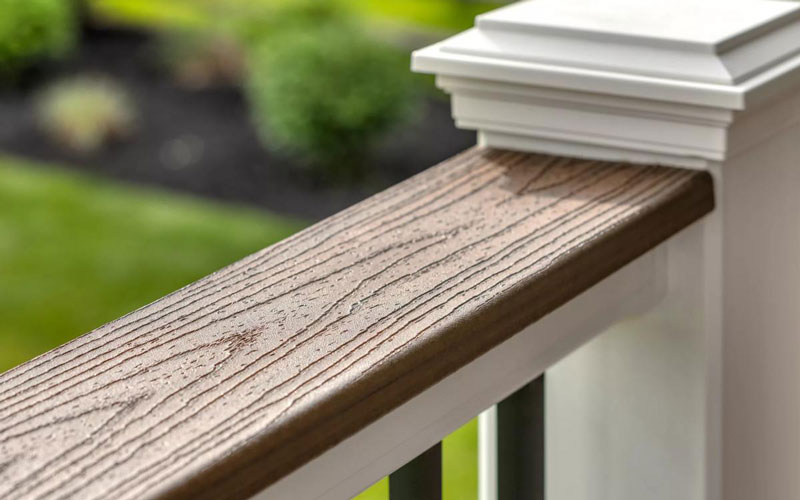
Table of Contents
What Is an Engineered Wood Top Rail?
An Engineered Wood Top Rail is a manufactured wood-based or engineered wood-profile component designed for use as the upper rail of a railing, balustrade, or similar architectural system. Unlike a simple unfinished timber section, an engineered profile can be manufactured to controlled dimensions and adapted to specific installation requirements.
The top rail is typically positioned horizontally above vertical posts, balusters, glass panels, or other railing elements. Its primary function is to provide a continuous upper rail that can be touched, used as a handrail, or serve as a visual finishing element for the railing structure.
Depending on the project specification, an engineered wood profile can be produced in different cross-sectional dimensions, lengths, colors, surface finishes, and profile configurations. For large construction projects, these options allow the top rail to be coordinated with the overall architectural design.
Application in UAE Residential Development
In the UAE, residential developments commonly include villas, apartment buildings, townhouses, landscaped communal areas, terraces, balconies, staircases, and pedestrian circulation spaces. These areas may require railing systems for safety, separation, access control, or architectural finishing.
An Engineered Wood Top Rail can form part of railing systems used in:
- Residential balconies
- Staircases and internal corridors
- Outdoor terraces
- Rooftop residential areas
- Garden and landscaped walkways
- Poolside areas
- Community facilities
- Pedestrian bridges and elevated walkways
- Decorative residential balustrades
The top rail can be combined with different structural materials depending on the design. For example, it may be installed with metal posts, vertical balusters, glass panels, or other supporting components. This makes the profile adaptable to different residential railing designs.
For large-scale housing developments, standardized top rail dimensions can also simplify production, installation, and replacement.
Why Dimensional Accuracy Matters
A railing system consists of multiple components that must work together. If the top rail does not maintain the specified dimensions, it may create problems during assembly or affect the finished appearance.
For example, a project may specify a cross-section of 50mm × 45mm. Maintaining this dimensional requirement throughout production helps ensure that the profile fits the supporting structure and maintains a consistent appearance across the installation.
For a large residential development, even small dimensional variations can become significant when thousands of meters are installed. Therefore, manufacturers should maintain consistent extrusion, machining, cutting, and finishing processes where applicable.
Dimensional control should cover:
- Width
- Height
- Length
- Cross-sectional shape
- Straightness
- Surface consistency
- End-cut accuracy
Quality control at these stages helps reduce installation difficulties and minimizes material waste on the construction site.
Surface Appearance and Architectural Requirements
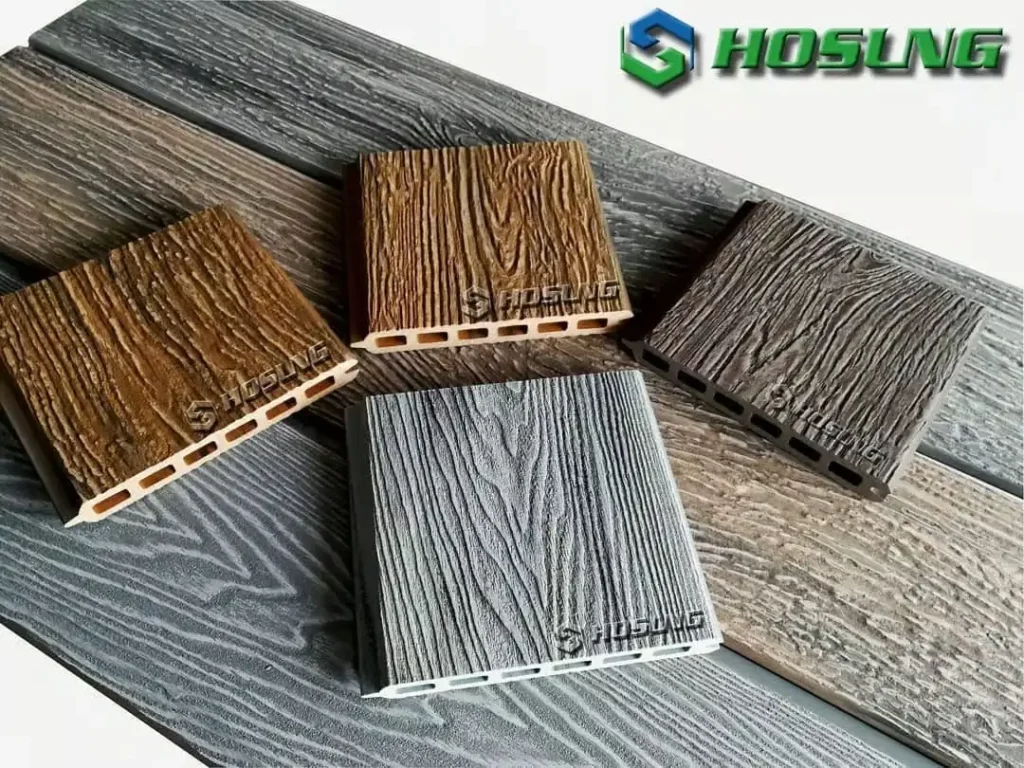
Residential railing components are visible architectural elements, so appearance is often nearly as important as physical performance. An engineered wood profile can provide a wood-inspired appearance while allowing manufacturers to control the surface finish and color according to project requirements.
Depending on the specification, buyers may request:
- Natural wood appearance
- Wood-grain texture
- Smooth surface
- Matte finish
- Dark wood tones
- Medium brown tones
- Grey or contemporary finishes
- Custom colors
A consistent finish is particularly important for large projects. If top rails are installed throughout multiple buildings or residential blocks, differences in color, texture, or surface quality can become noticeable.
For this reason, project buyers should confirm color samples and surface specifications before beginning large-scale production.
Engineered Wood Top Rail for Large-Volume Procurement
One of the key characteristics of construction material procurement is that quantities can be much larger than those required for individual residential projects. A UAE residential development may require thousands of meters of railing components across multiple buildings or sections of the development.
For example, one project procurement requirement can involve 4,479 linear meters of 50mm × 45mm engineered wood top rail.
At this scale, purchasing decisions should consider more than the unit price. The supplier’s production capacity, quality consistency, packaging, lead time, and ability to maintain the same specification throughout the order can directly affect project execution.
For large-volume procurement, buyers should therefore evaluate:
- Production capacity – Can the manufacturer complete the required quantity within the project schedule?
- Dimensional consistency – Can every batch maintain the specified profile dimensions?
- Color consistency – Can different production batches maintain the approved appearance?
- Packaging – Can long profiles be protected during handling and transportation?
- Lead time – Can production and delivery match the construction schedule?
- Customization – Can the supplier manufacture according to project-specific requirements?
- Quality inspection – Are inspection procedures available before shipment?
These factors can be particularly important when the material is part of a larger construction schedule.
Custom Lengths and Profile Requirements
Large residential projects may have different railing sections, resulting in different cutting and installation requirements. A supplier capable of producing or supplying customized lengths can help reduce unnecessary cutting and material waste.
The required profile can also depend on the design of the railing system. Buyers may provide technical drawings, cross-sectional drawings, installation details, or samples to ensure that the manufactured component matches the approved specification.
Before production, the supplier and buyer should confirm:
- Cross-sectional dimensions
- Required length
- Tolerance
- Surface finish
- Color
- Edge configuration
- Installation method
- Packaging requirements
- Quantity
- Delivery schedule
Confirming these specifications in advance helps prevent misunderstandings during mass production.
Packaging and Transportation Considerations
Long railing profiles require suitable packaging because they can be vulnerable to scratches, deformation, and damage during loading and transportation. This becomes especially important when products are shipped internationally to the UAE.
For large-volume orders, profiles should be securely bundled and protected from excessive movement during transportation. Packaging should also make it easy for the receiving team to identify different batches or specifications.
Depending on the product length and shipping method, suppliers may use reinforced cartons, protective films, pallets, wooden packaging, or other suitable solutions.
Proper packaging protects the surface finish and helps ensure that the material arrives ready for inspection and installation.
Quality Control Before Delivery
Before shipment, project buyers should consider conducting or requesting inspections covering appearance, dimensions, quantity, packaging, and other agreed specifications.
For an Engineered Wood Top Rail, inspection can include checking the cross-sectional dimensions at different points, verifying profile straightness, inspecting the surface for visible defects, and confirming that the color and finish correspond to the approved sample.
For large projects, batch records and production inspection procedures can also provide useful traceability.
A clear quality-control process reduces the risk of receiving materials that do not match the approved project specification.
Choosing a Supplier for UAE Residential Projects
When sourcing engineered wood railing components for a UAE residential development, buyers should look beyond product availability and consider the supplier’s ability to support the complete project procurement process.
A suitable manufacturer should be able to understand technical drawings, confirm specifications, provide samples when required, manufacture consistent quantities, and prepare appropriate export packaging.
Communication is also important. Before placing a large order, the buyer should confirm all technical and commercial details, including product dimensions, quantity, color, finish, tolerances, packaging, delivery terms, production lead time, and inspection requirements.
For project-based purchasing, a detailed quotation is generally more useful than a simple unit price because it allows the procurement team to evaluate the complete supply arrangement.
Conclusion
An Engineered Wood Top Rail can serve as an important architectural component in residential railing and handrail systems. For UAE residential development projects, large-volume procurement requires careful attention to dimensions, appearance, customization, quality control, packaging, and delivery schedules.
A specification such as 50mm × 45mm combined with a requirement measured in thousands of linear meters demonstrates why project procurement should be based on consistent manufacturing and clearly confirmed technical requirements. By working with a wpc manufacturer capable of maintaining stable quality and supporting customized project requirements, contractors, developers, and procurement teams can better coordinate railing materials with the broader construction schedule.
For large residential projects, the right top rail is not simply a decorative profile. It is a component that must integrate with the railing structure, satisfy the approved design, maintain consistent appearance across extensive installations, and arrive on site in a condition suitable for efficient construction.