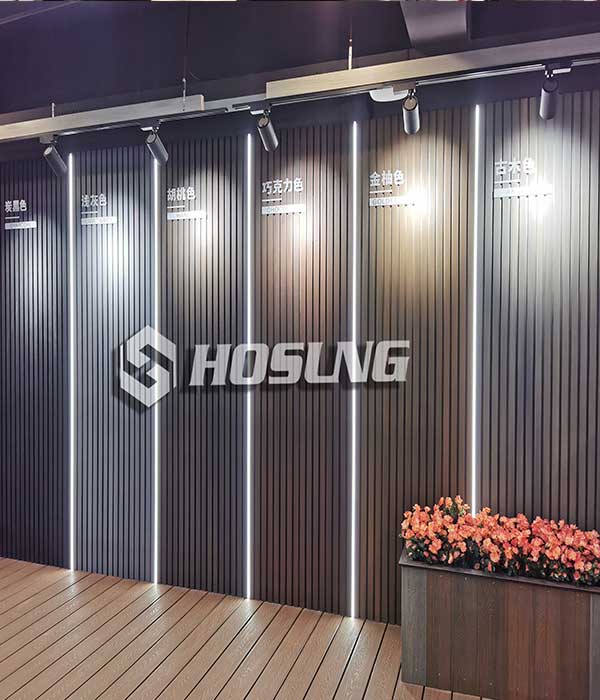
Finding reliable wholesale composite decking suppliers is important for distributors and contractors seeking quality products at competitive prices. China offers a wide range of composite decking in different colors, finishes, sizes, and customized options. For bulk orders, working directly with Chinese manufacturers can help reduce costs and provide greater product flexibility. Buyers should evaluate not only price but also material quality, production capacity, certifications, quality control, packaging, delivery, and after-sales service.
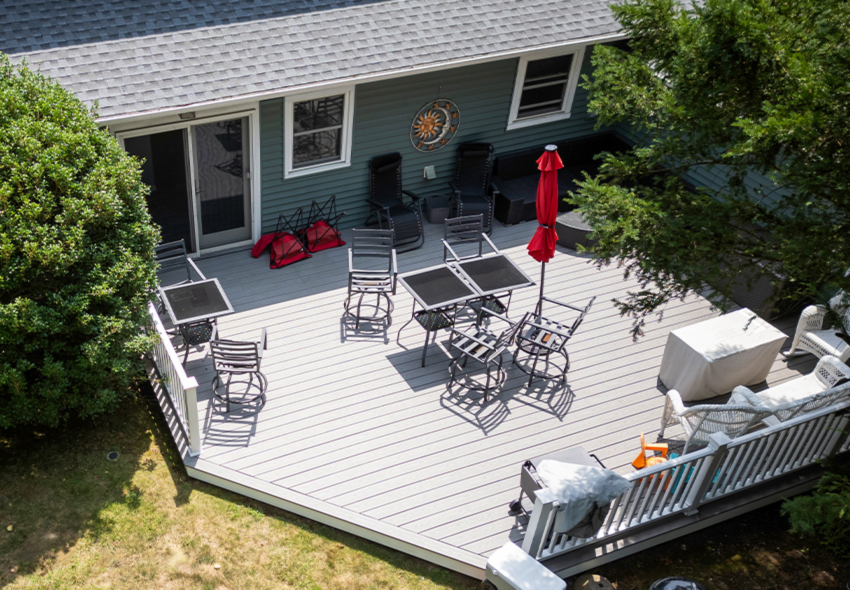
Table of Contents
Why Choose Chinese Composite Decking Suppliers?
China has a mature manufacturing industry for outdoor building materials. Composite decking manufacturers have developed production capabilities covering raw material preparation, extrusion, surface treatment, embossing, co-extrusion, cutting, packaging, and quality inspection.
One of the biggest advantages of sourcing from China is the combination of manufacturing capacity and product variety. Wholesale buyers can often find suppliers capable of producing different decking profiles for residential, commercial, landscaping, and infrastructure projects.
Chinese suppliers can also support large-volume orders. This is particularly useful for distributors and importers that need stable supply throughout the year.
Another advantage is customization. Depending on the supplier’s capabilities, buyers may be able to request specific board dimensions, colors, surface textures, packaging methods, accessories, and product configurations.
For businesses selling composite decking under their own market positioning, direct factory sourcing can also make it easier to develop customized product ranges.
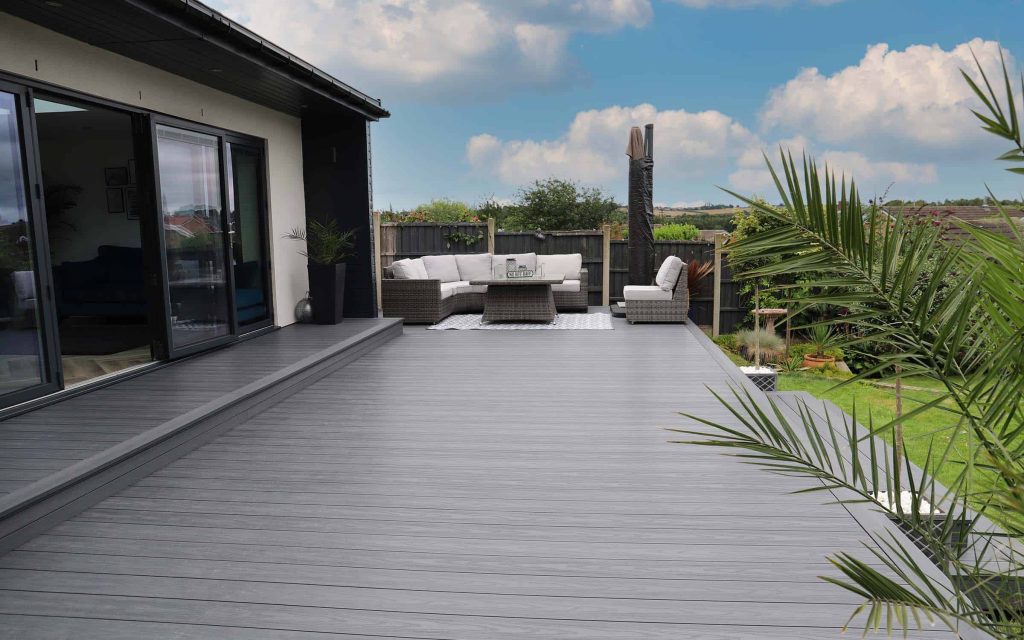
What Is Composite Decking?
Composite decking is an outdoor decking material generally manufactured from a combination of wood fiber and polymer materials, together with additives designed to improve processing, durability, color stability, and performance.
Unlike traditional untreated wood decking, composite decking does not rely entirely on natural wood fibers for structural and surface performance. The polymer component helps provide resistance to moisture, while the wood fiber contributes to the appearance and texture associated with natural timber.
Different manufacturing formulas can produce different levels of strength, density, water resistance, surface durability, and color stability. Therefore, buyers should not evaluate composite decking solely by appearance.
The manufacturing process also affects the final product. Extrusion technology, temperature control, material mixing, cooling, surface treatment, and dimensional control all influence the consistency of finished decking boards.
For wholesale buyers, understanding these factors makes it easier to compare different suppliers objectively.
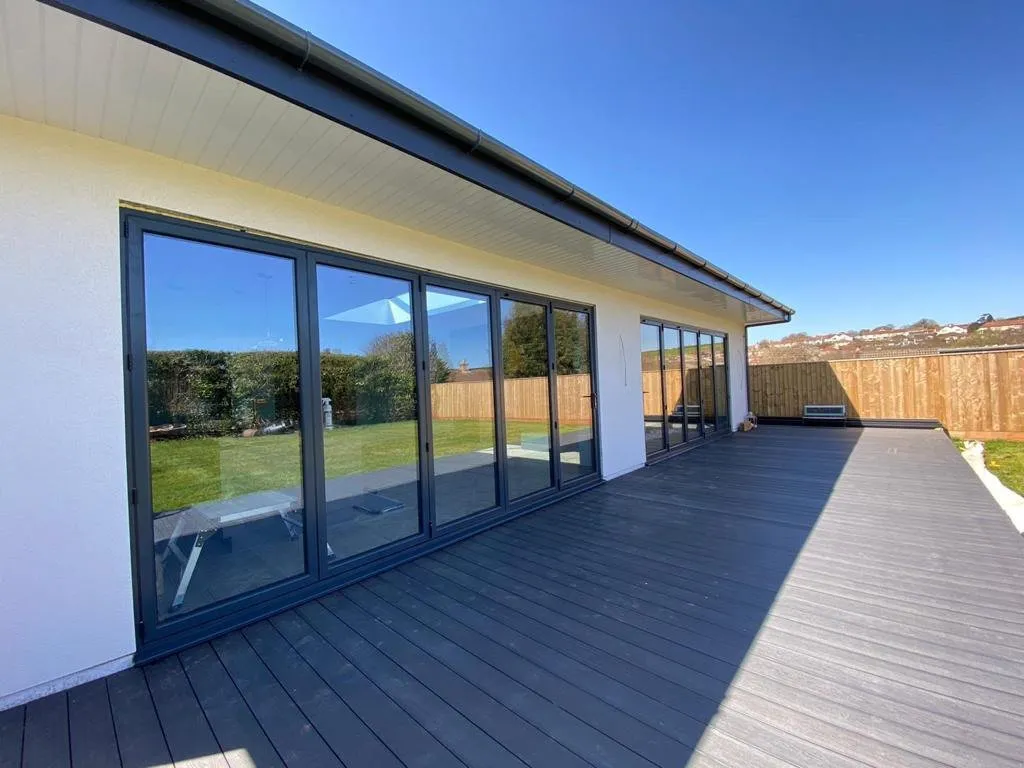
Types of Composite Decking Available From Wholesale Suppliers
Wholesale composite decking suppliers in China may offer several product categories.
Traditional WPC Decking
Wood-plastic composite decking is one of the most widely used composite decking solutions. It is commonly produced using wood fiber and thermoplastic polymers.
WPC decking can provide a natural wood-like appearance while requiring less maintenance than conventional timber decking. It is suitable for gardens, patios, balconies, walkways, terraces, and other outdoor areas.
Capped Composite Decking
Capped composite decking includes an additional protective polymer layer around the decking core. This outer layer can improve resistance to moisture, stains, fading, and surface wear.
For commercial projects or areas exposed to frequent use, capped products may be an attractive option because the protective surface can provide additional durability.
Co-Extruded Decking
Co-extruded decking is manufactured using multiple material layers during the extrusion process. The outer layer is designed to provide improved surface protection while the internal structure provides the required strength and dimensional stability.
This type of decking is increasingly considered for projects where appearance retention and long-term outdoor performance are important.
Hollow Composite Decking
Hollow boards contain internal cavities that reduce material consumption and product weight. This can make transportation and handling easier.
However, hollow decking should be selected according to the application. Buyers should evaluate load requirements, board design, joist spacing, installation conditions, and expected usage.
Solid Composite Decking
Solid composite boards contain a denser internal structure and generally provide greater weight and material density than hollow products.
They can be suitable for applications requiring higher rigidity or where a more substantial board structure is preferred.
Key Factors When Choosing Wholesale Composite Decking Suppliers
Price is important for wholesale buyers, but it should not be the only purchasing criterion.
1. Material Composition
Ask the supplier for detailed information about the raw materials used in the decking boards.
Important factors may include the type of polymer, wood fiber ratio, additives, pigments, stabilizers, and protective layers.
Material composition can influence mechanical properties, water absorption, dimensional stability, appearance, and service life.
A supplier that can clearly explain its material formulation is generally easier to evaluate than one that provides only general product descriptions.
2. Manufacturing Capacity
Production capacity matters when purchasing large quantities.
Before placing a major order, buyers should understand the supplier’s monthly production capacity, number of extrusion lines, factory organization, and ability to handle peak-season demand.
A supplier may offer an attractive price for a small order but struggle to maintain consistent delivery schedules for large projects.
Stable production capacity is especially important for distributors that need regular replenishment.
3. Product Consistency
Wholesale buyers need products that remain consistent between different production batches.
Color, thickness, width, length, surface texture, and dimensional tolerances should remain within agreed specifications.
Ask the supplier how product dimensions are inspected during production and whether samples from different batches can be compared.
Consistent quality can reduce installation problems and customer complaints after products reach the destination market.
4. Surface Finish
The surface is one of the most visible features of composite decking.
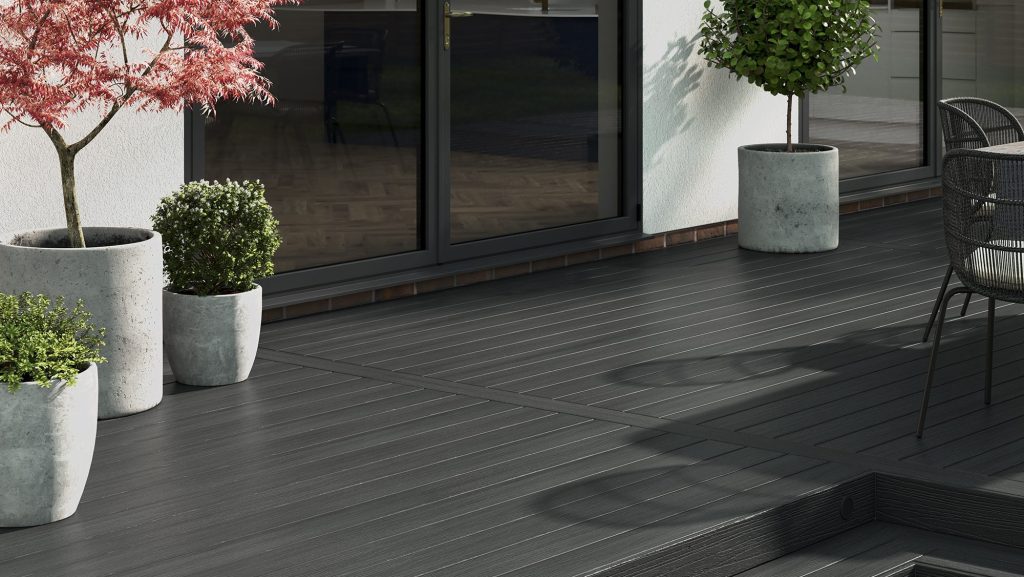
Common finishes include wood-grain textures, brushed surfaces, embossed patterns, and relatively smooth designs.
When comparing suppliers, request physical samples rather than relying entirely on digital photographs.
A sample can help you evaluate color, texture, rigidity, edge quality, surface uniformity, and overall appearance.
5. Color Options
Different markets have different preferences for decking colors.
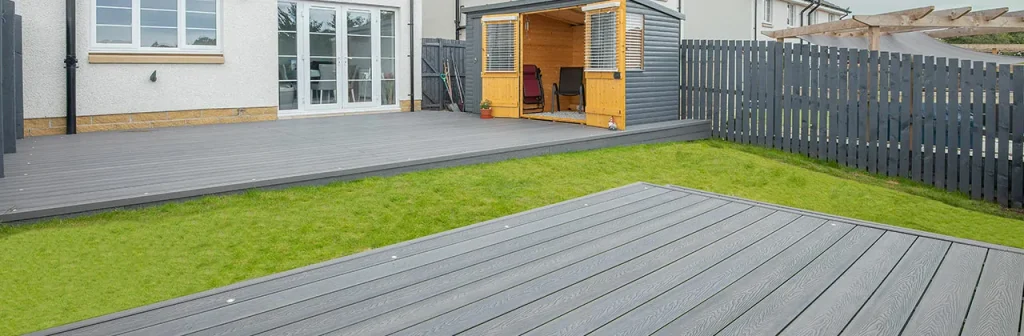
Common choices include brown, grey, dark grey, black, natural wood tones, and other customized colors.
Wholesale buyers should ask whether standard colors are available and whether custom colors require a minimum order quantity.
If you operate as a distributor, selecting several complementary colors can help create a more complete product range.
Why Factory Direct Purchasing Can Be Beneficial
Working directly with manufacturers can provide several advantages compared with buying through multiple layers of intermediaries.
The first advantage is communication. Buyers can communicate directly with technical and production teams about product specifications.
The second advantage is customization. Direct manufacturers may have more flexibility when developing special dimensions, colors, surface designs, packaging, or other requirements.
The third advantage is cost control. Eliminating unnecessary intermediary margins may make the overall sourcing structure more competitive, particularly for container-level orders.
However, factory-direct purchasing also means that buyers need to conduct their own supplier evaluation. A low factory price does not automatically indicate the best overall purchasing value.
MOQ and Wholesale Pricing
Minimum order quantity is another important factor when evaluating wholesale composite decking suppliers.
MOQ requirements can vary depending on product type, color, dimensions, packaging, and whether customization is involved.
Standard products may have lower minimum quantities, while customized colors or packaging can require larger production runs.
When requesting a quotation, provide as much information as possible, including:
- Decking board dimensions
- Board length
- Product type
- Hollow or solid structure
- Surface finish
- Color
- Required quantity
- Packaging requirements
- Destination port
- Accessories needed
- Custom branding requirements
A detailed inquiry allows suppliers to prepare a more accurate quotation.
Buyers should also compare the total landed cost rather than the factory unit price alone. Shipping, insurance, import duties, local transportation, packaging, and other expenses can significantly affect the final cost.
Quality Control for Composite Decking
Quality control should be considered throughout the entire production process.
Raw materials should be inspected before production. During extrusion, manufacturers should monitor temperature, pressure, material mixing, cooling, and dimensional stability.
Finished products should be checked for dimensions, surface quality, color consistency, structural integrity, and other agreed specifications.
For large orders, international buyers may also consider third-party inspection before shipment.
A pre-shipment inspection can help confirm whether the finished goods meet the agreed specifications before the products leave the factory.
This is particularly valuable when ordering customized decking products or large quantities.
Certifications and Testing
Depending on the target market and application, buyers may need specific certifications or test reports.
Requirements can differ between countries and may relate to environmental performance, material composition, fire performance, mechanical properties, or chemical content.
When evaluating suppliers, ask what testing documentation is available for the specific product being purchased.
It is important to ensure that certificates and test reports correspond to the actual product rather than assuming that documentation for one product applies to all product models.
If your products are being sold through a regulated construction market, check local requirements before finalizing your purchase specifications.
Packaging and Container Loading
Composite decking is relatively long and requires careful packaging for international transportation.
Good packaging should protect boards from scratches, deformation, moisture, and damage during loading and unloading.
Suppliers may use bundles, protective films, cartons, pallets, or customized packaging depending on the product and destination.
Container loading should also be planned carefully.
Because shipping costs are an important part of the landed cost, buyers should discuss loading quantities with suppliers before placing an order. The number of boards per bundle, bundle dimensions, pallet usage, and container utilization can all affect transportation efficiency.
A supplier experienced in international exports can usually provide useful recommendations for packaging and container loading.
Lead Time and Delivery Planning
Production lead time can vary depending on order quantity, product type, customization, raw material availability, and factory workload.
Standard products are generally easier to produce than highly customized products.
Before confirming an order, ask the supplier for a realistic production schedule rather than relying on an approximate delivery promise.
For project-based purchases, delivery timing is particularly important because construction schedules may depend on the arrival of decking materials.
It is also useful to clarify what happens if there are changes in quantity, specifications, or shipping schedules after an order has been confirmed.
Private Label and Custom Packaging
Many distributors want to develop their own product identity rather than sell generic materials.
Depending on the manufacturer’s capabilities, wholesale composite decking suppliers may provide private-label services such as customized cartons, labels, product manuals, packaging designs, or other printed materials.
Private labeling can help distributors build a recognizable product range in their local market.
However, customized packaging usually requires additional preparation and may involve minimum quantities. Buyers should confirm artwork requirements, printing methods, packaging dimensions, and approval procedures before mass production.
For companies developing a long-term decking business, choosing a manufacturer capable of supporting both standard and customized orders can provide greater flexibility.
Decking Accessories Matter Too
A complete composite decking system involves more than decking boards.
Common accessories include:
- Joists
- Starter clips
- Hidden fasteners
- Screws
- End clips
- Corner accessories
- Fascia boards
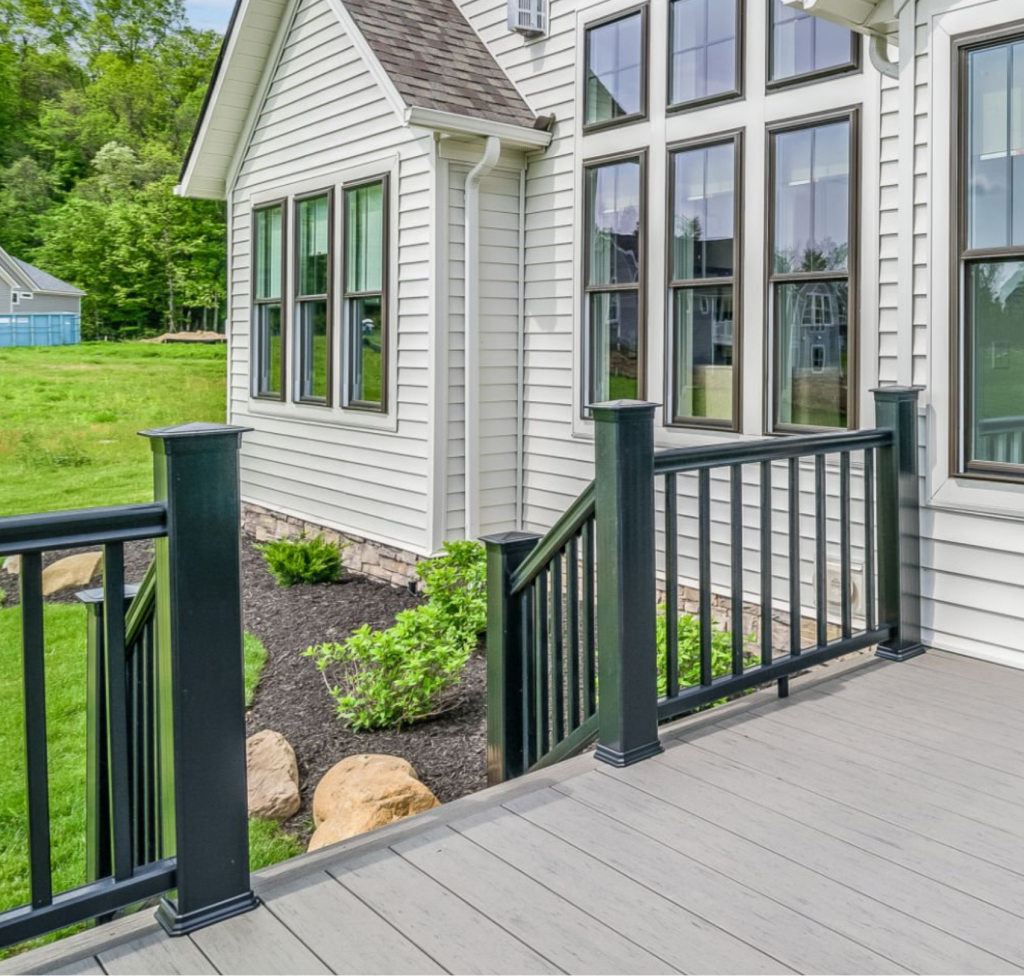
- Edge profiles
- Post and railing components
When sourcing from China, buyers can ask whether the supplier provides compatible accessories.
Purchasing boards and accessories from the same supplier can simplify product matching and logistics. It can also reduce the risk of compatibility problems during installation.
However, accessory specifications should always be checked carefully to ensure they are suitable for the selected decking system.
Questions to Ask a Chinese Supplier Before Ordering
Before selecting a supplier, prepare a list of technical and commercial questions.
You can ask:
- What materials are used in the decking boards?
- What are the standard board dimensions?
- Are hollow and solid options available?
- What surface finishes are available?
- What colors are available?
- Can custom colors be produced?
- What is the MOQ for standard products?
- What is the MOQ for customized products?
- What is the normal production lead time?
- What quality inspection procedures are used?
- Are product test reports available?
- What packaging options are available?
- How many boards can fit into a standard container?
- Can accessories be supplied?
- Is private-label packaging available?
- What after-sales support is provided?
Clear answers to these questions make supplier comparison much easier.
How to Compare Wholesale Composite Decking Suppliers
Instead of choosing a supplier based only on the lowest quotation, create a comparison system.
You can evaluate suppliers according to:
| Factor | What to Check |
|---|---|
| Product Quality | Material, density, surface and dimensional consistency |
| Factory Capacity | Production lines and monthly output |
| Customization | Colors, sizes, packaging and profiles |
| MOQ | Minimum order requirements |
| Price | Factory price and total landed cost |
| Lead Time | Production and delivery schedule |
| Quality Control | Inspection procedures and testing |
| Packaging | Protection and container utilization |
| Communication | Response speed and technical support |
| After-Sales | Warranty and problem resolution |
This approach allows buyers to compare suppliers using the same criteria.
For companies entering the composite decking market, it can be useful to order samples from several potential suppliers before committing to a larger purchase.
Sample evaluation can reveal differences that are not obvious from quotations or product catalogs.
Conclusion
China offers international buyers a broad selection of composite decking products and manufacturing solutions. From traditional WPC boards to capped and co-extruded decking, buyers can find products designed for different applications, budgets, and market requirements.
However, successful sourcing depends on selecting the right manufacturing partner.
When evaluating wholesale composite decking suppliers, look beyond the quoted price. Pay attention to material composition, product consistency, factory capacity, surface quality, customization options, quality control, certifications, packaging, delivery time, and after-sales support.
For distributors, contractors, importers, and project buyers, taking time to compare suppliers and test samples can significantly reduce sourcing risks.
By working with a capable Chinese manufacturer – Hosung WPC and establishing clear technical and commercial requirements, buyers can build a more stable supply chain and develop a competitive composite decking product range for their target market.