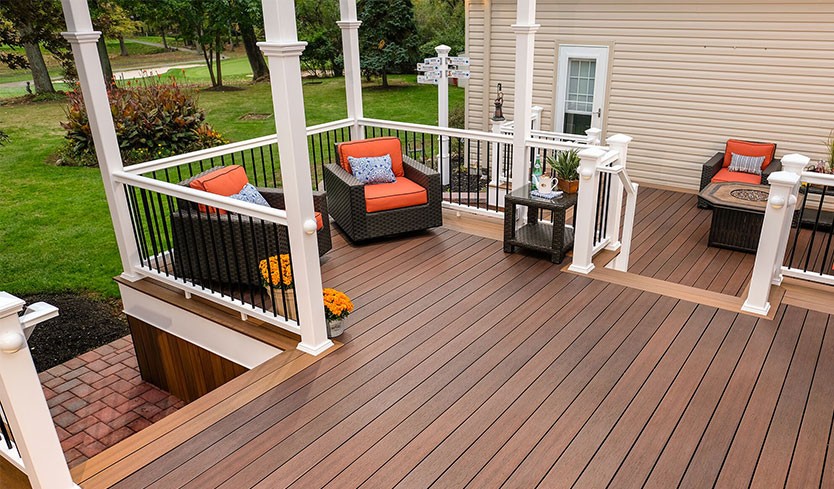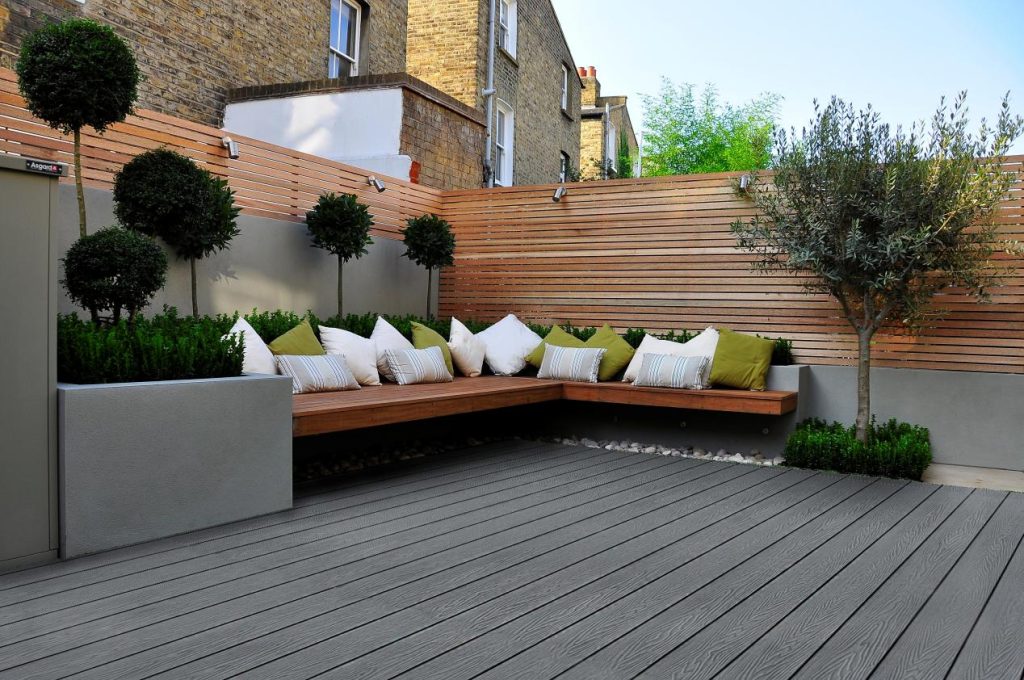
A swimming pool is not only a place for swimming but also an outdoor space for relaxation, entertainment, and family activities. The surrounding deck plays an important role in improving safety, appearance, and overall comfort. Among various outdoor flooring options, composite decking for pool areas has become a popular choice for homes, hotels, resorts, and commercial spaces. Compared with traditional wood, composite decking offers better moisture resistance, durability, and lower maintenance requirements. Choosing the best composite decking for pool areas requires considering factors such as slip resistance, water resistance, stability, and long-term performance. This guide covers the key features, design options, installation tips, and maintenance considerations for pool decking.
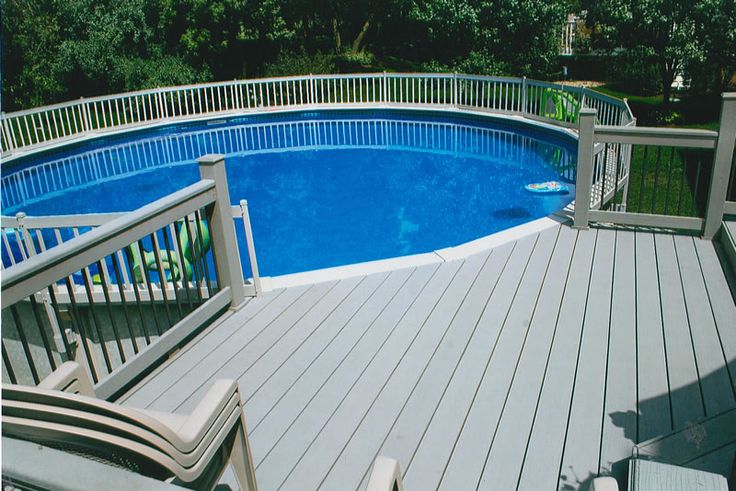
Table of Contents
Why Choose Composite Decking for Pool Areas?
Pool environments create challenges that many traditional decking materials struggle to handle. Water splashes, wet feet, chlorine, cleaning chemicals, and continuous sunlight can quickly affect outdoor surfaces. Composite decking is specifically designed to address these challenges.
One of the biggest advantages of composite decking is its excellent moisture resistance. Traditional wood absorbs water over time, which can lead to swelling, cracking, warping, and decay. Around pools, where the decking surface frequently becomes wet, these problems can develop faster.
Composite decking uses a combination of wood fibers and polymer materials to create a stable structure that does not easily absorb moisture. This makes it a reliable solution for areas exposed to regular water contact.
In addition, composite decking requires significantly less maintenance compared with natural wood. Wooden pool decks often require regular sanding, staining, sealing, and painting to maintain their appearance. Composite decking generally only requires simple cleaning with water and mild soap to remove dirt and surface stains.
For homeowners and commercial property owners looking for a long-term outdoor flooring solution, composite decking for pool areas offers an attractive balance between performance and appearance.
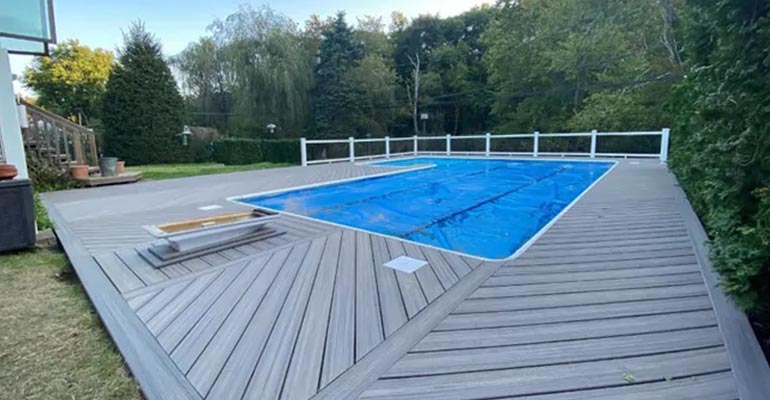
Key Features of the Best Composite Decking for Pool Areas
Not all composite decking products are the same. The best option for pool applications should include several important characteristics that ensure safety, durability, and visual appeal.
1. Excellent Water Resistance
Water resistance is one of the most important factors when selecting pool decking. Pool decks are constantly exposed to water from swimming, rain, cleaning, and outdoor humidity.
High-quality composite decking should have a low water absorption rate to prevent structural problems caused by moisture. A stable composition helps the boards maintain their original shape and strength even after years of exposure to wet conditions.
Water-resistant decking also helps reduce issues such as:
- Swelling and expansion
- Cracking caused by moisture cycles
- Mold growth
- Surface deterioration
This makes composite materials especially suitable for swimming pools, spas, balconies, and other outdoor areas where water exposure is unavoidable.
2. Slip Resistance and Pool Safety
Safety is a critical concern around swimming pools. Wet surfaces can become slippery, increasing the risk of accidents. The best composite decking for pool areas should have a textured surface designed to improve traction.
Many composite decking boards feature wood grain patterns or embossed surfaces that provide additional grip under wet conditions. This creates a safer walking surface for children, elderly people, and anyone moving around the pool area with wet feet.
When evaluating pool decking, consider:
- Surface texture
- Anti-slip performance
- Board design
- Drainage capability
A good decking system should allow water to flow away efficiently while maintaining a comfortable walking surface.
3. Resistance to Sunlight and UV Exposure
Outdoor pool decks are exposed to direct sunlight for many hours throughout the year. Continuous UV exposure can cause some materials to fade, weaken, or lose their original appearance.
Quality composite decking includes UV-resistant properties that help maintain color stability. Although all outdoor materials experience some natural weathering over time, well-designed composite decking can significantly reduce fading compared with untreated wood.
UV resistance is especially important for:
- Rooftop pools
- Resort swimming pools
- Outdoor entertainment areas
- Properties in hot climates
A decking material that maintains its appearance over time can help preserve the overall design quality of the outdoor space.
4. Strong Structural Stability
Pool decking must withstand regular foot traffic, outdoor furniture, and changing weather conditions. The best composite decking products are manufactured with high structural strength to support long-term use.
Compared with natural wood, composite boards are less likely to:
- Split
- Crack
- Warp
- Develop weak areas
This stability is especially valuable for commercial applications where the deck may experience heavy daily traffic.
Hotels, resorts, restaurants, and public recreational facilities often choose composite decking because it provides consistent performance with fewer repairs over its service life.
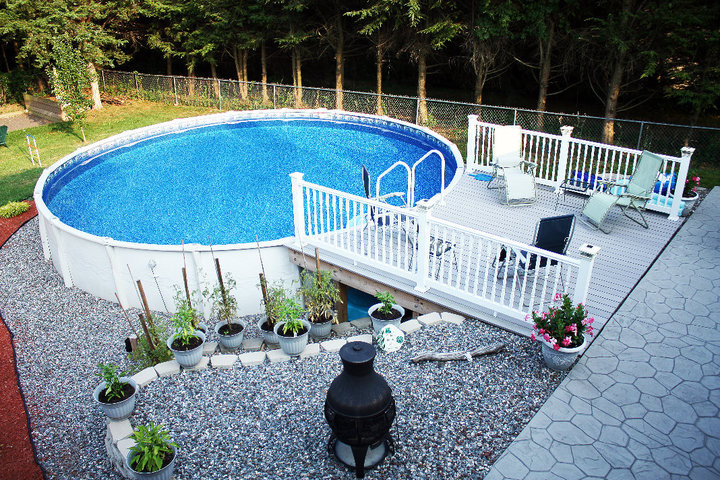
Comparing Composite Decking with Other Pool Deck Materials
When designing a pool area, property owners can choose from several decking materials. Each option has advantages and disadvantages.
Composite Decking vs. Natural Wood
Natural wood has traditionally been used for outdoor decks because of its warm appearance and natural texture. However, wood requires significant maintenance when installed near swimming pools.
Common issues with wood decking include:
- Water absorption
- Rot and decay
- Regular sealing requirements
- Splitting and cracking
- Color fading
Composite decking provides a similar natural appearance while reducing many of these maintenance challenges.
For pool applications, composite decking offers a more practical solution because it performs better under constant moisture exposure.
Composite Decking vs. Concrete
Concrete is another common pool surround material. It is durable and widely available, but it may not provide the same comfort and design flexibility.
Some limitations of concrete include:
- Hard surface feel
- Heat absorption under direct sunlight
- Limited design options
- Potential cracking over time
Composite decking provides a warmer and more comfortable surface while offering a wider range of colors, textures, and patterns.
Composite Decking vs. Ceramic Tiles
Tiles can create an elegant pool appearance, but they may have concerns related to slipperiness and maintenance.
Certain outdoor tiles can become dangerous when wet, especially if they do not have proper anti-slip properties. Broken tiles may also require replacement.
Composite decking offers a more forgiving surface and can provide better walking comfort around pools.
Best Composite Decking for Pool Areas
Choosing the right material is only the first step. A successful pool deck project also depends on proper planning, installation methods, and environmental considerations. Before purchasing composite decking for pool areas, several factors should be evaluated to ensure the final result meets both functional and aesthetic expectations.
1. Consider the Pool Environment and Climate
Different climates create different challenges for outdoor decking. A pool deck installed in a hot and sunny region may face intense UV exposure and high surface temperatures, while a deck in a humid or rainy area must handle frequent moisture.
When selecting composite decking, consider:
- Average temperature changes throughout the year
- Rainfall and humidity levels
- Exposure to direct sunlight
- Frequency of pool use
- Surrounding landscape conditions
A suitable decking material should maintain stability in changing weather conditions without excessive expansion, contraction, or surface damage.
For coastal areas, additional attention should be paid to resistance against moisture, salt air, and environmental corrosion. Composite decking with strong weather resistance can provide reliable performance in challenging outdoor environments.
2. Choose the Right Surface Texture
The surface design of pool decking affects both safety and appearance. A smooth surface may provide a modern look but may not offer enough traction when wet. On the other hand, highly textured surfaces can improve grip but may feel less comfortable under bare feet.
The ideal pool decking surface should balance:
- Slip resistance
- Walking comfort
- Easy cleaning
- Attractive appearance
Many composite decking options are designed with realistic wood grain patterns that create a natural look while improving surface friction. This allows homeowners and designers to achieve a stylish outdoor space without compromising safety.
3. Pay Attention to Board Size and Installation Layout
The dimensions of decking boards can influence the overall appearance and structural performance of a pool area.
Common considerations include:
- Board width
- Board thickness
- Installation direction
- Spacing between boards
- Edge finishing
Wider boards can create a more spacious and contemporary appearance, while narrower boards may provide a traditional deck style. The installation pattern can also influence the visual effect of the pool area.
For example:
- Horizontal layouts can make small spaces appear wider.
- Diagonal layouts can create a more dynamic appearance.
- Mixed patterns can add decorative value.
Professional planning helps ensure the decking design matches the surrounding architecture and landscape.
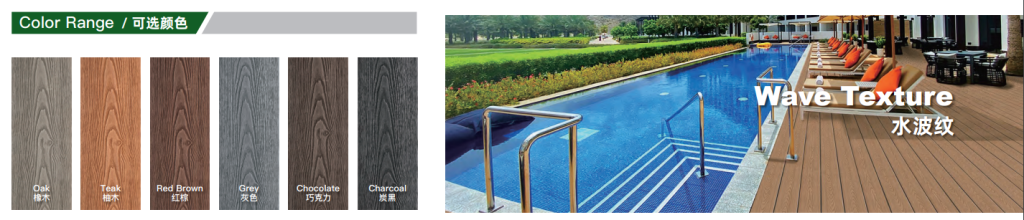
Design Ideas for Composite Decking Around Swimming Pools
One of the reasons composite decking has become popular is its design flexibility. Modern outdoor spaces are no longer limited to simple rectangular decks. Designers can create customized pool environments using different colors, layouts, and accessories.
1. Modern Minimalist Pool Designs
Minimalist pool designs often focus on clean lines, simple shapes, and neutral colors. Composite decking works well with this style because it can create a smooth transition between the pool, garden, and outdoor living areas.
Popular design elements include:
- Large open deck areas
- Simple geometric patterns
- Matching outdoor furniture
- Integrated lighting systems
A modern composite pool deck can create a premium outdoor atmosphere suitable for both private homes and commercial properties.
2. Natural Landscape Pool Designs
For gardens, resorts, and outdoor recreational areas, many designers prefer a natural appearance. Composite decking with realistic wood textures can blend well with plants, stone features, and landscape elements.
This design approach creates a relaxing environment while avoiding many of the maintenance problems associated with real wood.
Benefits include:
- Natural visual appeal
- Long-lasting appearance
- Reduced maintenance work
- Better resistance to outdoor conditions
This makes composite decking a practical choice for creating comfortable outdoor spaces that remain attractive over time.
3. Multi-Level Pool Deck Designs
Large outdoor areas can benefit from multi-level decking designs. Different levels can separate functional zones such as:
- Swimming areas
- Lounge spaces
- Dining areas
- Outdoor entertainment sections
Composite decking can be adapted for different elevations and layouts, allowing designers to create more dynamic outdoor environments.
Multi-level designs are especially useful for hotels, resorts, and luxury residential projects where outdoor space needs to serve multiple purposes.
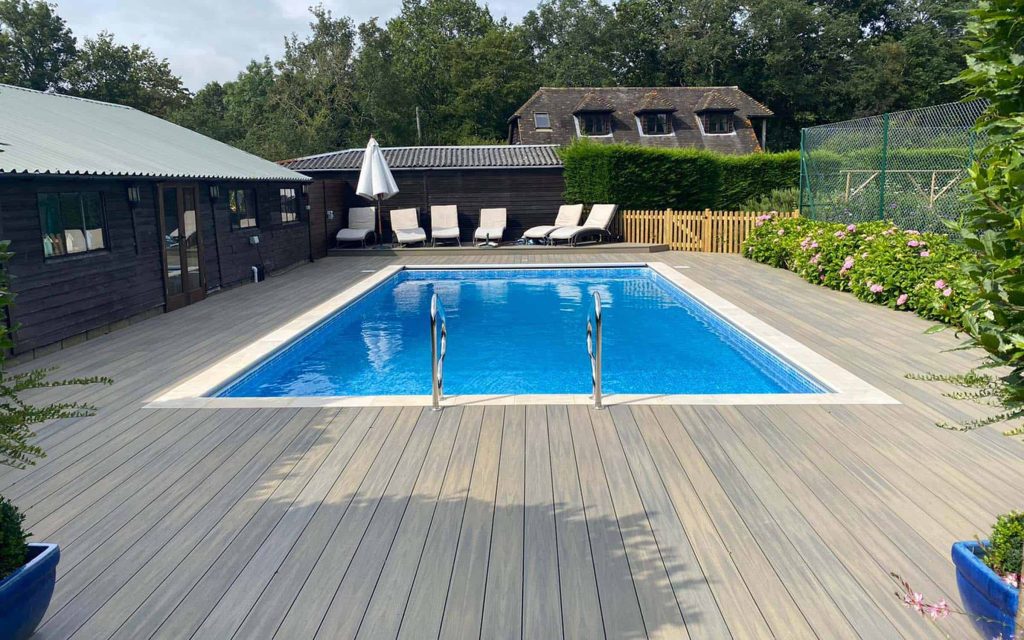
Applications of Composite Decking for Pool Areas
Composite decking is suitable for many different outdoor applications beyond private swimming pools.
Residential Swimming Pools
For homeowners, composite decking provides a comfortable and attractive area for:
- Family activities
- Outdoor relaxation
- Poolside dining
- Entertaining guests
Its low maintenance characteristics make it especially suitable for homeowners who want a beautiful outdoor area without frequent upkeep.
Hotels and Resorts
Hospitality projects require materials that combine appearance, durability, and easy maintenance. Pool areas in hotels and resorts often experience heavy traffic, making material selection especially important.
Composite decking can help create attractive outdoor environments while reducing long-term maintenance costs.
Commercial Recreation Areas
Public pools, fitness centers, and recreational facilities require safe and durable surfaces. Composite decking can provide a reliable solution for high-use outdoor spaces where safety and performance are priorities.
Conclusion
Selecting the best composite decking for pool areas requires careful consideration of safety, durability, design, and maintenance requirements. Compared with traditional materials, composite decking provides excellent moisture resistance, improved stability, attractive appearance, and easier maintenance, making it a practical choice for modern swimming pool environments.
Whether used for residential pools, luxury resorts, commercial recreation facilities, or outdoor entertainment spaces, composite decking can create a comfortable and long-lasting surface that enhances the overall value of an outdoor area.
As demand for durable and sustainable outdoor solutions continues to grow, professional manufacturers such as Hosung WPC provide high-quality composite decking solutions designed to meet the needs of global customers seeking reliable performance for pool and outdoor applications.