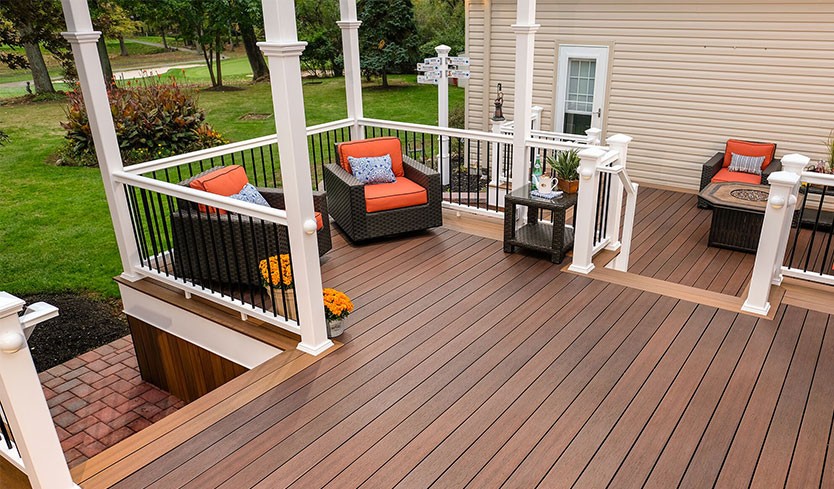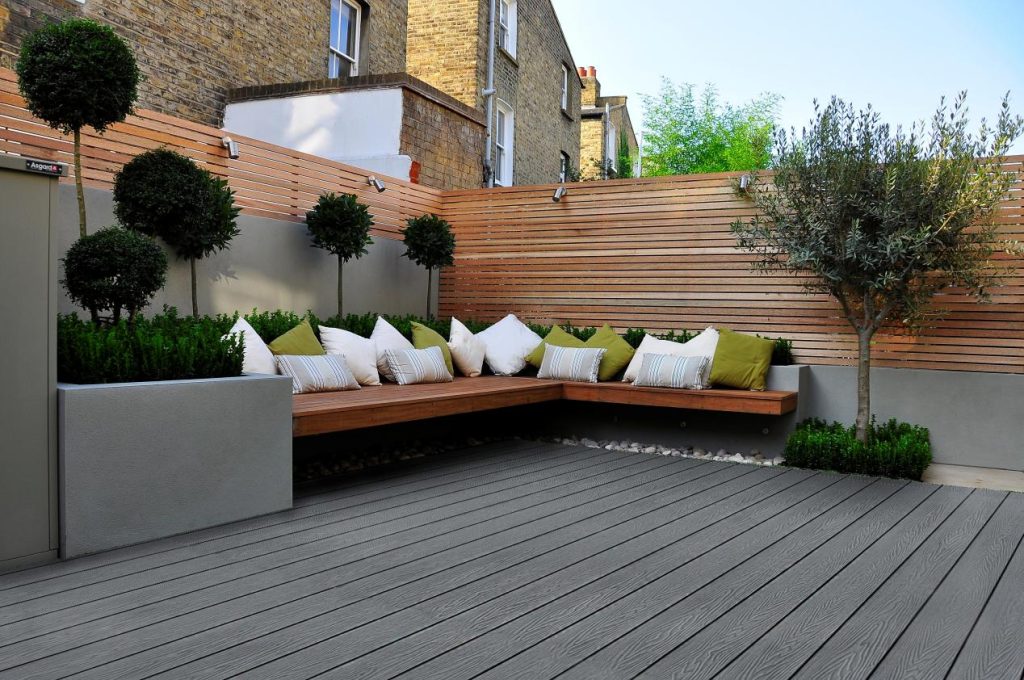
Outdoor steps face concentrated foot traffic, moisture, temperature changes, and repeated wear, making the choice of the best composite decking for steps especially important. The right decking should offer strength, slip resistance, weather durability, low maintenance, and a secure, attractive finish. Composite decking is a popular option because it resists rot, splintering, moisture, and everyday wear better than traditional timber. However, board construction, thickness, surface texture, support spacing, and stair design should all be considered before installation.
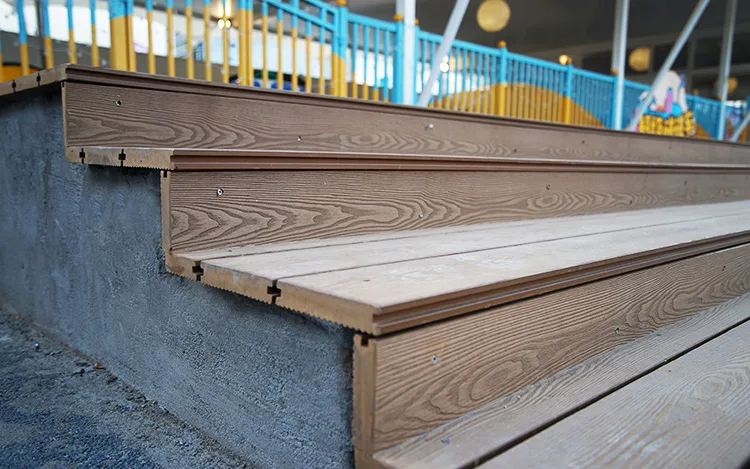
Table of Contents
Why Choose Composite Decking for Steps?
Steps are often exposed to more demanding conditions than the main deck. People repeatedly walk across the same tread, place weight near the front edge, and track dirt and moisture onto the surface. Traditional timber steps can eventually develop problems such as cracking, splintering, warping, rotting, and fading if they are not maintained properly.
Composite decking offers several advantages for stair applications.
1. Excellent Weather Resistance
Composite decking is designed for outdoor environments. A quality board can resist moisture and weather exposure better than untreated timber. This is particularly valuable for steps because horizontal treads can collect rainwater, while the front edges are exposed to repeated wetting and drying.
In areas with frequent rain or high humidity, selecting a board with good moisture resistance can help maintain long-term performance.
2. Low Maintenance
One of the biggest reasons homeowners choose composite decking is its relatively low maintenance requirement. Unlike timber, composite decking generally does not require regular staining, painting, or sealing to maintain its basic appearance.
Routine cleaning with appropriate outdoor cleaning methods can remove dirt, leaves, and other debris from stair surfaces.
3. Splinter-Free Surface
Wooden steps can develop splinters as the material ages. This can be particularly inconvenient when people walk barefoot around gardens, patios, swimming pools, and outdoor entertainment areas.
Composite decking is manufactured as a consistent engineered material, providing a smooth or textured surface without the typical splintering associated with deteriorating timber.
4. Consistent Appearance
Composite decking is available in many colors, textures, and surface patterns. This makes it possible to coordinate stairs with the main deck, fencing, landscaping, patio, or exterior walls.
For a modern appearance, homeowners may choose neutral gray, charcoal, or dark tones. Natural brown and wood-inspired finishes can create a more traditional outdoor environment.
5. Long-Term Durability
Because stairs experience concentrated loads, durability is particularly important. A properly selected composite board combined with adequate structural support can provide a stable and long-lasting stair surface. The supporting frame remains critical, because composite boards themselves should not be treated as a substitute for structural stair framing.
What Is the Best Composite Decking for Steps?
There is no single composite board that is perfect for every staircase. The best composite decking for steps depends on traffic level, climate, stair design, budget, and installation requirements.
In general, the most suitable option should have the following characteristics:
- Strong and stable construction
- Appropriate thickness for stair applications
- Good slip resistance
- Excellent resistance to moisture
- Strong UV resistance
- Durable surface texture
- Compatibility with the stair framing system
- Suitable fasteners and accessories
- A finish that complements the surrounding deck
For busy residential stairs or commercial applications, a dense, durable board is generally preferable. For lightly used garden steps, a lighter construction may be sufficient if the supporting structure is appropriately designed.
Solid vs. Hollow Composite Decking for Steps
One of the first decisions is whether to use solid or hollow composite boards.
Solid Composite Decking
Solid boards have a dense composite structure throughout the board. They are generally heavier but can provide excellent rigidity and resistance to impact.
They are particularly suitable for:
- Main entrance steps
- High-traffic residential stairs
- Commercial outdoor stairs
- Frequently used garden staircases
- Projects requiring a robust tread surface
The additional material can increase the cost and weight, but the added stability can be valuable for stair applications.
Hollow Composite Decking
Hollow boards contain internal channels that reduce material usage and overall weight. They can be easier to handle and may offer a more economical solution.
However, stair applications require careful attention to support. Hollow boards should not simply be installed over widely spaced supports because insufficient support can result in excessive movement or deflection.
For stairs, always check the board’s installation requirements and recommended support arrangement before choosing a hollow profile.
Capped Composite Decking for Steps
Capped composite decking has an additional protective polymer layer around the composite core. This protective surface can improve resistance to staining, moisture, fading, and everyday wear.
For outdoor steps, capped decking can be particularly attractive because stairs are exposed to frequent foot traffic and environmental contamination.
A capped surface can also make routine cleaning easier. However, the specific performance of a capped board depends on its construction, surface texture, and manufacturing quality.
When evaluating capped decking for steps, look beyond the word “capped.” Consider the entire board structure and whether the product has been designed or tested for stair applications.
Why Slip Resistance Matters
Slip resistance should be one of the highest priorities when choosing the best composite decking for steps.
A flat deck may become uncomfortable when wet, but a wet staircase can present a much greater safety concern. Rain, dew, pool water, mud, and snow can all reduce traction.
Look for features such as:
- Textured surfaces
- Embossed wood-grain patterns
- Anti-slip finishes
- Grooved surfaces where appropriate
- Suitable stair nosing
- High-contrast tread edges
A textured surface can help improve traction, but the actual slip performance should be evaluated using the manufacturer’s technical information and, where relevant, applicable testing standards. Composite boards can differ considerably in wet-condition performance.
For poolside or frequently wet stairs, slip resistance should take priority over purely decorative considerations.
Choose the Right Thickness
Thickness is another important factor.
Stair treads experience downward force from every person using the stairs. If the board is too thin or the support structure is inadequate, the tread may flex more than expected.
For this reason, stair decking may require a more robust board specification than standard flat decking. Some manufacturers recommend thicker stair boards or closer structural support specifically for stair applications.
However, thickness alone does not determine strength. The board’s density, profile, material composition, span, and supporting structure all influence performance.
Before purchasing, check the technical specifications and installation requirements rather than choosing a board based only on thickness.
Stair Framing and Support
Even the best composite decking for steps will not perform properly if the underlying structure is poorly designed.
Composite decking is generally a decking surface material rather than the primary structural component of a staircase. The stringers, framing, blocking, and connections must provide adequate support.
Support spacing is particularly important. Composite boards can be more flexible than some timber products, so excessive spacing may cause movement or deflection.
Many composite decking systems use closer support spacing for stairs than for standard horizontal decking. For example, some installation guidance recommends stair stringers at approximately 12 inches on center or closer, depending on the tread material and system. The exact requirement should always come from the relevant product installation instructions and local building requirements.
Before installation:
- Inspect the existing stair frame.
- Check stringer spacing.
- Confirm the frame is level and stable.
- Add blocking where required.
- Verify the tread support meets the decking specifications.
- Confirm fasteners are compatible with the decking material.
A strong frame provides the foundation for a stable stair surface.
Consider Stair Nosing
The front edge of a stair tread receives considerable wear. It is also the point where people visually identify the edge of each step.
Stair nosing can provide several advantages:
- Protects the leading edge
- Creates a finished appearance
- Helps define the tread
- Can improve edge visibility
- May contribute to traction depending on the design
Some composite decking systems include matching nosing profiles or dedicated stair boards. If a project requires a seamless appearance, using compatible components can make the finished staircase look more professional.
For stairs used by children, older adults, or people with limited visibility, a contrasting tread edge can also help make each step easier to identify.
Best Composite Decking for Different Applications
The ideal material can vary according to where the stairs are installed.
Residential Garden Steps
For ordinary garden steps, a durable WPC or composite board with a textured surface can provide a good balance of appearance, performance, and maintenance.
The design can match the main decking or deliberately contrast with it.
Poolside Steps
Poolside stairs require extra attention to moisture and traction. Choose a decking surface designed for wet environments and prioritize slip resistance.
A textured finish and clearly visible stair edges can help create a safer design.
High-Traffic Entrance Steps
Front entrance stairs experience repeated daily use. A dense, durable composite board is generally preferable, particularly when the stairs are exposed to rain, snow, dirt, and direct sunlight.
A darker contrasting nosing can also make the edge of each tread more visible.
Commercial Outdoor Stairs
Commercial stairs may experience substantially higher traffic than residential stairs. In these applications, material durability, structural support, slip resistance, maintenance requirements, and applicable building regulations become even more important.
A premium composite system may provide better long-term value when maintenance and replacement costs are considered.
Color and Design Ideas for Composite Steps
The best composite decking for steps should perform well while also contributing to the overall appearance of the outdoor space.
Matching Steps and Deck
Using the same color for the deck and stairs creates a unified appearance. This is especially effective for minimalist outdoor designs.
Contrasting Treads
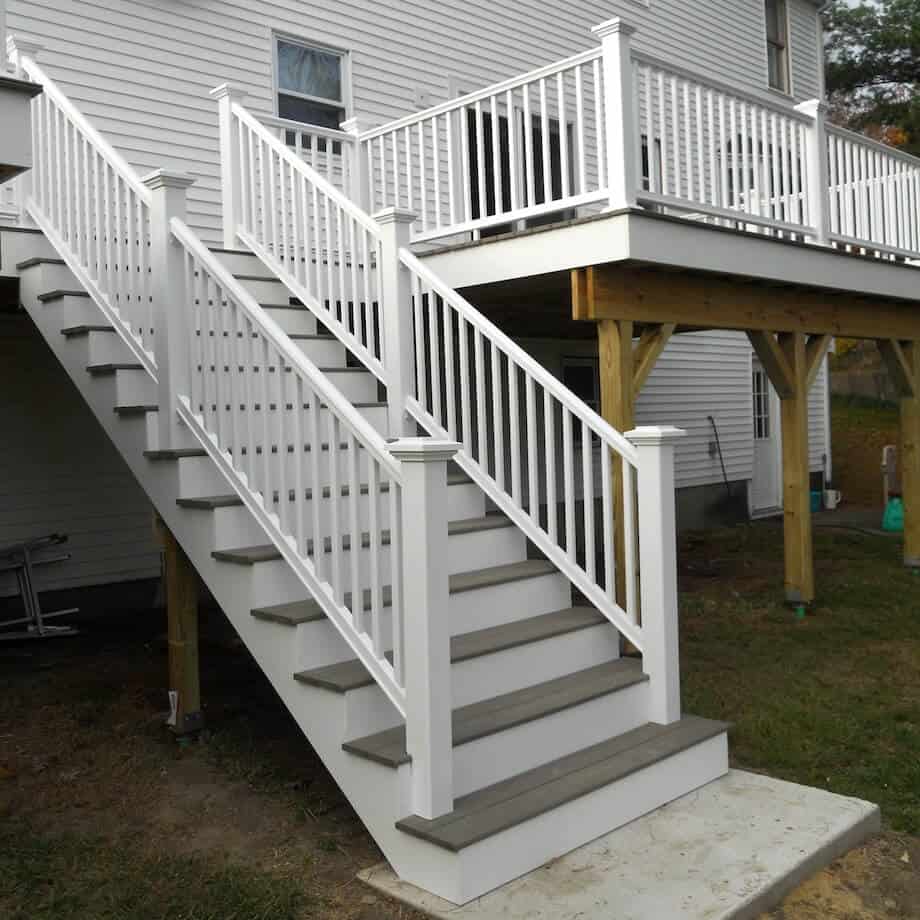
A contrasting stair color can visually separate the steps from the main deck. For example, a darker tread against a lighter deck can create a strong architectural effect.
Dark Treads With Light Risers
This design creates visual depth and can make the staircase look more structured. It works particularly well in contemporary gardens.
Wood-Look Steps
Wood-inspired textures provide the appearance of natural timber while retaining the low-maintenance characteristics of composite decking.
Two-Tone Staircases
Using one color for the treads and another for risers or fascia boards can create a distinctive appearance without requiring complicated construction.
Installation Tips for Composite Decking Steps
Proper installation is just as important as material selection.
First, make sure the stair frame is structurally sound. Composite boards should be installed over an appropriate support structure rather than used to compensate for weak or incorrectly spaced framing.
Next, follow the recommended spacing requirements for the specific board. Composite decking can expand and contract with temperature changes, so appropriate expansion and drainage gaps are necessary.
Use compatible screws, clips, or fastening systems. Incorrect fasteners may damage the board or create an unattractive finish.
During installation, make sure:
- Every tread is level.
- The front edges are properly aligned.
- Fasteners are securely installed.
- Required expansion gaps are maintained.
- Water can drain effectively.
- Stair nosing is securely fixed.
- Railings comply with applicable regulations.
- The completed staircase does not have loose or unstable boards.
Do not assume that standard flat-deck installation instructions automatically apply to stairs. Stair treads can have different structural requirements, and some systems specify closer stringer spacing than ordinary decking.
Final Guide to Choosing the Best Composite Decking for Steps
The best composite decking for steps should combine durability, safety, structural compatibility, weather resistance, and attractive design.
For most outdoor stair projects, prioritize a board with:
- Strong construction
- Appropriate thickness
- Good wet-weather traction
- Reliable moisture resistance
- UV stability
- A durable surface texture
- Compatible stair nosing
- Suitable fastening options
- Proper structural support
Solid or high-density boards can be appropriate for heavily used stairs, while hollow profiles may work for lighter residential applications when they are properly supported. Capped composite decking can be a strong option where resistance to moisture, staining, and UV exposure is especially important.
Most importantly, the decking board should be considered together with the entire stair system. Correct stringer spacing, secure fastening, appropriate expansion gaps, drainage, nosing, and compliance with local building requirements all contribute to a safe and durable result.
For buyers, contractors, architects, and distributors looking for a reliable composite decking solution, Hosung WPC offers composite decking products designed for modern outdoor applications and can be considered when evaluating suppliers for decking and stair projects.