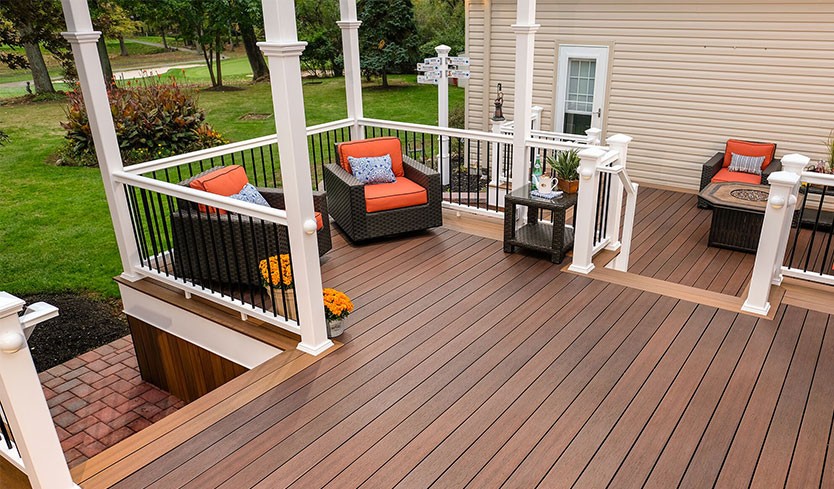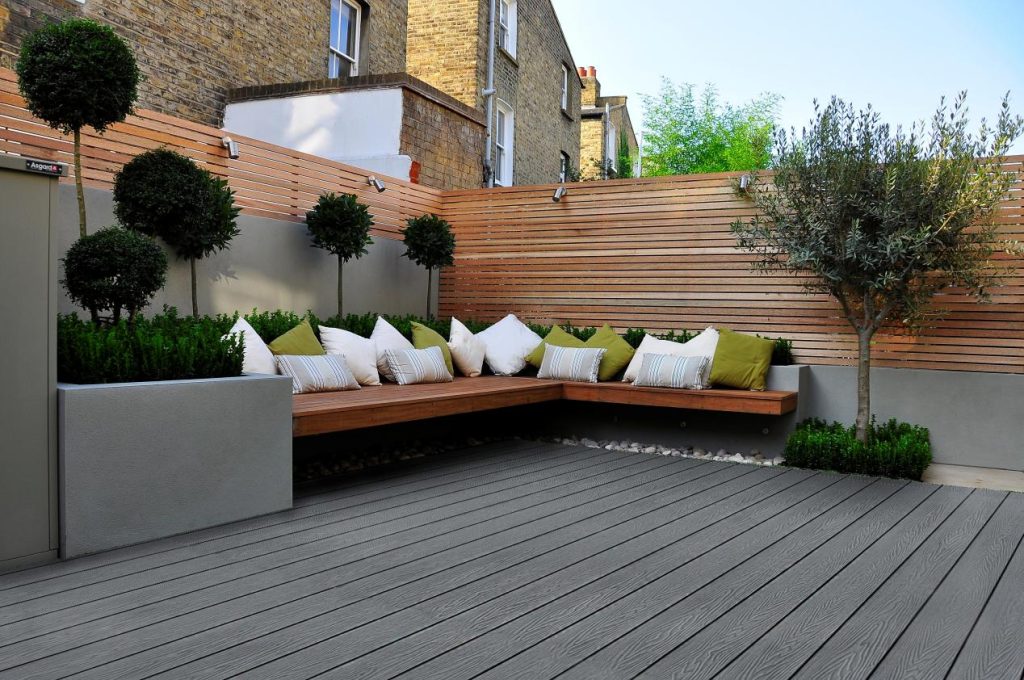
Choosing the right decking material is an important decision for homeowners, contractors, architects, and commercial property developers. A deck needs to look attractive, withstand outdoor conditions, provide a comfortable surface, and remain reliable for many years. With so many decking products available, one common question is: which is the best composite decking material? There is no single material that is perfect for every project. However, modern composite decking has become one of the most popular alternatives to traditional wood because it combines durability, low maintenance, weather resistance, and attractive appearance. The best choice depends on the material composition, manufacturing quality, intended application, climate, budget, and desired appearance.
Table of Contents
Which Is the Best Composite Decking Material?
For many outdoor applications, high-quality wood-plastic composite decking is one of the best overall choices because it offers a practical balance between appearance, durability, maintenance requirements, and cost.
However, the best material depends on what you prioritize.
If moisture resistance is the primary concern, a plastic-rich or capped composite product may be preferable. If natural appearance and a wood-like texture are more important, a wood-plastic composite with a carefully designed surface may be a better choice. For projects requiring excellent dimensional stability and resistance to harsh environments, premium capped composite decking can provide additional protection.
Therefore, instead of choosing a decking product based only on price or appearance, buyers should evaluate several important characteristics.
1. Material Composition
The material formulation is one of the most important factors affecting composite decking performance.
Wood-plastic composite decking generally combines wood fibers with thermoplastic materials. Different plastics provide different properties. Polyethylene-based composites are widely used because of their balance of flexibility, durability, and processing characteristics. Polypropylene can provide higher stiffness and temperature resistance in certain formulations, while PVC-based decking offers excellent resistance to moisture and biological deterioration.
The ratio between wood fibers and polymer also matters. A higher wood content may create a more natural appearance, but it can require careful formulation and processing to achieve good moisture resistance. A higher polymer content can improve water resistance and reduce moisture-related problems.
For this reason, buyers should ask manufacturers about the actual material composition rather than relying only on the general term “composite decking.”
2. Moisture and Water Resistance
Outdoor decks are constantly exposed to rain, humidity, condensation, and sometimes standing water. Traditional wood can absorb moisture, which may contribute to swelling, cracking, warping, mold, and decay.
One of the major advantages of composite decking is its resistance to moisture. High-quality composite materials absorb significantly less water than conventional untreated wood.
Capped composite decking can provide another level of protection because its outer protective layer helps prevent moisture from reaching the core. This can be particularly useful around swimming pools, gardens, coastal properties, and other environments where water exposure is frequent.
When comparing products, consider water absorption, edge protection, surface structure, and whether the product has a protective cap.
3. Durability and Service Life
A good decking material should withstand years of foot traffic and outdoor exposure without losing its structural performance.
Composite decking can provide excellent resistance to common outdoor problems such as cracking, splintering, rotting, and insect damage. However, durability varies considerably between manufacturers and product grades.
The quality of the raw materials, extrusion process, formulation, profile design, and surface treatment all influence the final product.
For commercial decks, balconies, walkways, restaurants, hotels, and other high-traffic areas, buyers should pay particular attention to load-bearing performance and wear resistance. A lower-cost product may not always provide the best long-term value if it requires early replacement.
4. UV and Color Resistance
Because decks are exposed to direct sunlight, ultraviolet radiation is another important consideration.
Poor-quality decking may experience noticeable fading or color changes after prolonged UV exposure. High-quality composite decking typically uses UV stabilizers, pigments, protective layers, or specialized surface treatments to improve color retention.
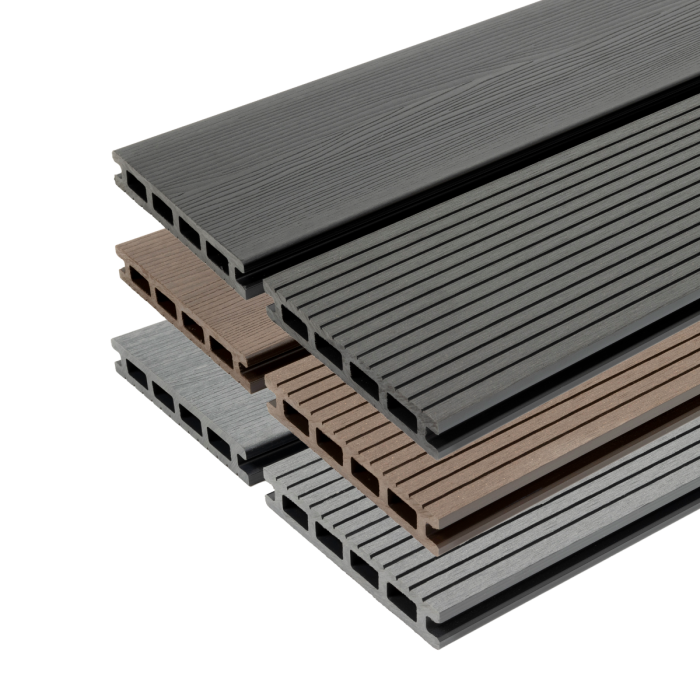
Popular colors include brown, gray, black, and natural wood tones. Some manufacturers also offer multi-tone surfaces designed to imitate the appearance of natural timber.
If maintaining a consistent appearance is important, ask about the product’s UV resistance and expected color performance before purchasing.
5. Maintenance Requirements
One of the biggest reasons people choose composite decking is its relatively low maintenance.
Traditional timber decking may require regular staining, sealing, painting, sanding, or replacement of damaged boards. Composite decking generally does not require the same level of routine treatment.
Normal maintenance usually involves removing dirt, leaves, and other debris and cleaning the surface when necessary. However, composite decking is not completely maintenance-free. Grease, food stains, algae, and accumulated dirt should still be cleaned properly.
For homeowners and commercial property owners looking to reduce long-term maintenance work, composite decking can offer significant convenience.
6. Slip Resistance and Surface Design
Safety is particularly important for decks installed around swimming pools, gardens, balconies, restaurants, and public spaces.
The surface texture of composite decking can influence traction when the surface is wet. Different manufacturers use different embossing patterns and surface finishes to improve grip while maintaining a natural appearance.
When selecting decking for wet environments, do not focus only on color and appearance. Consider the surface texture, drainage design, and slip-resistance characteristics of the product.
7. Solid vs. Hollow Composite Decking
Composite decking is commonly available in solid and hollow profiles.
Solid boards are generally heavier and can provide strong structural performance. They may be suitable for demanding applications where strength and impact resistance are important.
Hollow boards contain internal cavities that reduce material consumption and overall weight. They can be easier to handle and may provide an economical solution for some residential or decorative applications.
Neither structure is automatically the best. The appropriate option depends on installation conditions, span requirements, supporting structure, expected loads, and project budget.
8. Appearance and Wood-Like Texture
For many buyers, appearance is nearly as important as performance.
Modern composite decking can reproduce the visual characteristics of natural wood through embossed grain patterns, realistic colors, multi-tone finishes, and matte surfaces.
Compared with older composite products, modern manufacturing technology allows manufacturers to create more realistic wood textures and consistent surface finishes.
For residential gardens, terraces, balconies, and hospitality projects, choosing the right color and texture can significantly affect the overall appearance of the outdoor space.
9. Environmental Considerations
Environmental performance is another factor increasingly considered when selecting decking materials.
Some composite decking products use recycled plastics and reclaimed wood fibers, helping reduce the need for virgin raw materials. Their long service life can also reduce the frequency of replacement.
However, “composite” does not automatically mean environmentally friendly. Buyers should investigate the manufacturer’s raw materials, recycled content, production processes, product lifespan, and end-of-life options.
If sustainability is a major project requirement, request specific information and certifications from the supplier rather than relying on general marketing claims.
How to Choose the Best Composite Decking
When comparing composite decking materials, consider the following factors:
- Material composition and polymer type
- Wood-to-plastic ratio
- Water and moisture resistance
- UV and color stability
- Impact and wear resistance
- Slip resistance
- Solid or hollow construction
- Surface texture and appearance
- Installation requirements
- Expected service life
- Maintenance requirements
- Environmental characteristics
- Manufacturer quality and technical support
- Total cost over the product’s lifetime
Price should not be the only consideration. A slightly more expensive decking product may provide better long-term value if it offers greater durability, lower maintenance requirements, and better resistance to outdoor conditions.
Where Is Composite Decking Commonly Used?
Composite decking is suitable for many residential and commercial applications. It is commonly used for garden decks, patios, balconies, terraces, pool surrounds, rooftop areas, walkways, restaurants, hotels, resorts, and outdoor public spaces.
For areas exposed to heavy moisture or intense sunlight, selecting a product specifically engineered for those conditions is especially important.
Final Thoughts
So, which is the best composite decking material? For many outdoor projects, high-quality wood-plastic composite decking offers an excellent combination of durability, moisture resistance, low maintenance, appearance, and long-term value.
However, the best choice is not simply the product with the highest price or the most attractive appearance. Buyers should evaluate the complete material formulation, manufacturing quality, surface technology, structural design, weather resistance, and application requirements.
By comparing these factors carefully, homeowners, contractors, architects, and distributors can select composite decking that provides reliable outdoor performance while delivering the appearance and maintenance advantages they expect.