Building façade renovation projects often require materials that combine the appearance of natural wood with better resistance to outdoor conditions. In Spain, where buildings may be exposed to strong sunlight, seasonal temperature changes, humidity, rain, and coastal air, selecting suitable exterior materials is particularly important. For projects that require the visual effect of traditional wooden structural or decorative elements, wpc beams can provide a practical alternative to conventional timber.
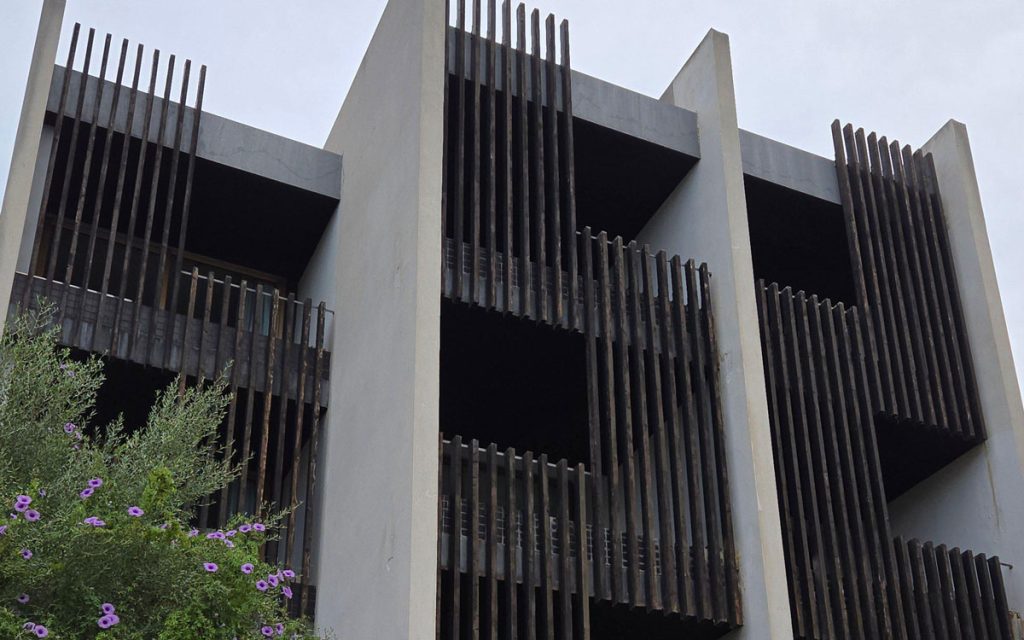
Table of Contents
WPC, or wood plastic composite, is produced by combining wood-based fibers or flour with polymer materials and additives. The resulting material can reproduce the visual characteristics of wood while offering improved resistance to moisture, insects, cracking, and routine outdoor exposure. For façade renovation, WPC beams can be used as decorative horizontal elements, architectural framing components, façade projections, pergola structures, and other exterior applications.
A recent building renovation requirement from Spain highlights the demand for large-format WPC beams measuring 5,200 mm × 135 mm × 70 mm. This type of specification demonstrates why custom dimensions, surface appearance, structural design, and long-term outdoor performance are important considerations when purchasing WPC beams for commercial or architectural projects.
Why WPC Beams Are Suitable for Façade Renovation
Traditional wooden beams can create a warm and natural architectural appearance, but maintaining real timber on an exterior façade can require regular treatment and inspection. Exposure to ultraviolet radiation, rainwater, humidity, insects, and temperature fluctuations can gradually affect untreated or inadequately protected wood.
WPC beams are designed to address several of these challenges. Their composite construction can provide greater dimensional stability and resistance to common outdoor environmental factors compared with many conventional wood products.
For façade renovation, the main advantages of wpc beams include:
- Wood-like appearance
- Good resistance to moisture
- Resistance to insects and biological deterioration
- Reduced risk of splintering compared with natural wood
- Low routine maintenance requirements
- Consistent dimensions and appearance
- Availability in different colors and surface finishes
- Customizable dimensions for architectural applications
- Suitability for exterior decorative applications
These characteristics make WPC an attractive choice when an architect, contractor, developer, or building owner wants to preserve the visual style of wooden façade elements while reducing maintenance requirements.
WPC Beams Can Reproduce the Appearance of Natural Wood
One of the main reasons architects select WPC beams is their ability to reproduce the appearance of timber.
Exterior renovation projects frequently aim to maintain the original architectural character of a building. Replacing existing wooden elements with ordinary metal, concrete, or smooth plastic profiles may change the visual appearance significantly. WPC provides another option by combining a wood-inspired texture with the consistency of a manufactured composite material.
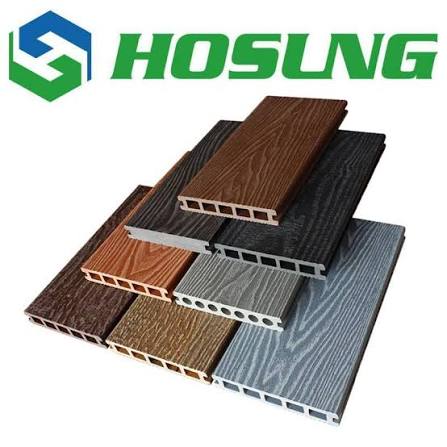
Depending on the production process, WPC beams can be manufactured with different surface textures, including wood grain patterns and brushed finishes. Brown, dark brown, grey, teak-style, and other wood-inspired colors can also be produced according to project requirements.
For a façade renovation, the surface finish is especially important because the beam may be visible from a considerable distance. A realistic wood grain and consistent color can help the replacement element integrate with the existing architectural design.
Large WPC Beam Dimensions for Architectural Applications
Not every façade renovation can use standard WPC profiles. Large buildings and commercial architectural projects may require long and relatively deep beams to match existing wooden elements.
A specification of 5,200 mm × 135 mm × 70 mm represents a substantial WPC beam requirement. The length is particularly important because long façade elements can reduce the number of joints and create a cleaner visual appearance.
When purchasing large-format wpc beams, buyers should not evaluate the product based on dimensions alone. The WPC manufacturer should also consider the internal structure, material formulation, extrusion process, reinforcement requirements, weight, installation method, and expected application.
For long beams, dimensional consistency is essential. If different pieces have significant variations in length, width, thickness, or straightness, installation can become more difficult. Consistent extrusion and quality control can therefore have a direct effect on the efficiency of façade installation.
Solid or Hollow WPC Beams?
The internal structure of a WPC beam can influence its weight, strength, cost, and installation requirements. Depending on the application, manufacturers may produce solid profiles or hollow structures.
A solid WPC beam generally provides a denser cross-section and may be selected when a heavier, more substantial appearance is required. However, it can also have greater weight and material consumption.
Hollow WPC beams can reduce weight and material usage while maintaining an appropriate external profile. Internal cavities can also make certain installation methods easier. However, the design of the hollow structure needs to be appropriate for the intended application.
For a façade renovation project, the choice between solid and hollow construction should be determined by the actual function of the beam. A purely decorative façade beam may have different requirements from a component that supports another architectural element.
Before placing a large-volume order, buyers should provide the manufacturer with information about the installation method, support spacing, expected loads, environmental conditions, and whether the beam is decorative or functional.
What to Consider When Ordering WPC Beams
Architects, contractors, and building-material distributors should evaluate several factors before selecting wpc beams for exterior projects.
1. Beam Dimensions
Dimensions should be confirmed precisely before production. For custom projects, the required length, width, and thickness should be included in the inquiry.
For example, a specification of 5,200 mm × 135 mm × 70 mm should be confirmed with the manufacturer before mass production. Buyers should also clarify whether these measurements refer to finished dimensions or nominal extrusion dimensions.
2. Surface Texture
The surface appearance can significantly affect the final façade. Wood grain, brushed texture, smooth surfaces, and other finishes can provide different architectural effects.
For renovation projects where existing timber is being replaced, a realistic wood grain is often preferred because it helps maintain the original appearance.
3. Color
WPC beams are available in a range of wood-inspired colors. The appropriate color should be selected according to the building’s façade, existing materials, and architectural design.
For large renovation projects, color consistency between different production batches is also important. A manufacturer should have suitable production and quality-control procedures to maintain visual consistency.
4. Outdoor Durability
Exterior beams are continuously exposed to environmental conditions. Buyers should ask about the material’s resistance to moisture, ultraviolet exposure, temperature changes, and general outdoor weathering.
The specific performance of WPC depends on the formulation, polymer content, wood content, additives, extrusion technology, and surface treatment. Therefore, buyers should request technical specifications from the manufacturer rather than relying only on general WPC descriptions.
5. Installation Method
The installation method should be considered before the beam is produced. Different façade systems may use mechanical fasteners, brackets, support frames, screws, concealed fixing systems, or other methods.
The beam profile may need to accommodate specific fixing requirements. In some cases, internal reinforcement or special machining may also be necessary.
Providing the manufacturer with installation drawings can help determine whether a standard profile or custom profile is more appropriate.
WPC Beams for Long-Term Exterior Use
Spain has many buildings with exterior architectural elements inspired by traditional wood construction. However, real wood requires ongoing maintenance to preserve its appearance and performance.
Depending on the species and treatment, natural timber can require periodic staining, sealing, painting, or protective treatment. Cracking, warping, moisture absorption, and insect activity can also become maintenance concerns.
WPC beams can reduce some of these maintenance requirements because the composite material is designed for improved resistance to common exterior conditions.
This does not mean that WPC is completely maintenance-free. Dust, airborne pollution, algae, and other contaminants can accumulate on exterior surfaces over time. Regular cleaning may still be necessary, particularly on façades exposed to traffic, humidity, or coastal environments.
However, routine cleaning is generally simpler than repeatedly refinishing natural timber.
Why Custom WPC Beams Matter for Renovation Projects
Renovation projects often have to work around existing architectural dimensions. Unlike new construction, where the designer can select dimensions based on available standard profiles, renovation work may require replacement components that match an existing structure.
This is one reason custom wpc beams are valuable for façade renovation.
A manufacturer capable of producing customized WPC profiles can potentially adjust:
- Length
- Width
- Thickness
- Internal structure
- Surface texture
- Color
- Weight
- Reinforcement configuration
- Machining and fixing details
For a requirement involving 5,200 mm long beams, custom production may be more suitable than attempting to combine several shorter standard profiles.
Longer continuous beams can provide a more uniform appearance and reduce visible joints. Nevertheless, transportation, handling, building access, and installation conditions must also be considered when selecting very long profiles.
WPC Beams Compared with Traditional Timber
Natural wood remains an important architectural material, but WPC can offer several advantages for projects where maintenance and outdoor durability are major considerations.
Natural timber provides genuine wood grain, natural variation, and a traditional appearance. However, it may require more frequent maintenance depending on the species and environmental conditions.
WPC provides a more consistent manufactured appearance. Its color and texture can be controlled during production, and its composite construction can improve resistance to moisture and insects.
For façade renovation, the decision should therefore be based on the project’s priorities. If the objective is to retain a wood-inspired architectural appearance while reducing maintenance, WPC can be a suitable alternative.
Quality Control Is Important for Large WPC Profiles
Large-format beams require careful quality control throughout the manufacturing process.
During extrusion, temperature, material formulation, cooling, dimensional control, and surface treatment can influence the final product. Inconsistent processing may result in dimensional variation, surface defects, color differences, or deformation.
For long WPC beams, straightness is particularly important. Even a relatively small deformation can become noticeable when the beam is several meters long.
A professional manufacturer should therefore inspect finished profiles for dimensions, appearance, surface quality, straightness, and other project-specific requirements.
For custom orders, buyers can also request samples or production prototypes before approving mass production. This can help confirm the color, texture, dimensions, and overall appearance before manufacturing the complete quantity.
How to Select a WPC Beam Manufacturer
For international architectural projects, selecting the right manufacturer is as important as selecting the material itself.
Buyers should consider whether the manufacturer has experience with custom WPC extrusion, large-format profiles, exterior architectural applications, and international orders.
It is also useful to request the following information before confirming an order:
- Product dimensions and tolerances
- Material composition
- Available colors and textures
- Outdoor durability information
- Weight per meter
- Internal structure drawings
- Installation recommendations
- Packaging method
- Production capacity
- Customization capabilities
For large renovation projects, manufacturers should also be able to communicate clearly about production lead time, packaging, loading, and transportation requirements.
WPC Beams for Commercial and Residential Architecture
Although façade renovation is an important application, wpc beams can also be used in many other architectural environments.
Potential applications include:
- Building façades
- Exterior decorative framing
- Pergolas
- Garden structures
- Balconies
- Terraces
- Outdoor ceilings
- Commercial buildings
- Hospitality projects
- Residential developments
- Landscape structures
- Architectural screening systems
Their wood-inspired appearance makes them suitable for projects that want a warm, natural visual effect without relying entirely on conventional timber.
For commercial buildings, WPC beams can also contribute to a consistent architectural identity. Multiple profiles can be produced with matching colors and textures, allowing different façade elements to maintain a unified appearance.
Why Spain Is an Important Market for WPC Exterior Materials
The Spanish construction and renovation market includes a wide variety of residential, commercial, hospitality, and public buildings. Exterior materials must often combine visual appeal with resistance to demanding environmental conditions.
This creates opportunities for WPC products in façade renovation and outdoor architectural applications.
For renovation contractors and architectural-material distributors in Spain, customized WPC beams can be especially useful when existing timber elements need to be replaced while maintaining a similar appearance.
A suitable WPC solution can combine the visual characteristics required by the architectural design with practical considerations such as durability, dimensional consistency, installation, and maintenance.
Final Considerations When Choosing WPC Beams
The right wpc beams for a façade renovation project should be selected according to more than appearance alone. Dimensions, internal structure, surface finish, color, outdoor performance, installation requirements, and manufacturing capabilities all need to be considered.
For projects requiring large custom profiles such as 5,200 mm × 135 mm × 70 mm, communication between the buyer, architect, contractor, and manufacturer is particularly important. Detailed technical drawings and application information can help the manufacturer determine the appropriate profile construction and production method.
As an alternative to traditional exterior timber, WPC beams can provide a combination of wood-inspired aesthetics, consistent manufacturing, lower routine maintenance, and suitability for outdoor architectural applications. For building façade renovation projects in Spain and other markets, custom WPC profiles can therefore be an effective solution when both appearance and practical outdoor performance are important.