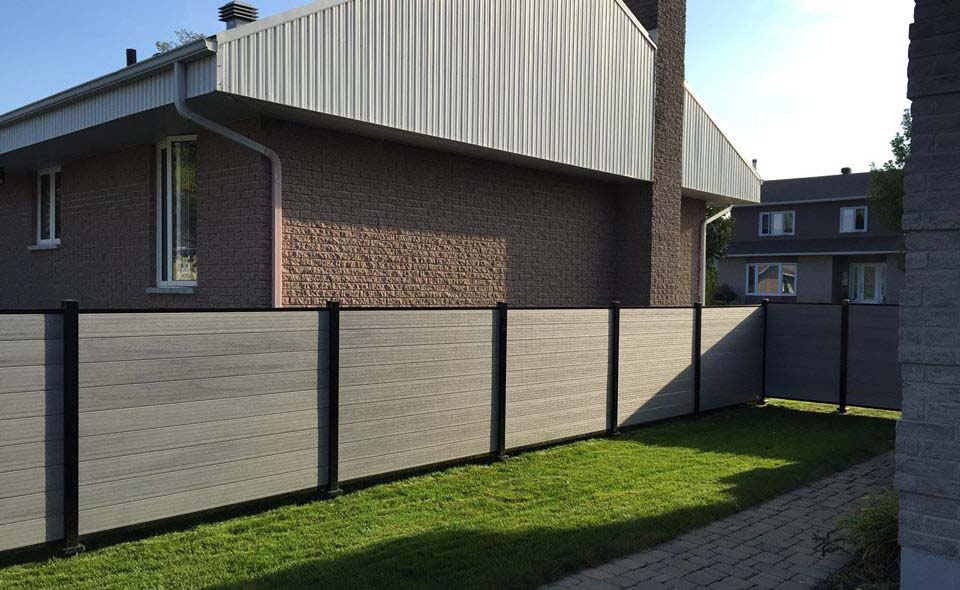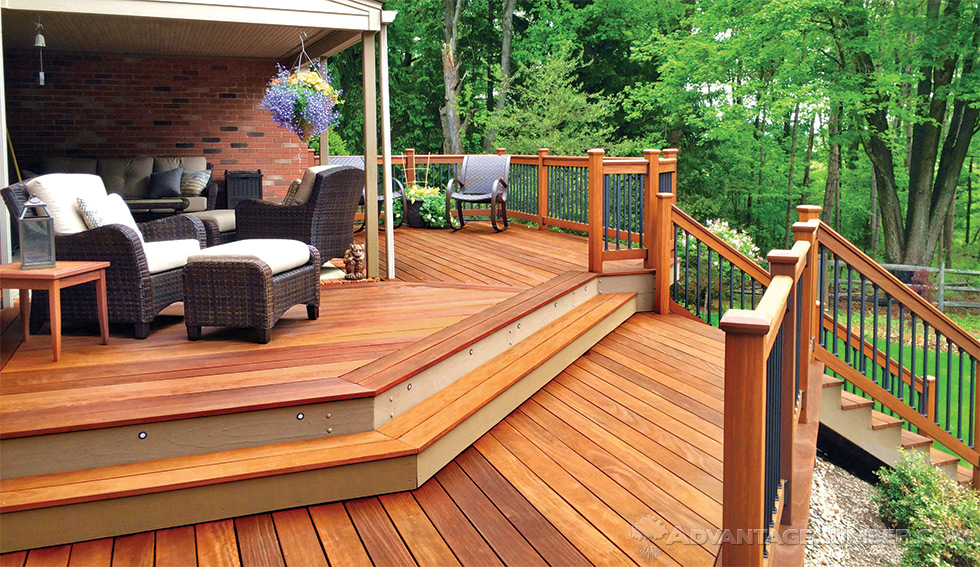
Composite decking has become one of the most in-demand outdoor flooring solutions in the UK, driven by its durability, low maintenance requirements, and modern architectural aesthetics. With increasing rainfall, fluctuating temperatures, and long-term exposure to moisture, UK homeowners require decking systems that can withstand harsh environmental conditions without warping, rotting, or fading. This guide provides a comprehensive, technical breakdown of how to evaluate composite decking systems, which performance factors matter most in the UK climate, and how to choose the most suitable solution for residential and commercial applications.
Table of Contents
Understanding Composite Decking in the UK Context
Composite decking is an engineered outdoor flooring material typically manufactured from a combination of:
- Wood fibres or wood flour
- High-density polyethylene (HDPE) or polypropylene
- Additives such as UV stabilizers, bonding agents, and color pigments
Unlike traditional timber decking, composite materials are designed to minimize moisture absorption and resist biological degradation.
Why it is especially relevant in the UK
The UK climate presents several challenges:
- High annual rainfall levels
- Frequent freeze-thaw cycles in winter
- Extended periods of humidity
- Limited sunlight in certain regions leading to algae growth
These conditions make untreated timber less stable over time. Composite systems are engineered specifically to counter these environmental stressors.
2. Key Performance Criteria for the Best Composite Decking
When evaluating which composite decking performs best in the UK, several technical parameters should be considered.
2.1 Moisture Resistance
The most critical factor is water absorption rate.
High-performance composite boards typically feature:
- Water absorption below 1%
- Fully capped protective polymer shell
- Sealed internal core structure
Lower absorption reduces:
- Swelling
- Rotting
- Mold formation
- Structural deformation
2.2 Slip Resistance (Safety Performance)
Due to frequent rain, slip resistance is essential in UK outdoor spaces.
Important indicators include:
- Surface embossing depth
- Friction coefficient rating (R-rating system)
- Drainage groove design
Premium decking often uses:
- Dual-sided textures (fine grain + deep wood grain)
- Micro-pattern anti-slip embossing
2.3 UV Stability and Colour Retention
Although the UK is not known for intense sunlight, UV degradation still occurs over long periods.
High-quality decking systems include:
- UV inhibitors in polymer matrix
- Co-extruded protective outer shell
- Fade-resistant pigment stabilization
This prevents:
- Greying effect
- Uneven colour fading
- Surface chalking
2.4 Structural Strength and Load Capacity
Decking must support:
- Outdoor furniture
- Foot traffic
- Garden structures
- Occasional heavy loads (hot tubs, planters)
Key indicators:
- Bending strength (MPa rating)
- Joist spacing tolerance
- Density per cubic meter
Higher-density composites generally provide better long-term stability.
2.5 Thermal Expansion Control
Composite materials expand and contract with temperature changes.
A well-engineered system ensures:
- Low linear thermal expansion coefficient
- Controlled installation gap design
- Dimensional stability under seasonal changes
This is especially important in the UK where temperatures fluctuate rapidly.
3. Types of Composite Decking Available in the UK Market
Composite decking in the UK market is engineered in multiple structural configurations, each designed to meet different performance requirements, installation environments, and budget considerations. Understanding these variations is essential for selecting a system that aligns with long-term durability expectations and site-specific conditions.
Composite decking is not a uniform product category. Instead, it is differentiated by internal structure, surface protection technology, and manufacturing process, all of which directly influence mechanical strength, weather resistance, and maintenance demands.
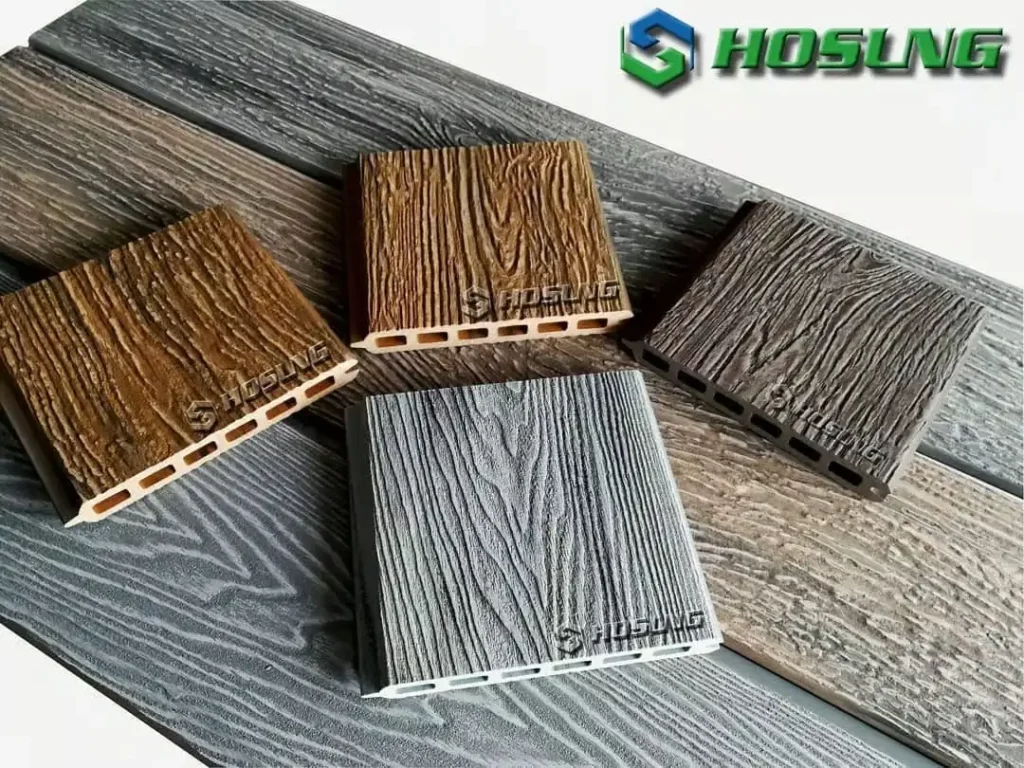
3.1 Hollow Composite Decking
This type incorporates internal voids or channels within the board profile, reducing overall material usage and weight while maintaining functional rigidity for light to moderate applications.
Advantages:
- Lightweight structure significantly simplifies handling and installation logistics
- Lower raw material consumption results in more cost-efficient production
- Suitable for residential patios, small garden decks, and low-load applications
Disadvantages:
- Reduced load-bearing capacity compared to fully dense profiles
- Lower thermal inertia, making it more responsive to temperature fluctuations
- Requires reduced joist spacing to maintain structural integrity over time
3.2 Solid Composite Decking
Solid composite boards feature a fully dense internal structure without voids, offering enhanced mechanical performance and long-term stability under demanding conditions.
Advantages:
- Superior structural strength and impact resistance
- Improved acoustic dampening under foot traffic
- Higher durability under concentrated or heavy loads
Disadvantages:
- Increased weight complicates transportation and installation processes
- Higher production cost due to greater material density
3.3 Capped Composite Decking
Capped systems integrate an advanced co-extruded polymer shell that encapsulates the core material, providing a high-performance protective barrier against external environmental factors.
Advantages:
- Excellent resistance to staining from organic matter and spills
- Enhanced UV protection for long-term colour stability
- Improved surface hardness and scratch resistance
- Simplified cleaning and maintenance requirements
Disadvantages:
- Higher upfront investment compared to uncapped alternatives
- More complex manufacturing process involving multi-layer extrusion technology
3.4 Uncapped Composite Decking
Uncapped composite boards consist of a uniform material composition without an additional protective outer layer, resulting in a more natural but less protected surface.
Advantages:
- Lower production and purchase cost
- More traditional wood-like aesthetic with a natural weathering effect
Disadvantages:
- Increased susceptibility to moisture penetration over time
- More noticeable fading and surface aging under UV exposure
- Higher long-term maintenance requirements to preserve appearance
Each structural type offers a distinct balance between cost, durability, aesthetics, and maintenance performance, making proper selection critical for achieving optimal results in UK environmental conditions.
4. Installation Considerations in UK Environments
Correct installation significantly impacts performance and lifespan.
4.1 Substructure Design
A stable foundation typically includes:
- Pressure-treated joists
- Aluminium framing (for premium applications)
- Proper spacing for ventilation
Recommended joist spacing:
- 300 mm for hollow boards
- 400 mm for solid boards
4.2 Drainage and Ventilation
Poor drainage is one of the leading causes of decking failure.
Best practices:
- Slight slope (1–2%) for water runoff
- Adequate airflow beneath decking
- Avoiding ground contact with boards
4.3 Fastening Systems
Two main installation methods:
- Hidden clip systems
- Face screwing (less common in modern installations)
Hidden systems offer:
- Cleaner aesthetic
- Reduced surface damage
- Better expansion control
5. Maintenance Requirements Compared to Timber Decking
One of the primary advantages of composite decking is reduced maintenance.
Routine maintenance tasks:
- Occasional washing with mild detergent
- Removing organic debris (leaves, moss)
- Periodic inspection of fixings
What is NOT required:
- Sanding
- Staining
- Painting
- Chemical sealing
This results in significantly lower lifecycle costs.
6. Cost Analysis of Composite Decking in the UK
Pricing varies based on material composition, density, and surface technology.
6.1 Initial Cost Factors
- Material type (solid vs hollow)
- Capped vs uncapped construction
- Board thickness
- Surface texture complexity
6.2 Installation Cost Factors
- Substructure requirements
- Labour rates
- Site preparation complexity
6.3 Long-Term Cost Efficiency
Although initial investment is higher than timber, composite decking offers:
- Lower maintenance expenses
- Longer service life (15–30 years typical)
- Reduced replacement frequency
7. Environmental Performance and Sustainability
Sustainability is increasingly important in UK construction decisions.
Composite decking contributes to sustainability through:
- Use of recycled plastics
- Utilization of reclaimed wood fibres
- Reduced deforestation impact
- Long lifecycle reducing material waste
Some advanced manufacturing processes also aim to reduce carbon footprint through energy-efficient production systems.
8. Aesthetic and Design Considerations
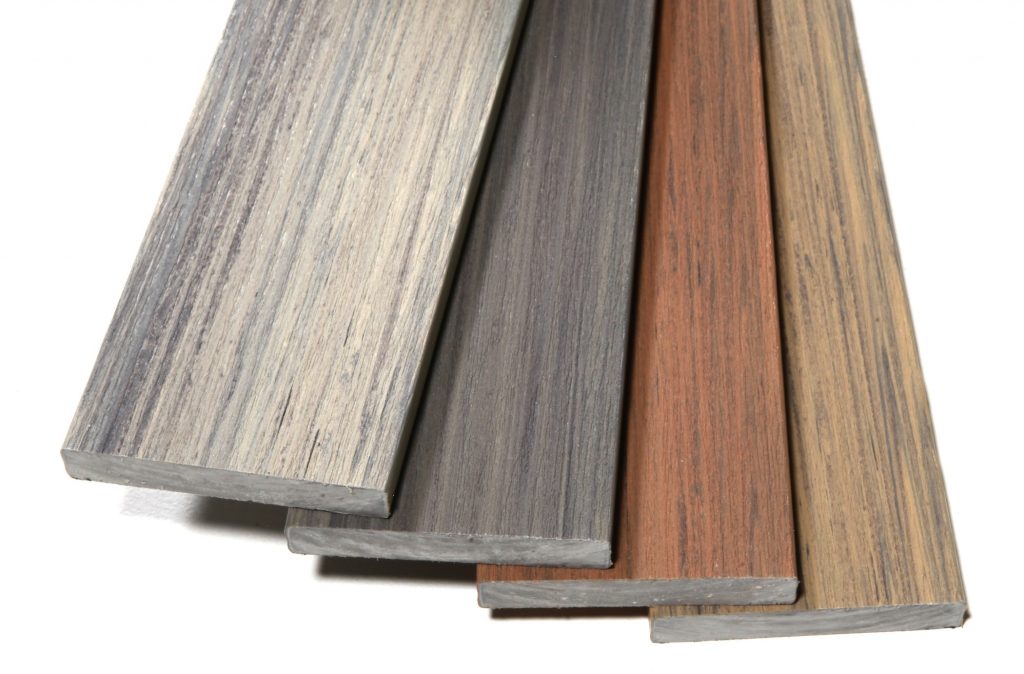
Modern composite decking is designed to replicate natural timber while offering enhanced performance.
Design variables include:
- Wood grain embossing depth
- Colour consistency across batches
- Board width variations
- Surface finish (matte, semi-gloss)
Popular design trends in UK landscapes:
- Grey-toned modern patios
- Dark charcoal minimalist terraces
- Natural oak-style garden decks
- Mixed-material outdoor living spaces
9. Common Problems and How to Avoid Them
Even high-quality decking can fail if incorrectly selected or installed.
9.1 Mould and Algae Growth
Caused by:
- Poor drainage
- Shaded environments
- Organic debris accumulation
Prevention:
- Regular cleaning
- Improved ventilation
- Anti-slip textured surfaces
9.2 Thermal Expansion Gaps Mismanagement
Incorrect spacing leads to:
- Buckling
- Warping
- Surface distortion
Solution:
- Follow manufacturer expansion gap guidelines
- Use calibrated clip systems
9.3 Structural Sagging
Caused by:
- Weak subframe
- Excessive joist spacing
- Low-density boards
Solution:
- Reinforced substructure
- Proper engineering design
10. Best Applications for Composite Decking in the UK
Composite decking is widely adopted across the UK due to its adaptability, structural stability, and resistance to moisture-related degradation. Its engineered composition allows it to perform reliably in both residential and high-traffic commercial environments, making it a versatile surface material for multiple architectural and landscape design scenarios.
Residential Applications
In residential environments, composite decking is primarily used to enhance outdoor living functionality while maintaining a low-maintenance lifestyle requirement. Common applications include:
- Garden patios:Ideal for creating extended living spaces connected to indoor areas. Composite decking provides a stable, splinter-free surface that remains visually consistent throughout seasonal changes.
- Balcony flooring:Suitable for elevated residential structures where weight efficiency and moisture resistance are important considerations.
- Rooftop terraces:Frequently used in urban housing and apartment developments, where drainage control, UV stability, and lightweight installation systems are critical.
- Pool surrounds:The slip-resistant surface texture and low water absorption rate make it a safer alternative to traditional timber or stone materials in wet environments.
Commercial Applications
In commercial settings, composite decking is selected for its durability under continuous foot traffic and its ability to maintain aesthetic consistency over time with minimal maintenance. Key applications include:
- Outdoor dining areas:Restaurants and cafés use composite decking to create durable, visually appealing seating zones that withstand spills, weather exposure, and heavy usage.
- Hotel landscaping:Resorts and hospitality venues apply composite systems in gardens, pool decks, and relaxation zones to ensure long-term performance and brand-consistent aesthetics.
- Public walkways:Municipal projects benefit from its anti-slip properties and resistance to wear, making it suitable for parks, waterfronts, and pedestrian zones.
- Retail outdoor spaces:Shopping centers and commercial complexes use decking to enhance outdoor seating and event areas while reducing lifecycle maintenance costs.
Industrial and Light Infrastructure Applications
Beyond residential and commercial use, composite decking is also applied in temporary or semi-permanent infrastructure scenarios where rapid installation and structural reliability are essential:
- Temporary event platforms:Used in exhibitions, outdoor festivals, and trade shows where modular flooring systems are required for fast deployment and dismantling.
- Exhibition flooring systems:Provides a uniform, professional surface for product displays and large-scale event environments, ensuring both safety and visual consistency.
Overall, the flexibility of composite decking allows it to bridge architectural, commercial, and industrial requirements, making it a multifunctional material suited to diverse UK construction and landscaping projects.
11. How to Evaluate the Best Composite Decking System
To determine the most suitable product, evaluate:
- Material density and composition
- Surface protection technology
- Slip resistance rating
- Structural load capacity
- Warranty period
- Installation system compatibility
A high-performance system will balance durability, safety, aesthetics, and long-term cost efficiency.
12. Final Selection Guidance
The best composite decking for UK conditions is typically characterized by:
- High moisture resistance
- Strong anti-slip surface design
- UV-stable coloration
- Solid or reinforced structural core
- Efficient drainage compatibility
- Low maintenance lifecycle requirements
Rather than focusing solely on appearance or upfront cost, long-term performance under UK environmental conditions should be the primary selection criterion.
Conclusion
Selecting the right composite decking system in the UK requires a structured evaluation of material composition, structural design, environmental resistance, and installation quality. The ideal solution is one that delivers long-term durability, minimal maintenance, and stable performance across seasonal weather variations.
In practice, engineered composite systems outperform traditional timber in nearly every key durability metric when correctly specified and installed. Welcome to get more about composite decking from Hosung WPC!