Composite decking has become increasingly popular for outdoor spaces, offering a low-maintenance, durable, and aesthetically pleasing alternative to traditional wood. One common question homeowners and builders face is: can you use composite decking for stairs? This article explores the considerations, benefits, installation techniques, and design options when using composite decking for stair construction, providing a comprehensive guide to help you make an informed decision.
Understanding Composite Decking
What is Composite Decking?
Composite decking is a blend of wood fibers and plastic, often with additional additives for durability and resistance to moisture, UV rays, and insects. Unlike traditional wood, composite decking does not require regular sealing, staining, or painting, making it an attractive choice for outdoor projects.
Advantages of Composite Decking
- Durability: Resistant to rot, splintering, and warping.
- Low Maintenance: Requires only occasional cleaning with soap and water.
- Aesthetic Variety: Available in a wide range of colors, textures, and finishes.
- Eco-Friendly Options: Often made from recycled materials.
- Long-Term Cost Savings: Reduced maintenance translates to lower lifetime costs.
Considerations Before Choosing Composite Decking
- Weight: Composite boards are heavier than traditional wood, which may impact stair framing.
- Expansion and Contraction: Temperature changes can cause boards to expand and contract.
- Initial Cost: Higher upfront cost than pressure-treated wood, though often offset by lower maintenance.
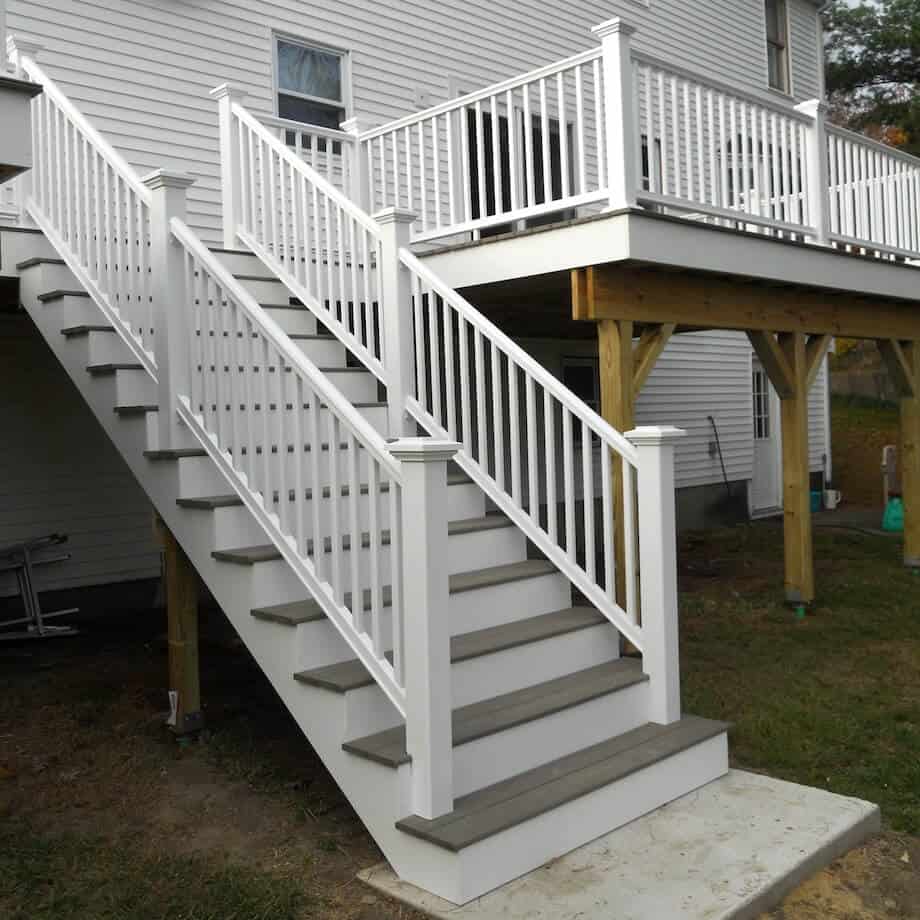
Why Use Composite Decking for Stairs?
Durability and Safety
Stairs are a high-traffic area, and using a material that withstands heavy use and environmental exposure is essential. Composite decking provides a slip-resistant surface and maintains structural integrity over time. Its non-splinter surface reduces the risk of injuries, making it ideal for families with children or pets.
Visual Appeal
Composite decking comes in a variety of wood-like finishes and colors, allowing the stairs to complement or enhance the surrounding deck or landscape design. Stairs constructed with composite materials offer a polished, professional look that retains its appearance over years of use.
Longevity and Maintenance
Unlike traditional wood, composite decking for stairs does not require periodic sanding, staining, or sealing. Cleaning is simple, usually involving a mild soap and water solution. This low-maintenance aspect makes composite decking an appealing choice for busy homeowners or commercial properties.
Design Considerations for Composite Decking Stairs
Standard Stair Dimensions
When building stairs with composite decking, adhere to standard stair dimensions for safety and comfort:
- Riser Height: 7 inches (maximum 7.75 inches)
- Tread Depth: 10-11 inches
- Nosing: 1-1.25 inches overhang
Stair Stringers
Composite decking is heavier than wood, so stringers must be designed to handle the weight. Pressure-treated wood or steel stringers are common choices, providing robust support.
Non-Slip Features
Many composite boards come with grooved surfaces or anti-slip textures. When designing stairs, consider adding:
- Grooved Treads: Enhances traction.
- Anti-Slip Strips: Increases safety in wet conditions.
- Contrast Colors: Highlight stair edges for visibility.
Installation Techniques for Composite Decking Stairs
Tools and Materials Needed
- Circular saw or miter saw
- Drill and screws compatible with composite material
- Measuring tape and level
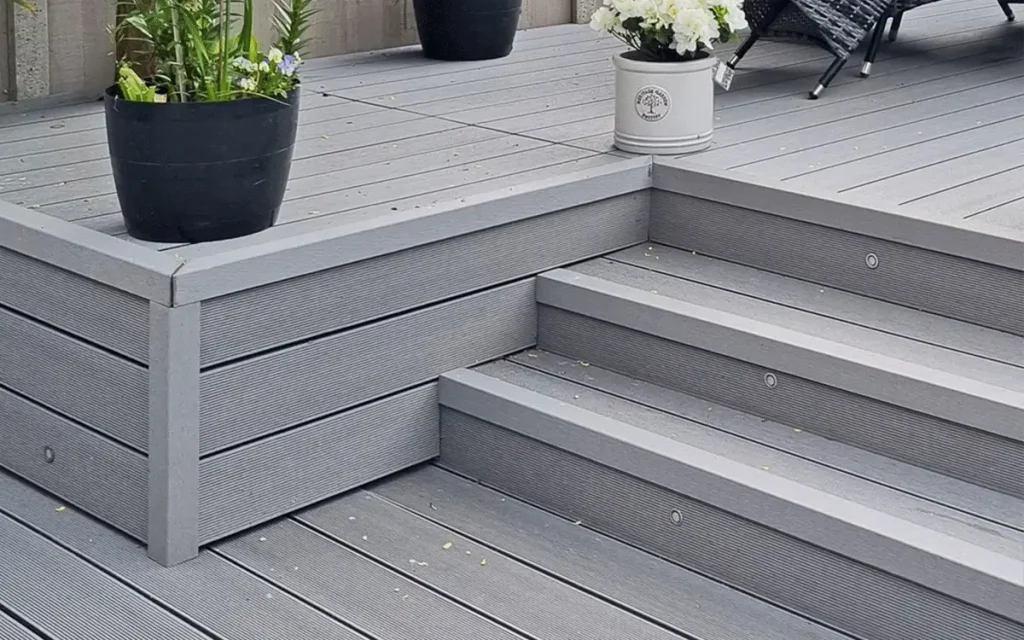
- Composite stair nosing
- Decking clips (if recommended by manufacturer)
Step-by-Step Installation
- Measure and Cut: Accurately measure risers and treads, cutting boards to fit.
- Attach Stringers: Ensure they are level and securely anchored.
- Install Treads: Fasten composite boards to the stringers, leaving appropriate gaps for expansion.
- Attach Risers: Optional, depending on design preference.
- Install Nosing: Secure stair nosing for safety and aesthetics.
- Check Alignment: Ensure stairs are level, and adjust if necessary.
Common Mistakes to Avoid
- Using standard wood screws not designed for composite materials.
- Ignoring expansion gaps, which can cause warping or buckling.
- Failing to secure stringers properly, compromising safety.
Benefits of Using Composite Decking for Stairs
- Weather Resistance: Composite decking resists moisture, preventing rot and decay.
- Color Retention: Modern composites retain color longer than traditional wood stains.
- Pest Resistance: No need to worry about termites or insects.
- Low Maintenance: Easy to clean without sanding or refinishing.
- Aesthetic Flexibility: Multiple colors and finishes to match any deck design.
Cost Considerations
Initial Investment
Composite decking for stairs can be more expensive upfront compared to wood. However, the long-term savings on maintenance, staining, and replacement often offset this initial cost.
Long-Term Value
When factoring in durability, low maintenance, and longevity, composite decking stairs often provide better value than traditional wood. They maintain structural integrity and appearance for decades, reducing ongoing repair costs.
Comparative Cost Table
Material | Initial Cost | Maintenance | Lifespan |
Pressure-Treated Wood | $10–$15 per sq ft | High | 10–15 years |
Composite Decking | $15–$25 per sq ft | Low | 25+ years |
Cedar/Wood | $12–$20 per sq ft | Medium | 15–20 years |
Aesthetic Options for Composite Decking Stairs
Color Choices
Composite decking comes in a variety of shades from light oak to deep mahogany, allowing homeowners to match stairs to decks, patios, or outdoor furniture.
Textures and Finishes
- Wood Grain: Mimics natural wood textures.
- Smooth Finish: Sleek, modern appearance.
- Grooved or Anti-Slip: Functional and safe for wet environments.
Lighting Integration
Stair lighting enhances safety and aesthetics:
- LED Strip Lights: Installed under nosing for subtle illumination.
- Recessed Lights: Integrated into stair risers or stringers.
- Solar-Powered Lights: Low-maintenance, eco-friendly option.
Environmental Considerations
Composite decking is often manufactured with recycled wood fibers and plastics, reducing environmental impact. Choosing composite decking for stairs aligns with sustainable building practices by extending material life and minimizing the need for chemical treatments.
Can You Use Composite Decking for Stairs in Different Climates?
Hot and Sunny Regions
Composite decking resists fading and expansion due to heat. Opt for lighter shades to reduce heat absorption and ensure proper expansion gaps during installation.
Cold and Snowy Climates
Composite decking withstands freeze-thaw cycles without cracking. Non-slip surfaces are essential to prevent accidents in icy conditions.
Coastal Areas
Composite decking resists saltwater corrosion, making it ideal for coastal homes. Regular cleaning prevents salt buildup and maintains appearance.
Maintenance Tips for Composite Decking Stairs
- Sweep debris regularly to prevent scratches.
- Wash periodically with mild soap and water.
- Avoid harsh chemicals or power washing at high pressure.
- Check screws and fasteners annually for tightness.
- Trim nearby plants to reduce mold and mildew buildup.
Frequently Asked Questions
Can You Cut Composite Decking Like Wood?
Yes, composite decking can be cut with standard woodworking tools, but blades should be sharp to prevent chipping.
Does Composite Decking Require Staining?
No staining or sealing is required, although some homeowners choose to apply a color enhancer for aesthetics.
How Long Will Composite Decking Stairs Last?
Properly installed composite decking stairs can last 25 years or more with minimal maintenance.
Can Composite Decking Be Slippery?
Some composite boards are naturally more slip-resistant than others. Using grooved boards, anti-slip strips, or stair nosing improves safety.