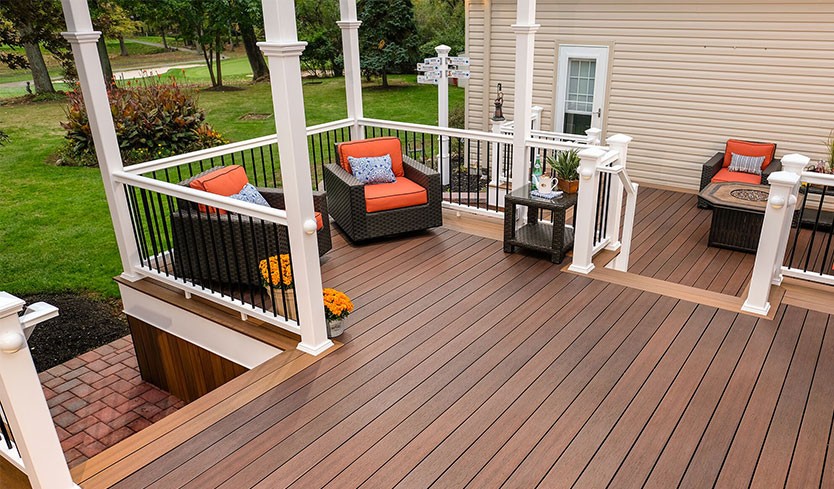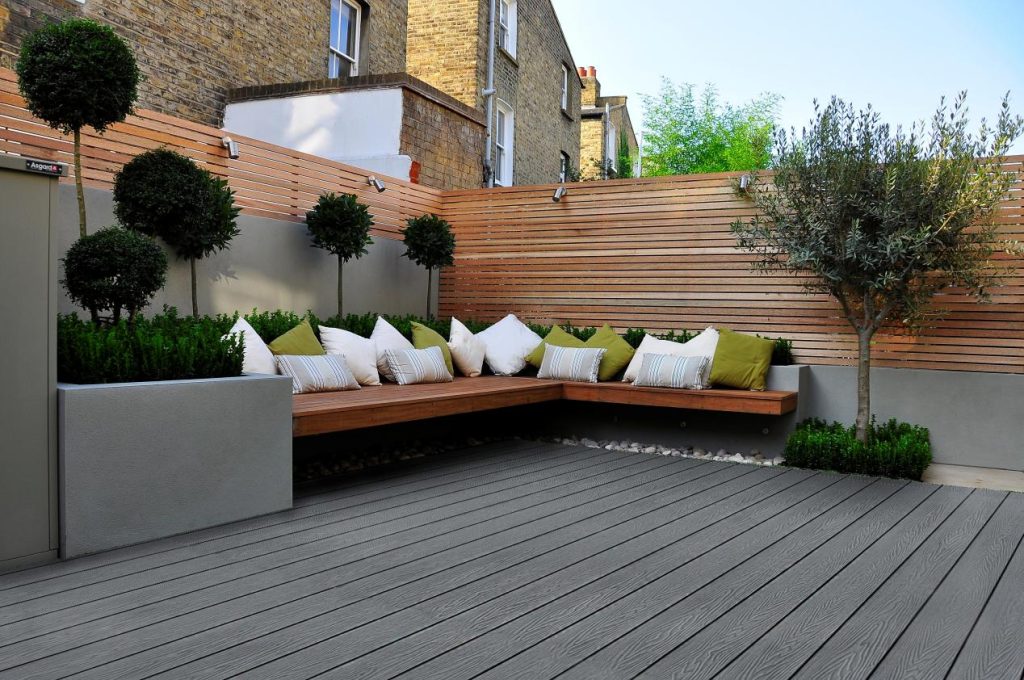
When planning an outdoor decking project, size and length matter more than many homeowners initially realize. Among the most practical and widely used options in the market today is composite decking 2.4 m. This specific board length offers a balanced combination of structural stability, ease of transportation, reduced waste, and cost efficiency. Whether you are a homeowner designing a backyard patio, a contractor building multiple terraces, or a developer planning residential projects, understanding the advantages and technical details of composite decking 2.4 m can help you make smarter purchasing and installation decisions.
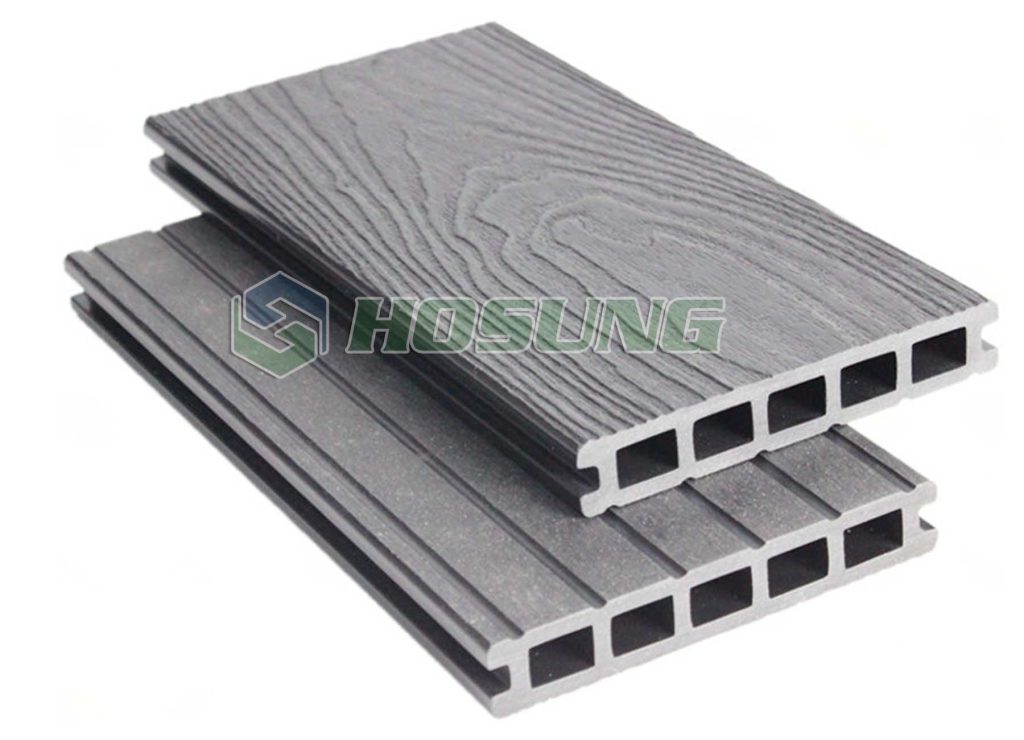
Table of Contents
What Is Composite Decking 2.4 m?
Composite decking 2.4 m refers to wood-plastic composite (WPC) decking boards manufactured in a standard length of 2.4 meters (approximately 8 feet). These boards are engineered using a combination of:
Wood fiber or wood flour
High-density polyethylene (HDPE) or PVC
Additives such as UV stabilizers, color pigments, and anti-oxidants
The result is a durable, weather-resistant decking material designed to withstand outdoor conditions without the common problems associated with traditional timber—such as rotting, splintering, warping, or insect damage.
The 2.4 m length is particularly suitable for:
Small to medium-sized patios
Balconies
Residential gardens
Poolside platforms
Rooftop terraces
Modular deck systems
It strikes a balance between structural integrity and manageable handling during installation.
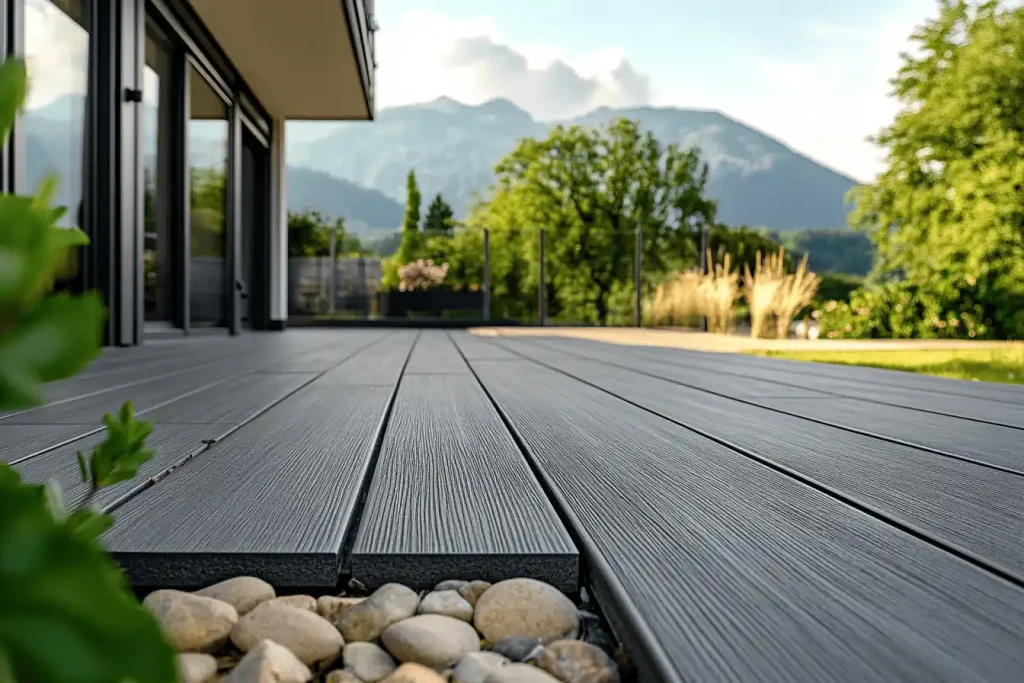
Why Choose the 2.4 m Length?
1. Easy Transportation and Handling
One of the biggest practical advantages of composite decking 2.4 m is transportation efficiency. Longer boards such as 3.6 m or 4.8 m often require special logistics arrangements, while 2.4 m boards fit comfortably into most delivery vehicles and storage areas.
For installers, 2.4 m boards are easier to:
Carry
Position
Align
Cut with minimal waste
2. Reduced Installation Stress
Longer boards can experience more expansion and contraction due to temperature changes. With composite decking 2.4 m, the shorter span helps reduce internal stress, making it more stable in climates with fluctuating temperatures.
3. Ideal for Joist Spacing
Many decking frameworks are designed with joist spacing between 300 mm and 400 mm. A 2.4 m board spans cleanly across common structural layouts without excessive trimming.
4. Lower Material Waste
In smaller residential projects, excessively long boards often require significant cutting, resulting in material waste. Composite decking 2.4 m provides flexibility and minimizes leftover scrap pieces.
Material Composition and Manufacturing Process
Understanding how composite decking 2.4 m is manufactured helps explain its performance advantages.
Raw Materials
High-quality composite decking typically contains:
50–60% wood fiber
30–40% recycled plastic
5–10% additives
These materials are mixed and processed through extrusion molding under high temperature and pressure.
Solid vs Hollow Boards
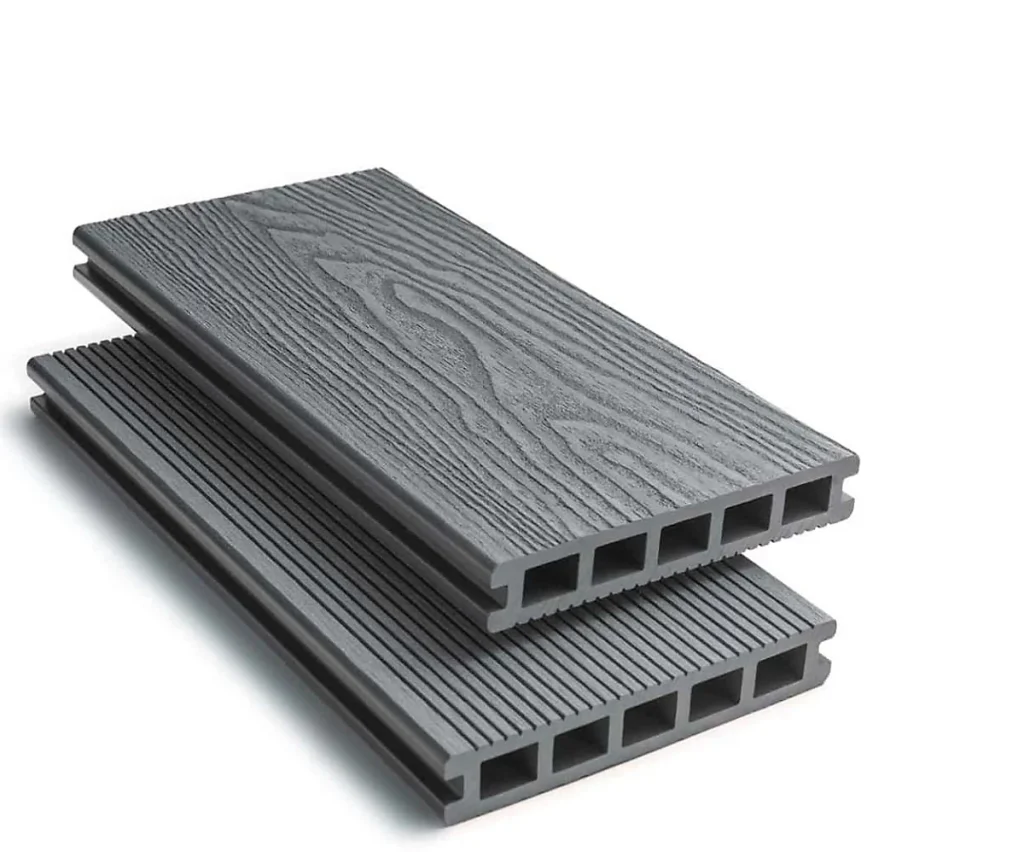
Composite decking 2.4 m is available in two main structural types:
Solid Boards
Higher load-bearing capacity
Suitable for commercial use
Heavier and more robust
Hollow Boards
Lightweight
More cost-effective
Ideal for residential applications
Capped vs Uncapped Composite
Capped composite decking features a protective outer layer that enhances:
Stain resistance
UV protection
Color retention
Moisture resistance
For outdoor environments exposed to heavy rain or strong sunlight, capped composite decking 2.4 m offers superior longevity.
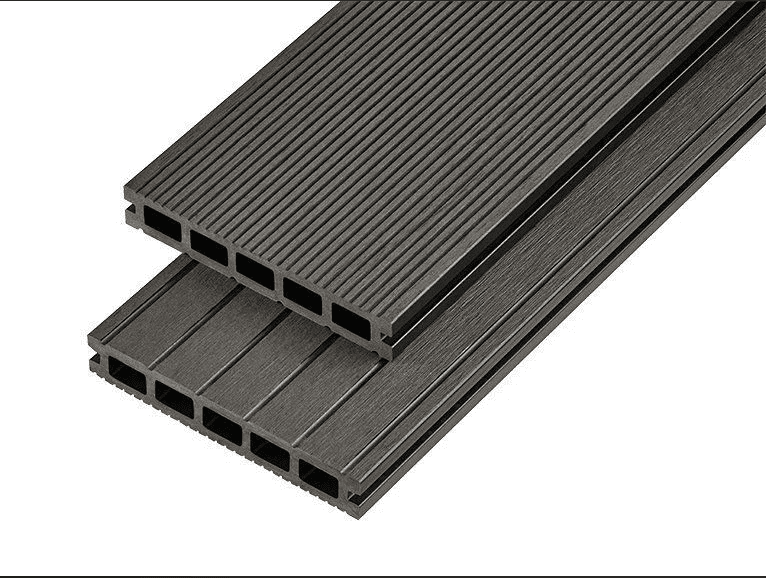
Technical Specifications of Composite Decking 2.4 m
While specifications vary by manufacturer, common dimensions include:
Length: 2400 mm
Width: 135–150 mm
Thickness: 20–25 mm
Weight: 2.0–3.5 kg per meter (depending on structure)
Load Performance
Composite decking 2.4 m typically supports:
Residential load requirements
Outdoor furniture
BBQ equipment
Foot traffic
With proper joist spacing (usually 300–400 mm), the board maintains structural stability without sagging.
Applications of Composite Decking 2.4 m
Composite decking 2.4 m is highly versatile and suitable for a wide range of environments, climates, and structural requirements. Thanks to its standardized length, stable composition, and easy installation characteristics, it adapts well to both compact residential layouts and expansive commercial developments. The 2.4 m format offers flexibility in design planning while minimizing material waste and installation complexity.
Residential Projects
Homeowners commonly use composite decking 2.4 m in various outdoor living spaces where durability, comfort, and low maintenance are priorities.
Backyard Patios
In residential settings, backyard patios are one of the most popular applications. Composite decking 2.4 m provides a clean, modern appearance while resisting moisture, insects, and warping. The manageable board length allows installers to create symmetrical layouts, diagonal patterns, or picture-frame borders without excessive cutting.
Garden Walkways
Garden paths benefit from composite decking’s slip-resistant surface and weather resistance. The 2.4 m boards can be easily aligned over joists or ground-level substructures, creating stable walkways that remain intact through seasonal temperature changes.
Balcony Flooring
For apartments and elevated balconies, weight and board stability are crucial. Composite decking 2.4 m—especially hollow-core options—offers lightweight performance while maintaining structural strength. Its resistance to water absorption makes it particularly suitable for exposed balcony environments.
Pool Decks
Around swimming pools, moisture resistance and anti-slip performance are essential. Composite decking 2.4 m performs well under constant water exposure and reduces the risk of splinters compared to traditional timber. Lighter color tones also help reduce surface heat in sunny climates.
Outdoor Dining Areas
Many homeowners extend their indoor living space outdoors. Composite decking 2.4 m provides a smooth, uniform platform capable of supporting outdoor furniture, grills, and decorative elements without frequent refinishing.
Commercial Projects
Beyond residential use, composite decking 2.4 m is widely adopted in commercial and public environments where long-term durability and low maintenance costs are critical.
Outdoor Cafés and Restaurants
Commercial dining spaces require flooring that can withstand high foot traffic and regular cleaning. Composite decking offers stain resistance and structural stability, making it ideal for hospitality applications.
Public Parks and Boardwalks
Municipal projects often prioritize longevity and safety. Composite decking 2.4 m resists decay, mold, and insect damage, making it suitable for park walkways, observation platforms, and waterfront boardwalks.
Resort Walkways and Hotel Terraces
Resorts and hotels use composite decking to create attractive outdoor environments that maintain their appearance despite constant exposure to sun, humidity, and heavy usage.
Rooftop Commercial Terraces
In urban developments, rooftop terraces demand lightweight yet durable materials. The 2.4 m board length simplifies logistics when transporting materials to higher floors.
Apartment Complexes and Mixed-Use Developments
Developers appreciate composite decking 2.4 m for its consistency and efficiency in large-scale installations. The uniform board size streamlines project timelines and reduces installation waste.
The 2.4 m length makes installation efficient in both small-scale residential projects and large-scale commercial developments, offering a practical balance between structural performance and design flexibility.
Installation Guide for Composite Decking 2.4 m
Proper installation ensures long-term performance.
Step 1: Substructure Preparation
The foundation must be:
Level
Stable
Well-drained
Substructures may use:
Pressure-treated timber joists
Aluminum joists
Steel framing
Step 2: Joist Spacing
For composite decking 2.4 m:
Standard spacing: 400 mm (residential)
300 mm for heavy-duty areas
Step 3: Expansion Gaps
Composite materials expand and contract with temperature changes.
Recommended gaps:
5–8 mm between board ends
3–5 mm between side joints
Step 4: Fastening Methods
Two common installation systems:
Hidden clip system (for clean surface appearance)
Face screw fastening (for extra strength)
Hidden clips are popular because they:
Improve aesthetics
Reduce surface damage
Allow consistent spacing
Pricing Factors of Composite Decking 2.4 m
The cost of composite decking 2.4 m varies depending on several technical, material, and market-related factors. While many buyers initially focus only on the price per board or per square meter, understanding the structure behind pricing helps explain why certain products cost more—and why higher upfront investment often leads to better long-term value.
Below are the main factors that influence the final price of composite decking 2.4 m.
1. Raw Material Quality
Raw material composition is one of the most important cost determinants. High-quality composite decking 2.4 m typically uses:
Refined wood fiber with consistent particle size
Premium HDPE or PVC polymers
UV stabilizers and anti-oxidant additives
Higher wood fiber purity improves surface texture and structural stability, while premium polymers enhance water resistance and reduce cracking or deformation over time. Inferior recycled plastics may reduce initial cost but can negatively impact strength, color retention, and lifespan.
Manufacturers that use controlled production processes and stricter quality standards generally price their boards higher—but the improved durability often offsets future replacement or repair costs.
2. Capped vs Uncapped
Capped composite decking 2.4 m features a protective polymer shell that fully or partially wraps the core material. This cap layer increases:
Stain resistance
UV protection
Scratch resistance
Moisture defense
Because capped boards require additional co-extrusion technology and higher material usage, they are typically more expensive than uncapped boards. However, in regions with strong sunlight, heavy rainfall, or high humidity, capped composite decking significantly reduces maintenance and prolongs color stability, making it a cost-effective long-term choice.
Uncapped boards remain more budget-friendly and are suitable for shaded areas or low-traffic residential applications.
3. Surface Finish
Surface processing also affects pricing. Composite decking 2.4 m is available in various textures and finishing treatments, each involving different manufacturing techniques.
Common surface options include:
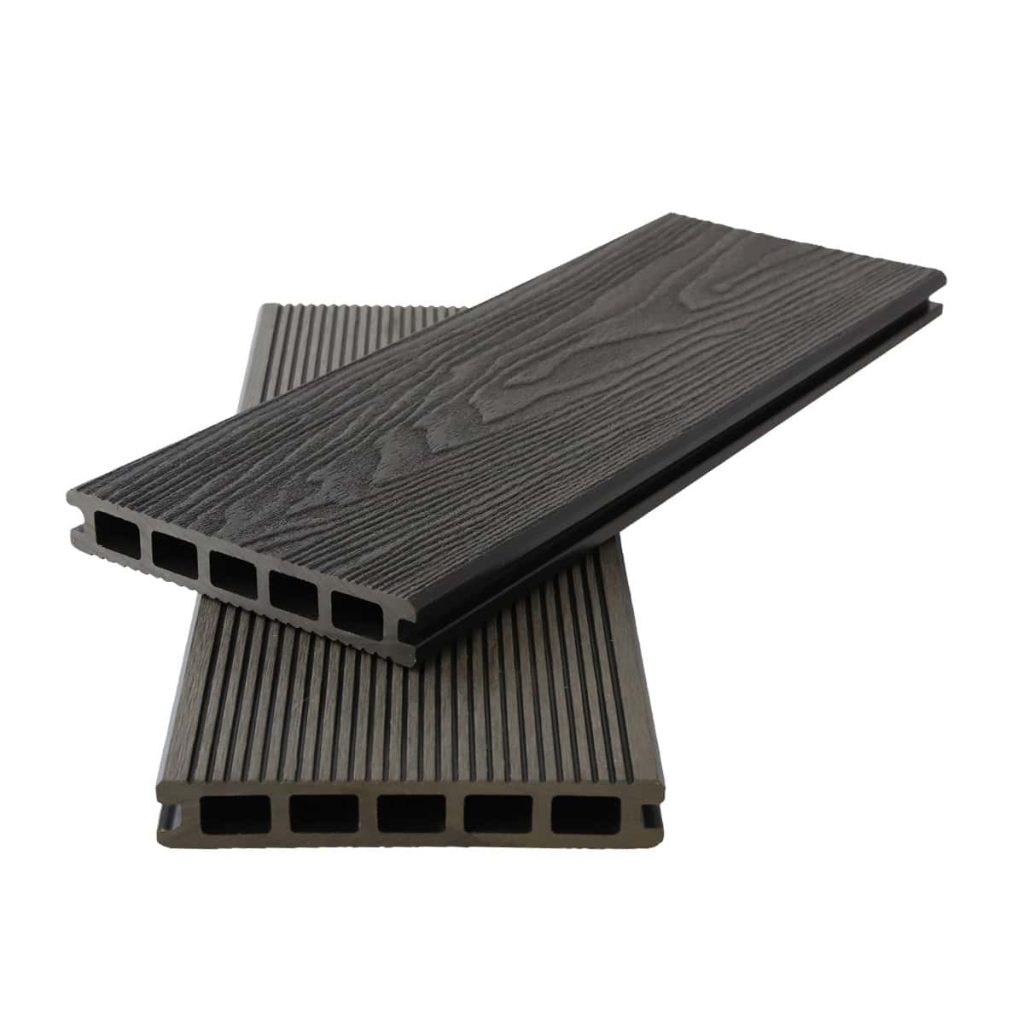
Wood grain embossing
Deep 3D texture
Brushed finish
Sanded surface
Advanced embossing and 3D textures require additional tooling and processing steps, increasing production costs. These finishes, however, enhance realism and improve anti-slip performance, which is especially important for pool decks and commercial walkways.
Brushed or sanded surfaces are generally more economical while still providing functional slip resistance.
4. Board Structure
The structural design of composite decking 2.4 m significantly impacts price.
Solid boards contain dense material throughout, offering:
Higher load-bearing capacity
Greater impact resistance
Improved durability in commercial settings
Because they use more raw material, solid boards are heavier and more expensive.
Hollow boards, on the other hand, are engineered with internal cavities to reduce weight and material usage. They are:
More cost-effective
Easier to transport
Suitable for residential applications
Choosing between solid and hollow structures depends on project load requirements and budget considerations.
5. Order Quantity
Order volume directly influences per-meter pricing. Manufacturers often provide tiered pricing structures, meaning:
Small retail purchases carry higher unit costs
Medium bulk orders receive moderate discounts
Large wholesale or container-load orders achieve the lowest price per meter
For contractors and developers working on multi-unit projects, bulk purchasing of composite decking 2.4 m can significantly reduce overall material expenditure.
Additional Cost Considerations
Beyond board pricing, buyers should also consider:
Hidden clip systems and fasteners
Substructure materials (timber, aluminum, or steel joists)
Transportation and logistics
Installation labor
When these elements are included in the total project budget, composite decking 2.4 m often proves more economical than traditional hardwood decking due to lower maintenance requirements.
Long-Term Cost Comparison
Although the upfront price of composite decking 2.4 m may be higher than some softwood options, it remains competitively priced compared to premium hardwood decking. When factoring in:
No need for annual staining or sealing
Reduced repair costs
Longer service life (15–25 years)
Minimal surface refinishing
Composite decking delivers strong return on investment over time.
Maintenance Requirements
One of the main advantages of composite decking 2.4 m is minimal maintenance.
Unlike traditional timber decking, it does not require:
Sanding
Staining
Sealing
Painting
Routine maintenance includes:
Periodic washing with water
Mild soap cleaning for stains
Removing debris from surface gaps
This significantly reduces lifetime ownership costs.
Environmental Benefits
Composite decking 2.4 m is often manufactured using recycled materials, contributing to sustainability goals.
Environmental advantages include:
Reduced deforestation
Recycling of plastic waste
Long service life (15–25 years)
Lower chemical usage compared to treated timber
For eco-conscious builders, composite decking offers a greener alternative to hardwood.
Composite Decking 2.4 m vs Traditional Timber
| Feature | Composite Decking 2.4 m | Traditional Timber |
|---|---|---|
| Rot Resistance | Excellent | Moderate |
| Insect Resistance | High | Low |
| Maintenance | Low | High |
| Color Stability | Strong | Fades easily |
| Lifespan | 15–25 years | 8–15 years |
| Splinter Risk | None | Possible |
While timber offers a natural aesthetic, composite decking 2.4 m provides superior durability and lower long-term maintenance.
Design and Aesthetic Options
Modern composite decking 2.4 m is no longer limited to basic, flat boards with uniform coloring. Advances in extrusion technology and surface treatment have significantly expanded the range of design possibilities, allowing homeowners, architects, and developers to achieve highly customized outdoor environments.
Today, composite decking 2.4 m is available in a wide spectrum of contemporary and natural tones, including:
Teak
Walnut
Charcoal
Coffee
Grey
Redwood
These color options are carefully engineered with blended pigments rather than surface paint, ensuring deeper color consistency and improved fade resistance over time. Multi-tonal finishes are also available, mimicking the natural variation found in real hardwood planks.
Realistic Wood Grain Textures
One of the most important aesthetic improvements in modern composite decking 2.4 m is advanced embossing technology. Manufacturers now use synchronized embossing techniques to create deep, authentic wood grain patterns that closely resemble natural timber species. Unlike early-generation composite boards, modern textures feel more organic underfoot while maintaining structural consistency.
Surface treatments typically include:
Deep wood grain embossing
Wire-brushed finishes
Natural matte surfaces
Lightly sanded textures
These finishes not only enhance realism but also improve slip resistance—an important safety factor for pool decks, walkways, and high-traffic areas.
Design Flexibility
Because composite decking 2.4 m comes in a manageable standard length, it allows for creative layout patterns such as:
Straight linear installations
Diagonal board arrangements
Herringbone designs
Picture-frame borders
The 2.4 m length reduces cutting waste while offering enough flexibility for both symmetrical and asymmetrical layouts.
Color Selection for Architectural Style
Color plays a significant role in outdoor design harmony. For contemporary architecture, darker tones like charcoal or deep walnut create strong visual contrast against light walls, metal railings, and glass elements. These shades often complement minimalist, industrial, or modern-style buildings.
On the other hand, lighter shades such as grey or teak enhance brightness in smaller patios and compact urban balconies. Lighter colors can also help reflect sunlight, reducing surface heat in warm climates.
Redwood and coffee tones remain popular for traditional or rustic designs, blending seamlessly with natural landscapes, garden environments, and wooden pergolas.
By offering a variety of finishes and tones, composite decking 2.4 m enables homeowners and designers to match outdoor flooring with façade materials, furniture styles, and landscaping themes.
Climate Performance
In addition to aesthetics, climate adaptability is a critical consideration when selecting decking materials. Composite decking 2.4 m is engineered to perform reliably across a wide range of environmental conditions.
It performs well in:
High humidity
Coastal environments
Heavy rainfall regions
Cold winter conditions
High Humidity and Rainfall
Traditional timber decking absorbs moisture, leading to swelling, warping, and decay. Composite decking 2.4 m contains polymer components that significantly reduce water absorption. This makes it highly suitable for tropical or monsoon-prone climates where constant humidity challenges natural wood materials.
Coastal Environments
Coastal areas expose decking to salt air, high moisture, and strong UV radiation. Composite boards resist corrosion, insect damage, and rot far better than untreated wood. The stable internal structure of composite decking 2.4 m helps prevent splitting and surface cracking even under fluctuating coastal temperatures.
Cold Winter Conditions
In colder regions, freeze-thaw cycles can damage traditional timber through repeated expansion and contraction. Composite decking 2.4 m maintains dimensional stability when installed with proper expansion gaps. Its resistance to moisture penetration reduces the risk of internal cracking during freezing conditions.
UV Resistance and Mold Protection
Capped composite boards are especially resistant to:
UV fading
Mold growth
Moisture penetration
The protective cap layer acts as a shield against sun exposure and surface staining. This ensures long-term color retention and reduces cleaning frequency in shaded or damp environments.
Common Questions About Composite Decking 2.4 m
Is 2.4 m strong enough for heavy loads?
Yes, with correct joist spacing and proper installation.
Can it be cut to size?
Absolutely. Standard woodworking tools can cut composite decking 2.4 m.
Does it get hot in sunlight?
Darker colors absorb more heat. Lighter shades remain cooler.
Is it waterproof?
It is highly moisture-resistant but should still allow drainage beneath the deck.
Conclusion
Composite decking 2.4 m is a practical, durable, and aesthetically appealing solution for modern outdoor flooring projects. Its manageable length simplifies transportation and installation while maintaining strong structural performance.
With advantages including:
Low maintenance
Long lifespan
Eco-friendly materials
Wide color options
Strong weather resistance
Composite decking 2.4 m has become one of the most preferred board sizes in residential and commercial decking construction.
If you are planning your next decking project, considering composite decking 2.4 m can help you achieve a balance of performance, design flexibility, and long-term cost savings.
Choosing the right supplier, selecting the correct board structure, and following professional installation practices will ensure your deck remains beautiful and durable for years to come.
Contact Hosung for more about these composite decking!