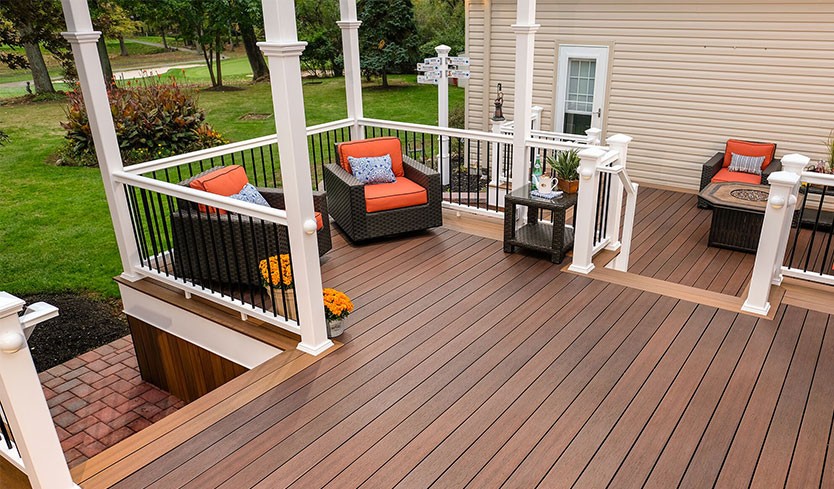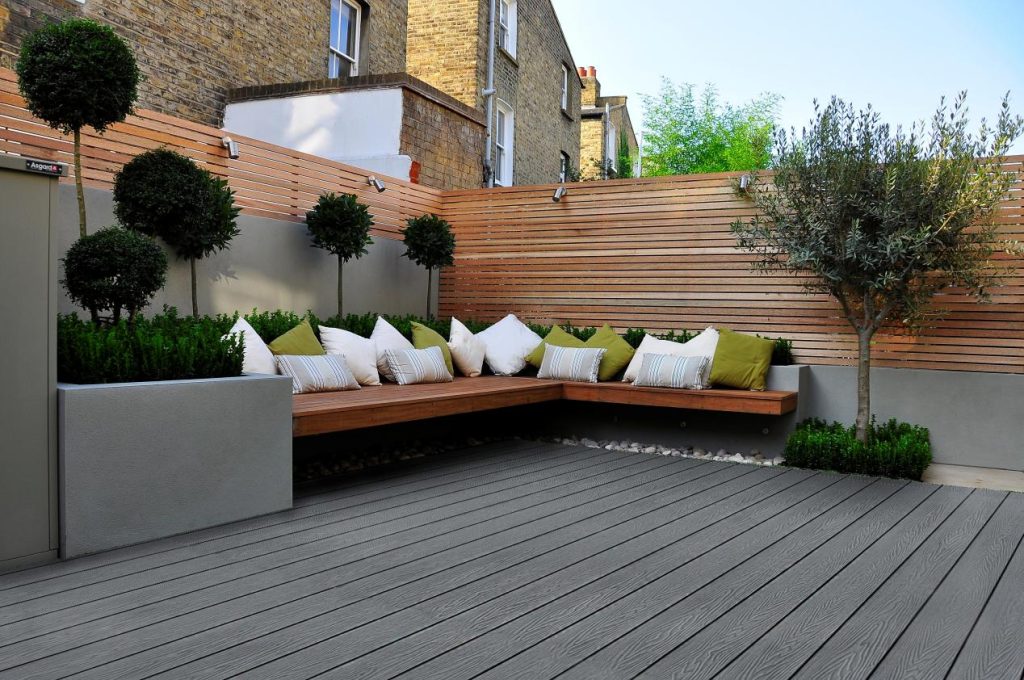
When it comes to designing the perfect backyard oasis, few elements elevate the space more than a well-crafted pool deck. The area surrounding your pool is not just functional; it sets the tone for relaxation, social gatherings, and outdoor entertainment. Choosing the right material for composite decking around pool is critical for safety, aesthetics, and long-term durability. This guide explores the best materials for poolside decking, practical installation tips, and expert advice to help you make an informed decision.

Table of Contents
Why Choose Composite Decking Around Pool?
Traditional wood decking has long been a favorite for outdoor spaces, but composite decking has rapidly overtaken it as the material of choice for poolsides. Composite decking, typically made from a blend of wood fibers and recycled plastics, offers several advantages over natural wood:
Water Resistance: Poolsides are constantly exposed to moisture, splashes, and even pool chemicals. Unlike wood, composite decking is resistant to water absorption, reducing the risk of warping, rotting, and mold growth.
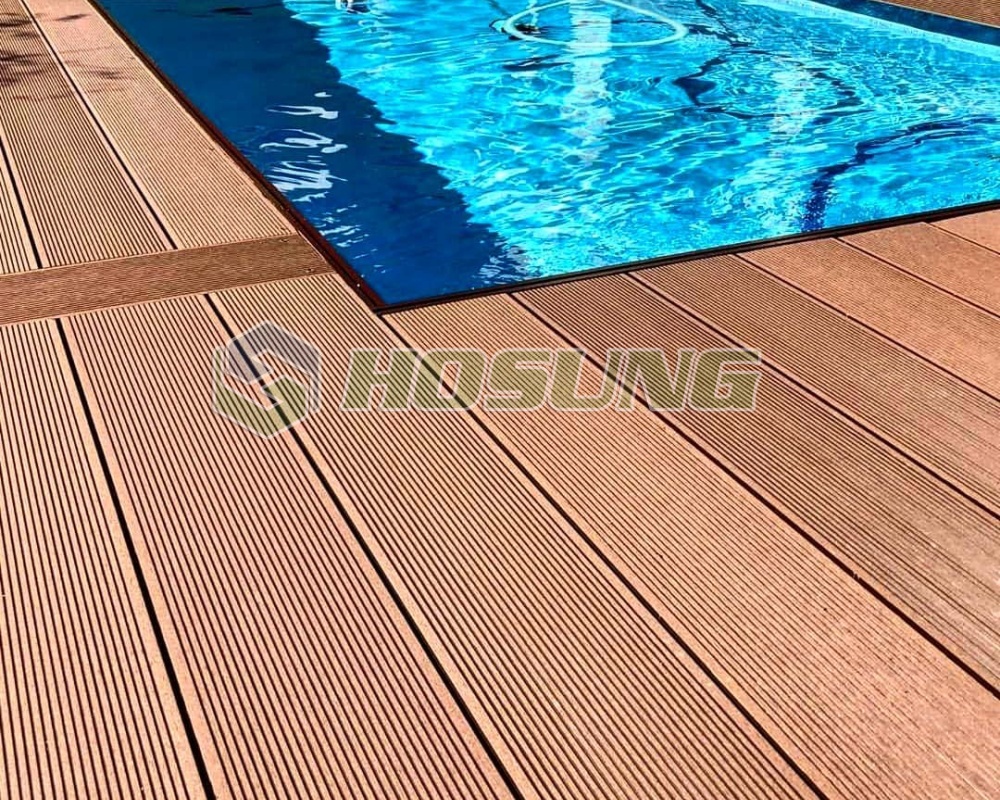
Slip Resistance: Safety is paramount around wet areas. High-quality composite decking often comes with textured surfaces or anti-slip coatings, making it ideal for families and high-traffic pool areas.
Low Maintenance: Wood decking requires regular sanding, staining, or sealing. Composite materials need only periodic cleaning with soap and water, saving both time and effort.
Durability: Composite decking resists cracking, splitting, and insect damage better than wood. Most products come with warranties ranging from 20 to 25 years, ensuring long-term reliability.
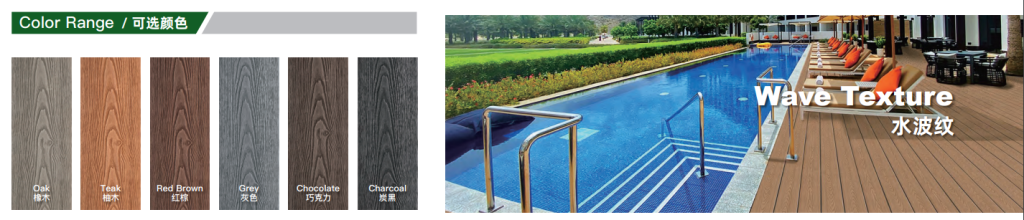
Aesthetic Versatility: Available in various colors, textures, and finishes, composite decking can mimic the natural look of wood or offer modern, sleek styles to complement your pool area.
For these reasons, many homeowners now prioritize composite decking around pool for both above ground and in-ground pools.
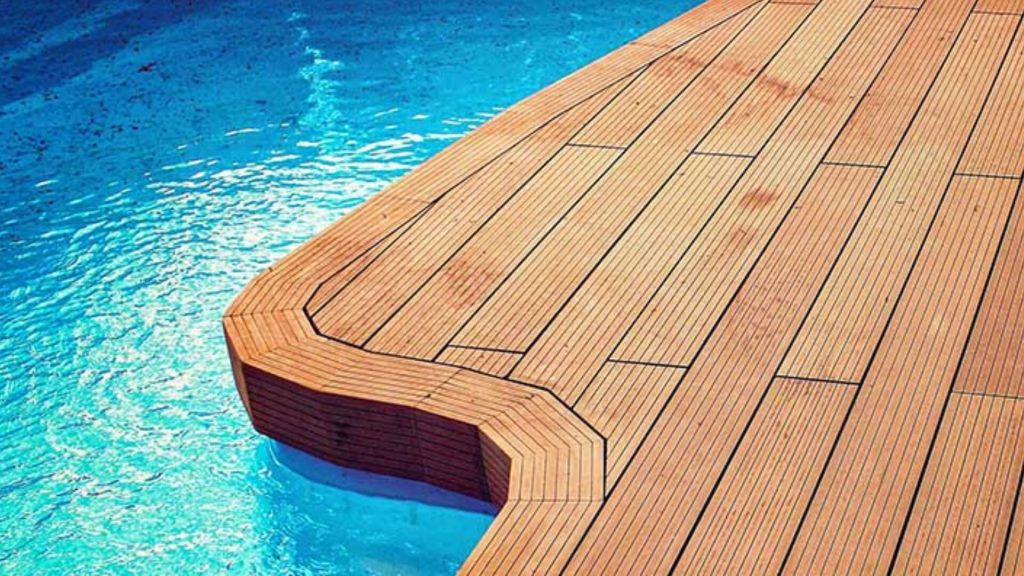
Types of Composite Decking Materials for Pool Areas
Choosing the right type of composite material is essential for functionality and style. Here are the most popular options for best composite decking around pool:
1. Wood-Plastic Composite (WPC)
WPC is the most common form of composite decking. Made from a mixture of wood fibers and recycled plastics, it combines the warmth of natural wood with the durability of synthetic materials.
Pros:
Feels like real wood
Resistant to splintering
Comes in multiple shades and textures
Cons:
Can be slightly prone to fading over time if exposed to intense sunlight
Not as heat-resistant as some newer polymer-based composites
WPC is an excellent choice for homeowners seeking a natural look without the maintenance challenges of timber.
2. Capped Composite Decking
Capped composites feature a protective outer layer or “cap” that shields the material from moisture, stains, and fading. This makes them particularly suitable for areas around pools.
Pros:
Superior resistance to stains and scratches
Highly water-resistant
Long-lasting color retention
Cons:
Slightly higher price point compared to uncapped composites
Some users find the surface more slippery when wet, so textured options are recommended
If you want low-maintenance composite decking around above ground pool, capped composites are highly recommended.
3. PVC Composite Decking
PVC decking is made entirely from plastic, offering exceptional resistance to water, mold, and chemicals. While it lacks the natural wood fibers, its durability makes it perfect for poolside environments.
Pros:
Completely waterproof
Easy to clean
Resistant to fading and staining
Cons:
Can look less like real wood
May be more expensive than traditional WPC
PVC composite decking is ideal for homeowners prioritizing longevity and minimal maintenance, especially in humid or heavily chlorinated pool areas.
4. Recycled Plastic Decking
Some composite boards are made from 100% recycled plastics, offering an eco-friendly alternative with outstanding water resistance. These boards are highly durable and often used in commercial pool areas.
Pros:
Extremely low maintenance
Eco-friendly option
Resistant to rot and insect damage
Cons:
Limited color and finish options
Can feel less warm underfoot than wood-based composites
For environmentally conscious homeowners, recycled plastic decking provides a sustainable yet practical solution.
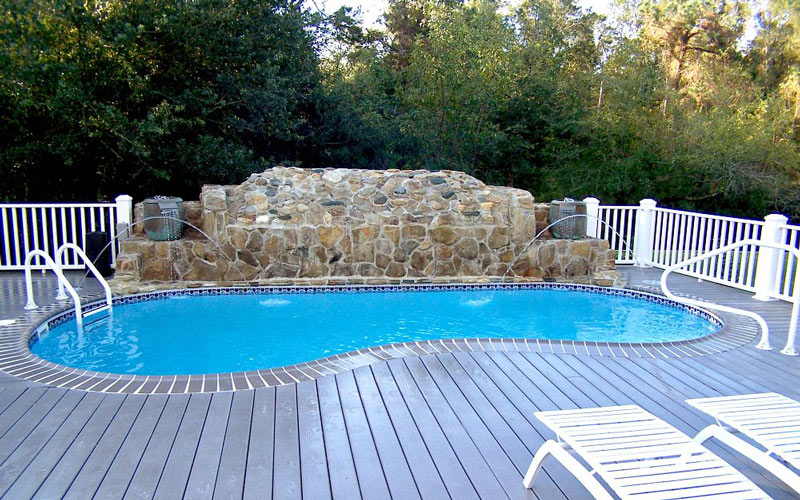
Key Factors to Consider When Choosing Composite Decking for Pools
While material type is crucial, several other factors affect the performance and safety of composite decking around pool:
1. Slip Resistance
Safety should always come first. Look for decking boards with textured or grooved surfaces to minimize the risk of slipping when wet. Many manufacturers rate their products using slip-resistance tests, so choose one suitable for poolside use.
2. Heat Retention
Poolside decking often gets direct sunlight. Some composites can become uncomfortably hot to walk on barefoot. If your pool area receives intense sun, opt for lighter colors or heat-resistant composites.
3. Color and Aesthetic Options
Composite decking comes in a wide range of colors and finishes, from natural wood tones to contemporary grays. Consider the overall design of your backyard, pool tile color, and outdoor furniture to ensure a cohesive look.
4. Durability and Warranty
Check manufacturer warranties, which often range from 20 to 25 years. Ensure your decking can withstand exposure to chlorine, saltwater, and UV rays without significant fading or structural damage.
5. Installation Method
Some composites are designed for hidden fasteners, giving a seamless appearance, while others use traditional screws or clips. Proper installation ensures both safety and aesthetic appeal.
6. Maintenance Requirements
Even though composites are low-maintenance, regular cleaning prevents algae growth and keeps your pool deck looking pristine. Consider the ease of cleaning and availability of maintenance guides from the manufacturer.
Best Practices for Installing Composite Decking Around Pools
Installing composite decking around above ground pool or in-ground pools requires careful planning. Here are some expert tips:
Ensure Proper Drainage
Water should not pool on the surface or between boards. Install your decking with slight gaps between boards (usually 3–5 mm) to allow for drainage and ventilation.Use Quality Fasteners
Use corrosion-resistant screws or hidden fasteners specifically designed for composite materials. Avoid regular wood screws that can rust and damage the boards.Allow for Expansion
Composite boards expand and contract with temperature changes. Leave adequate spacing at ends and edges to prevent warping or buckling.Create a Level Base
A stable, level foundation ensures long-term durability. For above ground pools, consider using joists and support structures recommended by the decking manufacturer.Consider a Perimeter Finish
Rounded edges, fascia boards, and trim give your pool deck a polished appearance while enhancing safety.Incorporate Non-Slip Surfaces
For areas with high foot traffic, integrate textured boards, anti-slip strips, or mats to reduce accidents.
Maintenance Tips for Long-Lasting Pool Decks
Even the best composite decking for around pools requires some care to maintain its beauty and safety:
Regular Cleaning: Sweep debris and clean spills promptly. Use mild soap and water or manufacturer-recommended cleaners.
Remove Algae and Mold: Chlorinated water or standing water can lead to algae growth. Use a soft brush to scrub affected areas.
Avoid Harsh Chemicals: Stick to pool-safe cleaning solutions. Avoid bleach or strong acids that can damage the surface.
Inspect Fasteners: Check screws or hidden clips periodically for loosening or rust.
Shade Considerations: If possible, provide shade with umbrellas or pergolas to reduce heat buildup and UV damage.
Why Composite Decking is Better Than Traditional Wood Around Pools
For decades, pressure-treated wood and natural timber were the go-to choice for pool decking. While beautiful initially, wood comes with several drawbacks compared to composites:
Frequent Maintenance: Wood needs staining, sealing, and sanding every few years.
Moisture Damage: Warping, cracking, and splintering are common around pools.
Shorter Lifespan: Wood decking typically lasts 10–15 years, whereas composites last 25+ years.
Safety Risks: Splinters and slippery wet surfaces pose hazards, especially for children.
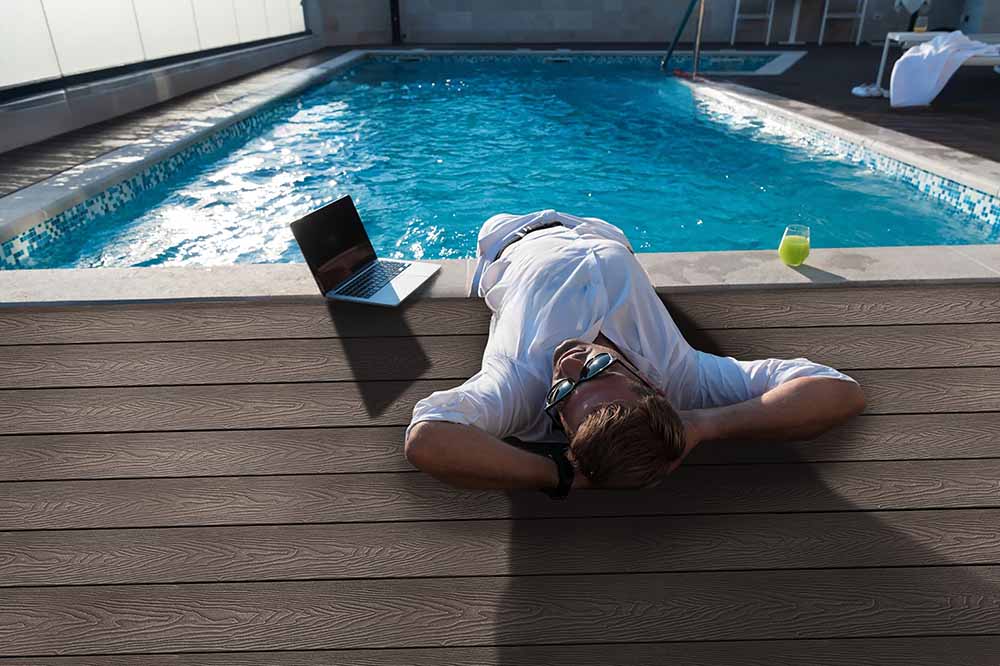
Composite decking eliminates many of these issues, offering a safer, more durable, and visually appealing solution for pool environments.
Designing Your Pool Area with Composite Decking
Beyond practicality, composite decking around pool allows for creative design:
Multi-Level Decks: Build elevated platforms for sunbathing, seating, or dining.
Integrated Lighting: LED strips, recessed lights, or solar fixtures enhance ambiance and safety.
Outdoor Furniture: Composite decking pairs beautifully with loungers, tables, and umbrellas.
Planters and Landscaping: Combine decking with greenery, flowers, or decorative stones for a resort-like feel.
Curved or Geometric Layouts: Many composite brands allow for flexible cuts, enabling unique deck shapes around pool contours.
Ideal Composite Decking for Above Ground Pools
Above ground pools present specific challenges. The decking must support elevated structures and ensure safety. Consider these options:
Modular Composite Deck Kits: Pre-fabricated sections designed for above ground pools simplify installation.
Capped or PVC Composites: Offer superior water resistance for elevated edges.
Slip-Resistant Surfaces: Essential for the ladder area and high-traffic points.
Proper planning ensures your above ground pool area is both functional and stylish.
Conclusion
Selecting the right composite decking around pool from Hosung can transform your backyard into a safe, low-maintenance, and aesthetically stunning retreat. With options like WPC, capped composites, PVC, and recycled plastic decking, homeowners can find a solution that balances durability, beauty, and safety. Prioritize slip resistance, heat management, and proper installation techniques to maximize your pool deck’s lifespan and performance.
Whether for an in-ground pool, an above ground pool, or a modern resort-style backyard, composite decking is the ultimate choice for poolside elegance and long-term reliability. Invest wisely, follow best practices, and enjoy a worry-free, stylish pool environment for years to come.