
Composite decking is an innovative solution that has gained immense popularity over the last few decades. It’s a low-maintenance alternative to traditional wood decking, made from a combination of wood fibers and plastic. Known for its durability, versatility, and aesthetic appeal, composite decking has become the material of choice for many homeowners and businesses. However, one key factor that must be considered during the installation of composite decking is drainage. Proper drainage ensures the longevity and performance of your deck by preventing water accumulation, mold growth, and other structural issues. In this article, we will dive deep into the importance of composite decking drainage, how to achieve optimal drainage, and the best practices to keep your deck in excellent condition for years to come.
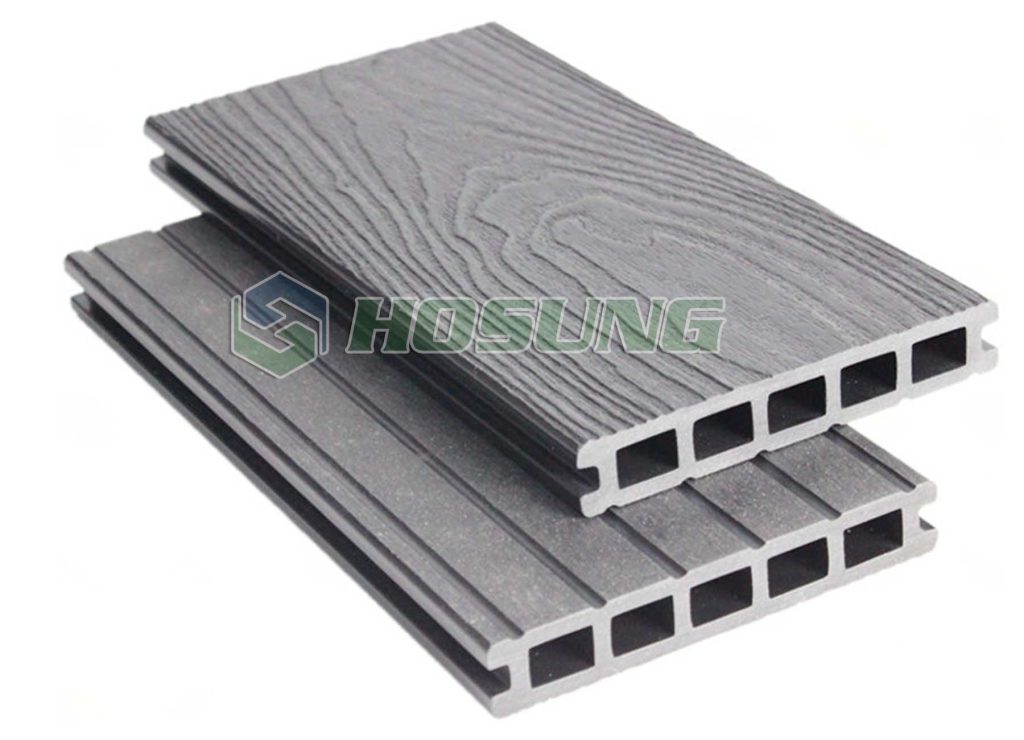
Table of Contents
Why Drainage is Important for Composite Decking
Before we explore how to achieve proper drainage, let’s first understand why it’s so important for composite decking.
1. Prevents Water Damage
Water pooling beneath your deck can cause significant damage over time. Composite decking, though durable, can suffer from the effects of constant exposure to moisture. When water is unable to flow away from the deck structure, it can lead to warping, rotting, and cracking. Therefore, effective drainage systems are essential to keeping your deck in optimal condition.
2. Reduces Mold and Mildew Growth
Moisture accumulation under your deck can also encourage the growth of mold and mildew. These not only affect the appearance of your decking but can also lead to unpleasant odors and potential health risks. Mold can spread quickly if it is not properly addressed, making proper drainage a critical factor in maintaining a clean and healthy deck environment.
3. Maintains Structural Integrity
When water is trapped beneath composite decking, it can weaken the support structure. Over time, this can result in sagging or even structural failure in extreme cases. A well-drained deck, on the other hand, will ensure that the substructure remains strong and intact for many years.
4. Improves Aesthetic Appeal
Water stains, algae, and mold can quickly tarnish the look of your deck. In addition to compromising the aesthetic value of your outdoor space, this can reduce the overall appeal of your property. Effective drainage ensures that water flows off and away from the deck, helping to maintain a clean and polished look.
Types of Drainage Systems for Composite Decking
1. Under-Deck Drainage Systems (Gutter Systems)
Under-deck drainage systems are designed to channel water away from the deck’s substructure. These systems are often installed beneath the decking and consist of troughs, gutters, and downspouts that direct water away from the deck. The main benefits of under-deck drainage systems include:
Prevents Water Pooling: These systems are particularly useful in areas with heavy rainfall or high humidity, as they prevent water from collecting under the deck.
Increased Durability: By preventing moisture from accumulating under the deck, you can reduce the risk of mold, mildew, and rot that can affect the decking material and substructure.
Creates Usable Space Below the Deck: Some under-deck drainage systems also create a dry area beneath the deck, which can be used for additional storage or outdoor living space.
2. Trench Drain Systems
A trench drain system, also known as a linear drain, runs parallel to the deck and collects water along its length. This system works best for decks built near areas with poor natural drainage or high water runoff. Trench drains can be installed around the perimeter of the deck or under specific areas that are prone to water accumulation.
Benefits of trench drain systems include:
Easy Installation: Trench drains are often easier to install than complex gutter systems.
Highly Effective: They collect water over a large surface area, reducing the risk of pooling and ensuring that water is quickly directed away from the deck.
Customizable: Trench drains can be customized to suit the specific design and layout of your deck.
3. Sump Pump Systems
A sump pump system is an advanced drainage solution used in cases where water accumulates underneath the deck despite efforts to install drainage systems. This system consists of a sump basin, a pump, and piping to direct the water away from the deck.
Sump pump systems are ideal for:
Decks in Low-Lying Areas: If your deck is installed in an area with poor natural drainage, a sump pump can prevent water buildup.
Areas with Heavy Rainfall: A sump pump system is highly effective in locations with frequent or heavy rainfall, as it can quickly pump water out and away from the deck.
4. Perimeter Drainage Systems
Perimeter drainage systems are installed around the outer edges of the deck, directing water toward appropriate drainage points such as downspouts or nearby storm drains. These systems are ideal for decks that are elevated, allowing water to run off the surface and into the drainage system.
The advantages of perimeter drainage systems are:
Enhanced Water Flow: These systems prevent water from flowing toward the deck’s support beams, helping to maintain structural integrity.
Minimal Aesthetic Impact: Perimeter drainage systems are usually unobtrusive and do not affect the appearance of your deck.
Key Components of Composite Decking Drainage
To ensure proper drainage, several components need to be considered during the installation and design of composite decking. These include:
1. Deck Slope
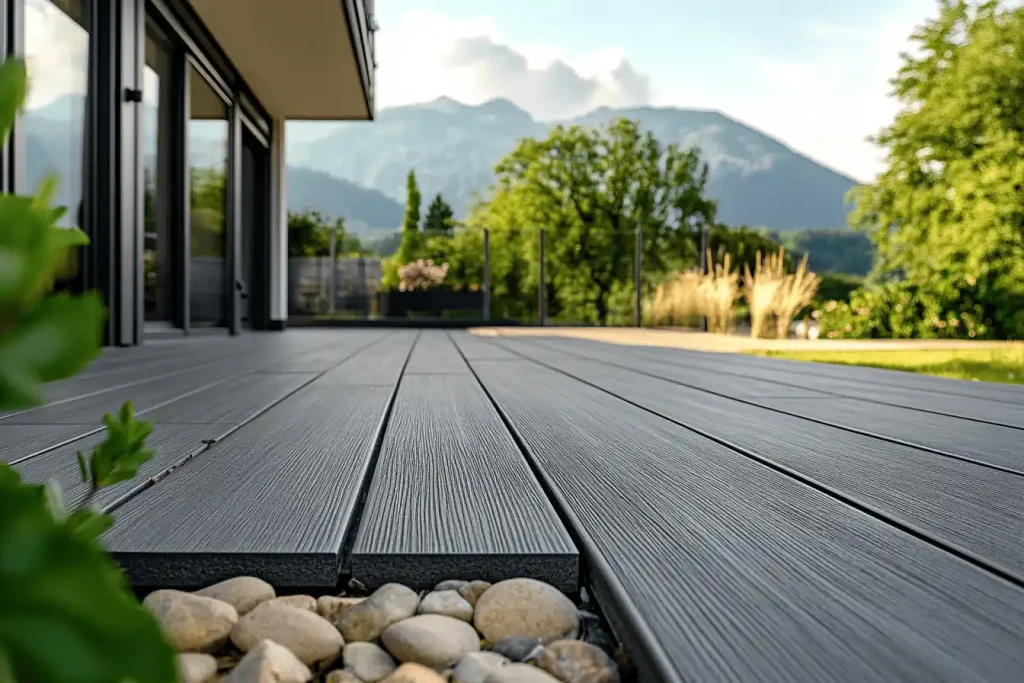
The slope of your deck is a crucial factor in ensuring water drains effectively. Composite decking should ideally be installed with a slight slope, typically between 1/8″ and 1/4″ per foot. This ensures that water flows off the deck surface instead of accumulating. Without this slope, the deck may collect water, leading to the problems discussed earlier.
2. Gaps Between Deck Boards
One of the standout features of composite decking is the interlocking design of the boards, which creates small gaps that help with drainage. These gaps are designed to allow water to pass through the deck and flow into the drainage system beneath. Be sure to follow the manufacturer’s guidelines on board spacing to maintain proper drainage.
3. Under-Deck Drainage Systems
An under-deck drainage system is an additional feature that can be installed to further protect your composite deck. These systems channel water away from the deck, preventing it from accumulating underneath. Typically, a series of troughs, gutters, and downspouts are used to direct the water toward an appropriate drainage location, such as a gutter system or drainage pipe.
4. Deck Flashing
Deck flashing is a protective material installed around the edges of your deck to prevent water from seeping into the deck structure. This is particularly important in areas where the deck meets a wall or other surface. Flashing helps to direct water away from the deck, preventing water damage and mold growth.
5. Proper Drainage Around the Deck’s Foundation
The foundation of your deck plays a major role in overall drainage. When installing composite decking, ensure that the foundation is designed to allow water to flow freely around and under the deck. This could include digging trenches for proper water runoff or creating channels to direct the water toward the drainage system.
Best Practices for Achieving Proper Drainage in Composite Decking
Now that we understand the importance of composite decking drainage, let’s take a look at some best practices for ensuring proper water management:
1. Install a Substructure with Drainage in Mind
The substructure of your deck is just as important as the surface itself when it comes to drainage. Make sure that the framing of your deck is raised above the ground, providing enough space for water to flow underneath. Additionally, use materials like pressure-treated lumber or galvanized steel that can resist water damage.
2. Use a Decking System with Integrated Drainage
Some composite decking systems come with integrated drainage features. These systems have built-in channels or grooves that guide water away from the deck. Opting for such a system can make your job easier and improve the performance of your deck’s drainage.
3. Consider Under-Deck Enclosures
If you want to fully protect the underside of your deck, consider using under-deck enclosures. These enclosures provide a waterproof barrier that keeps the area beneath your deck dry. This is especially important for decks built in areas with frequent rainfall or high humidity.
4. Maintain Regular Cleaning and Inspection
It’s essential to keep your deck and drainage systems clean and free from debris. Leaves, dirt, and twigs can clog up gaps and channels, causing water to pool. Regularly inspect your deck to ensure that water is flowing as intended and that there are no blockages.
5. Use a Proper Gutter System
If you install an under-deck drainage system, make sure it’s connected to a reliable gutter system. The gutters will capture and redirect the water to an appropriate drainage outlet, preventing water from accumulating under the deck.
6. Proper Installation of Composite Decking
Proper installation of your composite decking is key to ensuring drainage is effective. Follow the manufacturer’s instructions on spacing, slope, and fastening to achieve the best results. If in doubt, hiring a professional installer can help ensure everything is done correctly.
Troubleshooting Common Drainage Issues
Even with proper installation, some common drainage issues may arise. Here are some tips for troubleshooting:
1. Pooling Water
If you notice pooling water on your deck’s surface, check the slope of the deck. If the slope is inadequate, water will not flow off the surface. Adjust the slope by lifting the boards or adding shims where necessary.
2. Clogged Gaps and Channels
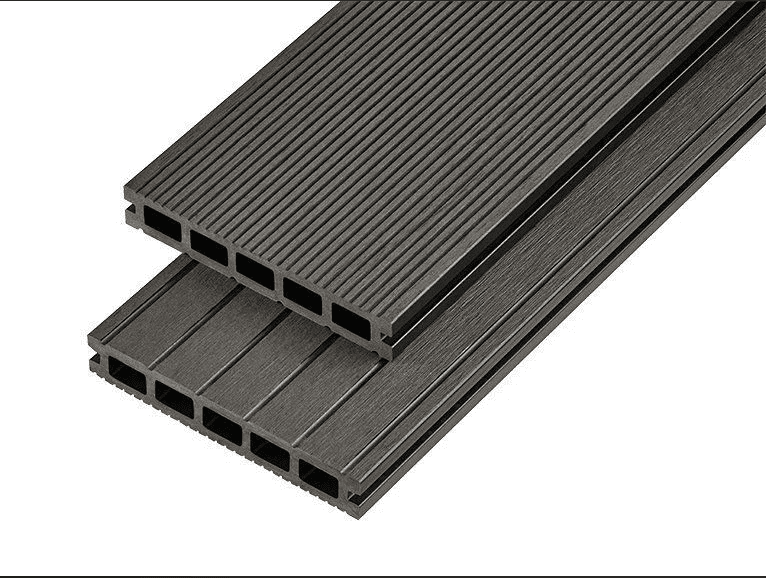
Over time, debris can accumulate in the gaps between your composite decking boards from Hosung WPC or in drainage channels. Regular cleaning is the best way to prevent clogging. Use a broom, pressure washer, or a vacuum to remove leaves, dirt, and other debris.
3. Moisture Damage
If you notice signs of moisture damage, such as warping or discoloration, check the substructure for water accumulation. Ensure that your deck is properly ventilated, and consider installing or upgrading your drainage system if needed.
How Weather and Climate Affect Composite Decking Drainage
When planning for composite decking drainage, it’s important to take into account the local weather and climate. Environmental conditions can have a significant impact on water drainage and the overall performance of your deck. Here’s how different weather conditions may affect your drainage setup:
1. Heavy Rain and Storms
In regions with heavy rainfall or frequent storms, it is essential to have an advanced drainage system in place. Excessive rain can overwhelm standard drainage systems, causing water to pool and potentially damage the deck or underlying structure. Installing under-deck drainage systems or trench drains will ensure that excess water is channeled away quickly.
Key Considerations:
Opt for larger downspouts and gutters to handle large volumes of water.
Choose a drainage system with a higher flow capacity to prevent clogging during periods of heavy rainfall.
2. Snow and Freezing Conditions
In areas with cold winters, the freezing and thawing of water can create challenges for drainage systems. When snow melts or water accumulates, it may freeze under the deck or around the substructure, leading to potential damage. This is especially true if the deck is not sloped properly, as water can get trapped.
Key Considerations:
Ensure that your deck has sufficient slope to allow water to flow freely during the thawing process.
Install drainage systems that prevent ice buildup, such as under-deck drainage systems with heated channels.
Consider installing a sump pump to address any water that accumulates during the winter months.
3. High Humidity and Moisture-Rich Environments
In humid or coastal areas, where moisture levels are consistently high, moisture can easily accumulate under the deck. Over time, this can lead to mold growth, rotting, and an unpleasant odor. High humidity can also accelerate the deterioration of composite decking materials.
Key Considerations:
Use a high-quality under-deck drainage system to prevent water from stagnating beneath the deck.
Install ventilation features around the deck’s perimeter to allow air to circulate and help dry out any moisture that accumulates.
Regularly clean your deck to remove leaves, dirt, and other organic matter that can trap moisture.
4. Wind Exposure
Wind can play a significant role in how water behaves on your deck. Strong winds can carry rain or snow across the surface, potentially overwhelming drainage systems. Furthermore, wind can also blow debris onto the deck, clogging gaps and channels in the drainage system.
Key Considerations:
Ensure your drainage systems are robust and capable of handling higher-than-usual volumes of water.
Regularly inspect your deck for debris that may obstruct proper drainage, especially after storms or heavy winds.
5. Heat and Sunlight
In areas with extreme heat or prolonged periods of sunlight, composite decking can expand and contract. If water is trapped beneath the deck during these conditions, it can exacerbate the risk of damage to the material. Additionally, prolonged exposure to the sun can dry out composite decking, causing cracks or warping.
Key Considerations:
Monitor your deck for signs of warping and address any drainage issues promptly.
Consider using darker-colored composite decking that resists fading in the sun.
Conclusion: Protecting Your Composite Deck Investment
Proper drainage is crucial to maintaining the durability, appearance, and overall integrity of your composite decking. By ensuring that your deck has a slight slope, sufficient spacing between boards, and an effective drainage system, you can prevent a host of potential issues, such as water damage, mold growth, and structural weakening.
Investing in quality drainage solutions not only extends the life of your composite decking but also enhances the overall enjoyment of your outdoor living space. Whether you choose to install an under-deck drainage system or rely on natural slope, make sure to keep drainage in mind when planning and installing your composite deck.