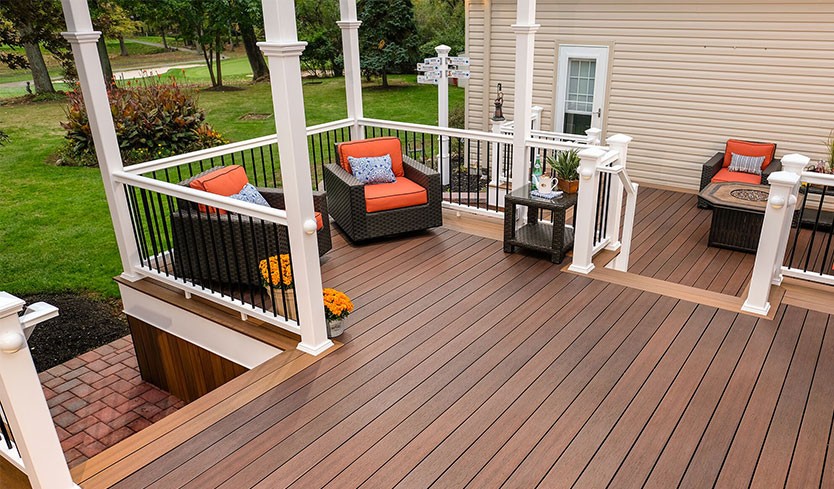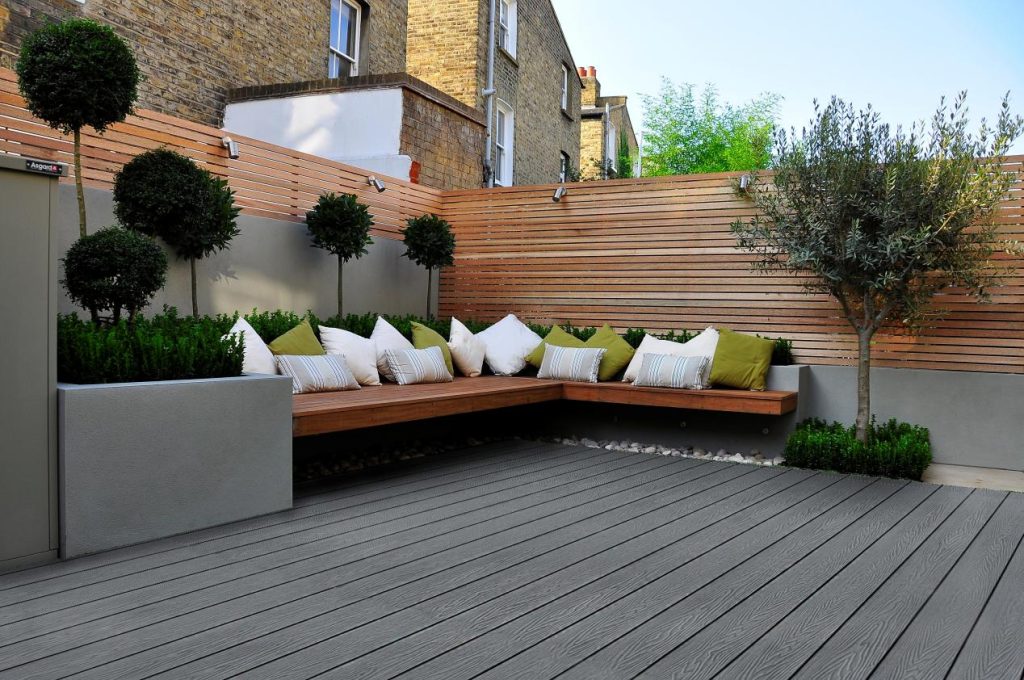
Outdoor flooring has become an important part of residential, commercial, hospitality, and recreational projects. Property owners want attractive outdoor spaces that are comfortable and easy to maintain, while contractors and distributors need materials that provide consistent quality, reliable performance, and efficient installation. For these reasons, composite decking has become a popular alternative to traditional timber decking. Choosing the right composite decking material manufacturers is an important decision for buyers who need dependable products for long-term projects. A manufacturer does more than supply decking boards. Its material selection, production technology, quality control, product design, customization capabilities, packaging, and delivery services can all influence the final result.
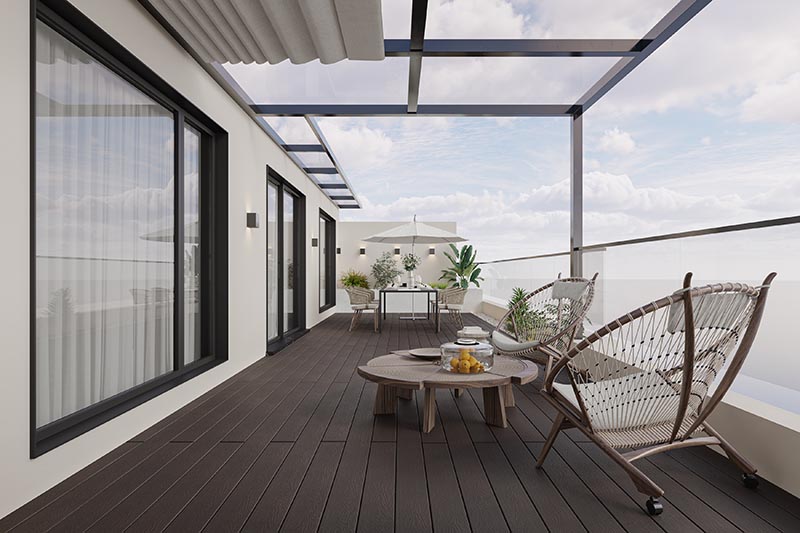
Table of Contents
What Is Composite Decking Material?
Composite decking is generally manufactured by combining wood-based fibers or other reinforcing materials with polymer materials and functional additives. The mixture is processed under controlled conditions to create decking boards with a consistent structure and appearance.
Compared with conventional timber, composite decking can offer greater resistance to moisture, cracking, splitting, and everyday wear. It also requires less routine maintenance because the material does not normally need the same level of staining, sealing, or painting associated with many timber products.
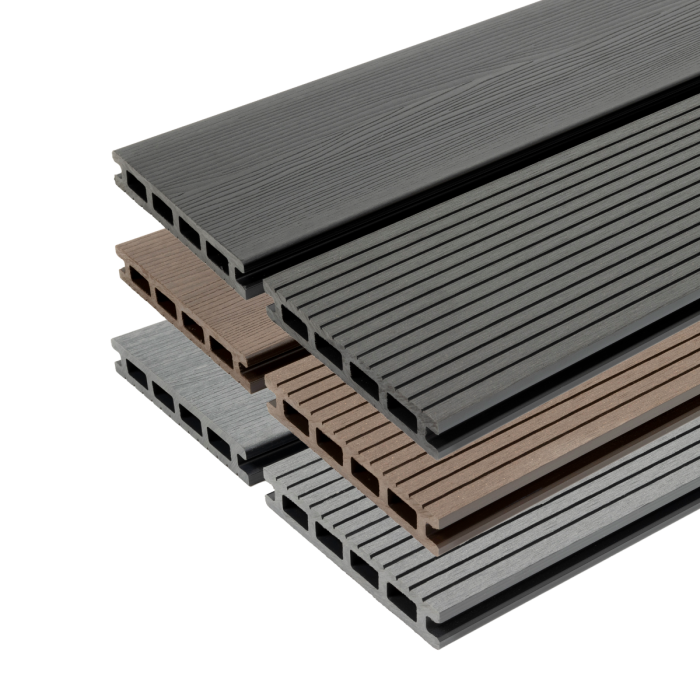
Composite decking can be produced in different surface textures, profiles, colors, dimensions, and structural configurations. Depending on the manufacturing process, products may feature solid or hollow structures and different surface treatments designed to provide specific visual and functional characteristics.
For buyers, understanding the basic composition of composite decking is essential because material quality directly affects dimensional stability, surface performance, appearance, and service life.
Why the Manufacturer Matters
Not all decking products are manufactured according to the same standards. Two products may look similar but perform differently because of variations in raw materials, formulation, processing temperature, extrusion technology, surface treatment, and quality inspection.
Experienced composite decking material manufacturers usually have established production systems covering raw material preparation, mixing, extrusion, forming, surface treatment, cutting, inspection, and packaging. A complete manufacturing process helps maintain consistency between production batches.
For distributors and project buyers, consistent quality is particularly important. If the color, dimensions, surface texture, or mechanical performance changes significantly from one batch to another, installation and project management can become more difficult.
A reliable manufacturer should therefore be evaluated not only by product appearance but also by its production capabilities and quality management procedures.
Key Materials Used in Composite Decking
The material formulation is one of the most important factors affecting decking performance. Common formulations may contain wood fibers, polymer resins, stabilizers, pigments, lubricants, and other functional additives.
Wood fibers can contribute to the natural appearance and structural characteristics of the board, while polymer components provide moisture resistance and help bind the material together. Additives can improve processing performance, color stability, weather resistance, and other characteristics.
The proportion and quality of each component matter. Low-quality raw materials may reduce surface consistency or long-term performance, while an appropriately controlled formulation can produce boards with better dimensional stability and more predictable properties.
When comparing suppliers, buyers should ask about the material composition, raw material sources, formulation standards, and quality-control procedures instead of evaluating products solely according to price.
Production Technology and Quality Control
Manufacturing technology plays a major role in determining the final quality of composite decking. During production, raw materials need to be mixed evenly before entering the forming process. Temperature, pressure, extrusion speed, cooling, and dimensional control must also be carefully managed.
Surface treatment is another important production stage. A textured or brushed surface can improve the visual appearance of decking and create a more natural look. Some products also use co-extrusion or protective surface technologies to enhance resistance to staining, fading, moisture, and everyday use.
Quality control should continue throughout the production process. Manufacturers may inspect dimensions, color consistency, surface condition, density, mechanical properties, water absorption, and other relevant characteristics.
For large projects, buyers should also consider whether the manufacturer can maintain stable quality across repeated orders. A supplier capable of producing consistent products over time can reduce replacement risks and simplify project planning.
Product Design and Available Options
Different projects require different decking specifications. A residential balcony may need a compact profile, while a commercial outdoor area may require wider or stronger boards. Manufacturers may therefore offer multiple dimensions, profiles, surface textures, and installation systems.
Color selection is another important consideration. Common options include natural wood-inspired shades, gray tones, brown tones, and contemporary neutral colors. Some manufacturers can also develop customized colors according to project requirements.
Surface patterns can vary from realistic wood grain to modern linear textures. The choice should match the project’s architectural style and expected usage conditions.
Buyers should also check whether matching accessories are available. Clips, screws, edge boards, joists, fascia boards, and other components can make installation easier and help create a complete decking system.
Indoor and Outdoor Application Considerations
Although composite decking is commonly associated with outdoor applications, the appropriate product should always be selected according to its intended environment.
Outdoor installations may experience rain, sunlight, temperature fluctuations, humidity, and frequent foot traffic. Therefore, resistance to moisture, ultraviolet exposure, temperature changes, and surface wear should be considered.
For areas with heavy use, structural strength and surface durability become particularly important. For residential applications, appearance, comfort, maintenance requirements, and installation convenience may receive greater attention.
A professional manufacturer should be able to provide technical information that helps buyers determine whether a specific product is suitable for their intended application.
Customization for Wholesale Buyers
For importers, distributors, contractors, and project developers, customization can be an important purchasing factor. Different markets may have different preferences regarding colors, board dimensions, surface textures, packaging, and accessories.
Many composite decking material manufacturers support OEM or customized production for qualified buyers. Customization may include product dimensions, colors, surface patterns, packaging specifications, labeling, and accessory combinations.
Before placing a customized order, buyers should confirm minimum order quantities, sample procedures, development timelines, production capacity, packaging requirements, and inspection standards.
Samples are especially useful for large projects. They allow buyers to evaluate color, texture, dimensions, surface quality, and installation compatibility before committing to a larger order.
How to Compare Manufacturers
When selecting a manufacturer, buyers should evaluate several factors rather than choosing the lowest quotation.
First, examine manufacturing experience and production capacity. A supplier with stable facilities and experienced production personnel is generally better prepared for repeated or large-volume orders.
Second, review quality-control procedures. Ask what tests are conducted and how production batches are inspected.
Third, compare product specifications. Look at dimensions, material composition, density, surface treatment, mechanical performance, water resistance, and weathering characteristics.
Fourth, evaluate customization capabilities. If your market requires specific colors, profiles, packaging, or accessories, confirm these requirements before making a purchasing decision.
Fifth, consider communication and technical support. Clear communication can prevent misunderstandings regarding specifications, quantities, packaging, and delivery schedules.
Finally, evaluate the manufacturer’s ability to maintain stable supply. Competitive pricing is useful, but dependable production and delivery are often more important for long-term business relationships.
Questions to Ask Before Ordering
Before purchasing composite decking, buyers should prepare a list of technical and commercial questions. These may include:
- What materials are used in the decking formulation?
- What board dimensions and profiles are available?
- Are solid and hollow options offered?
- What surface textures and colors are available?
- How is product quality inspected?
- Can samples be provided before bulk production?
- What customization services are available?
- What is the minimum order quantity?
- What packaging methods are used?
- Are installation accessories available?
- Can the supplier support repeat orders with consistent specifications?
- What technical documents can be provided?
Clear answers to these questions can make supplier comparison much easier and reduce purchasing risks.
Conclusion
Composite decking can provide an attractive, durable, and relatively low-maintenance solution for many outdoor flooring projects. However, product performance depends heavily on material formulation, manufacturing technology, quality control, and proper product selection.
For this reason, choosing reliable composite decking material manufacturers should be based on more than appearance or initial price. Buyers should examine raw materials, production capabilities, quality inspection, product options, customization services, technical support, packaging, and supply stability.
A capable composite decking manufacturer should be able to provide consistent products, clear specifications, professional communication, and dependable production support. By carefully evaluating these factors before placing an order, distributors, contractors, importers, and project buyers can select composite decking materials that better match their application requirements and establish a stronger foundation for long-term cooperation.