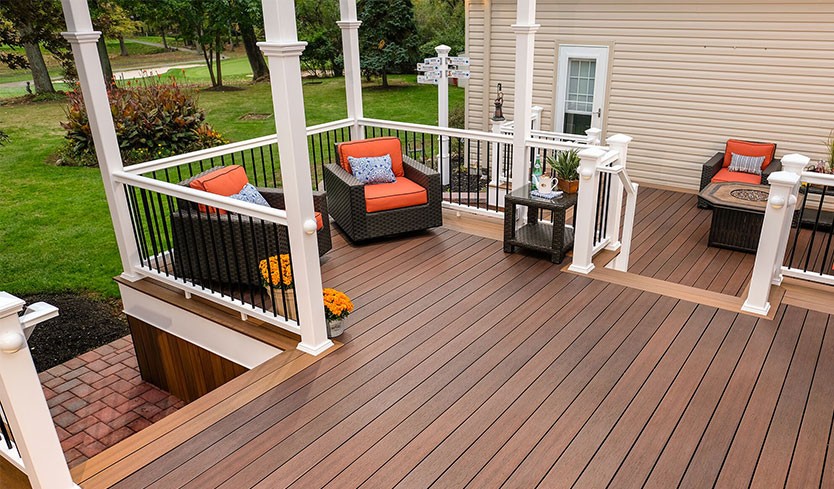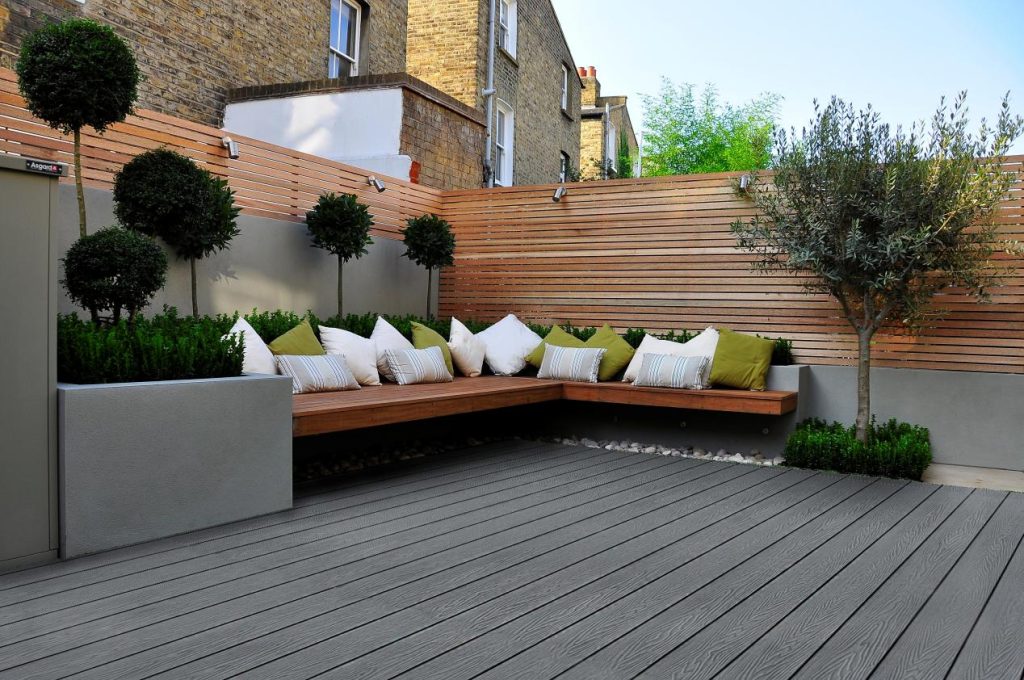
When it comes to designing the perfect outdoor oasis around your pool, the decking material you choose plays a crucial role in both aesthetics and functionality. Composite pool decking is becoming a top choice for homeowners with both inground and above-ground pools, thanks to its durability, low maintenance, and attractive appearance. This guide will explore everything you need to know about composite decking for pools, helping you decide if it’s the right choice for your outdoor space.
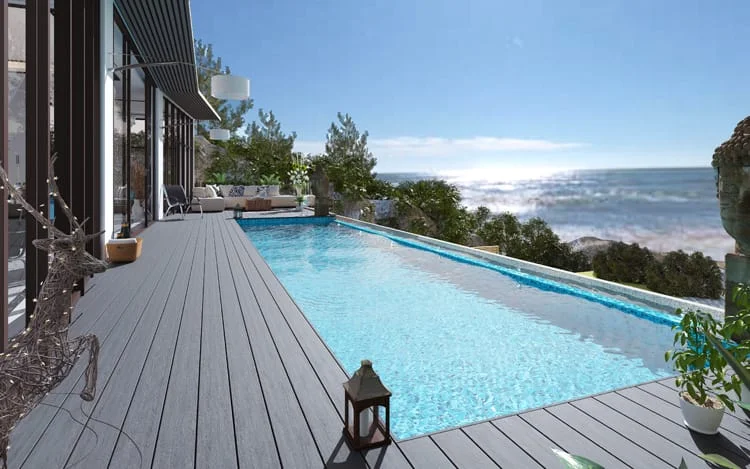
Ecoscape UK and Similar Brands
Table of Contents
What is Composite Pool Decking?
Composite decking is made from a blend of wood fibers and plastic (often polyethylene or polypropylene), creating a material that looks like wood but doesn’t suffer from many of the disadvantages of natural wood, such as warping, splintering, or rotting. The addition of plastic also makes composite decking more resistant to moisture, which is a significant advantage for poolside environments.
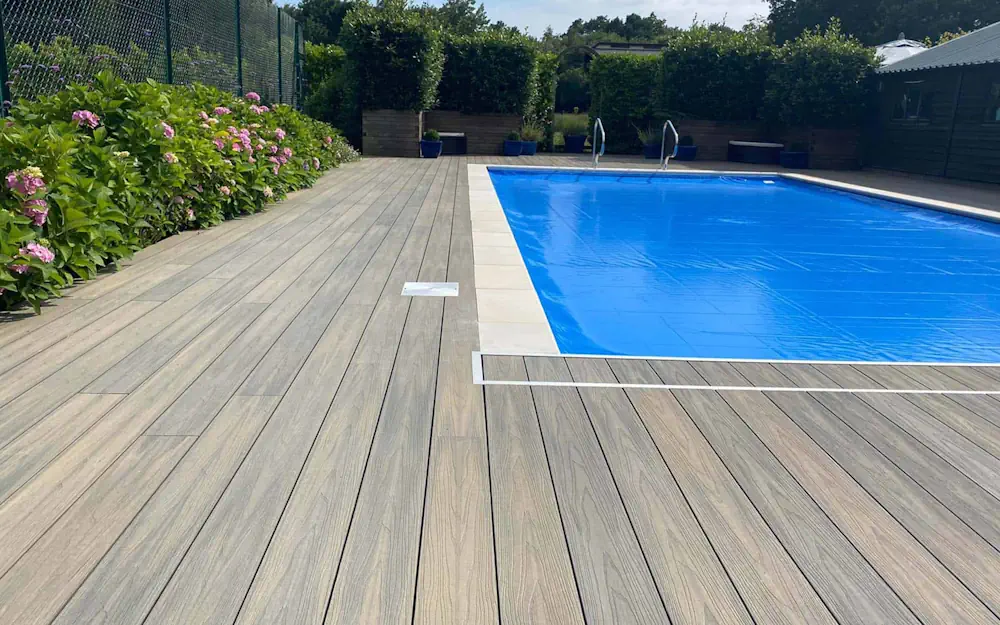
Benefits of Composite Decking for Pool Areas
a. Durability
Composite decking is highly resistant to the elements. Unlike wood, which can warp or rot from exposure to moisture, composite decking is engineered to resist damage from water, UV rays, and temperature fluctuations. This makes it ideal for areas around pools, where the deck is constantly exposed to moisture and sunlight.
b. Low Maintenance
One of the biggest selling points of composite decking is its low-maintenance nature. Unlike traditional wood decks, which need to be stained, sanded, and sealed regularly, composite decking only requires occasional cleaning with soap and water. This saves homeowners both time and money over the years.
c. Safety
Safety is a top concern for poolside areas. Composite decking materials are designed to be slip-resistant, even when wet. Many composite decking brands offer textured surfaces that enhance traction, reducing the likelihood of accidents around the pool.
d. Aesthetic Appeal
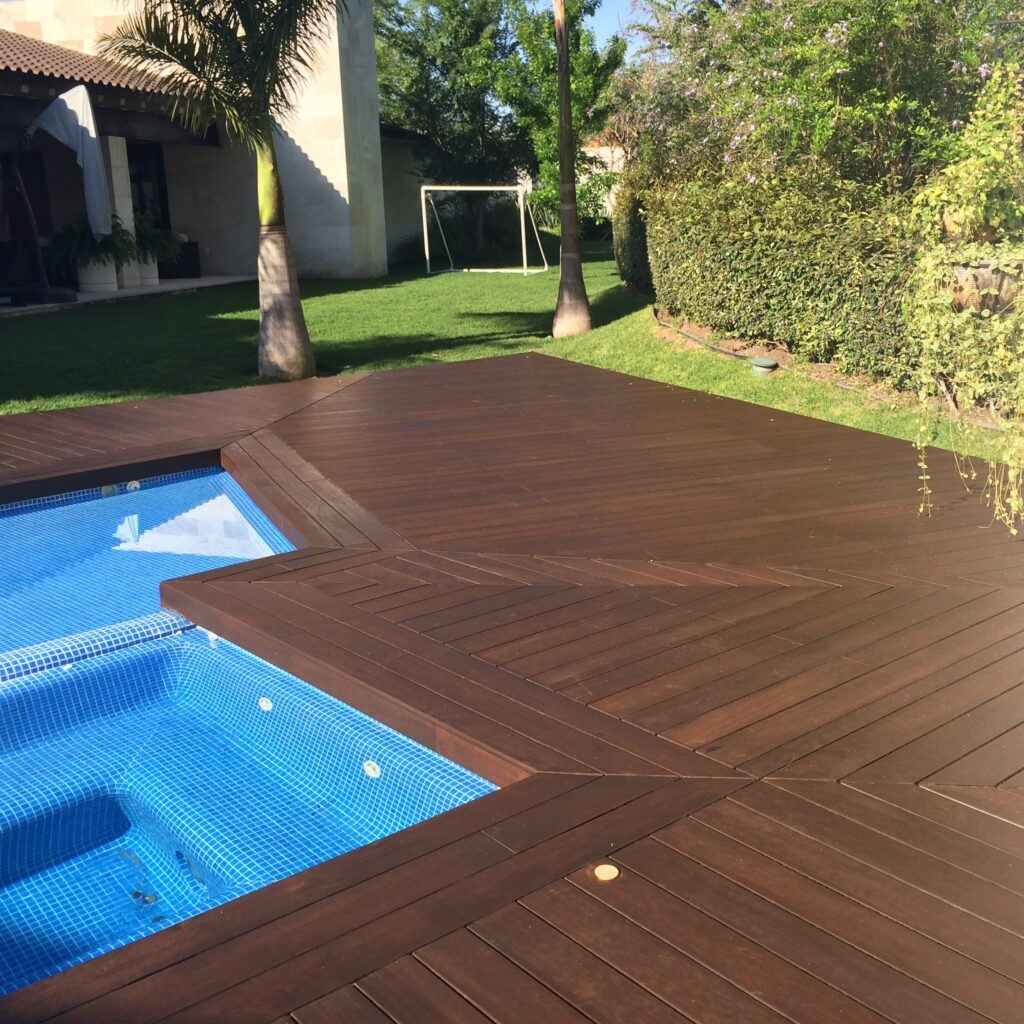
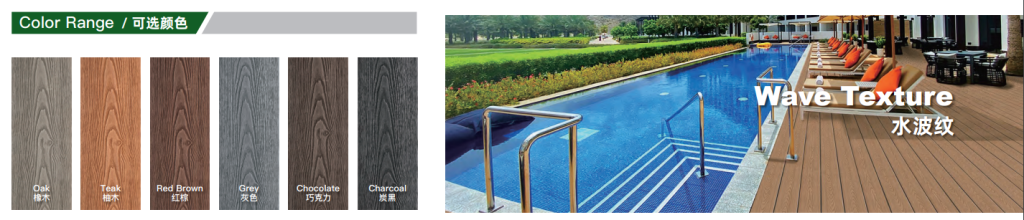
Composite decking is available in a wide range of colors, textures, and finishes. Whether you prefer a classic wood look or a more modern, sleek finish, there are options that will complement any poolside design. Many composite decks also feature natural-looking grain patterns that mimic the appearance of real wood, offering the best of both worlds.
e. Environmentally Friendly
Composite decking is often made from recycled materials, including wood scraps and plastic, making it a more environmentally friendly option compared to traditional wood decking. By choosing composite, you’re contributing to the reduction of waste and minimizing the need for deforestation.
Types of Composite Pool Decking
Composite decking comes in different varieties, each with its own benefits. Here are the most common types of composite decking materials used around pools:
a. Capped Composite Decking
Capped composite decking has a layer of plastic around the core, offering extra protection against moisture and UV damage. This type of decking is highly resistant to staining and fading, making it an excellent choice for pool areas where chlorine and other chemicals may come into contact with the deck surface.
b. Uncapped Composite Decking
Uncapped composite decking does not have the protective plastic coating found in capped varieties. While still resistant to moisture and decay, it may require more frequent cleaning and maintenance than capped decking. This type of decking is often more affordable but may not be the best option for poolside environments due to its lower resistance to stains and fading.
c. PVC Decking
While technically not composite, PVC decking is often grouped in the same category due to its similar characteristics. PVC decks are made entirely of plastic, making them highly resistant to water and chemical damage. However, they can be more slippery than composite decks when wet, so if you choose PVC for your pool deck, look for textured options.
Choosing the Right Composite Decking for Your Pool
When selecting composite decking for your pool area, it’s essential to consider several factors to ensure you choose the best material for your needs:
a. Pool Type
Whether you have an inground or above-ground pool, the decking material must be able to withstand the unique challenges of your specific pool setup.
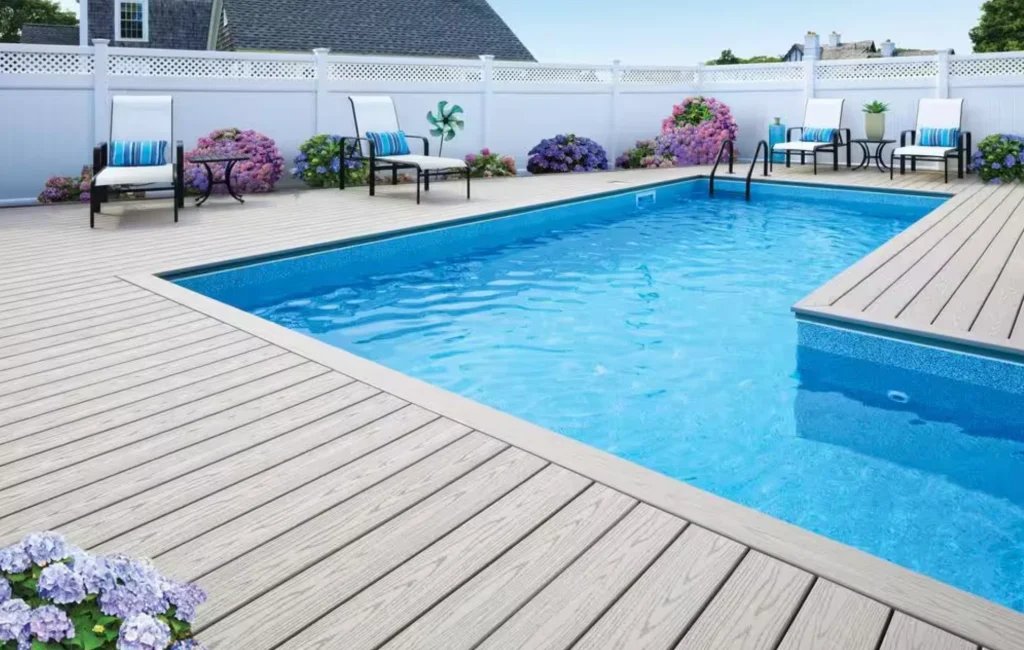
- Inground Pools: For inground pools, composite decking provides a sleek, modern appearance that enhances the overall aesthetic of your backyard. The deck will often cover a larger area, so choose a material that is durable and easy to maintain over time.
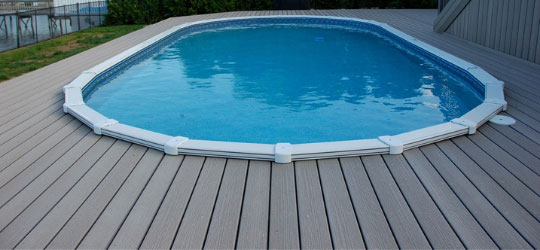
- Above Ground Pools: For above-ground pools, composite decking can be used to build a platform or a surrounding area that elevates the pool, giving it a more integrated look. Above-ground pool decks tend to be smaller, but it’s still crucial to choose a material that’s slip-resistant and durable in a wet environment.
b. Deck Design and Size
Consider the design and layout of your deck. If you plan to entertain or have seating around the pool, choose a decking material that provides ample space and is comfortable to walk on. Additionally, consider the aesthetics—composite decking comes in many colors, so select one that complements the colors of your pool, landscaping, and home.
c. Budget
Composite decking is typically more expensive than traditional wood, but it offers long-term savings due to its low maintenance requirements. It’s important to strike a balance between budget and quality. Capped composite decking may be pricier upfront but will likely save you more in the long run due to its durability.
Installation Process for Composite Pool Decking
While composite decking is relatively easy to install, it’s essential to follow the proper steps to ensure a secure, long-lasting deck. Here’s a quick overview of the installation process:
a. Prepare the Area
Begin by clearing the area around the pool. If you are installing a deck for an above-ground pool, you’ll need to create a level foundation. For inground pools, the installation process may involve creating a substructure that supports the composite decking.
b. Install the Frame
The frame is the foundation of the deck, and it’s crucial to use strong, durable materials like pressure-treated lumber or steel. Make sure the frame is level and properly aligned.
c. Lay the Decking Boards
Once the frame is in place, begin laying the composite decking boards. Most composite decking is installed using hidden fasteners, which create a smooth, fastener-free surface. Be sure to leave proper gaps between the boards to allow for expansion and contraction.
d. Finish with Trim and Accessories
To complete the deck, install any trim pieces around the edges of the deck. You may also want to add lighting, railings, or other accessories to enhance the functionality and appearance of your pool area.
Maintenance Tips for Composite Pool Decking
One of the main advantages of composite decking is its low maintenance. However, it’s still important to care for your deck to keep it looking its best:
a. Regular Cleaning
Although composite decking doesn’t require staining or sealing, it still needs to be cleaned regularly to remove dirt, leaves, and debris. Use a broom or leaf blower to clear the surface, and wash it with soap and water to remove stubborn stains.
b. Avoid Harsh Chemicals
While composite decking is resistant to water and chemicals, it’s still a good idea to avoid harsh cleaning products that can damage the surface. Opt for a mild detergent and a soft brush to clean the decking.
c. Inspect for Damage
Periodically inspect your composite deck for signs of wear, such as loose boards or damaged fasteners. Addressing small issues early on can prevent them from becoming bigger problems down the road.
Cost of Composite Pool Decking
The cost of composite pool decking can vary depending on the type of material you choose, the size of your deck, and your location. On average, composite decking for pool areas can cost between $20 and $40 per square foot, including installation. While the initial investment may be higher than traditional wood decking, the long-term savings in maintenance and replacement costs make composite decking a smart investment for pool owners.
Conclusion
Composite pool decking is a fantastic choice for both inground and above-ground pools, offering numerous benefits, including durability, low maintenance, safety, and aesthetic appeal. Whether you’re building a new pool deck or replacing an old one, composite decking is an investment that will enhance your pool area for years to come. By considering factors like pool type, deck design, budget, and maintenance requirements, you can choose the best composite decking for your needs and create a beautiful, functional outdoor space around your pool.
Need Help Designing Your Dream Pool Deck?
Hosung is a trusted provider of high-quality WPC (Wood Plastic Composite) materials perfect for pool decking. If you’re ready to transform your backyard into a resort-like retreat, feel free to contact us for a custom quote or product consultation.