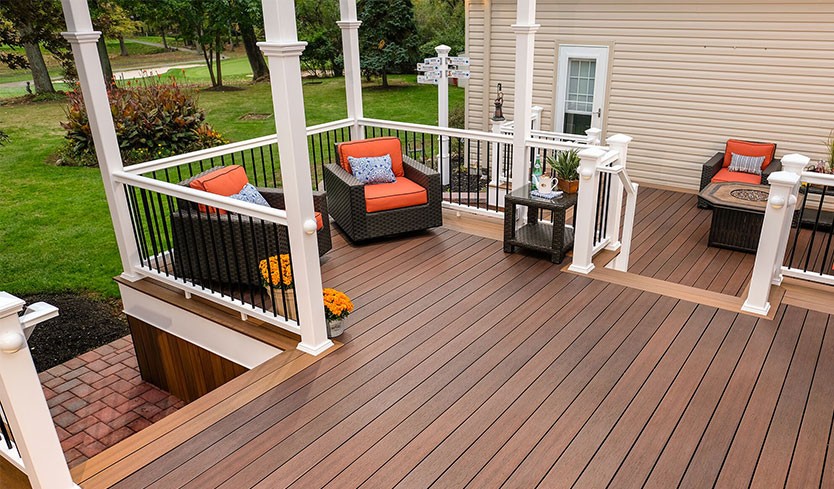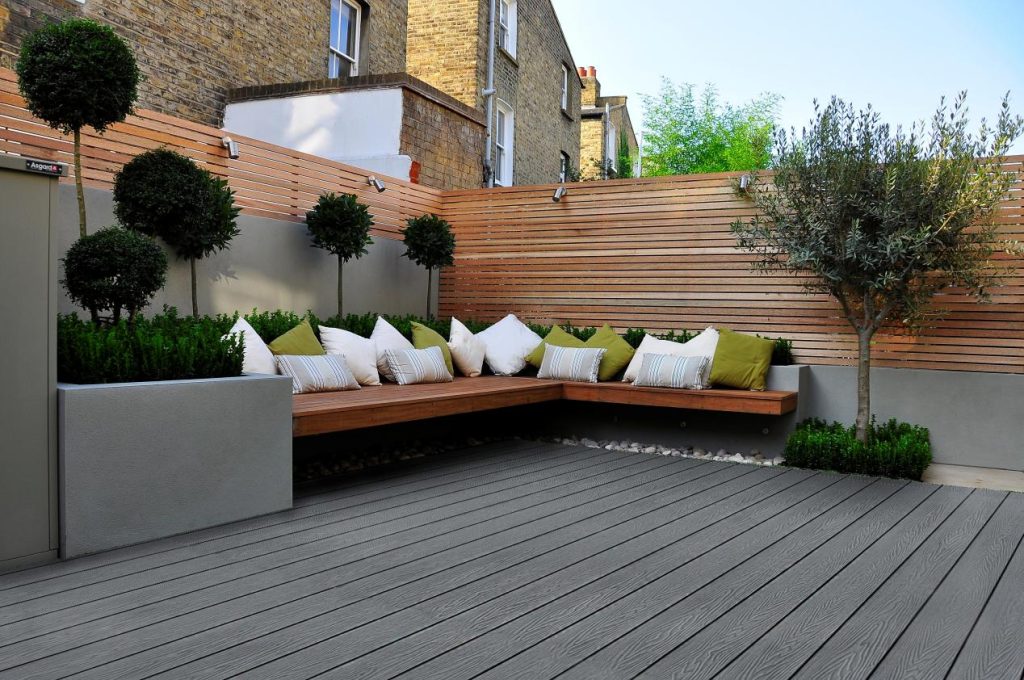
Composite decking has become an increasingly popular choice for outdoor living spaces because it combines practical performance with a wide range of design possibilities. However, composite decking is not a single uniform product. Different manufacturing methods, material compositions, surface structures, profiles, colors, and installation systems can create very different decking solutions. Understanding the different types of composite decking can help homeowners, contractors, architects, and project buyers select the right product for gardens, patios, balconies, pool areas, commercial spaces, and other outdoor applications. The best choice depends on factors such as appearance, moisture exposure, maintenance requirements, installation method, expected traffic, and project budget.
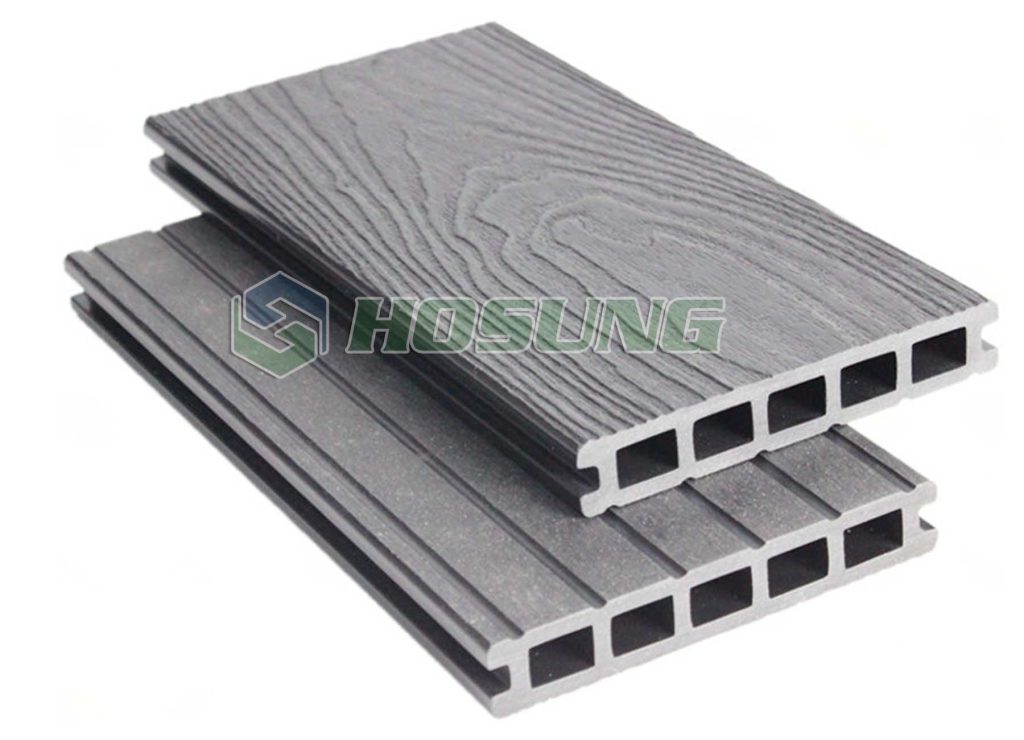
Table of Contents
Traditional Wood-Plastic Composite Decking
Wood-plastic composite decking is one of the most widely used categories of composite outdoor flooring. It is generally manufactured by combining wood fibers or wood flour with thermoplastic polymers and selected additives.
The wood component contributes a natural appearance and helps create a wood-like texture, while the polymer component provides resistance to moisture and improves dimensional stability compared with many conventional wood products.
This type of decking is available in many profiles and surface finishes. Some products have a relatively smooth surface, while others feature embossed wood-grain textures designed to create a more natural appearance.
Traditional wood-plastic composite decking is suitable for:
- Residential terraces
- Garden decks
- Patios
- Balconies
- Outdoor dining areas
- Walkways
- Commercial landscaping projects
Its balance between appearance, durability, and maintenance makes it a practical option for many general outdoor applications.
Capped Composite Decking
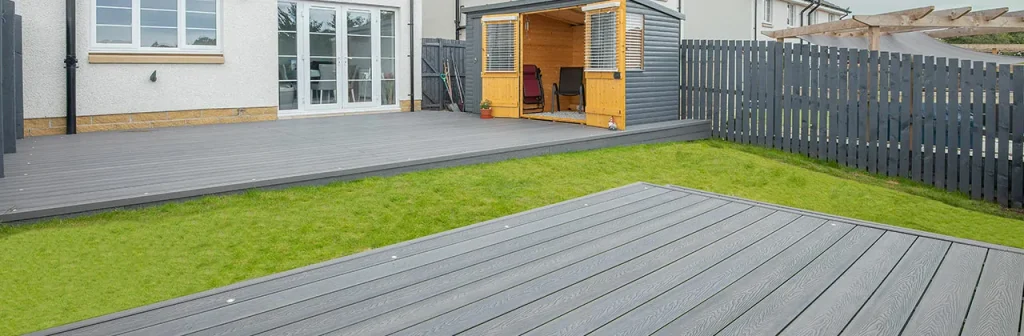
Capped composite decking is designed with an additional protective polymer layer around the core of the board. This outer layer is often referred to as a cap or protective shell.
The capped construction provides an additional barrier against moisture, stains, fading, and everyday surface wear. Because the surface layer protects much of the internal composite material, capped boards can offer enhanced resistance in demanding outdoor environments.
Another important advantage is design flexibility. The outer layer can be produced in different colors, textures, and patterns, allowing manufacturers to create decking with a more realistic wood appearance.
Capped composite decking is particularly useful for areas where surface appearance is important, including:
- Residential patios
- Poolside decks
- Outdoor entertainment areas
- Restaurant terraces
- Hotel outdoor spaces
- High-traffic commercial decks
When choosing capped decking, buyers should evaluate the quality and thickness of the protective layer as well as the construction of the underlying board.
Uncapped Composite Decking
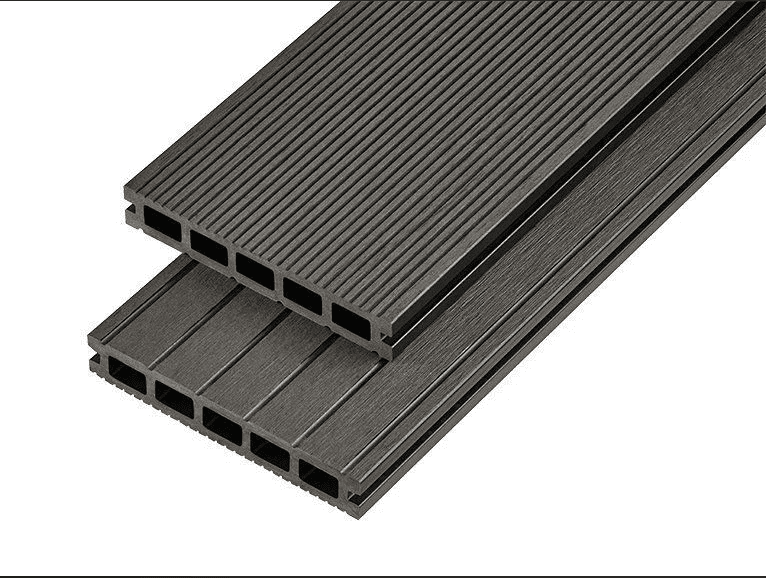
Uncapped composite decking does not have a separate protective outer shell. Instead, the composite material forms the exposed surface of the board.
This construction can provide a more straightforward and cost-effective decking solution. Depending on the formulation and manufacturing process, uncapped boards can still provide good resistance to outdoor conditions.
One advantage of uncapped decking is that the color and material are consistent throughout the board. Minor scratches or surface damage may therefore be less visually noticeable than they would be on some products with a highly contrasting surface layer.
Uncapped decking can be considered for:
- Garden platforms
- Residential decks
- Low-to-medium traffic outdoor areas
- Landscaping projects
- Budget-conscious installations
However, the performance of an uncapped board depends heavily on its material formulation, processing quality, density, and surface treatment.
PVC Composite-Style Decking
Some decking products are manufactured primarily from polymer materials rather than using a significant wood-fiber component. PVC-based decking is one example.
Because it contains little or no wood fiber, this type of decking behaves differently from conventional wood-plastic composite boards. It can offer low moisture absorption and is particularly suitable for environments where water exposure is a major consideration.
PVC-based decking is often selected for:
- Pool surrounds
- Wet outdoor areas
- Marine-adjacent applications
- Balconies
- Rooftop terraces
- Areas with frequent rain
Its relatively low moisture absorption can be a significant benefit. At the same time, buyers should consider thermal expansion, surface texture, structural requirements, and installation details before choosing this type of decking.
Hollow Composite Decking
Composite decking boards can also be classified according to their internal structure. Hollow decking contains internal cavities or channels running through the board.
The hollow structure reduces the amount of material required to produce the board, which can lower weight and make transportation and handling easier. It can also make installation more convenient for certain projects.
Typical benefits include:
- Lower board weight
- Easier transportation
- Reduced material consumption
- Convenient handling
- Potentially lower overall project cost
However, hollow boards require appropriate support spacing and installation practices. The internal structure can also affect impact resistance and load-bearing performance.
For residential projects and decorative applications, hollow decking can be an efficient choice. For heavy commercial traffic or applications involving substantial loads, buyers should carefully check the board’s technical specifications.
Solid Composite Decking
Solid composite decking has a relatively dense internal structure without large continuous cavities.
Because there is more material within the board, solid decking can provide higher mass and robust structural performance. It may be preferred for projects that require greater resistance to heavy loads, impacts, or intensive use.
Common applications include:
- Commercial walkways
- Public outdoor platforms
- High-traffic terraces
- Heavy-use balconies
- Outdoor stairs
- Structural decking systems
Solid boards are generally heavier than hollow boards, which can increase transportation and handling requirements. Nevertheless, their strength and substantial construction can make them suitable for demanding applications.
Co-Extruded Composite Decking
Co-extruded composite decking is produced by combining different material layers during the extrusion process. A protective surface layer is bonded to a composite core as the board is manufactured.
This manufacturing method allows different layers to perform different functions. The internal core can provide structural properties, while the outer layer can improve resistance to staining, moisture, fading, and surface wear.
Co-extruded decking can also provide greater control over appearance. Manufacturers can create different colors, wood-grain patterns, and surface textures while maintaining a stable internal structure.
This type of decking is often suitable for projects where both appearance and long-term surface performance are important.
Embossed Composite Decking
The surface texture is another way to classify composite decking. Embossed decking has a patterned surface created during manufacturing.
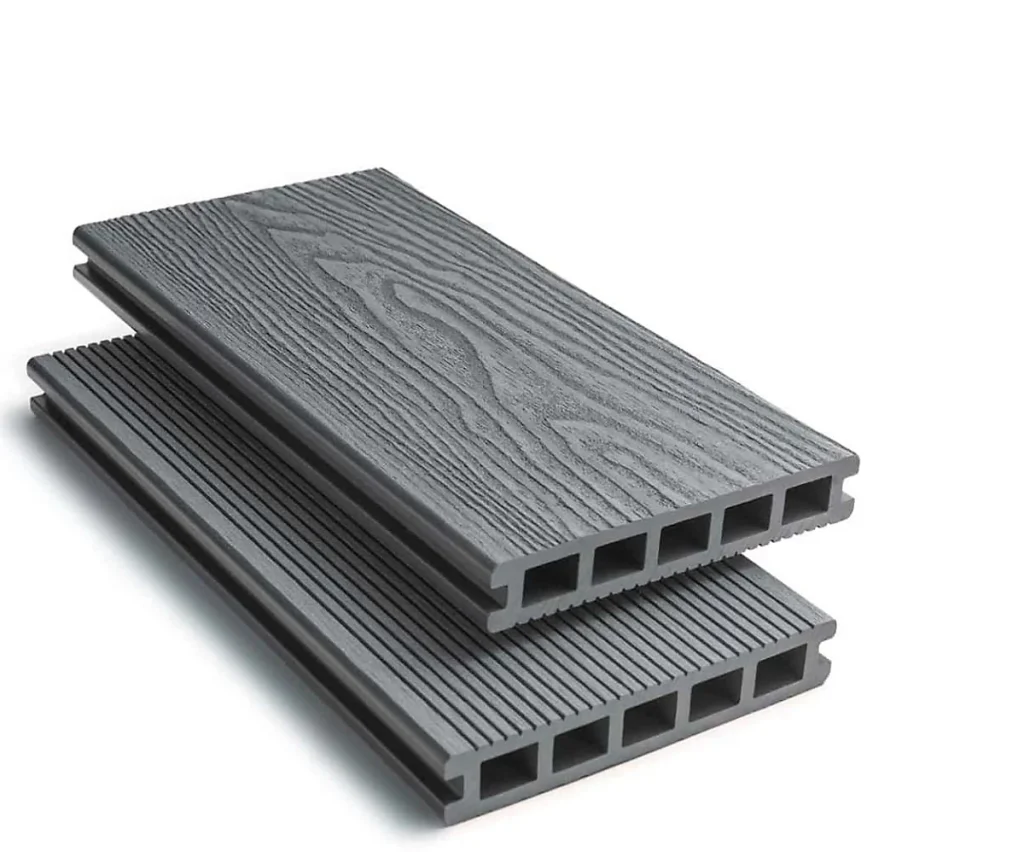
Wood-grain embossing is particularly common because it gives composite boards a more natural visual character. Depending on the manufacturing technique, the texture may range from subtle grain patterns to deeper, more pronounced designs.
Embossed surfaces can also contribute to slip resistance and tactile performance.
This type of decking works well for outdoor areas where designers want to combine composite material performance with a traditional timber-inspired appearance.
Grooved Composite Decking
Grooved decking boards feature channels or grooves along the board surface or sides. These grooves can have both functional and decorative purposes.
One common application is concealed fastening. Depending on the profile, fasteners can fit into side grooves, creating a cleaner surface with fewer visible screws.
Grooved boards are frequently used for:
- Residential decks
- Garden terraces
- Balconies
- Commercial outdoor spaces
- Poolside platforms
The groove design should be compatible with the selected clip and fastening system. Proper matching between boards and accessories is essential for a stable installation.
Reversible Composite Decking
Some composite boards are manufactured with two usable faces. One side may feature a wood-grain pattern, while the other side has a different texture or finish.
This provides greater flexibility during installation. Buyers can select the surface that best matches the desired design.
Reversible decking can be useful when a project requires different visual options without purchasing two separate board types.
For manufacturers and distributors, reversible products can also simplify inventory management because one board can serve multiple design requirements.
Grooved and Ungrooved Decking
Another practical classification involves the fastening edge of the decking board.
Ungrooved boards have solid edges and are often installed using conventional top-fixing methods. This can provide straightforward installation and may be suitable for projects where visible fasteners are acceptable.
Grooved boards are designed to accommodate hidden clips or specialized fastening systems. They can create a cleaner finished appearance because many fasteners are positioned between boards rather than directly through the visible surface.
The choice between grooved and ungrooved decking should be based on appearance, installation method, maintenance access, and compatibility with the substructure.
Different Surface Finishes
Composite decking is available with many different surface finishes. The surface can significantly influence the appearance, texture, and practical performance of the finished deck.
Common options include:
Wood-Grain Finish
Wood-grain surfaces imitate the visual texture of natural timber. They are widely used in residential landscaping and outdoor living projects.
Brushed Finish
Brushed surfaces can provide a textured appearance while creating a contemporary visual effect.
Smooth Finish
Smooth boards have a cleaner and more minimalist appearance. They can work well with modern architectural designs.
Deep Embossed Finish
Deeply embossed patterns create a stronger wood-like texture and can provide additional surface character.
When selecting a finish, buyers should consider not only appearance but also cleaning requirements, slip resistance, local weather conditions, and intended use.
Different Composite Decking Colors
Color is another important distinction among composite decking products. Modern manufacturing technology allows decking to be produced in a wide range of colors.
Popular color categories include:
- Light grey
- Dark grey
- Brown
- Dark brown
- Red-brown
- Beige
- Black
- Natural wood tones
Light-colored boards can create a bright and spacious appearance, while darker boards can produce a stronger architectural effect. Brown and natural wood tones are often selected when the objective is to create a traditional outdoor atmosphere.
Color selection should also consider surrounding buildings, landscaping, outdoor furniture, sunlight exposure, and the overall architectural style.
Single-Color and Multicolor Decking
Some composite decking products use a relatively uniform color, while others incorporate multiple tones.
Single-color decking creates a consistent appearance across the installation and can be useful for modern commercial or residential designs.
Multicolor decking can imitate the natural variation found in timber. Different shades within the same board or across different boards can create a more organic appearance.
For larger projects, color variation can also be used intentionally to create patterns, borders, or visual zones.
Conclusion
The different types of composite decking provide solutions for a wide range of outdoor applications. Wood-plastic composite boards, capped decking, uncapped decking, PVC-based products, hollow boards, solid boards, co-extruded structures, embossed surfaces, grooved profiles, and reversible boards each offer different combinations of appearance, performance, installation convenience, and cost.
There is no single composite decking type that is ideal for every project. The right choice depends on the installation environment, expected traffic, moisture exposure, design requirements, structural needs, maintenance expectations, and budget.
For homeowners, contractors, distributors, and project buyers, understanding these differences makes it easier to compare decking products and select a system that matches the specific application. By evaluating the board structure, surface construction, material composition, profile, color, fastening method, and technical specifications together, buyers can make a more informed decision and achieve a durable, attractive outdoor space.