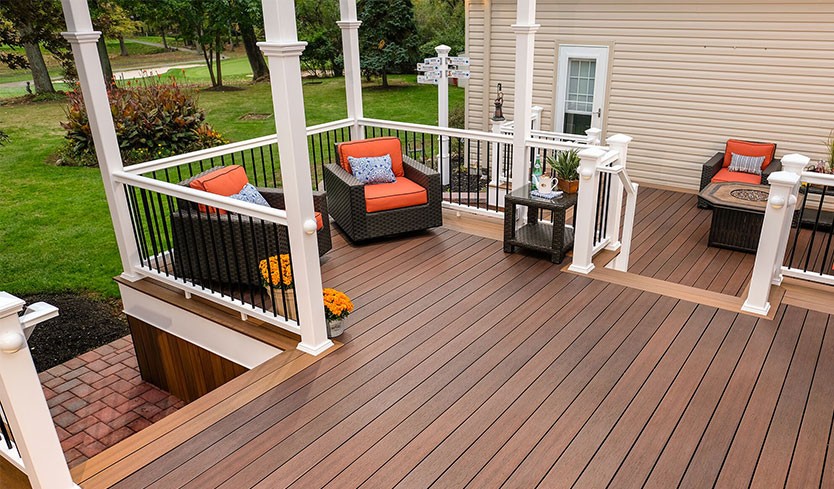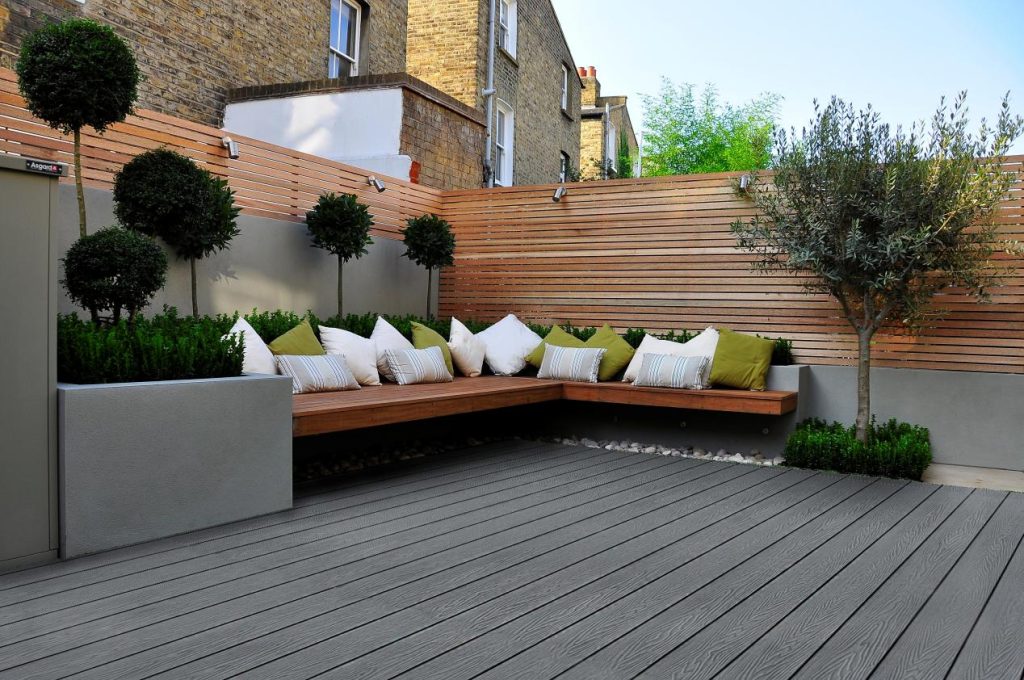
When homeowners want to upgrade an old, cracked, or visually outdated porch, composite decking over concrete porch has become one of the most practical and popular solutions. Instead of demolishing existing concrete—which is costly, time-consuming, and environmentally unfriendly—installing composite decking on a concrete porch delivers a modern appearance, improved comfort, and long-term low maintenance. With growing interest in composite decking over concrete porch, composite decking on concrete porch, and composite decking over concrete front porch, it’s clear that many homeowners are considering this upgrade. This guide explains how to choose composite decking over concrete porch, focusing on material selection, substructure design, drainage, safety, aesthetics, and cost, so you can make a confident and informed decision for your porch renovation project.
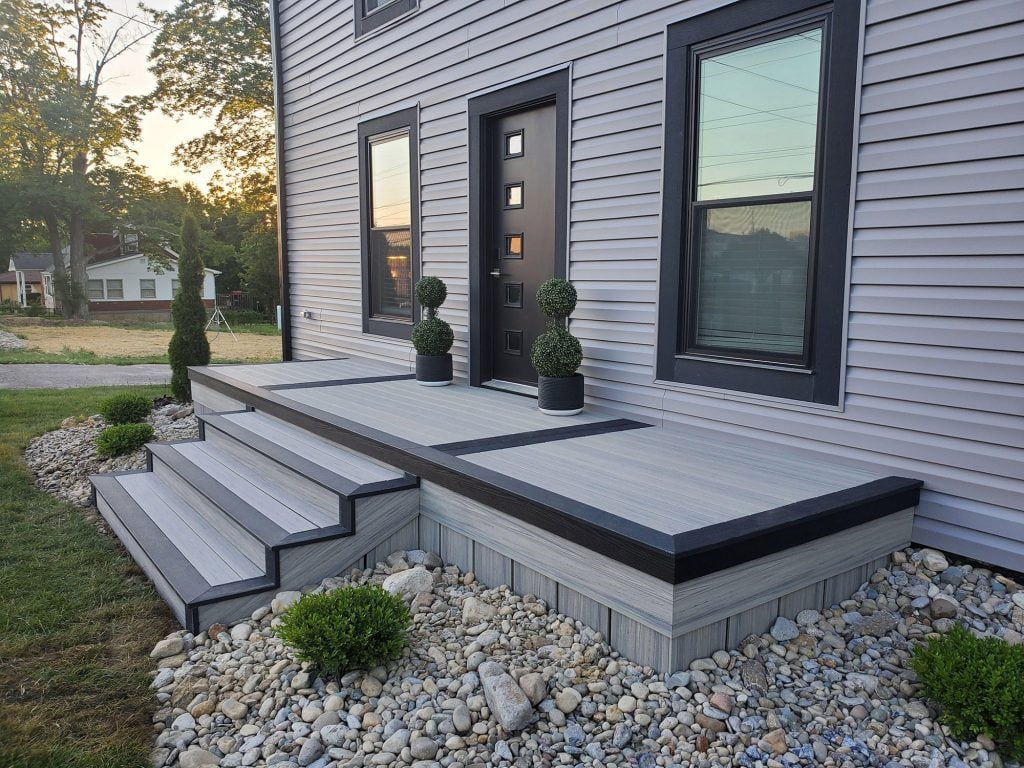
Table of Contents
Why Choose Composite Decking Over a Concrete Porch?
Before diving into selection criteria, it’s important to understand why so many homeowners are choosing composite decking over concrete porch surfaces instead of traditional solutions.
Transforming Old Concrete Without Demolition
Concrete porches often develop cracks, stains, and surface spalling over time. Removing them can be expensive and disruptive. Installing composite decking over concrete porch slabs allows you to reuse the existing structure while completely changing the appearance.
Enhanced Aesthetics
Composite decking offers a wide range of colors, textures, and wood-grain finishes. Whether your home style is modern, traditional, or rustic, composite decking on a concrete porch can dramatically improve curb appeal—especially for a composite decking over concrete front porch, which is one of the most visible exterior features of a home.
Comfort and Safety
Unlike bare concrete, composite decking is:
Cooler underfoot in summer (depending on color and technology)
More comfortable to walk on
Less prone to cracking and surface dusting
Available with slip-resistant textures
Low Maintenance
Composite decking does not require sealing, staining, or painting. When installed over a concrete porch, maintenance typically involves only occasional cleaning with soap and water.
Assessing Your Existing Concrete Porch
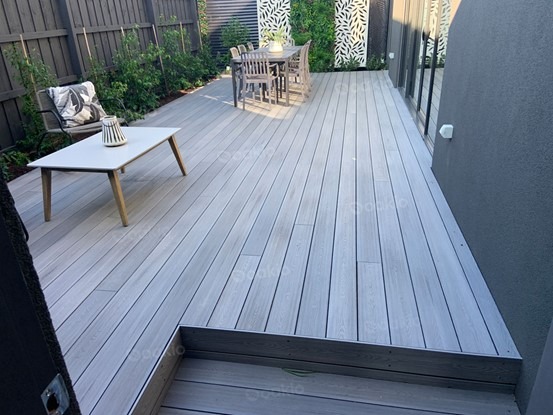
The first step in choosing composite decking over concrete porch is evaluating the condition of the existing concrete slab.
Structural Integrity Matters
Composite decking can only perform well if the concrete beneath it is structurally sound. Check for:
Major cracks wider than 1/4 inch
Significant settlement or heaving
Loose or crumbling concrete
Poor slope causing water pooling
Minor surface cracks are usually not an issue, but severe structural damage should be repaired before installing composite decking on a concrete porch.
Slope and Drainage
A concrete porch should have a slight slope away from the house for water drainage. When adding composite decking over concrete porch surfaces, this slope must be preserved or properly managed using a raised subframe system.
Poor drainage is one of the most common mistakes in composite decking over concrete front porch installations.
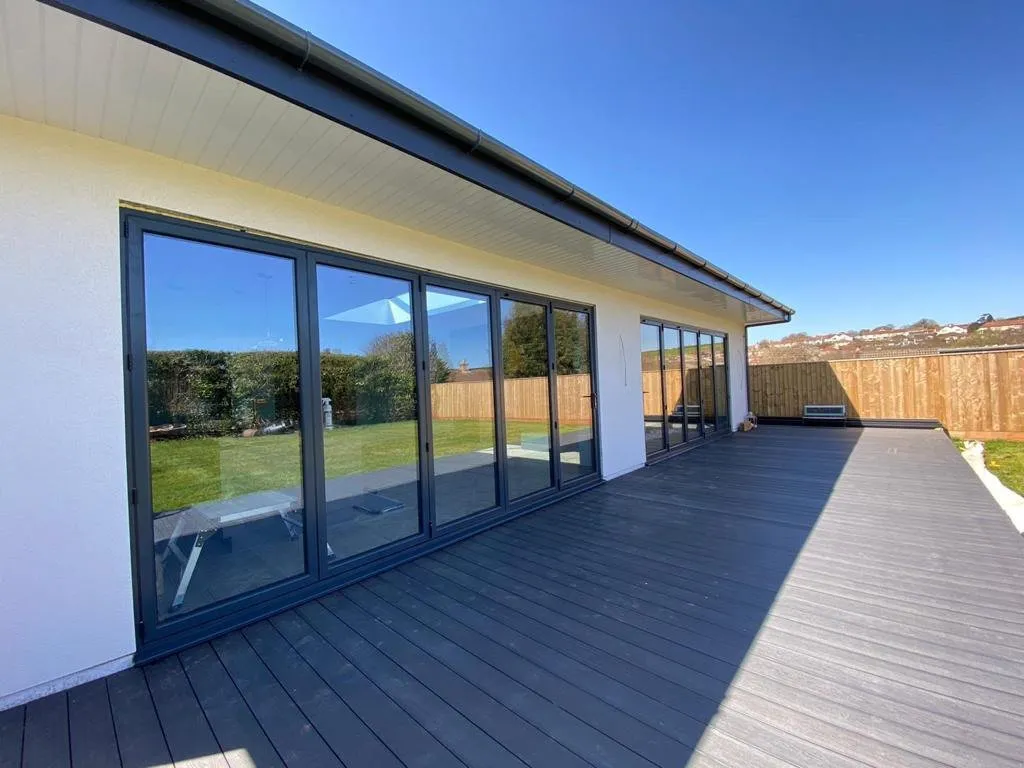
Understanding Substructure Options for Composite Decking on Concrete Porch
One of the most critical decisions is how the decking will be supported above the concrete.
Sleeper System (Most Common)
A sleeper system involves placing pressure-treated wood or composite battens directly on the concrete slab.
Key considerations:
Sleepers must be moisture-resistant
Typically spaced 12–16 inches on center
Must allow airflow and drainage
For composite decking over concrete porch installations, sleepers are often installed with shims or adjustable pedestals to correct minor unevenness.
Adjustable Pedestal Systems
Pedestal systems are increasingly popular for high-end projects.
Advantages:
Excellent drainage
Precise leveling
Improved airflow
Reduced moisture-related issues
If you are planning a composite decking over concrete front porch where appearance and longevity matter most, pedestal systems are often worth the investment.
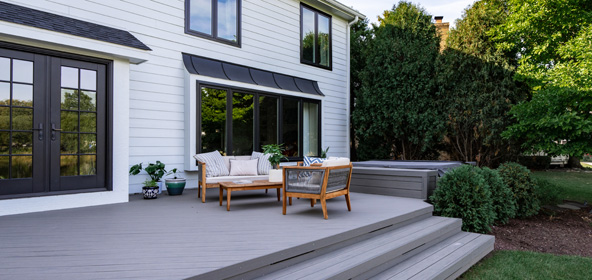
Choosing the Right Composite Decking Material
Not all composite decking boards are created equal, and this is especially true when installing composite decking over concrete porch surfaces. Because concrete retains moisture and limits airflow from below, the decking material you choose must perform well in a more demanding environment. Selecting the right composite decking product is crucial for long-term durability, appearance retention, and overall performance on a concrete porch.
Capped vs. Uncapped Composite Decking
For composite decking over concrete porch applications, capped composite decking is strongly recommended.
Why capped boards are better:
Enhanced moisture resistance
Improved stain and fade protection
Better mold and mildew resistance
Longer lifespan
Easier cleaning and color stability over time
Capped composite decking features a protective outer shell that wraps around the core, acting as a barrier against moisture, spills, UV exposure, and dirt. This makes capped boards particularly suitable for concrete-based installations, where moisture evaporation is slower. In contrast, uncapped boards may absorb moisture more easily, which is not ideal when airflow is limited beneath the decking. Over time, this can lead to surface discoloration, mold growth, or reduced structural stability.
Solid vs. Hollow Composite Boards
Solid Composite Decking
Heavier and more rigid
Better for high-traffic porches
Reduced vibration and noise
Stronger load-bearing capacity
Solid boards are often preferred for composite decking on concrete porch areas that serve as main walkways or front porches. Their density provides a more stable feel underfoot and better resistance to long-term wear.
Hollow Composite Decking
Lighter weight
Often more cost-effective
Easier handling during installation
Requires careful support spacing
Hollow boards can still be used successfully, but they require precise substructure design to prevent flexing. For porches with frequent foot traffic, solid composite decking is generally the safer and more durable choice.
Moisture Management: A Critical Factor
Concrete retains moisture, and composite decking—although moisture-resistant—is not immune to long-term exposure.
Ventilation Is Essential
When choosing composite decking over concrete porch systems, ensure:
Minimum clearance between decking and concrete
Open sides where possible for airflow
Proper spacing between boards
Lack of ventilation can trap moisture, leading to mold growth on the substructure and potential odor issues.
Waterproofing the Concrete Surface
Many professionals recommend applying a waterproof membrane or coating to the concrete slab before installing composite decking.
Benefits include:
Reduced moisture transfer
Protection of sleepers or pedestals
Extended lifespan of the entire system
This step is especially important for composite decking over concrete front porch installations exposed to rain and snow.
Slip Resistance and Safety Considerations
Porches, especially front porches, must prioritize safety.
Textured Surfaces
Choose composite decking with embossed or brushed textures designed to improve grip when wet.
Slip Resistance Ratings
Some manufacturers provide slip resistance data. For composite decking on concrete porch surfaces exposed to rain, snow, or morning dew, higher slip resistance is a key selection factor.
Edge and Step Visibility
If your composite decking over concrete porch includes steps:
Use contrasting colors or nosing
Consider integrated LED lighting
Ensure compliance with local building codes
Climate Considerations When Choosing Composite Decking
Climate plays a major role in how composite decking performs over concrete.
Hot Climates
In warm regions:
Choose lighter colors to reduce heat absorption
Look for heat-mitigating composite technologies
Ensure expansion gaps are properly sized
Cold and Freeze-Thaw Regions
For composite decking over concrete porch in cold climates:
Select boards rated for freeze-thaw durability
Ensure drainage prevents ice buildup
Avoid trapping water beneath the decking
Color and Design Selection for Composite Decking Over Concrete Porch
The porch is often the first thing visitors see.
Matching Home Architecture
For composite decking over concrete front porch projects:
Traditional homes pair well with warm wood tones
Modern homes often suit gray or charcoal boards
Farmhouse styles benefit from natural, weathered finishes
Board Width and Pattern
Wide boards create a contemporary look, while narrower boards feel more traditional. Diagonal or picture-frame layouts can elevate the visual impact of composite decking on a concrete porch.
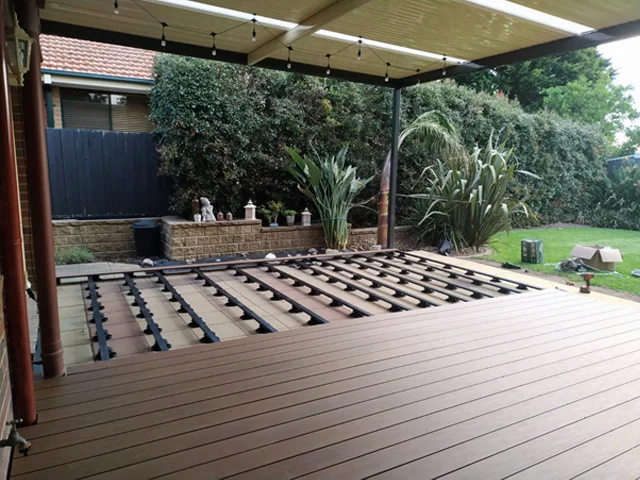
Installation Method: Hidden Fasteners vs. Face Screws
Hidden Fastener Systems
Most premium composite decking over concrete porch installations use hidden clips.
Advantages:
Clean, screw-free surface
Improved aesthetics
Reduced water penetration
Face Screwing
Used in specific situations such as:
Starter boards
Perimeter framing
Areas requiring additional holding strength
Always follow manufacturer guidelines to maintain warranty coverage.
Load Capacity and Furniture Considerations
A concrete porch can handle significant weight, but the decking system above it must also be designed accordingly.
When choosing composite decking over concrete porch:
Confirm load ratings of boards
Use appropriate sleeper spacing
Reinforce areas for heavy furniture, planters, or grills
This is especially important for large composite decking over concrete front porch designs used for entertaining.
Cost Factors to Consider
While composite decking over concrete porch projects can be more affordable than full demolition and rebuilds, costs still vary.
Key Cost Components
Composite decking boards
Substructure (sleepers or pedestals)
Waterproofing materials
Fasteners and accessories
Labor (if professionally installed)
Long-Term Value
Although initial costs may be higher than wood alternatives, composite decking offers:
Lower maintenance expenses
Longer lifespan
Better appearance retention
Over time, composite decking on a concrete porch often proves more cost-effective.
Maintenance Requirements After Installation
One of the biggest advantages of composite decking over concrete porch installations is ease of care.
Routine Cleaning
Sweep debris regularly
Wash with mild soap and water
Avoid harsh chemicals unless recommended
Seasonal Inspections
Check for:
Blocked drainage
Loose fasteners
Signs of trapped moisture
With proper design, maintenance is minimal compared to traditional wood decking.
Is Composite Decking Over Concrete Porch Right for You?
Composite decking is an excellent solution if:
Your concrete porch is structurally sound
You want to improve appearance and comfort
You prefer low maintenance materials
Long-term durability is a priority
It may not be ideal if:
Concrete is severely damaged
Budget is extremely limited
Height restrictions prevent proper drainage
Final Thoughts: Making the Right Choice
Choosing composite decking over concrete porch is both a practical and aesthetic upgrade that can dramatically enhance your home’s exterior. By carefully evaluating your concrete base, selecting the right composite material, designing proper drainage and ventilation, and considering climate and safety factors, you can ensure a successful, long-lasting installation.
Whether you are planning a simple backyard update or a show-stopping composite decking over concrete front porch, the key lies in thoughtful material selection and smart system design. With the right approach, composite decking on a concrete porch delivers beauty, durability, and peace of mind for years to come.
If you take the time to choose wisely, your new composite decking over concrete porch won’t just cover old concrete—it will redefine your outdoor living experience.
Looking for composite decking for your porch? Welcome to contact Hosung WPC – professional composite decking boards manufacturer and supplier in China!