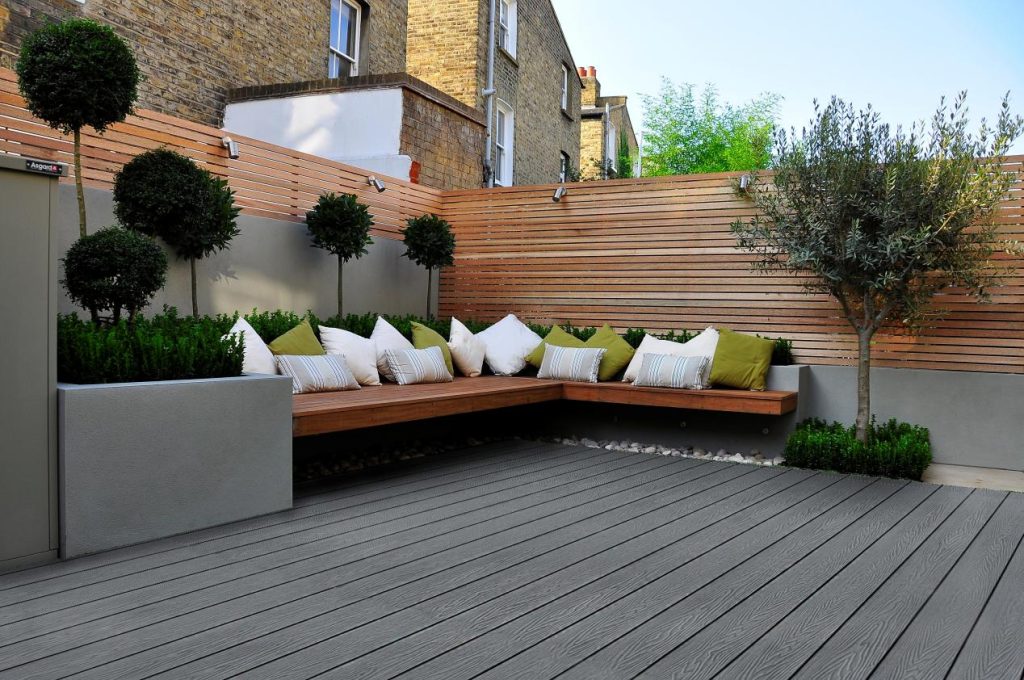
Selecting composite decking sounds easy—until you actually start comparing products. Colors look similar, prices vary wildly, specs feel confusing, and every supplier claims their boards are “premium,” “eco-friendly,” and “long-lasting.” If you’ve ever stared at a composite decking product page thinking “They all look the same—so how do I choose?” you’re not alone. This guide is written specifically to help you select composite decking with confidence, using real-world decision tips instead of generic definitions. No textbook explanations. No marketing fluff. Just practical insights that buyers, contractors, and project owners actually need when making a choice. Whether you’re sourcing composite decking for a backyard, commercial project, poolside, or export market, the tips below will help you avoid common mistakes and select composite decking that truly fits your project.
Table of Contents
Start with the End Use, Not the Product Catalog
One of the biggest mistakes people make when they select composite decking is starting from product lists instead of usage scenarios.
Before you compare brands, profiles, or prices, answer these questions clearly:
Is the decking for residential or commercial use?
Will it be installed in a high-traffic area?
Is it exposed to strong sunlight, rain, or snow?
Is it near water, such as a pool, lake, or coastal area?
Composite decking that works perfectly for a private balcony may fail quickly in a café terrace or public walkway. When you select composite decking based on usage first, you instantly narrow down unsuitable options.
Tip: Write down the worst conditions your decking will face, not the best ones. That mindset alone improves your selection dramatically.
Don’t Judge Composite Decking by Thickness Alone
Many buyers assume thicker boards automatically mean better quality. That’s only half true.
When you select composite decking, thickness must be evaluated together with:
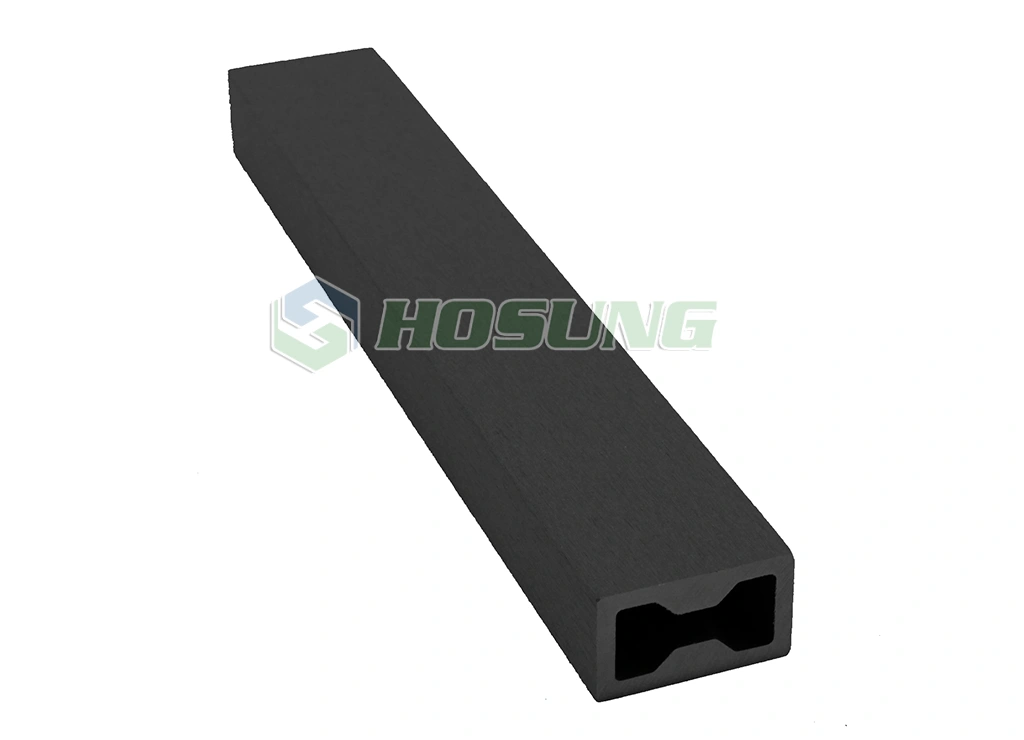
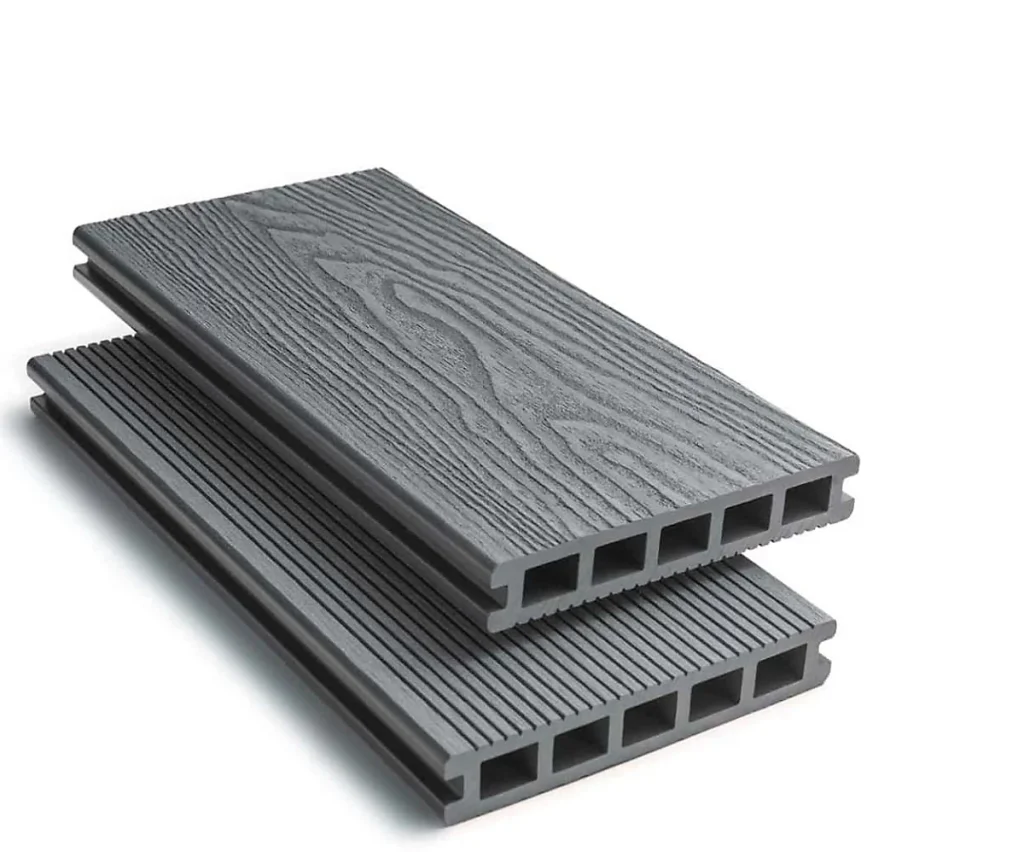
Internal structure (solid vs hollow)
Wall thickness inside hollow boards
Density of the composite material
Span capability between joists
A well-designed 23mm board with strong internal ribs can outperform a poorly made 25mm board. Conversely, ultra-thin boards may sag over time even if they look solid at first.
What to do instead:
Ask suppliers for recommended joist spacing. This tells you far more about real strength than thickness numbers alone.
Solid vs Hollow Boards: Choose Based on Risk, Not Price
Selecting between solid and hollow boards is one of the most common decision points when people select composite decking. While both options can work, they serve very different risk profiles. Understanding where those risks come from is far more important than comparing prices alone.
Structural Strength and Load Tolerance
Solid boards are heavier, stronger, and more forgiving during installation. Their full-body structure distributes loads evenly across the deck frame, making them better suited to handle concentrated weight from furniture, foot traffic, and equipment. This structural consistency reduces the chance of soft spots or localized bending over time.
Hollow boards are lighter and rely on internal chambers to achieve strength. While this design lowers material usage and cost, it also means that load tolerance is more dependent on correct joist spacing and edge support. Any deviation from recommended installation practices increases the risk of deflection.
Installation Flexibility and Error Tolerance
Solid boards are more tolerant of real-world installation conditions. Slightly uneven substructures, minor framing inaccuracies, or variations in joist height are less likely to affect long-term performance. This makes solid boards a safer option when installation conditions are less predictable.
Hollow boards perform best in controlled installations where substructures are level, spacing is precise, and installers follow technical guidelines closely. Without this level of control, small errors can lead to noise, movement, or visible sagging.
Cost vs Long-Term Risk
The mistake many buyers make is choosing hollow boards only because they’re cheaper on the initial invoice. While the upfront cost may be lower, potential issues such as deformation or reduced underfoot stability can increase maintenance or replacement costs over time.
Solid boards, although more expensive initially, often reduce long-term risk by maintaining consistent performance under varied conditions.
Project Suitability Scenarios
Solid boards are better suited for projects involving public access, heavy furniture, long spans between joists, or uneven substructures. In these environments, durability, safety, and structural confidence are critical.
Hollow boards work well for private residential decks, controlled installations, and projects with strict weight limits where loads are predictable and professionally managed.

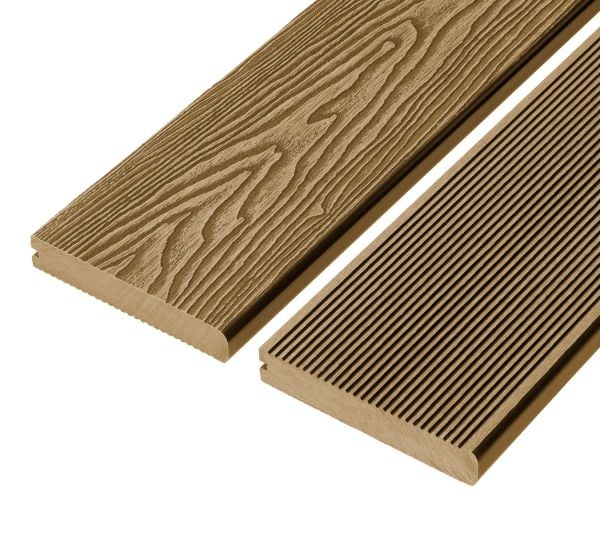
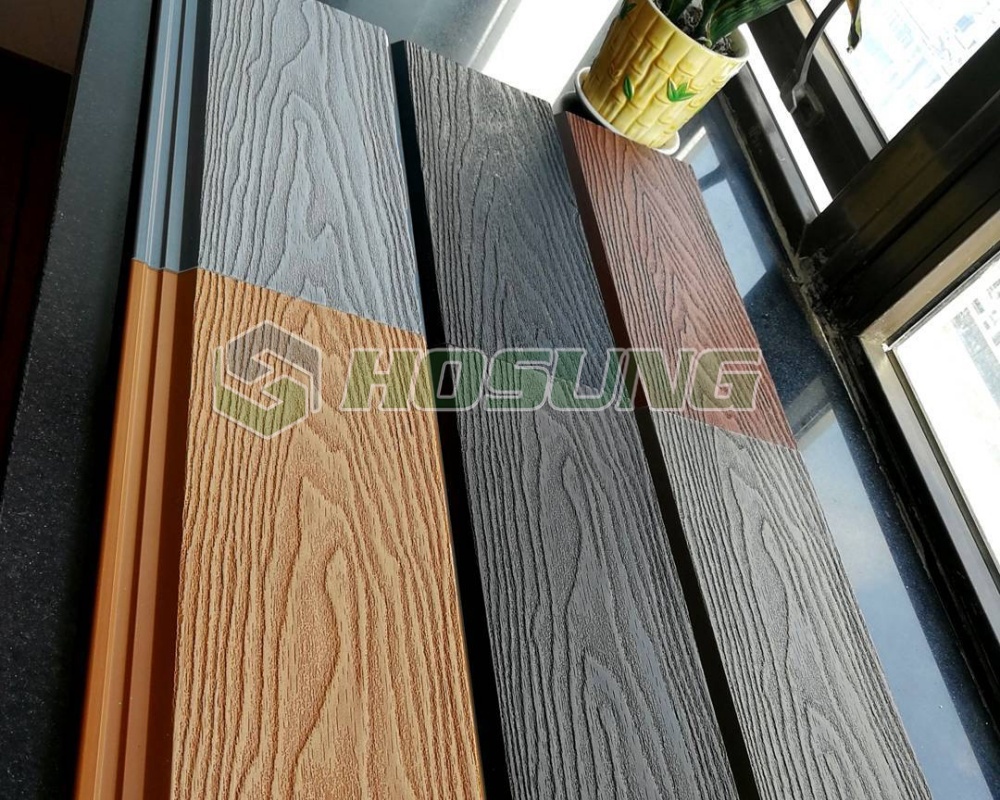
Pay Attention to Surface Texture (More Than Color)
Color usually gets all the attention, but surface texture affects daily use far more.
When selecting composite decking, evaluate:
Slip resistance when wet
Barefoot comfort
Scratch visibility
Ease of cleaning
Deep wood-grain embossing looks great, but it can trap dirt. Smooth surfaces clean easily but may show scratches faster. Brushed textures often balance both.
Pro tip: Ask for physical samples, not just photos. Touch them. Wet them. Scratch them lightly. This tells you more than any catalog description.
UV Stability Is More Important Than “Fade Resistance” Claims
Almost every composite decking brand claims “fade resistant.” That phrase alone means very little.
What really matters when you select composite decking is:
Whether UV stabilizers are used
Whether the board is capped or uncapped
How long the supplier has real outdoor exposure data
Capped composite decking generally performs better in harsh sunlight, but not all caps are equal. Thin, poorly bonded caps can peel or crack.
Smart buyer move: Ask how the decking looks after 3–5 years, not after 3 months.
Climate Compatibility: Match the Decking to Your Region
Selecting composite decking without considering climate is like choosing tires without knowing the road conditions.
Hot climates:
Require low thermal expansion
Need better UV resistance
Cold climates:
Demand impact resistance
Need flexibility to avoid cracking
Humid or coastal regions:
Require moisture stability
Benefit from capped surfaces
If a supplier can’t clearly explain how their decking behaves in your climate, that’s a warning sign.
Expansion Gaps Are a Design Decision, Not an Afterthought
Many installation failures come from ignoring thermal expansion.
When you select composite decking, check:
Linear expansion rate
End-gap recommendations
Side-gap tolerances
Boards that expand too much may require visible gaps, which affects aesthetics. Others allow tighter installation but need precise workmanship.
Tip: Ask for installation photos from projects in similar climates. Real installations reveal how forgiving a product really is.
Hidden Fasteners vs Face Screws: Choose Maintenance Strategy Early
Fastening systems influence both appearance and long-term maintenance.
Hidden fasteners:
Cleaner look
More precise installation
Harder board replacement
Face screws:
Industrial or rustic appearance
Easier repairs
More visible hardware
When you select composite decking, decide whether you prioritize appearance or serviceability. There’s no universal right answer—only what fits your project goals.
Fire Rating Matters More Than You Think
Even if your local code doesn’t demand it, fire performance is worth considering.
Composite decking near:
BBQ areas
Fire pits
Commercial venues
…should have documented fire behavior data.
When selecting composite decking, ask:
Does it meet any fire standards?
How does it behave under heat exposure?
Ignoring this can become an expensive mistake later.
Color Consistency Across Batches Is a Hidden Risk
One often-overlooked issue when people select composite decking is batch consistency.
If your project is large or phased:
Inconsistent color batches can ruin visual uniformity
Reordering months later may result in visible color differences
Best practice: Order extra boards upfront or confirm batch control policies with the supplier.
Weight Matters for Installation and Structure
Composite decking is heavier than wood—sometimes much heavier.
Before you select composite decking, consider:
Load limits of existing structures
Labor handling requirements
Shipping costs for large projects
Lightweight hollow boards reduce transport costs, but heavier solid boards often feel more stable underfoot.
Environmental Claims: Look Beyond Buzzwords
Many buyers want eco-friendly decking—and that’s great. But not all claims are equal.
When selecting composite decking:
Ask what percentage is recycled material
Confirm whether materials are post-consumer or industrial scrap
Check consistency of material sourcing
Real sustainability shows up in process transparency, not slogans.
Warranty: Read What’s Excluded, Not Just What’s Promised
A long warranty looks impressive, but the details matter.
When you select composite decking, read:
Coverage conditions
Installation requirements
Exclusions related to climate, cleaning, or misuse
A shorter, clearer warranty is often more valuable than a long one full of loopholes.
Price Comparison Without Context Is Misleading
Never select composite decking based on price per square meter alone.
Instead, compare:
Board lifespan
Maintenance costs
Replacement difficulty
Warranty reliability
A slightly higher upfront cost can be cheaper over 10–15 years.
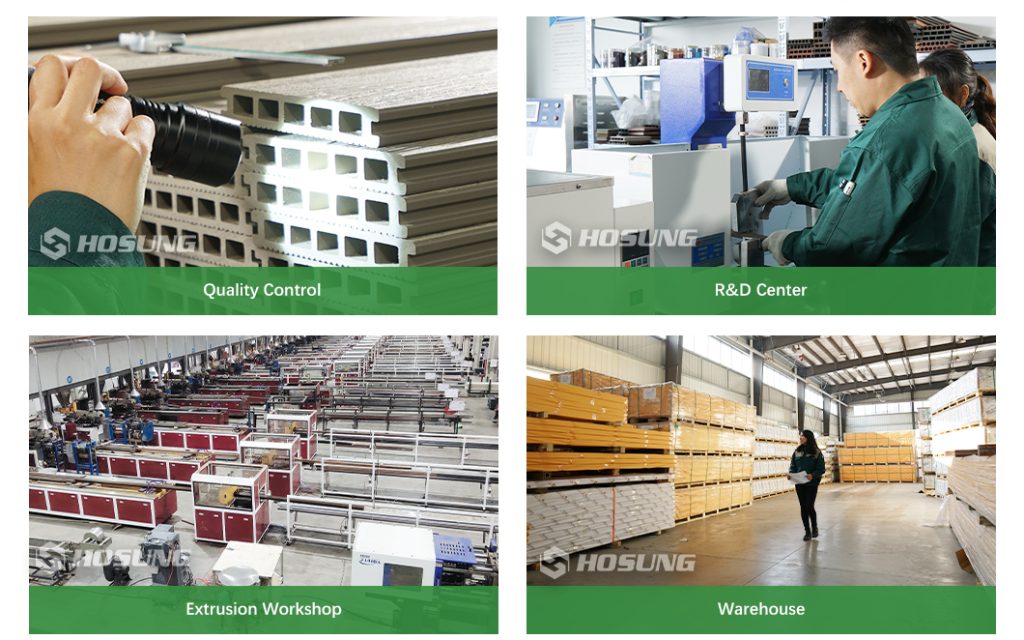
Supplier Experience Is Part of the Product
Finally, composite decking is not just a material—it’s a system.
A good supplier helps you:
Choose correct profiles
Avoid installation mistakes
Solve issues if something goes wrong
When you select composite decking, evaluate the people behind the product, not just the boards themselves.
Final Thoughts: How to Select Composite Decking Without Regret
Selecting composite decking isn’t about chasing the newest product or the lowest price. It’s about aligning material performance, installation reality, climate demands, and long-term expectations.
If you remember just three things:
Start with usage conditions
Evaluate structure and performance, not just appearance
Think long-term, not just at purchase
…you’ll select composite decking that delivers real value over time.
The right composite decking should disappear into your life—not constantly demand attention, repairs, or regret.