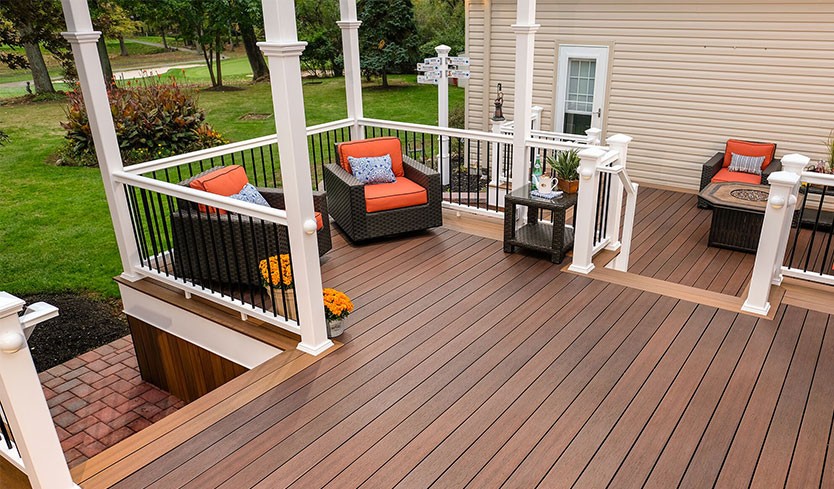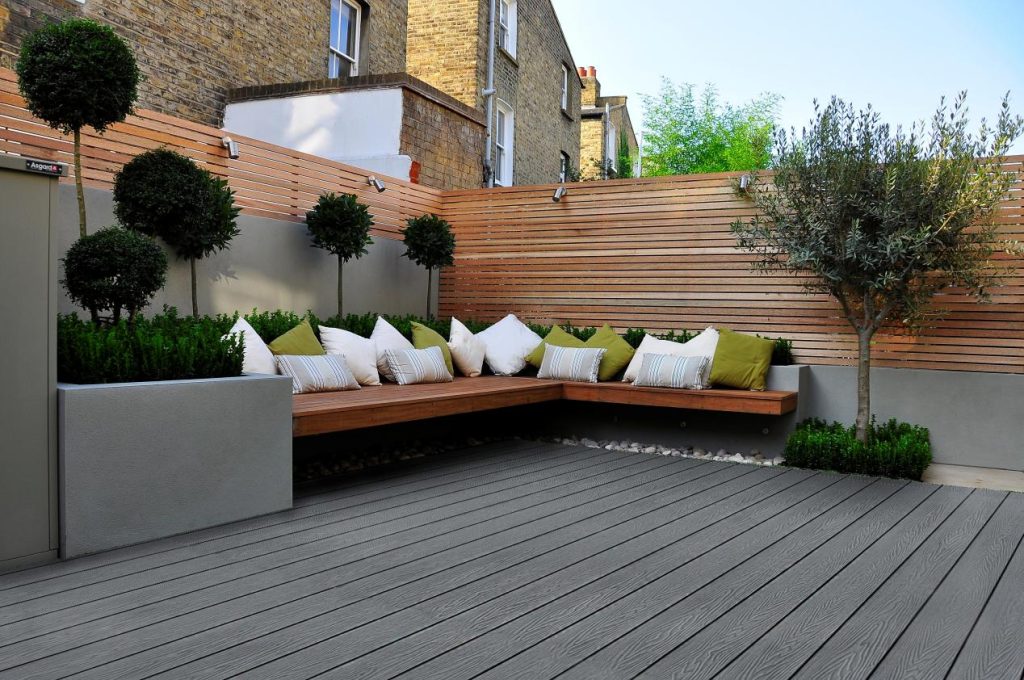
Composite decking is a durable, low-maintenance alternative to traditional wood decking. Understanding the types of composite decking material helps builders, contractors, and homeowners choose the right solution. Made from wood fibers, plastic polymers, and additives, different materials provide varying levels of strength, moisture resistance, appearance, and durability for diverse outdoor applications.
Table of Contents
Main Types of Composite Decking Material
1. Wood-Plastic Composite (WPC) Decking
Wood-plastic composite decking, commonly known as WPC decking, is one of the most widely used types of composite decking material in residential and commercial projects.
WPC decking typically combines natural wood fibers with plastic polymers such as polyethylene or polypropylene. The combination creates a material that maintains the appearance of natural wood while improving durability.
Characteristics of WPC Decking
The main features of WPC decking include:
- Natural wood-like appearance
- Good moisture resistance
- Reduced maintenance requirements
- Resistance to insects and decay
- Easy installation
- Long service life
Compared with traditional wood decking, WPC decking does not require regular painting, staining, or sealing. The surface remains stable under normal outdoor conditions and can withstand exposure to sunlight and rain.
Advantages of WPC Decking
One of the biggest advantages of WPC decking is its balance between appearance and performance. The wood fibers provide a natural texture, while the plastic component improves resistance against environmental factors.
Other benefits include:
Low maintenance
WPC decking only requires occasional cleaning with water and mild detergent. There is no need for frequent chemical treatments.
Environmental benefits
Many WPC products use recycled plastics and reclaimed wood materials, reducing waste and supporting sustainable construction practices.
Design flexibility
WPC decking is available in various colors, textures, and surface patterns, allowing designers to create different outdoor styles.
Applications of WPC Decking
WPC decking is widely used for:
- Residential balconies
- Garden pathways
- Swimming pool surroundings
- Outdoor terraces
- Parks
- Commercial landscape projects
Because of its balanced performance and cost-effectiveness, WPC decking is often considered the standard choice for many outdoor decking applications.
2. Solid Composite Decking
Solid composite decking is manufactured with a fully dense internal structure. Unlike hollow boards, solid composite decking contains more material throughout the entire board profile.
This structure provides excellent strength and impact resistance, making it suitable for areas that experience heavy foot traffic.
Features of Solid Composite Decking
Solid composite boards offer:
- Higher load-bearing capacity
- Strong structural stability
- Better resistance to impact
- Reduced risk of cracking
- Improved durability
Because of their density, solid boards are heavier than hollow composite boards. However, this additional weight contributes to their strength and long-term performance.
Advantages of Solid Composite Decking
Solid composite decking is often selected for demanding environments where reliability is important.
Key benefits include:
High strength
The dense structure allows solid boards to support heavier loads, making them suitable for commercial applications.
Excellent durability
Solid boards perform well in areas exposed to frequent use, temperature changes, and outdoor conditions.
Premium appearance
The solid profile provides a high-quality feel similar to premium hardwood decking.
Disadvantages
The main limitations of solid composite decking include:
- Higher material cost
- Greater transportation weight
- More difficult handling during installation
However, for projects requiring maximum durability, these disadvantages are often acceptable.
Common Applications
Solid composite decking is commonly used for:
- Hotels
- Restaurants
- Public walkways
- Commercial outdoor areas
- High-end residential properties
3. Hollow Composite Decking
Hollow composite decking is designed with internal cavities that reduce material usage while maintaining sufficient structural performance.
The hollow design makes the boards lighter and easier to transport compared with solid composite decking.
Characteristics of Hollow Composite Decking
Main features include:
- Lightweight structure
- Lower material consumption
- Easier installation
- Cost efficiency
- Good overall performance
The internal hollow structure reduces the total weight of each board, which can significantly improve transportation efficiency for large-scale projects.
Benefits of Hollow Composite Decking
Cost-effective solution
Because less raw material is required during manufacturing, hollow boards are generally more affordable.
Easy installation
The lighter weight makes handling and installation faster, especially for large outdoor projects.
Resource efficiency
Lower material consumption can reduce production costs and environmental impact.
Considerations When Choosing Hollow Decking
Although hollow composite decking offers many advantages, buyers should consider installation requirements carefully. Proper support spacing and installation methods are important to maintain long-term stability.
Hollow boards may not be the best choice for extremely high-load environments.
Applications
Hollow composite decking is suitable for:
- Residential gardens
- Private balconies
- Small outdoor platforms
- Landscaping projects
- Budget-conscious construction projects
4. Capped Composite Decking
Capped composite decking is an advanced type of composite decking material that includes an additional protective polymer layer covering the outer surface of the board.
The protective cap improves resistance against moisture, stains, scratches, and fading.
Structure of Capped Composite Decking
A typical capped composite board includes:
- Internal composite core
- Protective polymer outer layer
- Decorative surface texture
The cap layer acts as a barrier between the composite core and external environmental conditions.
Advantages of Capped Composite Decking
Capped decking provides several performance improvements:
Enhanced moisture protection
The protective layer prevents water penetration and reduces the possibility of swelling or structural damage.
Better stain resistance
The surface is easier to clean and performs better against oil, food stains, and dirt.
Improved color stability
UV-resistant materials help maintain appearance over many years of outdoor exposure.
Higher scratch resistance
The protective surface reduces damage caused by furniture movement and daily use.
Applications
Capped composite decking is commonly used for:
- Luxury residential projects
- Swimming pool decks
- Premium landscaping
- Hospitality developments
- Outdoor entertainment areas
Because of its enhanced performance, capped composite decking is usually positioned as a premium product category.
5. PVC Composite Decking
PVC composite decking is another important category among modern decking solutions. Unlike traditional wood-plastic composite decking, PVC decking is mainly manufactured from polyvinyl chloride polymers without natural wood fibers.
Because it contains no organic wood components, PVC decking provides excellent resistance against moisture, mold, and decay.
Characteristics of PVC Composite Decking
PVC decking typically features:
- 100% synthetic composition
- Excellent waterproof performance
- Strong resistance to humidity
- Low maintenance requirements
- Lightweight structure
- Long outdoor service life
Since PVC does not absorb water, it performs particularly well in wet environments where traditional wood materials may deteriorate quickly.
Advantages of PVC Composite Decking
Superior moisture resistance
One of the biggest advantages of PVC decking is its ability to resist water absorption. This makes it suitable for locations exposed to rain, humidity, or direct water contact.
Excellent durability
PVC decking does not rot, crack, or split like natural wood. It also resists damage from insects such as termites.
Easy cleaning
The non-porous surface prevents dirt and stains from penetrating deeply into the material, making maintenance simple.
Lightweight construction
PVC boards are usually lighter than solid composite boards, which can reduce transportation and installation difficulty.
Limitations of PVC Decking
Although PVC decking offers excellent weather resistance, it also has some limitations:
- Less natural wood feel compared with WPC products
- Higher expansion and contraction potential under temperature changes
- Higher initial cost for premium products
Modern manufacturing technologies have improved PVC decking appearance, with many products featuring realistic wood grain textures.
Common Applications
PVC composite decking is commonly used for:
- Swimming pool areas
- Marine environments
- Waterfront platforms
- Outdoor balconies
- Residential terraces
6. Polyethylene-Based Composite Decking
Polyethylene-based composite decking is one of the most common forms of wood-plastic composite decking. It typically uses high-density polyethylene (HDPE) as the polymer component.
HDPE provides excellent toughness, impact resistance, and outdoor durability.
Features of PE Composite Decking
Important characteristics include:
- Strong mechanical performance
- Good weather resistance
- High impact strength
- Good processing performance
- Cost-effective production
Because polyethylene materials are widely available and recyclable, PE-based decking has become popular in global markets.
Advantages of PE Composite Decking
Good flexibility
Compared with some rigid materials, polyethylene provides better flexibility, reducing the risk of sudden cracking.
Outdoor durability
PE composite decking performs well under changing weather conditions, including sunlight exposure and temperature variations.
Environmental advantages
Many manufacturers use recycled polyethylene materials, helping reduce plastic waste.
Applications
PE composite decking is widely used in:
- Residential outdoor spaces
- Garden landscaping
- Public parks
- Commercial outdoor flooring
7. Polypropylene-Based Composite Decking
Polypropylene (PP) composite decking is another type of composite decking material known for its strength and heat resistance.
Compared with polyethylene, polypropylene generally provides higher stiffness and better temperature resistance.
Characteristics of PP Composite Decking
Main features include:
- High rigidity
- Good dimensional stability
- Strong chemical resistance
- Lightweight performance
- Good heat resistance
PP-based decking is often selected for applications requiring stronger structural performance.
Benefits of PP Composite Decking
Excellent mechanical strength
Polypropylene contributes to a stronger board structure, making it suitable for applications requiring higher resistance to pressure and impact.
Good temperature performance
PP materials maintain performance under relatively high temperatures, making them suitable for warmer climates.
Chemical resistance
PP decking has good resistance to many chemicals, improving durability in challenging environments.
Applications
PP composite decking may be used for:
- Commercial outdoor flooring
- Industrial landscaping areas
- High-temperature regions
- Heavy-use outdoor spaces
8. Bamboo Composite Decking
Bamboo composite decking combines bamboo fibers with plastic polymers to create a sustainable alternative to traditional wood decking.
Bamboo grows quickly compared with many hardwood species, making it an attractive renewable resource.
Characteristics of Bamboo Composite Decking
Bamboo composite decking offers:
- Renewable raw materials
- Natural appearance
- Good strength
- Modern outdoor aesthetics
- Improved weather resistance compared with bamboo alone
The manufacturing process improves bamboo’s natural limitations, such as moisture sensitivity and susceptibility to biological damage.
Advantages
Sustainable material source
Bamboo is a rapidly renewable plant resource, making bamboo composite products attractive for environmentally conscious projects.
Natural appearance
Bamboo fibers provide a unique texture and appearance that appeals to customers looking for natural outdoor designs.
Good strength performance
When combined with polymers, bamboo fibers contribute to improved structural properties.
Applications
Bamboo composite decking is suitable for:
- Eco-friendly construction projects
- Residential landscaping
- Outdoor leisure areas
- Sustainable commercial developments
How to Choose the Right Type of Composite Decking Material
Selecting the correct composite decking material depends on several factors, including location, budget, expected service life, and performance requirements.
1. Consider the Installation Environment
The surrounding environment plays an important role in material selection.
For areas with high humidity or frequent rainfall, materials with excellent waterproof performance, such as capped composite decking or PVC decking, may be preferred.
For dry residential gardens, standard WPC decking can provide an effective balance between cost and performance.
For coastal areas exposed to saltwater, buyers should choose materials with strong corrosion resistance.
2. Evaluate Durability Requirements
Different projects require different levels of durability.
Residential projects may prioritize appearance and affordability, while commercial projects often require maximum strength and long service life.
Important durability factors include:
- Moisture resistance
- UV resistance
- Scratch resistance
- Impact resistance
- Temperature stability
Premium composite decking products usually include additional protective technologies to improve outdoor performance.
3. Compare Solid and Hollow Structures
The internal structure of decking boards directly affects performance.
Solid Decking
Best suited for:
- Heavy traffic areas
- Commercial projects
- Long-term installations
Advantages:
- Stronger structure
- Better impact resistance
- Premium quality appearance
Hollow Decking
Best suited for:
- Residential projects
- Cost-sensitive applications
- Lightweight installation requirements
Advantages:
- Lower cost
- Easier transportation
- Faster installation
4. Consider Appearance and Design Requirements
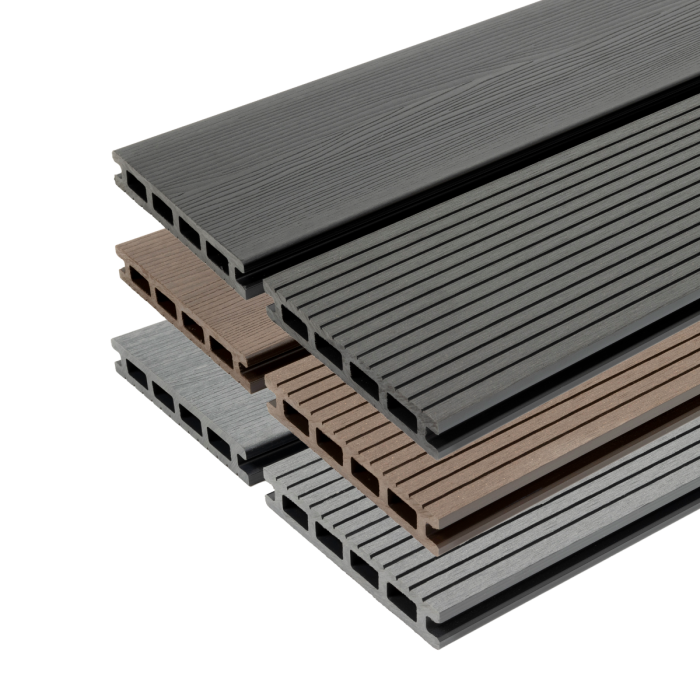
Modern composite decking is available in many colors, textures, and finishes.
Popular design options include:
- Natural wood grain patterns
- Contemporary gray tones
- Brown hardwood styles
- Multi-color surface effects
For architectural projects, appearance can be as important as technical performance.
Manufacturers now use advanced embossing and surface treatment technologies to create realistic wood-like finishes.
Composite Decking Material Compared with Traditional Wood
Traditional wood decking has been used for decades because of its natural appearance and availability. However, composite decking offers several advantages.
| Feature | Composite Decking | Natural Wood Decking |
|---|---|---|
| Moisture resistance | Excellent | Requires protection |
| Maintenance | Low | High |
| Insect resistance | Excellent | Limited |
| Service life | Long | Depends on wood type |
| Color stability | Better with protective layers | Requires staining |
| Sustainability | Often uses recycled materials | Requires timber resources |
While natural wood remains popular for certain applications, composite decking provides a more convenient and durable solution for many outdoor projects.
Why Composite Decking Material Is Increasingly Popular
The global demand for composite decking continues to grow because consumers and businesses are looking for outdoor materials that combine aesthetics, performance, and sustainability.
Several factors contribute to this trend:
Growing Outdoor Living Spaces
More homeowners are investing in patios, gardens, balconies, and outdoor entertainment areas. Composite decking provides an attractive flooring solution for these spaces.
Reduced Maintenance Costs
Compared with traditional wood, composite decking requires less maintenance, helping property owners reduce long-term expenses.
Environmental Awareness
Many composite decking products use recycled plastics and wood fibers, supporting sustainable construction practices.
Improved Manufacturing Technology
Modern production techniques have improved the appearance, strength, and durability of composite decking products.
What Buyers Should Look for in a Composite Decking Supplier
For wholesalers, distributors, and construction companies, choosing a reliable composite decking supplier is essential.
Important supplier evaluation factors include:
Product Quality Control
A professional manufacturer should have strict quality management systems covering:
- Raw material inspection
- Production monitoring
- Dimensional accuracy testing
- Weather resistance testing
Customization Capability
Different markets may require different:
- Colors
- Surface textures
- Board sizes
- Packaging solutions
Manufacturers with customization capabilities can better support international customers.
Production Capacity
Large-scale projects require suppliers with stable production capacity and reliable delivery schedules.
Technical Support
Experienced suppliers should provide installation guidance, product specifications, and technical documentation.
Conclusion
Understanding the different types of composite decking material helps buyers select the most suitable solution for their projects. From traditional WPC decking and solid composite boards to advanced capped decking, PVC solutions, and sustainable bamboo composites, each material type offers unique advantages.
The best choice depends on factors such as application environment, durability requirements, design preferences, and budget considerations.
With excellent weather resistance, low maintenance needs, and flexible design options, composite decking has become a reliable alternative to traditional wood decking. For homeowners, contractors, and international buyers, selecting the right composite decking material can improve outdoor spaces while providing long-term value and performance.