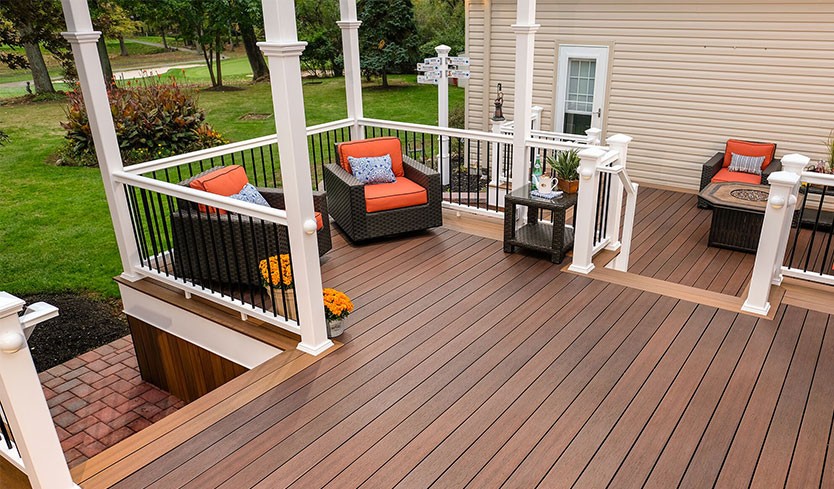
For distributors, contractors, builders, and retailers, choosing the right wholesale WPC composite decking supplier is essential. Buyers should consider more than price, including material quality, dimensions, customization, packaging, shipping, and supplier reliability. WPC composite decking combines wood fibers and polymer materials to create durable outdoor decking. For bulk buyers, wholesale sourcing can offer competitive pricing and a stable supply. This guide covers the key factors to consider when purchasing wholesale WPC composite decking.
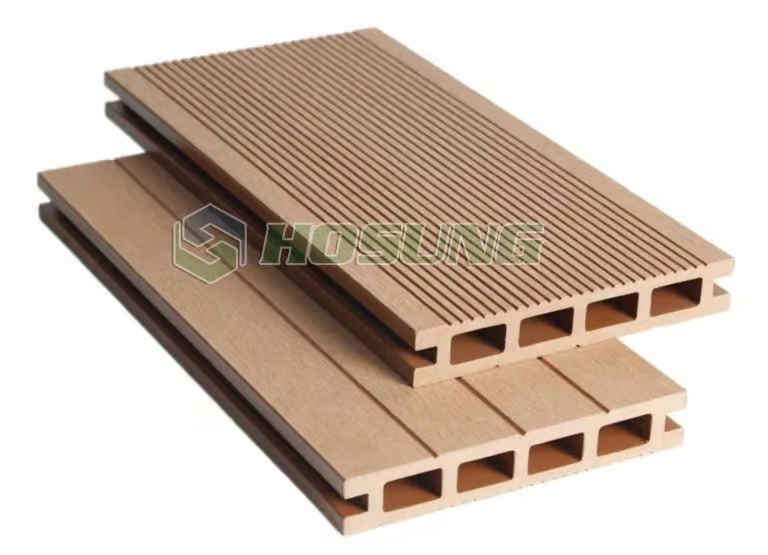
Table of Contents
Why Buy WPC Composite Decking Wholesale?
Purchasing decking in wholesale quantities can be beneficial for companies that regularly handle outdoor construction or landscaping projects.
Lower Unit Costs
The most obvious advantage of wholesale purchasing is the potential for a lower cost per board or per square meter. Larger production quantities allow manufacturers to optimize material usage, production schedules, packaging, and logistics.
However, buyers should compare the complete quotation rather than focusing only on the unit price. A low product price may not represent the lowest overall cost if packaging, accessories, shipping, or quality issues increase the final expense.
Consistent Product Supply
Contractors and distributors often need decking products repeatedly. Working with a reliable wholesale supplier can make it easier to maintain consistent stock and reorder the same product.
This is particularly important for distributors selling decking to multiple customers. Differences in color, dimensions, surface texture, or profile between production batches can create problems when completing ongoing projects.
More Customization Options
Wholesale buyers may have more opportunities to customize products when working directly with a manufacturer.
Depending on the supplier, customization may include:
- Board dimensions
- Surface texture
- Colors
- Embossed patterns
- Hollow or solid profiles
- Packaging
- Labels
- Accessories
- Private packaging requirements
Not every supplier provides all of these options, so customization should be discussed before requesting a formal quotation.
Understand the WPC Material Composition
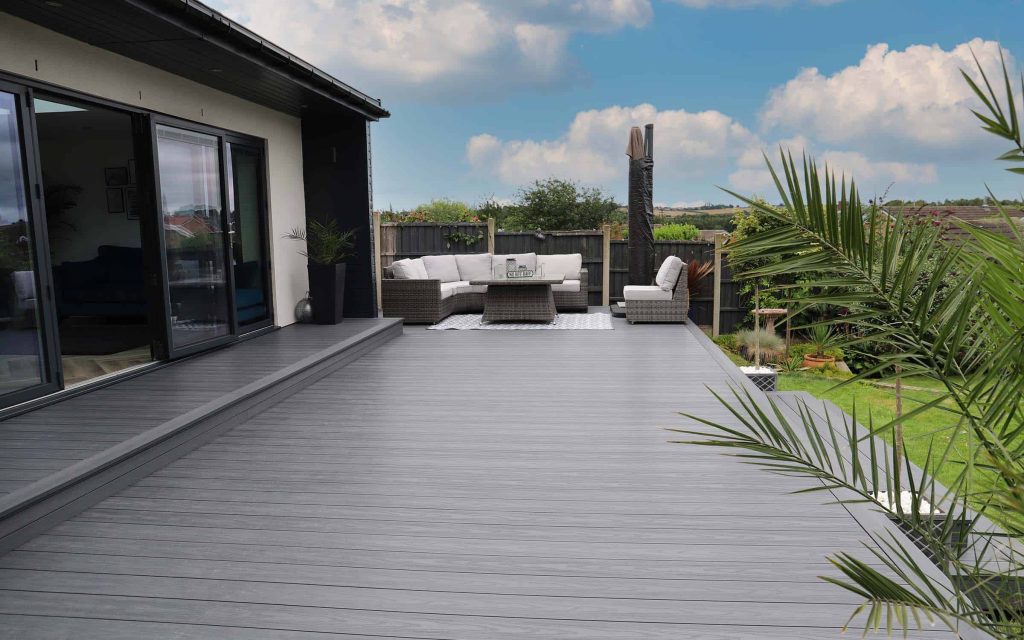
One of the most important factors when purchasing wholesale WPC composite decking is understanding what the decking is actually made from.
WPC decking generally contains three major categories of components:
- Wood-based material
- Polymer material
- Functional additives
Wood fibers or wood flour contribute to the appearance and structure of the board, while polymer materials help provide moisture resistance and structural performance. Additives may be used to improve properties such as UV resistance, color stability, processing performance, and weather resistance.
The ratio between wood and polymer can vary depending on the product design and manufacturing technology.
Wholesale buyers should therefore avoid comparing products only according to the term “WPC.” Two products may both be described as WPC decking but have different formulations, densities, mechanical properties, and expected performance.
Ask the supplier for technical information about the material composition and product specifications before making a large purchase.
Choose Between Hollow and Solid WPC Decking
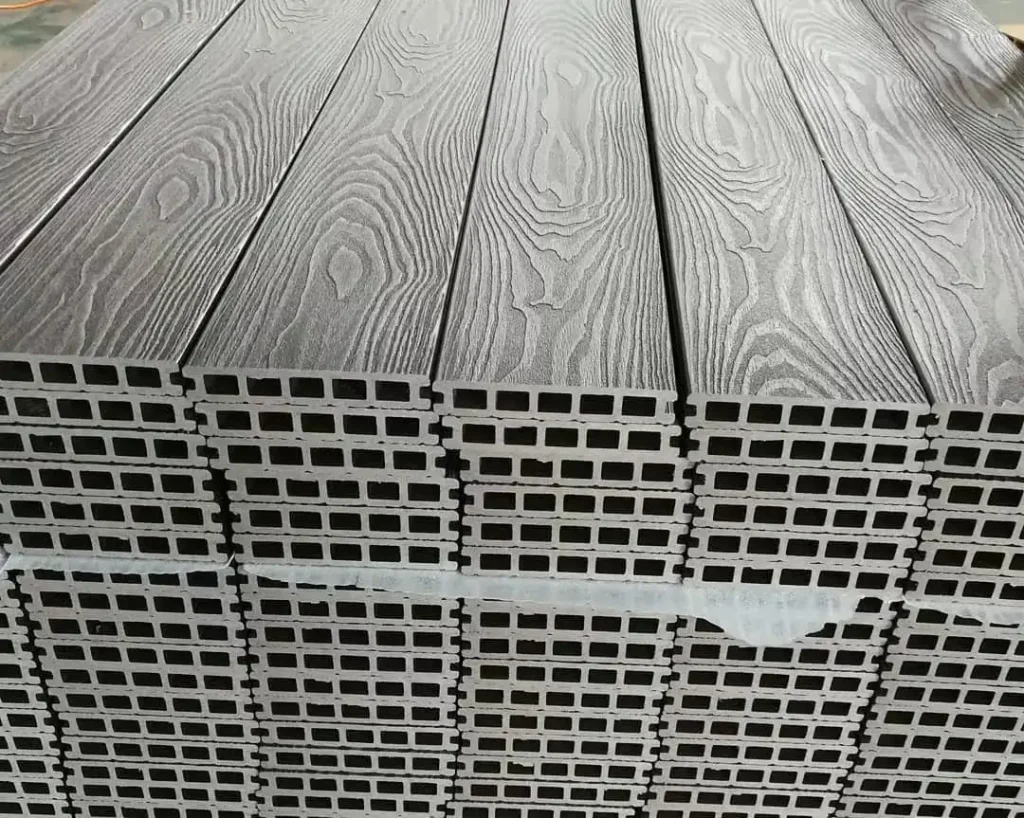
WPC decking is commonly available in hollow and solid profiles.
Hollow WPC Decking
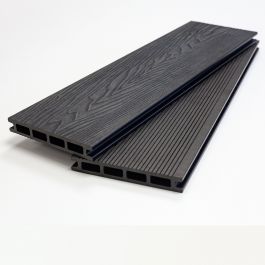
Hollow decking boards contain internal cavities that reduce material consumption and overall weight.
Potential advantages include:
- Lower product weight
- Easier transportation and handling
- Reduced material usage
- Potentially lower shipping costs
- Convenient installation for certain applications
However, the internal structure should be properly designed to provide sufficient strength for the intended application.
Solid WPC Decking
Solid WPC boards contain a denser material structure and generally have greater material volume.
They may be preferred for applications requiring:
- Higher perceived strength
- Greater impact resistance
- Heavy-use environments
- Specific installation requirements
Neither profile is automatically better for every project. The correct choice depends on application, load requirements, installation method, budget, and local climate.
Pay Attention to Decking Dimensions
Dimensions have a direct impact on installation, shipping, inventory management, and project calculations.
Important dimensions include:
- Board width
- Board thickness
- Board length
- Profile shape
- Weight per board
- Weight per square meter
Wholesale buyers should confirm whether the quoted dimensions are actual dimensions or nominal dimensions.
Board length is also important. Standard lengths may simplify production and logistics, while customized lengths may reduce cutting waste for specific projects.
When ordering large quantities, confirm the dimensional tolerance as well. Small differences between batches can affect installation, especially when decking systems use clips or concealed fastening systems.
Consider Surface Finishes and Colors
Appearance is a major selling point for composite decking. Wholesale customers may need different colors and surface finishes depending on the target market.
Common color categories include:
- Brown
- Dark brown
- Grey
- Light grey
- Black
- Wood-inspired colors
- Custom colors
Surface finishes can include wood grain patterns, brushed textures, embossed textures, and other decorative designs.
For distributors, offering several colors and textures can help address different customer preferences. However, carrying too many variations can increase inventory complexity.
Before placing a large order, it is useful to request samples and evaluate:
- Color consistency
- Surface texture
- Grain appearance
- Edge quality
- Dimensional accuracy
- Overall finish
A physical sample is often more useful than relying only on product photographs.
Check Weather and Outdoor Performance
Because decking is typically installed outdoors, environmental performance is one of the most important considerations.
Outdoor decking can be exposed to:
- Rain
- Humidity
- Direct sunlight
- Temperature changes
- Snow
- Dirt
- Pool water
- Frequent foot traffic
A suitable WPC product should be selected according to the climate and application conditions.
For example, buyers serving regions with strong sunlight should pay close attention to UV resistance and color stability. Markets with high humidity or frequent rainfall require materials with appropriate moisture resistance.
Temperature changes can also cause thermal expansion and contraction. Proper installation requires sufficient expansion gaps according to the manufacturer’s installation instructions.
Evaluate the Supplier’s Manufacturing Capability
A wholesale supplier should be evaluated as carefully as the product itself.
Important supplier factors include:
Production Capacity
If you plan to purchase large quantities, confirm whether the manufacturer can produce your required volume within the expected timeframe.
Production capacity becomes particularly important during peak seasons.
Quality Control
Ask how the supplier controls raw materials, extrusion, surface treatment, dimensions, packaging, and finished products.
A professional quality control process can help reduce:
- Dimensional inconsistencies
- Surface defects
- Color variations
- Damaged boards
- Packaging problems
Product Development
A manufacturer with product development capabilities may be able to provide more options for profiles, surfaces, colors, and accessories.
This can be useful for distributors that want to create differentiated product lines.
Export Experience
For international wholesale purchases, experience with export packaging and international logistics can make the purchasing process more efficient.
The supplier should understand documentation, packaging requirements, container loading, and international transportation procedures.
Ask About MOQ
Minimum order quantity, or MOQ, is another important factor when sourcing wholesale WPC composite decking.
MOQ can be calculated by:
- Pieces
- Square meters
- Bundles
- Pallets
- Containers
Different suppliers may have different requirements.
If you are testing a new supplier or introducing WPC decking to a new market, a smaller initial order can reduce inventory risk. Once sales become stable, larger orders may provide better pricing.
Always confirm the MOQ for standard products as well as customized products because customized colors, packaging, and profiles may require higher minimum quantities.
Calculate the Total Wholesale Cost
The product quotation is only one part of the total purchasing cost.
A better approach is to calculate the complete landed cost, including:
Product Cost + Packaging Cost + Inland Transportation + Export Charges + Ocean Freight + Import Duties + Local Delivery = Total Landed Cost
For international buyers, shipping efficiency can have a significant effect on the final price.
WPC decking is relatively bulky, so container loading efficiency matters. The number of boards, bundles, or square meters that can fit into a container can influence the actual cost per square meter.
Therefore, ask the supplier for detailed loading information before comparing quotations.
Packaging Is Important for Wholesale Decking
Decking boards can be damaged during handling and transportation if packaging is inadequate.
Wholesale buyers should check whether products are packed with appropriate:
- Protective film
- Bundles
- Strapping
- Corner protection
- Pallets
- Cartons
- Moisture protection
Packaging should be designed for the transportation method and destination.
If the products will be shipped overseas, the packaging should be strong enough to withstand loading, unloading, container transportation, and warehouse handling.
Don’t Ignore Accessories
A complete decking system may require more than the boards themselves.
Depending on the installation design, buyers may also need:
- Joists
- Starter clips
- Installation clips
- Screws
- End caps
- Corner profiles
- Edge trim
- Fascia boards
- Other installation components
For distributors, purchasing compatible accessories from the same supplier can simplify inventory management and provide customers with a complete solution.
However, accessories should be checked for compatibility with the selected decking profile before ordering.
Request Samples Before Bulk Orders
One of the safest ways to evaluate a new supplier is to order samples before making a large purchase.
A sample evaluation can cover:
Appearance: Check color, grain, texture, and surface quality.
Dimensions: Measure width, thickness, and length.
Structure: Examine whether the board is hollow or solid and inspect the profile.
Surface: Look for scratches, uneven texture, or visible manufacturing defects.
Installation: Test clips, screws, and other accessories if possible.
Performance: Where appropriate, conduct basic tests or request professional test reports.
A sample cannot replace complete laboratory testing, but it can help identify obvious quality differences before a wholesale order is placed.
Ask for Technical Documentation
Professional wholesale suppliers should be able to provide technical information for their products.
Depending on the market and application, useful documents may include:
- Product specifications
- Installation instructions
- Technical data sheets
- Test reports
- Quality inspection records
- Packaging specifications
- Material information
If a product is intended for a commercial construction project, the buyer may need additional technical documentation to meet project requirements.
Having clear documentation also makes it easier for distributors to create accurate product listings and sales materials.
Consider Long-Term Maintenance
One reason customers choose WPC decking is its relatively low maintenance requirement compared with many traditional outdoor decking materials.
Routine maintenance may include:
- Sweeping dirt and leaves
- Cleaning stains
- Removing standing water
- Washing the surface periodically
- Checking drainage areas
- Inspecting the installation system
However, “low maintenance” does not mean “maintenance-free.” Proper cleaning and drainage can help maintain the appearance and service performance of the decking.
Wholesale buyers should understand the recommended maintenance procedures so they can provide accurate information to their customers.
Common Applications of Wholesale WPC Composite Decking
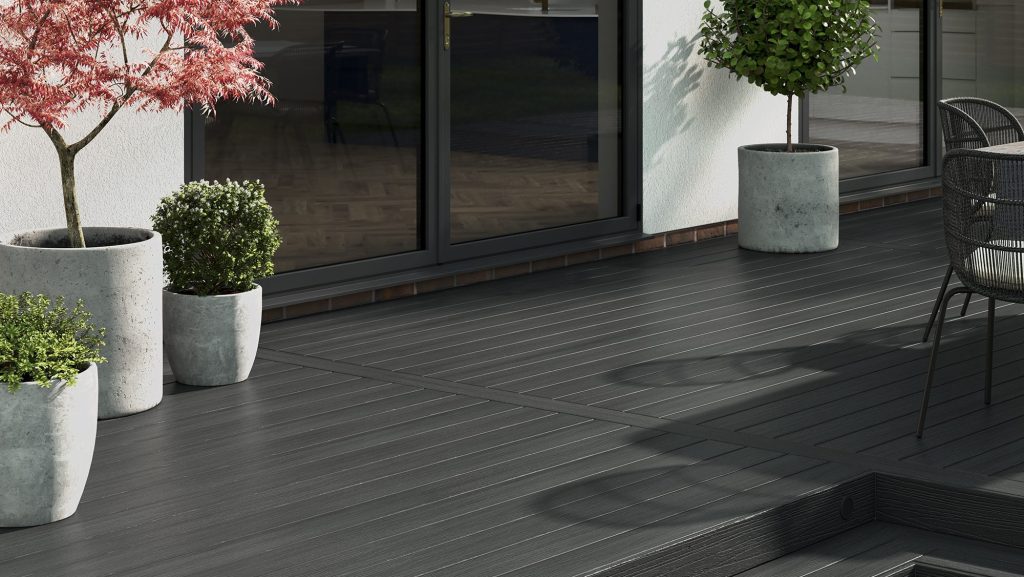
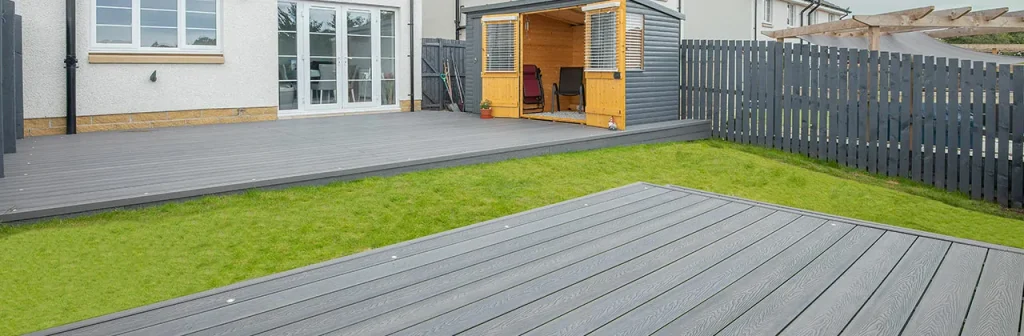
WPC decking can be used in many outdoor environments, including:
- Residential balconies
- Garden terraces
- Patios
- Poolside areas
- Rooftop terraces
- Walkways
- Commercial outdoor spaces
- Hotels
- Restaurants
- Public landscape projects
- Recreational areas
The appropriate product should always be selected according to the project’s structural, environmental, and installation requirements.
For commercial projects, buyers should pay particular attention to expected foot traffic and local building requirements.
How to Choose the Right Wholesale Supplier
When comparing suppliers, create a checklist rather than selecting a manufacturer based only on price.
Consider these questions:
- Does the supplier manufacture WPC decking directly?
- What materials and formulations are used?
- What decking profiles are available?
- What are the standard dimensions?
- What colors and surface finishes are available?
- What is the MOQ?
- What is the production capacity?
- Can customized products be produced?
- What quality control procedures are used?
- What technical documents are available?
- How is the decking packaged?
- How efficiently can products be loaded for shipping?
- What accessories are available?
- What is the expected production lead time?
- What after-sales support is provided?
Comparing suppliers using the same criteria makes it easier to identify the best overall value.
Tips for Negotiating a Wholesale WPC Composite Decking Order
Wholesale negotiations should focus on the complete order rather than just reducing the unit price.
For example, buyers can discuss:
- Quantity-based pricing
- Packaging requirements
- Payment terms
- Production lead time
- Sample costs
- Customized colors
- Accessory pricing
- Container loading
- Replacement policies
- Quality inspection
- Shipping arrangements
A clear purchase specification can prevent misunderstandings later.
The purchase order should specify the product model, dimensions, color, quantity, packaging, accessories, delivery requirements, and quality standards.
Conclusion
Sourcing wholesale WPC composite decking requires more than comparing prices from several suppliers. Buyers need to evaluate material composition, board structure, dimensions, surface finish, outdoor performance, production capability, quality control, packaging, logistics, and after-sales support.
For distributors and contractors, the ideal supplier is not necessarily the one offering the lowest initial quotation. A reliable composite decking manufacturer that provides consistent quality, stable supply, flexible customization, efficient packaging, and clear technical support can deliver better long-term value.
Before committing to a large order, request samples, compare specifications, calculate the complete landed cost, and verify the supplier’s production and quality capabilities. With careful sourcing and proper product selection, wholesale WPC composite decking can become a practical and scalable solution for residential, commercial, landscaping, and outdoor construction markets.