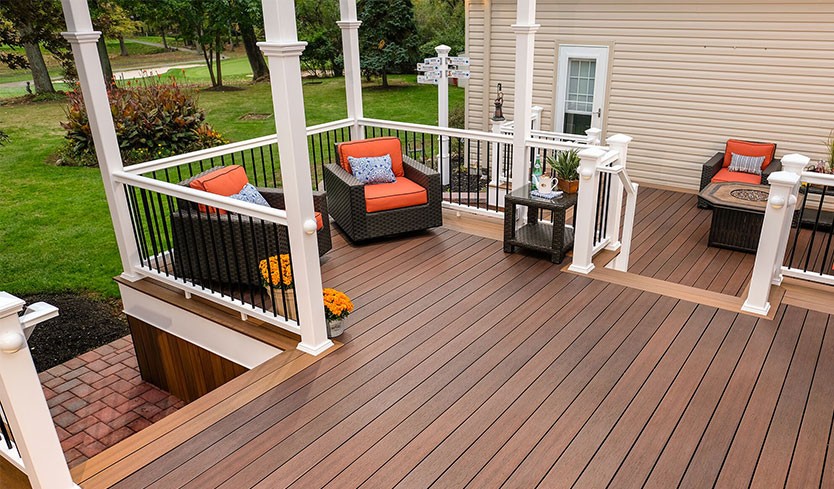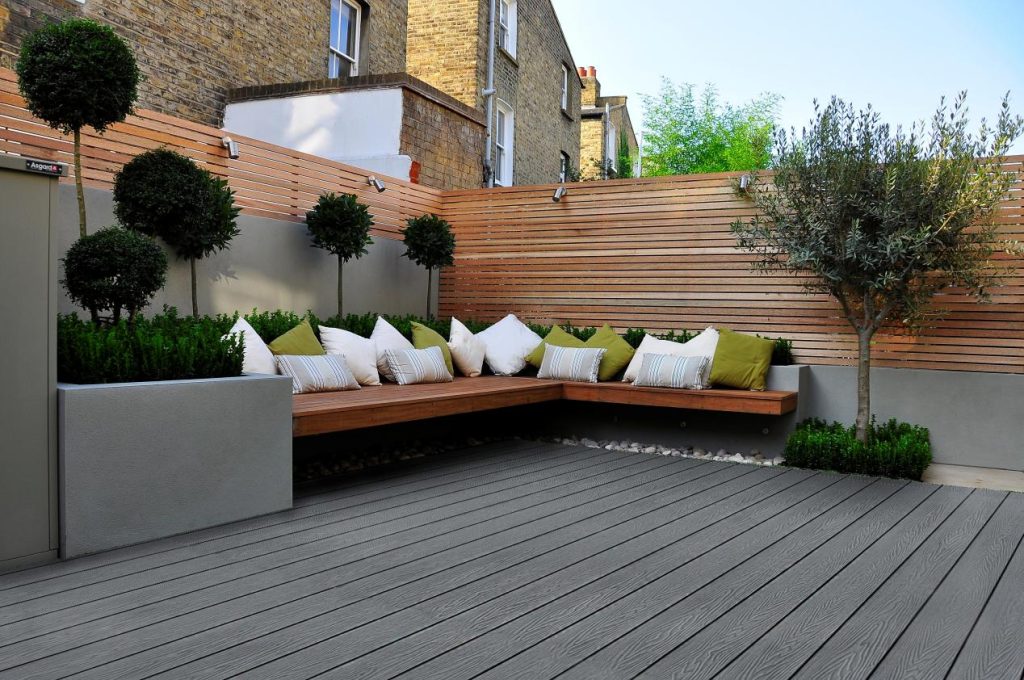
Composite decking has become one of the most popular choices for homeowners seeking a durable, low-maintenance, and aesthetically pleasing alternative to traditional wood. Among the different styles available, wood effect composite decking stands out for its ability to replicate the natural beauty of timber while offering superior performance. In this comprehensive guide, we’ll explore the various types of wood effect composite decking, tips on selecting the right material for your project, and ideas on how to style and pair it for a visually stunning outdoor space.
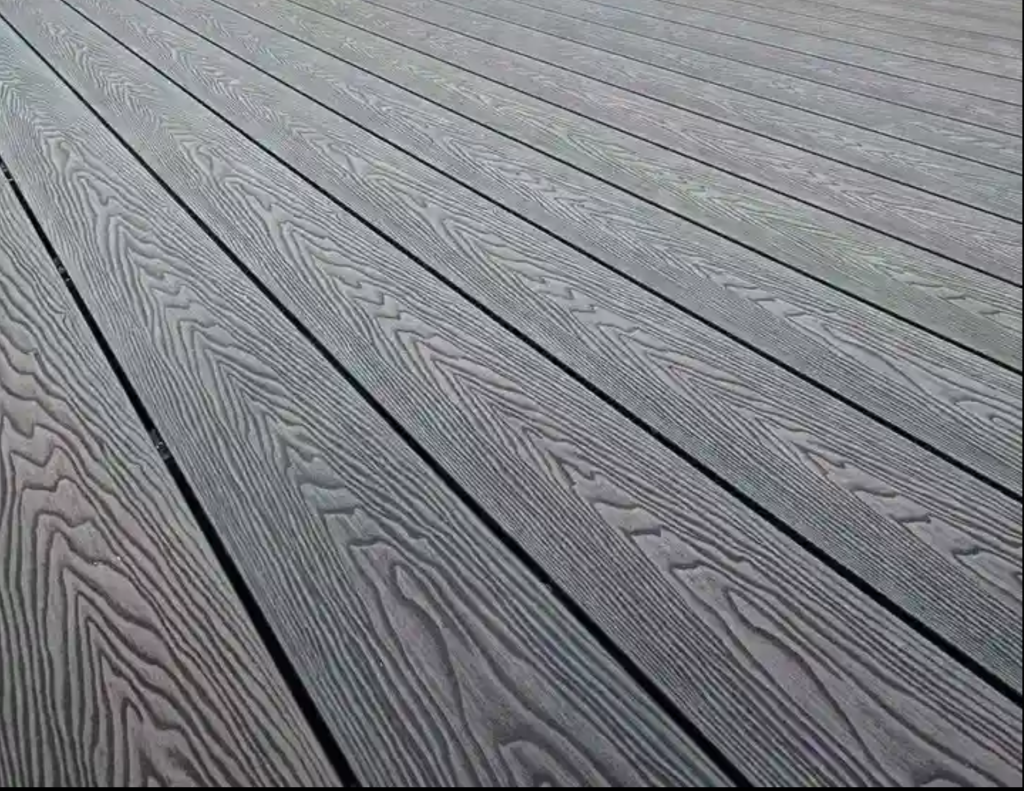
Table of Contents
What is Wood Effect Composite Decking?
Wood effect composite decking is a synthetic decking material designed to mimic the look and texture of natural wood. It is usually made from a blend of recycled wood fibers and high-quality plastic, often polyethylene (PE) or polyvinyl chloride (PVC). The combination results in a material that is resistant to rot, insect damage, and weathering while requiring minimal maintenance. Unlike traditional wood decking, wood effect composite boards do not need regular sanding, staining, or sealing, making them an excellent choice for busy homeowners or those seeking a long-lasting outdoor surface.
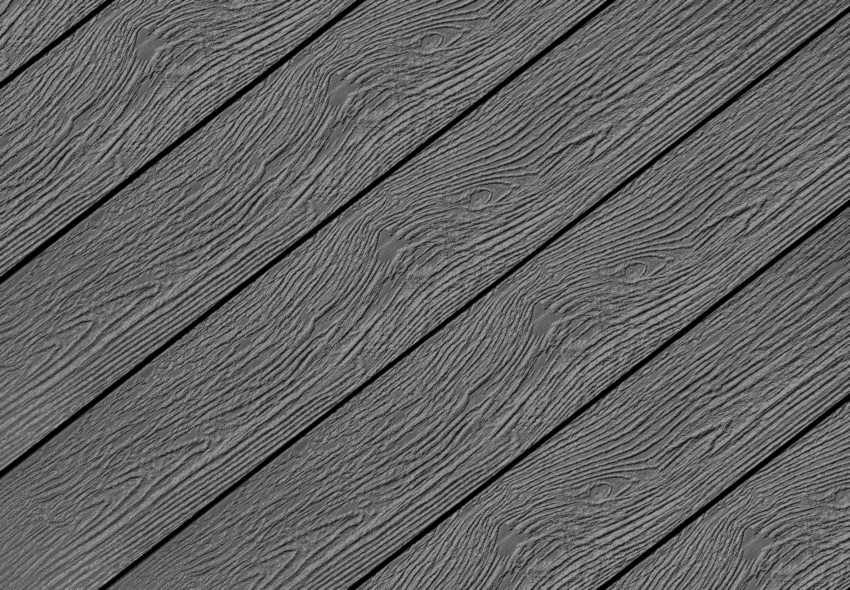
One of the most appealing aspects of wood effect composite decking is its versatility. Modern manufacturing techniques allow for a wide variety of colors, grains, and textures that closely resemble hardwoods like oak, walnut, or teak. This allows homeowners to achieve the aesthetic charm of timber while enjoying the practical benefits of composite materials.
Benefits of Wood Effect Composite Decking
Before diving into the types and selection tips, it’s worth exploring the benefits that make wood effect composite decking a popular choice for outdoor spaces:
Durability: Unlike traditional timber, composite decking resists cracking, splintering, and warping. It maintains its structural integrity even under heavy foot traffic.
Low Maintenance: Composite boards only require occasional cleaning with soap and water. There’s no need for sanding, staining, or sealing, saving both time and cost in the long run.
Weather Resistance: Composite decking withstands harsh weather conditions, including UV rays, rain, and snow, without fading or rotting.
Eco-Friendly: Many composite boards are made from recycled materials, making them an environmentally responsible choice.
Aesthetic Flexibility: With a range of wood tones and finishes, composite decking can complement any outdoor design style, from contemporary patios to rustic garden decks.
Slip Resistance: Many wood effect composite boards are designed with textured surfaces that provide excellent grip, making them safe for wet environments such as around pools.
Types of Wood Effect Composite Decking
When selecting wood effect composite decking, it is essential to understand the different types available. Manufacturers offer various compositions, surface finishes, and edge designs that impact the board’s performance and appearance. Here are the most common types:
1. Solid Composite Decking
Solid composite boards are dense and heavy, offering a similar feel to traditional wood. They are highly durable and have excellent resistance to impact, making them suitable for high-traffic areas.
Pros: High strength, long lifespan, realistic wood texture.
Cons: Slightly more expensive, heavier to install.
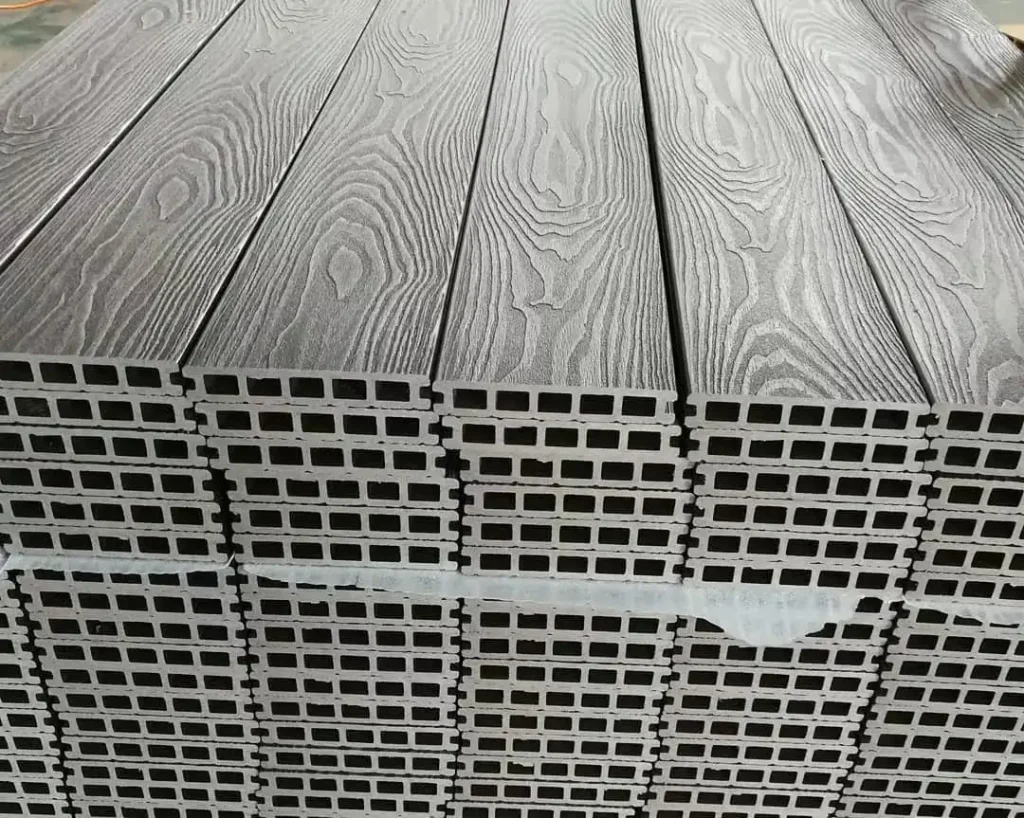
2. Hollow Composite Decking
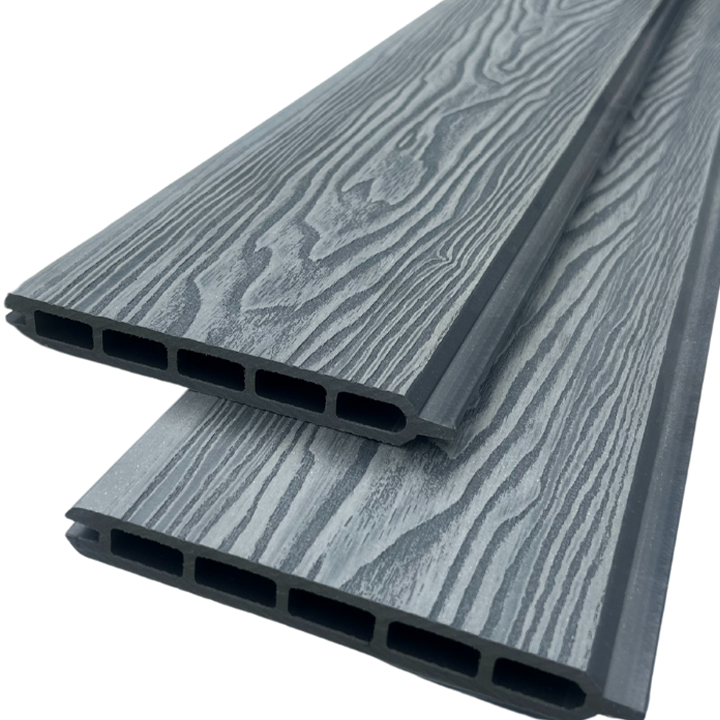
Hollow boards are lighter and feature a cavity inside the board, which reduces material costs and makes them easier to handle.
Pros: Lightweight, easier to install, cost-effective.
Cons: Slightly less strong than solid boards, may feel less like real wood underfoot.
3. Capped Composite Decking
Capped composite decking features a protective polymer layer on the surface of the board. This coating enhances resistance to staining, fading, and scratches.
Pros: Superior protection against weather and UV rays, low maintenance.
Cons: Higher price point, surface layer may wear over time with heavy use.
4. Grooved Decking Boards
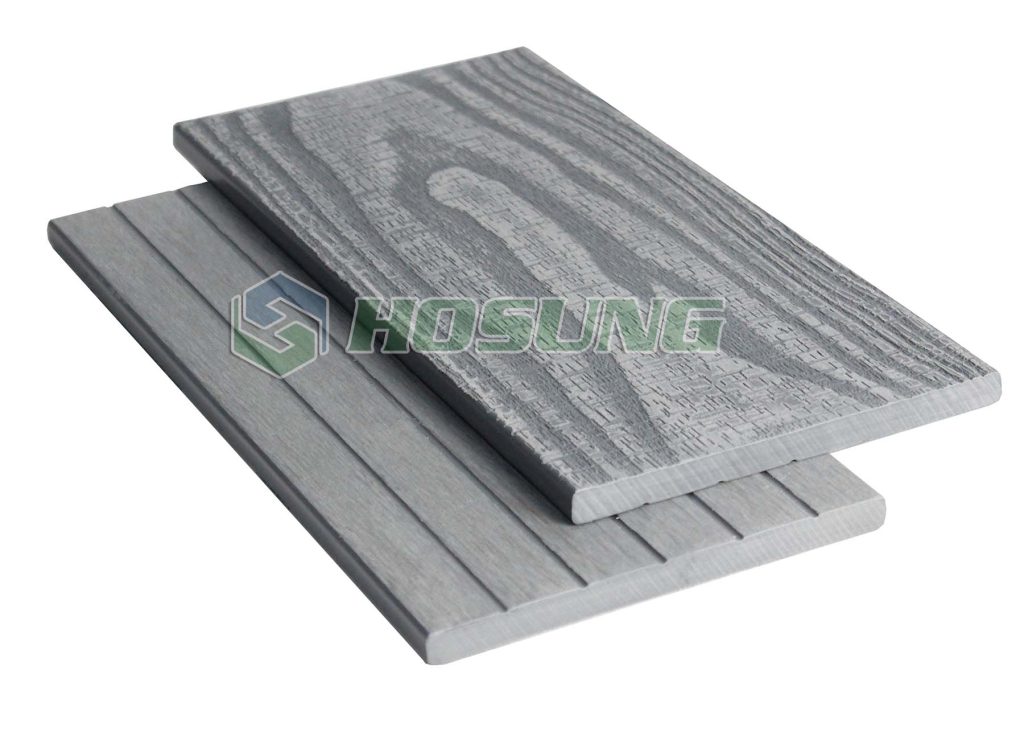
Grooved boards have channels on the sides, allowing them to be installed with hidden fasteners. This creates a clean, screw-free surface with a seamless finish.
Pros: Sleek appearance, easier to maintain.
Cons: Requires specific fasteners, installation can be more complex.
5. Textured vs Smooth Boards
Wood effect composite decking is available in textured and smooth finishes:
Textured Boards: Feature grain patterns and embossed textures that mimic real wood. They offer better slip resistance.
Smooth Boards: Have a sleek, modern appearance but may be more slippery when wet.
6. Color Options
Modern composite decking comes in a wide palette of wood-like colors, including natural oak, dark walnut, teak, and grey driftwood. Some manufacturers offer dual-tone boards, with one side lighter and the other darker, allowing versatile design choices.
How to Choose the Right Wood Effect Composite Decking
Selecting the right wood effect composite decking requires considering factors beyond just color and texture. Here are some key aspects to guide your decision:
1. Intended Use
Think about the function of your deck. High-traffic areas like patios, pool surrounds, and walkways benefit from solid or capped boards, which are more durable. Low-traffic areas, such as garden terraces, may be suitable for hollow boards.
2. Climate Considerations
In areas with heavy rainfall or snow, capped or treated boards provide extra protection against moisture penetration.
In sunny regions, UV-resistant boards prevent fading and discoloration.
3. Maintenance Preferences
If you prefer minimal maintenance, choose capped composite decking or boards with textured surfaces, which require less cleaning and resist staining better than smooth boards.
4. Budget
Hollow boards are generally more budget-friendly, while solid or capped boards offer higher durability at a higher cost. Consider your long-term needs and the lifespan of the decking material.
5. Aesthetic Goals
Consider the overall design theme of your outdoor space:
For a natural, rustic look: Opt for textured boards in warm wood tones.
For a modern, minimalist design: Smooth grey or neutral boards provide a contemporary feel.
For a luxurious finish: Choose boards with subtle dual-tone effects that mimic premium hardwood.
6. Installation Method
Some decking systems use hidden fasteners that require grooved boards, while others rely on screws or clips. Think about whether you want visible screws, a flush finish, or ease of installation.
Styling and Pairing Ideas for Wood Effect Composite Decking
Wood effect composite decking is incredibly versatile, allowing you to create a wide range of outdoor designs. Here are some tips for styling and pairing your decking boards:
1. Decking Patterns
Straight-Lay Boards: Classic layout where boards run parallel; simple and elegant.
Diagonal or Herringbone Patterns: Adds visual interest and makes the space appear larger.
Mixing Widths: Combining different board widths creates a modern, textured appearance.
2. Color Combinations
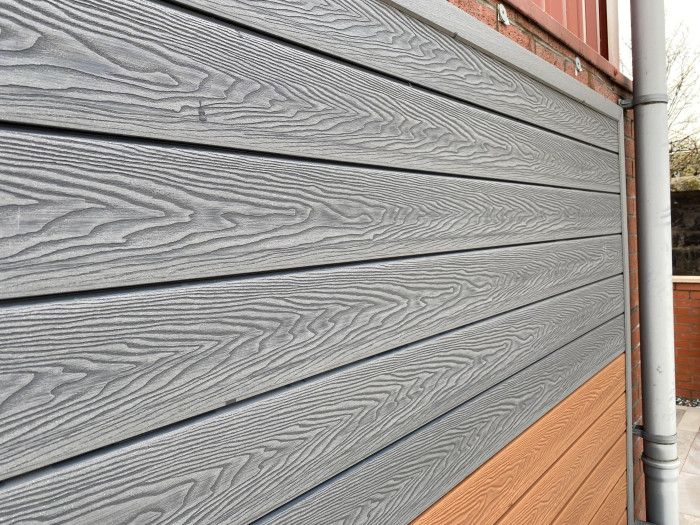
Mixing different wood tones can create depth and contrast. For example, pairing warm oak boards with cooler grey accents highlights the natural wood effect and adds dimension.
3. Furniture Pairing
Composite decking pairs well with various outdoor furniture materials:
Wooden Furniture: Complements the natural wood effect for a cohesive look.
Metal Furniture: Creates a modern industrial vibe.
Rattan or Wicker: Adds a cozy, relaxed feel for outdoor lounges.
4. Lighting Integration
Incorporating LED deck lights or post lights enhances safety and ambiance. Wood effect boards reflect light beautifully, especially lighter shades like teak or grey, creating a warm glow at night.
5. Greenery and Landscaping
Plant beds, potted plants, or raised garden boxes complement wood effect decking beautifully. Darker boards contrast with lush green foliage, while lighter boards highlight colorful flowers.
6. Water Features
Decking around pools or ponds benefits from textured boards that provide slip resistance. Pairing blue water with warm wood tones creates a luxurious, resort-style atmosphere.
7. Outdoor Kitchens and Fire Pits
Composite decking is heat resistant but avoid placing hot grills directly on the surface. Choose capped boards for areas near fire pits or barbecues to minimize staining and wear.
Installation Tips for Wood Effect Composite Decking
Proper installation ensures your deck looks great and lasts longer. Here are some essential tips:
Allow for Expansion: Composite boards expand slightly with temperature changes. Follow manufacturer guidelines for spacing.
Use Hidden Fasteners: Grooved boards installed with hidden clips create a smooth, screw-free surface.
Provide Proper Ventilation: Ensure airflow beneath the decking to prevent moisture buildup.
Level the Base: A solid, level base enhances stability and prevents sagging.
Regular Cleaning: Even though composite decking is low maintenance, occasional cleaning removes dirt and prevents mold or algae growth.
Common Mistakes to Avoid
When working with wood effect composite decking, homeowners often make the following mistakes:
Skipping the Substructure Check: A weak or uneven frame can compromise the decking’s performance.
Ignoring Manufacturer Instructions: Each composite board has specific installation and spacing requirements.
Choosing the Wrong Finish for Wet Areas: Smooth boards near pools can be slippery; opt for textured boards instead.
Overlooking UV Resistance: In sunny climates, non-UV-resistant boards may fade over time.
Maintenance Tips for Longevity
One of the main benefits of wood effect composite decking is minimal maintenance. Still, a few simple practices can keep your deck looking pristine:
Regular Cleaning: Sweep leaves and dirt regularly; wash boards with mild soap and water.
Remove Stains Promptly: Spills, grease, or food should be cleaned quickly to prevent marks.
Inspect Fasteners: Periodically check hidden clips or screws for looseness.
Avoid Harsh Chemicals: Bleach or acidic cleaners can damage the board’s surface.
By following these guidelines, composite decking can last 25–30 years with minimal upkeep, significantly longer than traditional timber.
Wood Effect Composite Decking vs Traditional Wood
Many homeowners ask how wood effect composite decking compares to real wood. Here’s a quick comparison:
| Feature | Wood Effect Composite | Natural Wood |
|---|---|---|
| Durability | High; resists rot, cracking, and warping | Moderate; prone to splitting, rot, and insect damage |
| Maintenance | Low; occasional washing | High; requires staining, sealing, and sanding |
| Cost | Moderate to high initial cost, long-term savings | Lower initial cost, higher maintenance costs |
| Appearance | Consistent color and texture; available in multiple shades | Unique natural grain; colors may fade over time |
| Environmental Impact | Made from recycled materials; eco-friendly | Timber harvesting impacts forests; sustainability varies |
While natural wood offers authentic charm, composite decking provides practical advantages, especially for busy homeowners seeking low-maintenance solutions.
Conclusion
Wood effect composite decking from Hosung WPC is an ideal choice for anyone looking to combine the timeless beauty of timber with modern durability and low maintenance. By understanding the different types, selecting the right material for your climate and usage, and incorporating creative styling ideas, you can create an outdoor space that is both visually stunning and long-lasting. From textured boards that replicate rustic hardwood to smooth, contemporary finishes perfect for minimalist designs, composite decking offers versatility, performance, and aesthetic appeal.
Whether you’re renovating an old deck, designing a new patio, or building a poolside retreat, wood effect composite decking offers an investment that enhances both the beauty and functionality of your outdoor living space. With careful selection, proper installation, and minimal upkeep, your deck can remain a beautiful and practical feature of your home for decades to come.