When choosing modern building and decorative materials, price per square foot is often one of the most decisive factors. Among the most frequently compared materials today are WPC (Wood Plastic Composite) and PVC (Polyvinyl Chloride). Whether you are a homeowner planning a renovation, a contractor estimating project costs, or a distributor sourcing materials for resale, understanding the WPC vs PVC price per sq ft can help you make a smarter and more profitable decision.
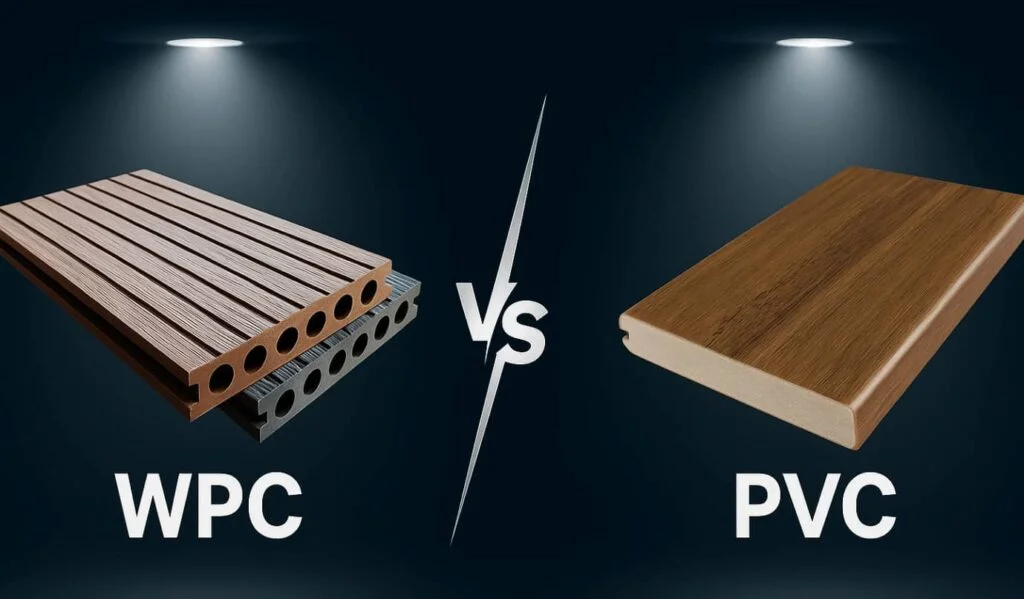
Table of Contents
This article, Hosung WPC will provide a deep, practical, and market-oriented comparison of WPC and PVC prices per square foot, while also considering durability, installation costs, lifespan, maintenance expenses, and long-term value. Instead of simply listing numbers, we will explain why prices differ and which material offers better value for specific applications.
Understanding the Basics Before Comparing Price per Sq Ft
Before diving directly into WPC vs PVC price per sq ft, it is important to understand what these materials are made of and how their composition affects cost.
What Is WPC?
WPC (Wood Plastic Composite) is a hybrid material composed of:
Wood fiber or wood flour (usually 50–70%)
Thermoplastic resins (PE, PP, or PVC-based)
Additives such as UV stabilizers, pigments, and coupling agents
WPC is widely used in:
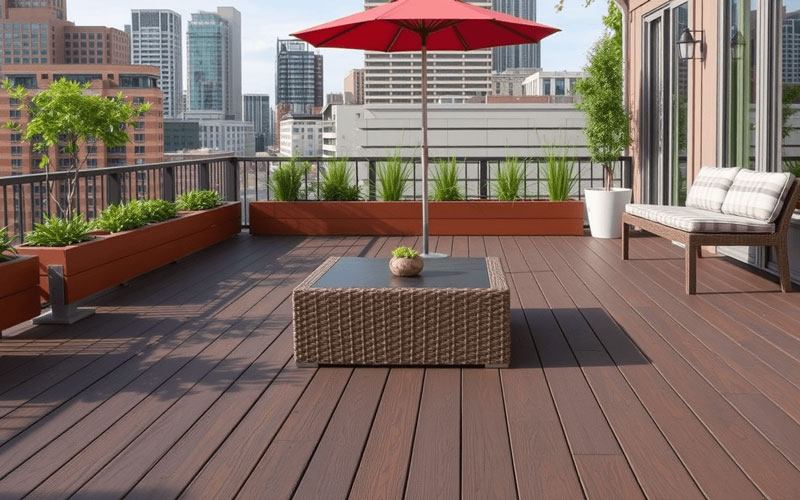
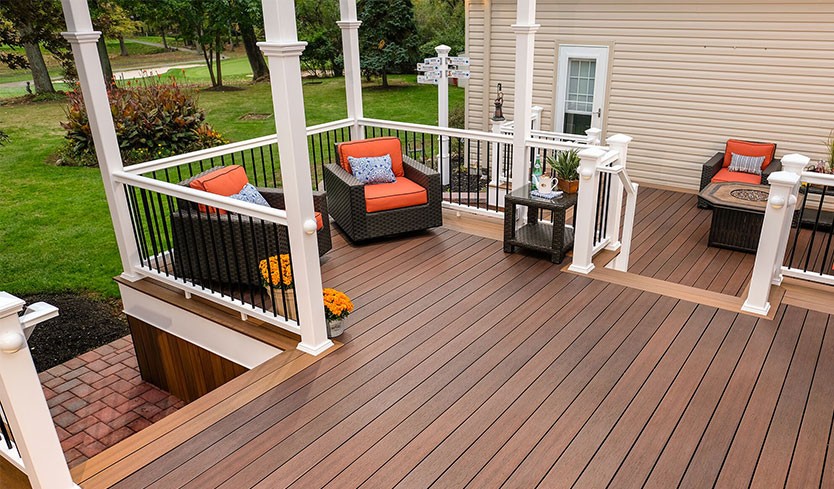
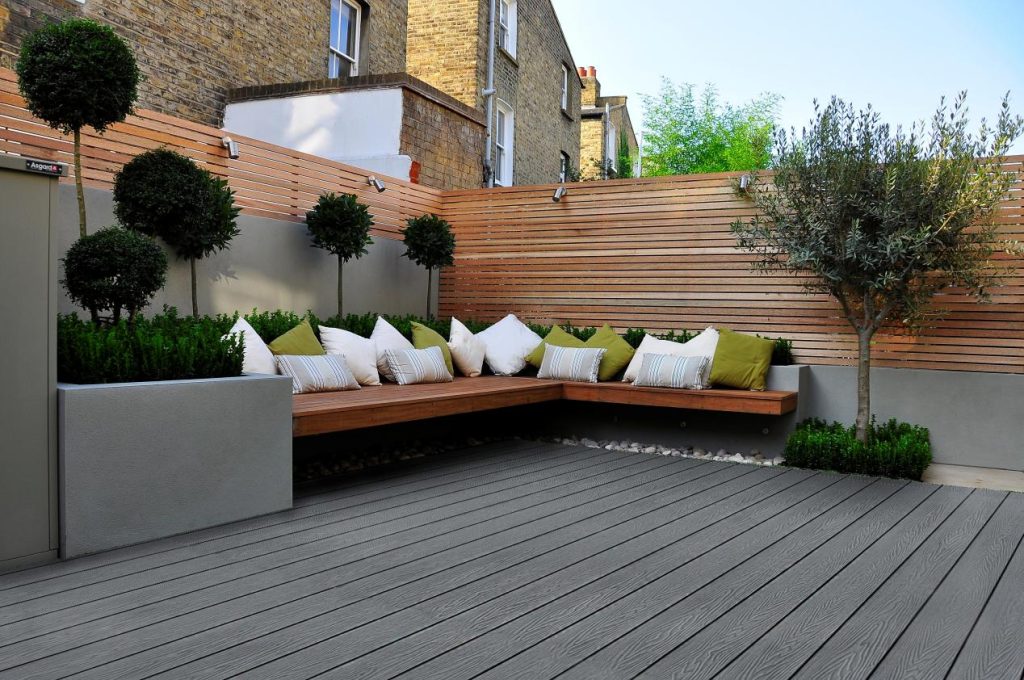
Outdoor decking
Wall cladding
Fencing
Pergolas and railings
Landscaping applications
Because WPC combines the visual appeal of wood with the durability of plastic, it often commands a higher price per sq ft than basic PVC products.
What Is PVC?
PVC (Polyvinyl Chloride) is a synthetic plastic polymer made primarily from:
Vinyl resin
Plasticizers (for flexible PVC)
Stabilizers and fillers
PVC is commonly used in:
Wall panels
Ceiling panels
Trim boards
Interior cladding
Bathroom and kitchen applications
PVC products are generally lighter, easier to install, and lower in raw material cost, which directly influences the PVC price per sq ft.
WPC vs PVC Price per Sq Ft: Average Market Ranges
Now let’s get straight to the core comparison: WPC vs PVC price per sq ft.
Note: Prices vary by region, thickness, surface treatment, brand, and order volume. The ranges below represent global average export or retail pricing.
Average WPC Price per Sq Ft
WPC decking:
USD $4.50 – $9.00 per sq ftWPC wall cladding:
USD $3.80 – $7.50 per sq ftWPC fencing panels:
USD $5.00 – $10.00 per sq ft
Factors increasing WPC price per sq ft:
Higher wood fiber content
Co-extrusion layers
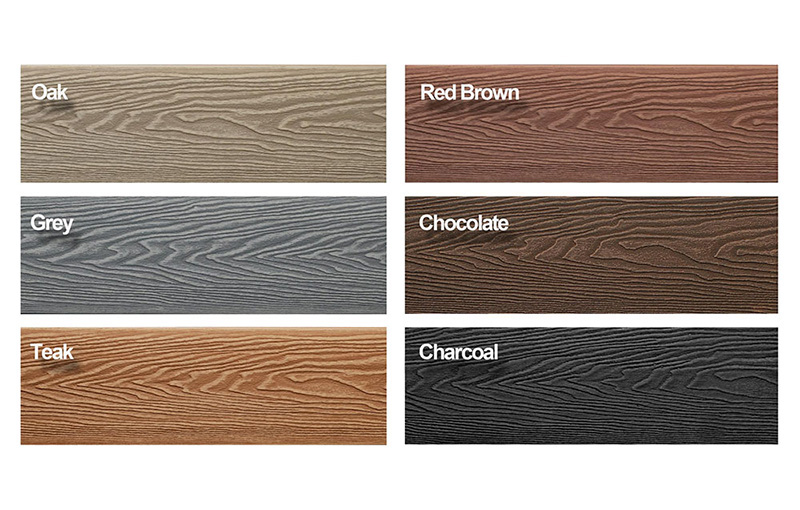
3D wood grain embossing
UV-resistant formulations
Premium color consistency
Average PVC Price per Sq Ft
PVC wall panels:
USD $1.80 – $4.00 per sq ftPVC ceiling panels:
USD $1.50 – $3.50 per sq ftPVC trim boards:
USD $2.50 – $5.00 per sq ft
PVC is clearly more affordable in terms of initial price per sq ft, which explains why it is popular in budget-sensitive projects.
Why WPC Costs More Than PVC Per Sq Ft
When comparing WPC vs PVC price per sq ft, many buyers ask why WPC is more expensive. The answer lies in several cost-driving factors that influence both production complexity and final market pricing.
Raw Material Cost
WPC uses:
Natural wood fibers (processed and dried)
Higher-grade polymers
More complex additive systems
Unlike PVC, the wood fibers used in WPC must undergo drying, grinding, and screening to achieve consistent particle size and moisture control. This preparation process adds both time and energy costs to manufacturing. In addition, WPC formulations rely on compatibilizers and stabilizers to ensure strong bonding between wood fibers and plastic polymers, further increasing material expenses.
PVC relies mainly on:
Synthetic resin
Fillers such as calcium carbonate
PVC formulations are comparatively simpler and more standardized. Fillers like calcium carbonate help reduce raw material cost while maintaining acceptable performance for interior applications. As a result, wood fiber processing and blending significantly increase production costs, directly pushing up the WPC price per sq ft.
Manufacturing Process
WPC manufacturing involves:
Precise material blending
Controlled extrusion temperatures
Advanced surface treatments
Because WPC combines organic and synthetic components, manufacturers must carefully manage temperature, pressure, and mixing ratios to avoid defects such as cracking or uneven texture. Many premium WPC products also require embossing, co-extrusion, or UV-protective layers, which add further production steps.
PVC panels often use:
Simpler extrusion or calendaring processes
Lower energy consumption
PVC production is generally faster and more energy-efficient, with fewer quality control variables. As a result, WPC requires higher manufacturing investment, which is ultimately reflected in its higher market pricing.
Installation Cost Comparison Per Sq Ft
Material price is only one part of the total cost. Installation also plays a major role in the WPC vs PVC price per sq ft comparison.
WPC Installation Cost
Installation cost: $2.50 – $5.00 per sq ft
Requires substructure (joists or battens)
Expansion gaps must be calculated
Specialized fasteners or clips often needed
PVC Installation Cost
Installation cost: $1.50 – $3.50 per sq ft
Lightweight panels
Can be installed directly on flat surfaces
Faster labor time
PVC generally wins in terms of installation affordability, making the total PVC cost per sq ft significantly lower for interior projects.
Maintenance Cost Over Time: Hidden Price Differences
When evaluating WPC vs PVC price per sq ft, many buyers tend to overlook long-term maintenance costs, which can significantly affect the total cost of ownership over the material’s lifespan. While the initial price per sq ft is important, understanding how much it costs to maintain the material over years can help make a more informed decision.
WPC Maintenance Cost
No painting, staining, or sealing required
Occasional cleaning with water and mild detergent
Resistant to rot, insects, moisture, and UV exposure
Outdoor lifespan: 15–25 years, depending on climate and installation quality
Estimated maintenance cost: $0.10 – $0.20 per sq ft per year
WPC’s low-maintenance nature is one of its strongest advantages. Unlike traditional wood, it does not require periodic sealing or painting, and its composite structure minimizes warping or splitting. Even in harsh weather conditions, WPC retains structural integrity and appearance, reducing the likelihood of costly repairs or premature replacement.
PVC Maintenance Cost
Easy to clean with standard household cleaners
Resistant to mold and mildew in indoor environments
Can discolor, become brittle, or warp under prolonged UV exposure
Outdoor lifespan: 8–15 years, shorter than WPC in most cases
Estimated maintenance cost: $0.15 – $0.30 per sq ft per year, especially outdoors
PVC may require replacement or repair more frequently in exterior applications due to sun damage or temperature fluctuations. Over time, these additional costs can offset its initially lower price per sq ft, making PVC less cost-effective for outdoor projects.
In summary, while WPC has a higher upfront cost, its reduced maintenance and longer lifespan often balance out the initial investment, providing better long-term value compared to PVC.
Durability and Lifespan vs Price per Sq Ft
Durability directly impacts the real cost behind WPC vs PVC price per sq ft.
| Feature | WPC | PVC |
|---|---|---|
| UV resistance | High | Medium |
| Moisture resistance | High | High |
| Structural strength | Higher | Lower |
| Outdoor lifespan | 15–25 years | 8–15 years |
If you divide total cost by lifespan, WPC can be more economical per sq ft per year in outdoor environments.
Indoor Applications: Is PVC Better Value Per Sq Ft?
For interior projects, the PVC price per sq ft often provides better value.
PVC is ideal for:
Bathrooms
Kitchens
Ceilings
Office interiors
Commercial renovations
In these scenarios:
No heavy load requirements
Limited UV exposure
Lower wear and tear
Here, the lower PVC price per sq ft usually makes more financial sense than WPC.
Outdoor Applications: WPC Justifies Its Higher Price Per Sq Ft
For exterior use, the WPC price per sq ft is often justified due to:
Better weather resistance
Reduced fading and cracking
More natural wood appearance
Higher structural stability
Applications where WPC offers better value:
Decking
Exterior wall cladding
Fencing
Garden structures
In these cases, choosing PVC solely for its lower price per sq ft can lead to higher replacement costs later.
Environmental Impact and Sustainability Cost Factors
Sustainability is increasingly influencing material selection and pricing.
WPC Sustainability
Uses recycled plastics
Reuses wood waste
Lower deforestation impact
Often qualifies for green building standards
PVC Sustainability
Fully synthetic
Recycling options exist but limited
Environmental regulations may increase future costs
In some markets, eco-friendly materials like WPC can command higher prices per sq ft but also offer better long-term brand and compliance value.
Regional Price Variations: WPC vs PVC Price per Sq Ft
Prices differ by region due to:
Labor cost
Import duties
Transportation
Local demand
Typical trends:
Asia: Smaller price gap between WPC and PVC
Europe: WPC priced higher due to sustainability standards
North America: Wide price range, strong demand for premium WPC
Understanding regional pricing is crucial when comparing WPC vs PVC price per sq ft for sourcing or exporting.
Bulk Purchasing and Wholesale Price per Sq Ft
For distributors and contractors:
Bulk orders can reduce WPC price per sq ft by 15–30%
PVC bulk discounts are usually 10–20%
Custom colors, branding, or profiles may increase unit price but improve resale margins.
Which Material Offers Better Value Per Sq Ft?
The answer depends on application:
Choose PVC if:
Budget is the primary concern
Project is indoor
Short-term use is acceptable
Fast installation is needed
Choose WPC if:
Project is outdoor
Long lifespan is required
Natural appearance matters
Lower long-term cost per sq ft is preferred
Final Verdict: WPC vs PVC Price per Sq Ft
When comparing WPC vs PVC price per sq ft, PVC clearly wins in initial affordability, while WPC excels in durability, outdoor performance, and long-term value.
Rather than asking which is cheaper, the better question is:
Which material delivers the lowest cost per sq ft over its entire lifespan?
For interiors, PVC often provides unbeatable value.
For exteriors, WPC’s higher price per sq ft is frequently a smarter investment.