Composite decking has become one of the most popular choices for outdoor flooring in residential and commercial projects. One of the most important technical factors that determines its performance, durability, and application is the thickness of composite decking. Understanding this parameter helps builders, homeowners, and designers choose the right boards for different structural needs. This article explains in detail what composite decking thickness means, standard sizes, how thickness affects performance, and how to choose the right option for your project.
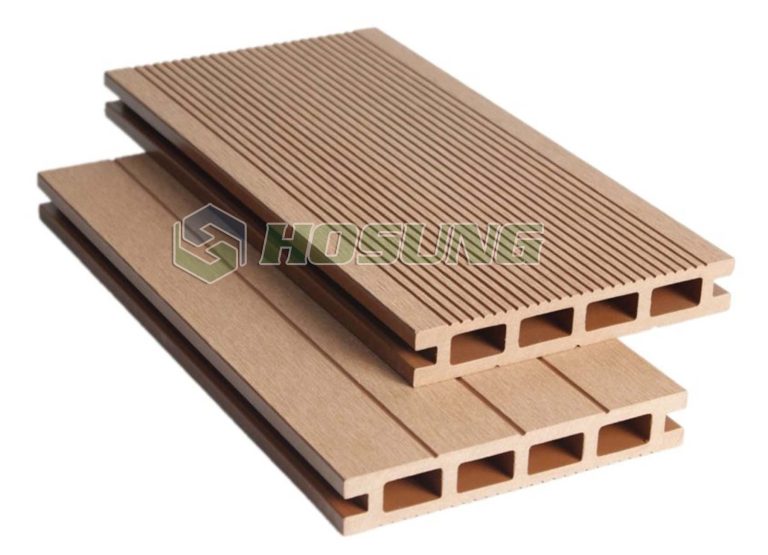
Table of Contents
Understanding Composite Decking Thickness
The thickness of composite decking refers to the vertical measurement of a decking board from its top surface to the bottom surface. It directly influences:
- Structural strength
- Load-bearing capacity
- Span between joists
- Installation method
- Long-term durability
Composite decking is typically made from a blend of wood fibers and recycled plastic materials, sometimes with a protective polymer cap. The thickness plays a critical role in how these materials behave under pressure, heat, and environmental exposure.
In simple terms, thicker boards are generally stronger and more rigid, while thinner boards are lighter and more flexible.
Standard Thickness of Composite Decking Boards
The thickness of composite decking varies depending on manufacturer, product type, and application. However, most products fall within a common range.
2.1 Common Thickness Range
Most composite decking boards are available in:
- 20 mm – 25 mm (standard residential decking)
- 25 mm – 30 mm (heavy-duty or commercial use)
- Below 20 mm (special lightweight systems or cladding use)
Among these, 25 mm is often considered the industry standard for general outdoor decking applications.
2.2 Typical Profiles
Composite decking boards come in different structural profiles:
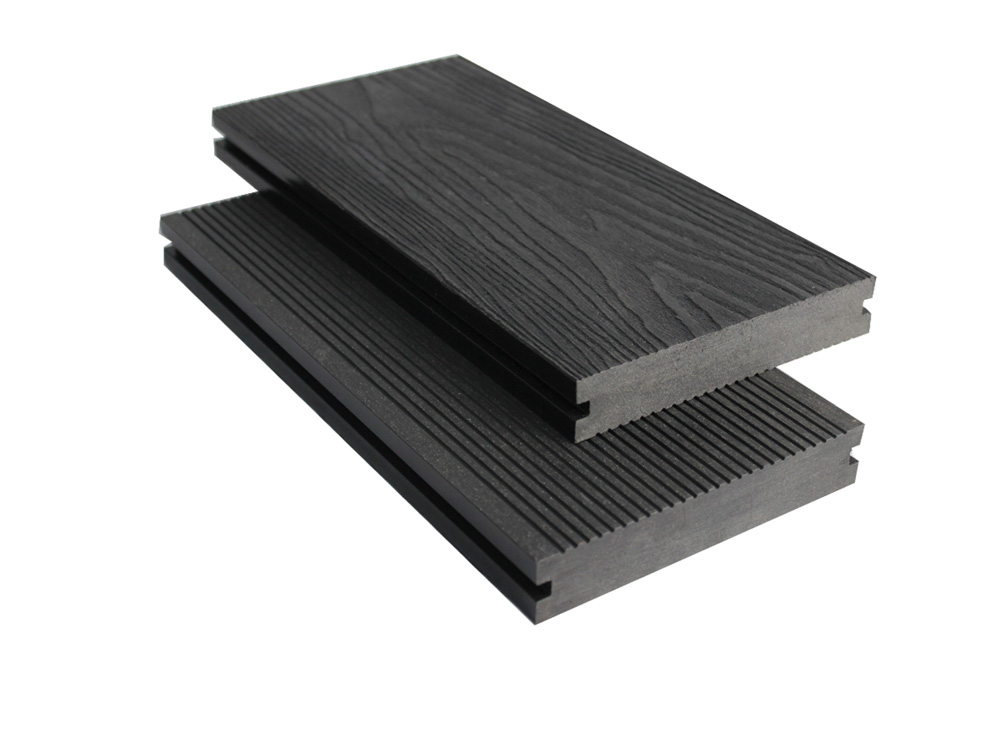
Solid boards
- Usually 20–30 mm thick
- High strength and durability
- Suitable for high-traffic areas
Hollow boards
- Usually 20–28 mm thick
- Lightweight and cost-efficient
- Require closer joist spacing
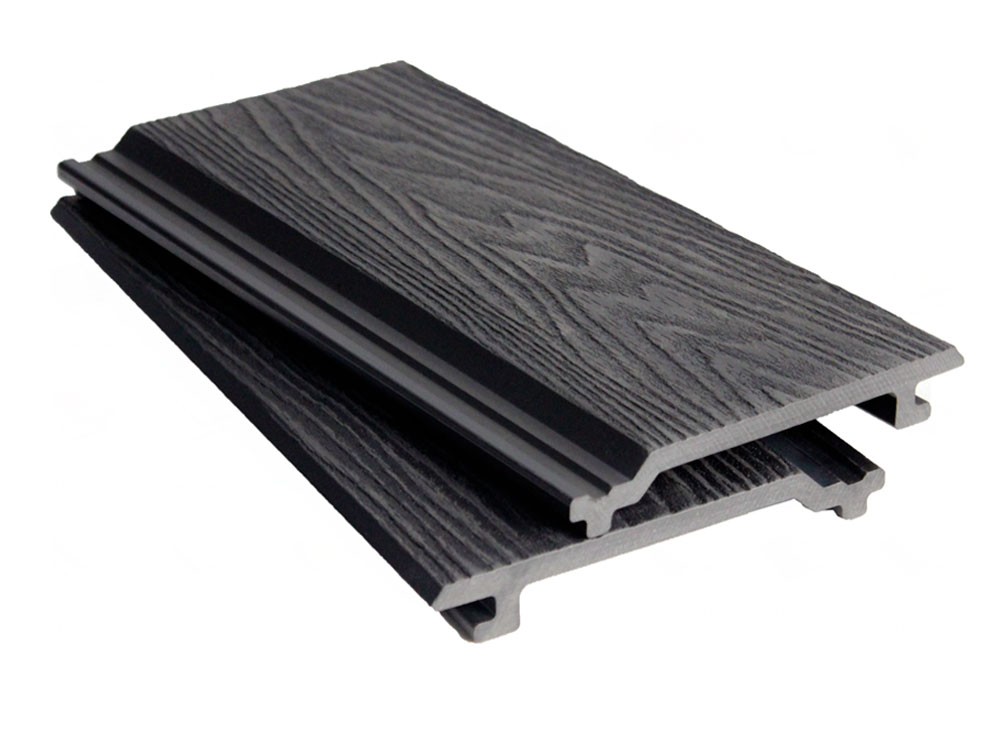
Co-extruded capped boards
- Typically 22–28 mm thick
- Enhanced surface protection
- Better moisture and stain resistance
Why Thickness Matters in Composite Decking
The thickness of composite decking is not just a physical measurement—it directly affects performance and usability.
3.1 Structural Strength
Thicker decking boards can withstand higher loads without bending or breaking. This is especially important for:
- Outdoor furniture placement
- High foot traffic areas
- Commercial boardwalks
- Rooftop decks
A thinner board may flex under pressure, which can reduce comfort and long-term stability.
3.2 Span Between Joists
One of the most important technical considerations is joist spacing.
- Thicker boards → wider joist spacing possible
- Thinner boards → closer joist spacing required
For example:
- 25–30 mm boards may allow joist spacing of 400–500 mm
- 20 mm boards may require spacing closer to 300–400 mm
Incorrect spacing can lead to sagging, cracking, or structural failure over time.
3.3 Durability and Lifespan
Thicker composite decking boards generally last longer because they:
- Resist warping better
- Handle thermal expansion more effectively
- Offer improved impact resistance
However, durability is also influenced by material quality, UV protection, and installation practices.
3.4 Comfort and Stability
Walking comfort is another factor affected by thickness:
- Thicker boards feel more solid underfoot
- Reduced vibration when walking
- Better support for outdoor furniture
Thin boards may feel slightly hollow or flexible, especially if improperly supported.
Factors That Influence Composite Decking Thickness Choice
Choosing the right thickness depends on multiple project-specific factors.
4.1 Residential vs Commercial Use
- Residential decking: 20–25 mm is usually sufficient
- Commercial decking: 25–30 mm or higher recommended
Commercial spaces require higher load-bearing capacity due to continuous foot traffic.
4.2 Installation Environment
Outdoor environments vary significantly:
- Rooftop terraces: often require lightweight thinner boards
- Garden decks: standard 20–25 mm works well
- Public walkways: thicker boards preferred
Moisture exposure, temperature changes, and sunlight exposure also influence material performance.
4.3 Joist Structure Design
The supporting frame determines what thickness is suitable.
- Strong steel or reinforced frames can support thinner boards
- Standard wood joists may require thicker boards for stability
Engineers often adjust joist spacing based on decking thickness to maintain safety and durability.
4.4 Budget Considerations
Thickness affects material cost:
- Thicker boards = higher material cost
- Thinner boards = lower upfront cost
However, cheaper thin boards may require more frequent replacement or maintenance, increasing long-term costs.
Comparison of Different Thickness Levels
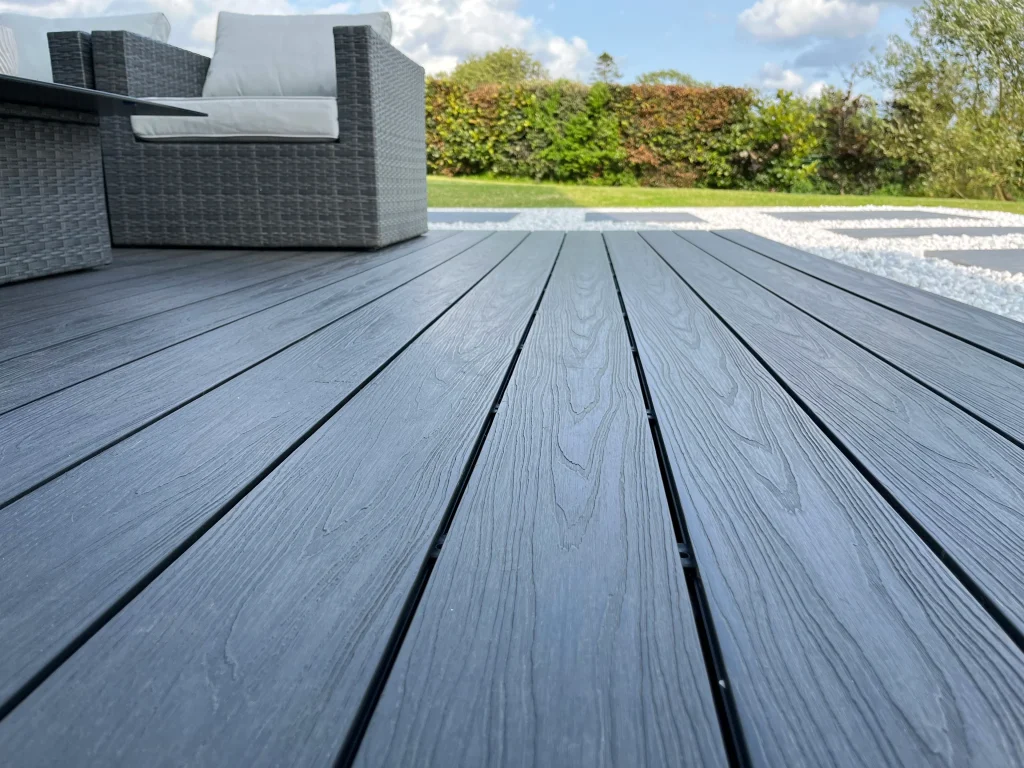
The thickness of composite decking is a critical factor that influences strength, durability, installation requirements, and overall performance. Different thickness levels are designed to meet various structural and aesthetic needs. While boards may share similar width and length dimensions, thickness directly affects load-bearing capacity, stiffness, and long-term stability. Below is an in-depth look at the common thickness categories used in composite decking: thin, standard, and thick boards.
5.1 Thin Composite Decking (15–20 mm)
Thin composite boards are typically between 15 mm and 20 mm thick. They are lighter and more flexible, which makes them a popular choice for certain decorative and low-load applications.
Advantages
- Lightweight: Easier to transport, handle, and install, especially in elevated or hard-to-access areas.
- Easy Installation: Thin boards require less structural support and can be quickly fitted into smaller projects.
- Lower Material Cost: Less raw material is used during production, reducing the overall expense.
Disadvantages
- Limited Load Capacity: Thin boards are less suitable for heavy furniture, high foot traffic, or commercial use.
- Close Joist Spacing Required: To prevent sagging or flexing, joists need to be positioned closer together, increasing structural requirements.
- Not Ideal for High-Traffic Areas: Over time, thin boards may show signs of wear faster than thicker alternatives.
Best Applications
- Decorative Decks: Ideal for small garden platforms or aesthetic features that prioritize appearance over structural load.
- Temporary Structures: Lightweight boards are suitable for seasonal decks or temporary exhibition platforms.
- Wall Cladding or Vertical Applications: Thin boards are often used for facades, fencing, or other vertical surfaces where strength requirements are lower.
5.2 Standard Composite Decking (20–25 mm)
Standard composite decking typically ranges from 20 mm to 25 mm in thickness. This category offers a balanced combination of strength, weight, and durability, making it the most widely used option for residential projects.
Advantages
- Balanced Strength and Weight: Provides sufficient rigidity for most home applications without being excessively heavy.
- Suitable for Most Residential Projects: Can handle moderate foot traffic and typical outdoor furniture loads.
- Good Durability: Offers long-lasting performance in standard residential environments.
Disadvantages
- Moderate Cost: Thicker than thin boards, which slightly increases material costs.
- Requires Proper Installation: Correct joist spacing and fastener placement are necessary to ensure long-term stability and prevent board flexing.
Best Applications
- Home Gardens: Perfect for backyard decks that see regular but moderate use.
- Patios: Ideal for family gatherings, barbecues, and other outdoor entertainment areas.
- Balcony Flooring: Provides a strong, aesthetically pleasing surface suitable for high-elevation use.
5.3 Thick Composite Decking (25–30+ mm)
Thick composite boards exceed 25 mm in thickness, often reaching 30 mm or more. They are designed for environments that demand high strength, rigidity, and durability.
Advantages
- High Strength and Rigidity: Thick boards resist flexing and can support heavy loads without deformation.
- Long Service Life: Greater thickness contributes to enhanced structural integrity and extended lifespan.
- Excellent Load Resistance: Suitable for high-traffic areas and heavy furniture or equipment.
Disadvantages
- Heavier: Increased weight can make handling and installation more labor-intensive.
- Higher Cost: More material is used, increasing the overall price per board.
- More Demanding Installation: Requires adequate support structures and careful fastening to ensure stability.
Best Applications
- Commercial Spaces: Ideal for restaurants, outdoor seating areas, or resort decks that experience heavy use.
- Public Boardwalks: Strong enough to withstand large crowds and harsh environmental conditions.
- High-Traffic Outdoor Areas: Suitable for parks, plazas, and other public recreational spaces.
5.4 Choosing the Right Thickness
Selecting the appropriate composite decking thickness depends on several factors:
- Expected Load: Higher thickness levels are required for heavy furniture, equipment, or public use areas.
- Installation Environment: Elevated structures or areas exposed to high wind or environmental stress benefit from thicker boards.
- Budget Considerations: Thinner boards are more cost-effective for decorative or low-traffic applications.
- Aesthetic Goals: Thicker boards may provide a more substantial and premium appearance, while thinner boards can create a lighter, more delicate look.
By carefully considering thickness in relation to structural requirements, usage patterns, and budget, project planners can ensure optimal performance and longevity of composite decking installations.
Hollow vs Solid Board Thickness Differences
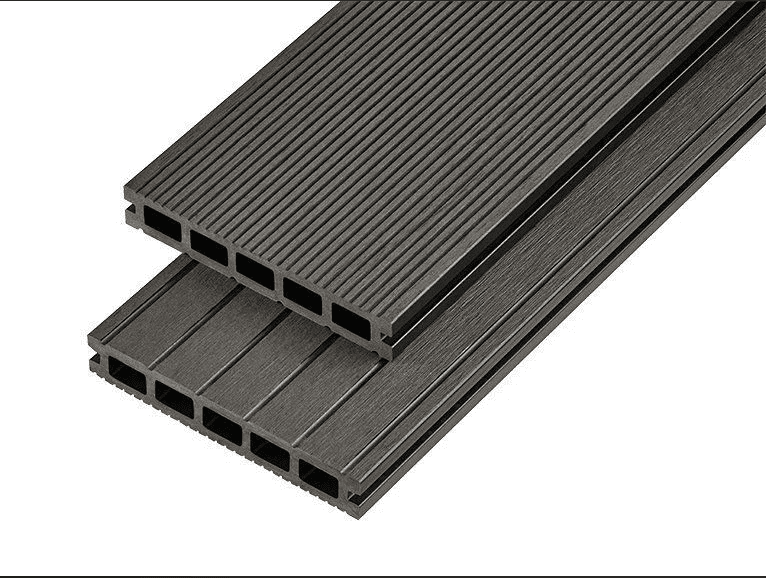
The internal structure of composite decking also affects how thickness performs.
6.1 Hollow Composite Decking
Even if two boards have the same thickness, hollow boards behave differently:
- Lower weight
- Reduced material usage
- Slightly lower strength
They depend heavily on thickness and rib structure for stability.
6.2 Solid Composite Decking
Solid boards provide:
- Consistent structural strength
- Better impact resistance
- More stable long-term performance
Solid boards are usually preferred where durability is critical.
Installation Considerations Related to Thickness
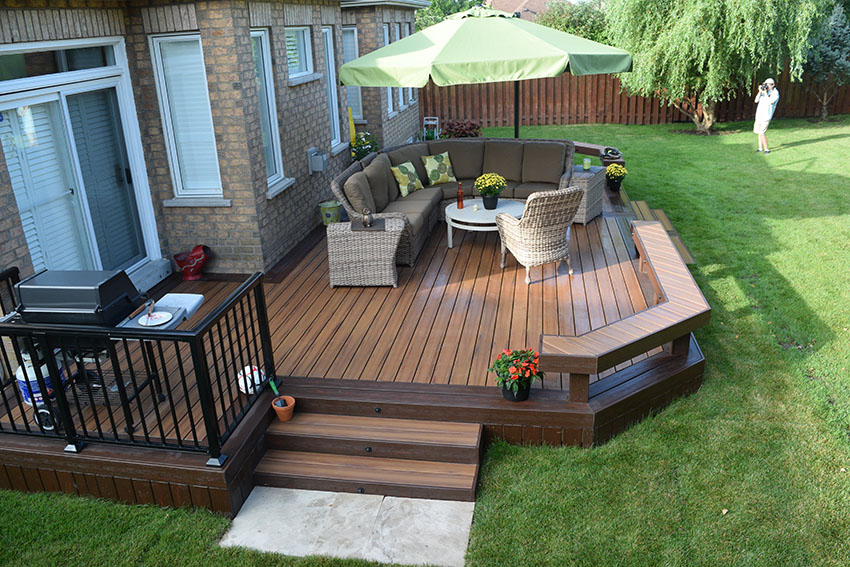
Proper installation ensures that the selected thickness performs as expected.
7.1 Joist Spacing Accuracy
Incorrect spacing is one of the most common causes of decking failure.
- Follow manufacturer recommendations strictly
- Adjust spacing based on thickness
- Reinforce high-load zones
7.2 Fastening Systems
Thicker boards often support:
- Hidden clip systems
- Stronger screw anchoring
Thin boards may require specialized fastening to avoid cracking.
7.3 Expansion and Contraction
Composite materials expand and contract with temperature changes.
- Thicker boards expand more uniformly
- Thin boards may warp if not properly installed
Proper gaps must always be maintained between boards.
How to Choose the Right Thickness of Composite Decking
When selecting decking, consider the following checklist:
8.1 Load Requirements
Ask:
- Will heavy furniture be used?
- Will there be frequent gatherings?
- Is it a public or private space?
Higher load = thicker board.
8.2 Aesthetic Preference
Thicker boards often look more premium and solid, while thinner boards create a lighter visual effect.
8.3 Environmental Conditions
Consider:
- Temperature fluctuations
- Rainfall exposure
- Sunlight intensity
Harsh environments benefit from thicker, more stable boards.
8.4 Maintenance Expectations
Thicker boards generally require less maintenance over time due to better resistance to deformation.
Conclusion
The thickness of composite decking is one of the most important technical factors influencing performance, durability, and application suitability. While standard boards typically range from 20 mm to 30 mm, the ideal choice depends on structural requirements, installation conditions, and long-term usage expectations.
In general:
Thin boards: suitable for light or decorative use
Standard boards: best for residential applications
Thick boards: ideal for commercial and heavy-duty environments
Understanding these differences ensures safer installation, longer lifespan, and better overall decking performance.