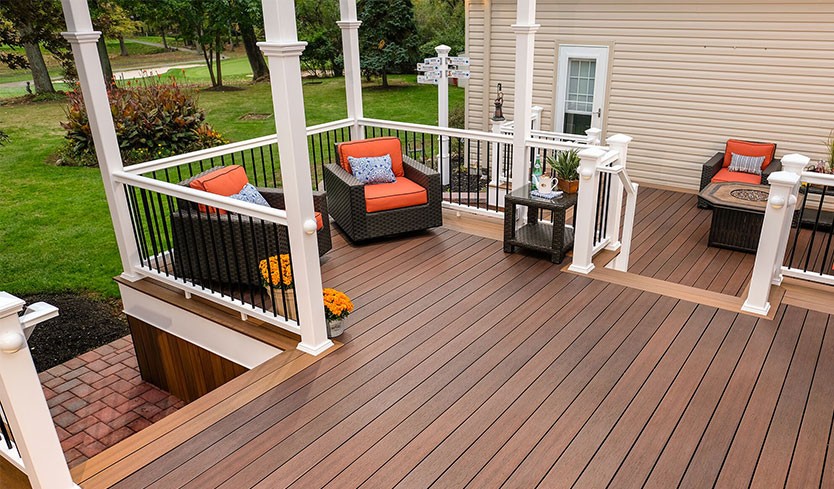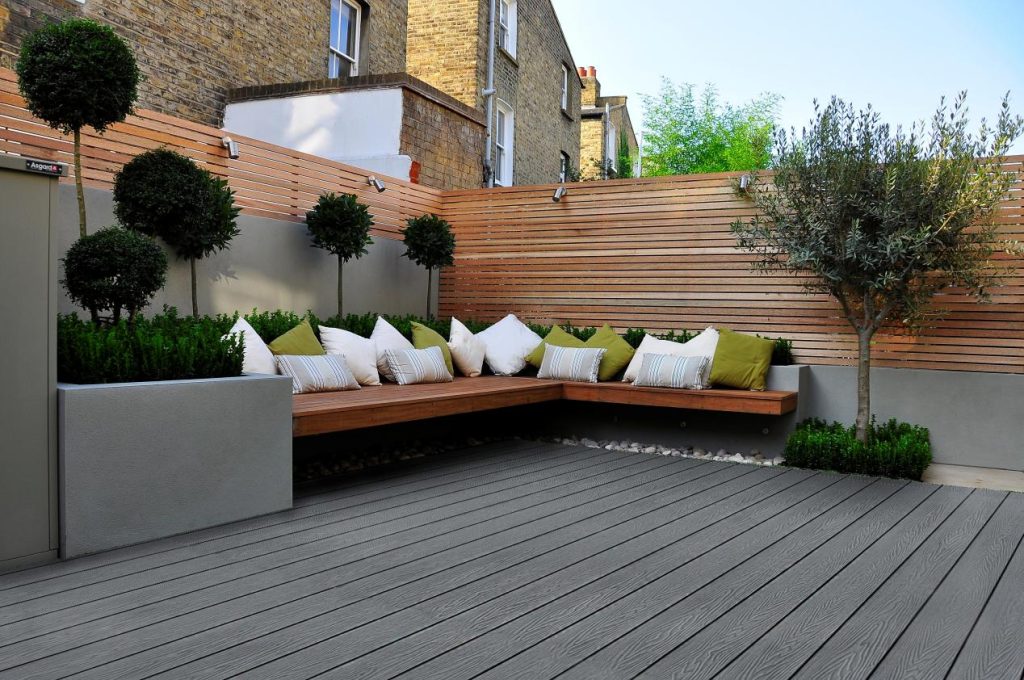
When designing a pool deck, choosing the right material is crucial for longevity, aesthetics, and performance. One of the best choices for poolside decking is composite decking, known for its durability, low maintenance, and ability to withstand the challenges of a wet environment. In this guide, we’ll explore the best composite decking options for pool decks, focusing on water protection, aesthetic appeal, and long-term performance.
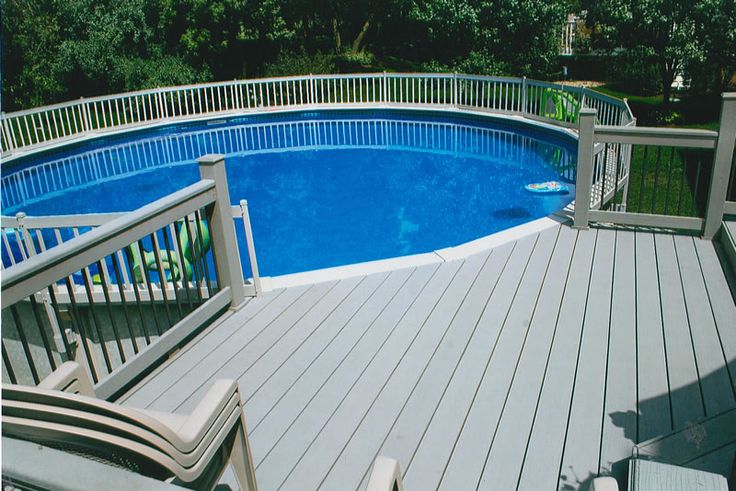
Table of Contents
Why Choose Composite Decking for Pool Decks?
Composite decking combines wood fibers and plastic, creating a durable and water-resistant material that can stand up to the harsh conditions around pools. When you’re installing a pool deck, water is constantly splashing and pooling on the surface, so your deck needs to handle moisture without deteriorating. Composite decking offers numerous advantages, such as:
- Water Resistance: Unlike wood, composite decking doesn’t absorb moisture, which prevents warping, rotting, and mold growth.
- Durability: Composite materials are resistant to scratches, stains, and fading, even when exposed to pool chemicals.
- Low Maintenance: Composite decks require little upkeep. A regular cleaning routine is all that’s needed to maintain their appearance and performance.
- Safety: Many composite decking options are designed to be slip-resistant, which is especially important around wet pool areas.
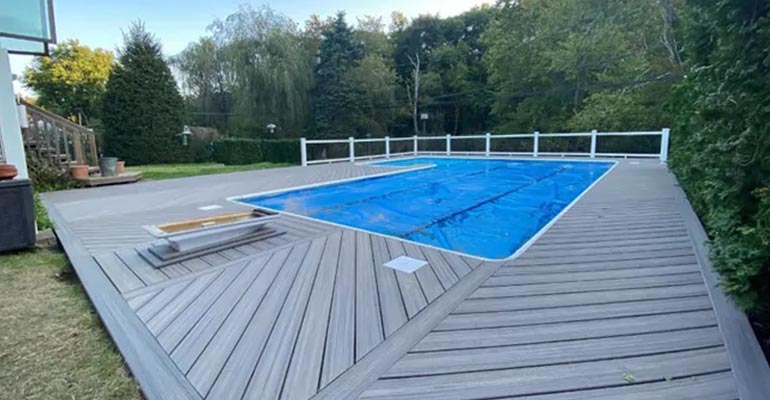
Key Features of the Best Composite Decking for Pool Decks
When choosing the best composite decking for your pool area, there are a few essential features to look out for to ensure water protection and long-term durability.
a. Waterproof Capstock Technology
High-quality composite decking often comes with a waterproof capstock (protective outer layer) that shields the core of the board from moisture. This layer not only enhances the water resistance of the decking but also protects it from pool chemicals, UV rays, and dirt.
b. Slip Resistance
Composite decking with textured surfaces or embossed patterns will provide better grip and reduce the risk of slipping, especially around the pool. Look for materials with enhanced slip resistance certifications to ensure safety.
c. Stain and Fade Resistance
Pool chemicals, chlorine, and even sunlight can cause traditional materials to fade or stain. The best composite decking materials for pool decks are engineered to resist both staining and fading, maintaining their appearance even in the harshest conditions.
d. UV Protection
UV rays can weaken deck materials over time, causing them to lose color and strength. Choose composite decking with integrated UV protection to ensure your deck retains its color and integrity for years.
e. Long-Term Durability
One of the key reasons composite decking is ideal for pool decks is its resistance to wear and tear. Look for brands that offer warranties of at least 25 years, as this indicates the material’s long-term durability and confidence from the manufacturer.
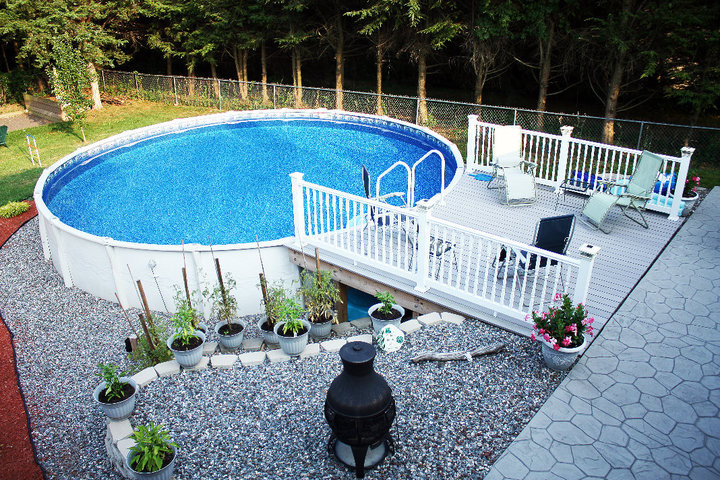
Types of Composite Decking for Pool Decks
Choosing the right composite decking for a pool deck is essential for maintaining durability, safety, and aesthetics in an environment constantly exposed to water. There are several types of composite decking materials available, each with unique features suited for poolside installations. Below are six top types of composite decking that offer exceptional water protection, longevity, and style for your pool area.
a. High-Performance Shell Composite Decking
High-performance shell composite decking is known for its advanced outer shell that provides extra protection against water and pool chemicals. The outer layer acts as a shield, making it highly resistant to water absorption and protecting the core of the deck.
- Waterproof Cap: The waterproof outer layer prevents water from entering the core of the decking, ensuring that it won’t absorb moisture and deteriorate over time.
- Maintenance-Free: This type of decking is virtually maintenance-free, requiring only occasional cleaning to keep it looking pristine.
- Scratch and Stain Resistant: Its durability ensures that it resists fading, scratching, and staining, making it perfect for high-traffic pool areas.
High-performance shell composite decking is ideal for homeowners looking for a hassle-free pool deck that will retain its beauty year after year.
b. PVC Composite Decking
PVC (polyvinyl chloride) composite decking is a fully synthetic material, meaning it is entirely made from plastic and doesn’t contain any wood fibers. This makes it one of the most water-resistant options for poolside environments.
- Completely Moisture-Resistant: PVC decking is non-porous, so it won’t absorb water. This makes it perfect for high-moisture areas such as around pools.
- Slip-Resistant: Many PVC options come with a textured surface to reduce the risk of slipping when the deck is wet.
- Variety of Styles: PVC decking is available in a wide range of colors, textures, and finishes, giving you plenty of options to match your desired poolside aesthetic.
PVC composite decking is an excellent choice for homeowners who prioritize a completely water-resistant surface with minimal maintenance and maximum slip protection.
c. Capped Composite Decking
Capped composite decking is a popular option for pool decks due to its superior moisture resistance. This type of decking features a composite core made of wood and plastic, encased in a protective outer layer, or “cap,” which enhances its water resistance and durability.
- Enhanced Durability: The capped layer protects the decking from stains, fading, and moisture damage. This makes it ideal for environments with exposure to pool chemicals.
- Natural Appearance: The core material often mimics the natural look of wood, while the cap provides a smooth, polished finish that resists wear.
- Environmentally Friendly: Many capped composite decking options use recycled materials in their construction, making them an eco-friendly choice.
Capped composite decking offers an excellent balance of durability, aesthetics, and environmental consciousness, making it a great choice for homeowners looking to combine style with function.
d. Wood-Based Composite Decking
Wood-based composite decking is a type of composite material made primarily from wood fibers mixed with resin and other plastic materials. Unlike traditional wood, it is designed to resist the common issues of rotting, warping, and splitting caused by moisture.
- Bio-Based Treatment: The wood used in these decks is often treated with bio-based liquids that improve its water resistance, ensuring long-term performance in wet environments.
- Natural Wood Aesthetic: Wood-based composite decking provides the warmth and beauty of natural wood while offering better protection from water and weathering.
- Low Maintenance: This material requires less upkeep than traditional wood, making it a low-maintenance option for pool decks.
Wood-based composite decking is perfect for those who love the look of natural wood but want the durability and low-maintenance qualities of composite materials.
e. Bamboo Composite Decking
Bamboo composite decking is an increasingly popular option for pool decks due to its eco-friendly properties and high durability. This type of decking combines bamboo fibers with plastic resins to create a strong, water-resistant surface.
- Water-Resistant: Bamboo composite decking has superior water resistance compared to traditional wood, which makes it ideal for poolside areas prone to splashing.
- Eco-Friendly: Bamboo is a renewable resource, and using it in composite decking reduces the environmental impact compared to other materials.
- Sustainable Strength: Bamboo is naturally stronger than many hardwoods, making it a durable option for pool decks that will withstand the rigors of water exposure and heavy foot traffic.
Bamboo composite decking is a sustainable and durable choice for homeowners who want an eco-friendly and long-lasting poolside deck.
f. Recycled Plastic Decking
Recycled plastic decking is made entirely from recycled plastic products, such as bottles and containers, making it an environmentally friendly choice. This type of decking is 100% moisture-resistant, making it one of the best materials for pool decks.
- Fully Water-Resistant: Recycled plastic decking doesn’t absorb water, preventing issues like rotting, mold, and mildew that are common with traditional wood.
- Minimal Maintenance: Because recycled plastic is non-porous, it doesn’t require regular sealing or staining, making it incredibly low-maintenance.
- Durability and Strength: Recycled plastic decking is resistant to impacts, scratches, and fading, ensuring that your pool deck remains beautiful for years.
Recycled plastic decking is an excellent choice for homeowners who want a low-maintenance, environmentally friendly, and long-lasting pool deck.
How to Maintain Composite Decking Around Pools
One of the biggest advantages of composite decking is its low maintenance, but to keep your pool deck looking its best, some care is necessary.
a. Regular Cleaning
To prevent dirt, debris, and algae from accumulating, regularly clean your composite deck with a soft brush or broom and warm water. You can also use a mild soap or deck cleaner specifically designed for composite materials. Avoid using harsh chemicals that can damage the surface.
b. Preventing Mold and Mildew
While composite decking is resistant to mold, it’s still important to keep your deck dry and clean to prevent mildew buildup. If you notice any signs of mold, use a diluted bleach solution to scrub the affected areas.
c. Cleaning Pool Chemicals
Pool chemicals can stain composite decking if they are not cleaned up promptly. After heavy pool use, rinse the deck with water to dilute any chlorine or chemicals that may have spilled onto the surface.
d. Protecting from Stains
To avoid staining from food, drinks, or other substances, wipe up spills immediately. Regular maintenance, including sweeping and washing the deck, will keep it in top condition.
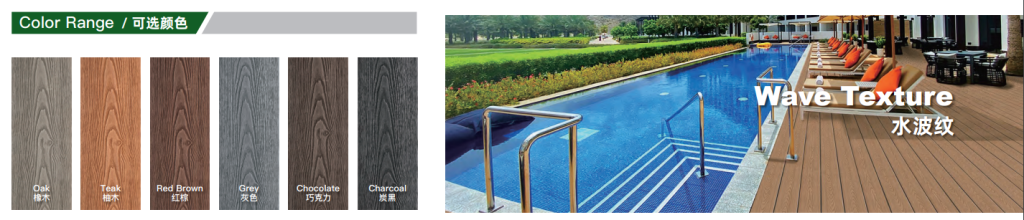
Conclusion: Choosing the Best Composite Decking for Your Pool Deck
When selecting composite decking from Hosung WPC, for your pool deck, water protection, slip resistance, and long-term durability are the most important factors to consider. Different types of composite decking, such as high-performance shell, PVC, capped, wood-based, bamboo, and recycled plastic decking, offer superior features that make them ideal for poolside environments.
By choosing high-quality composite decking, you’ll enjoy a beautiful, low-maintenance pool deck that will last for years, with minimal worry about water damage or constant upkeep. Whether you prefer a natural wood-like finish or a sleek, modern design, composite decking offers the perfect combination of functionality and style for poolside areas.
Key Takeaways:
- Composite decking is the ideal choice for pool decks due to its excellent water resistance and durability.
- Look for features like waterproof capstock technology, slip resistance, and UV protection when selecting your decking material.
- High-performance options, including PVC, capped, and wood-based composite decking, provide the best long-term performance in wet conditions.
- Regular cleaning and care will help maintain the longevity and appearance of your pool deck.
By investing in the right composite decking, you’ll create a stylish, safe, and durable poolside area that can withstand the test of time.