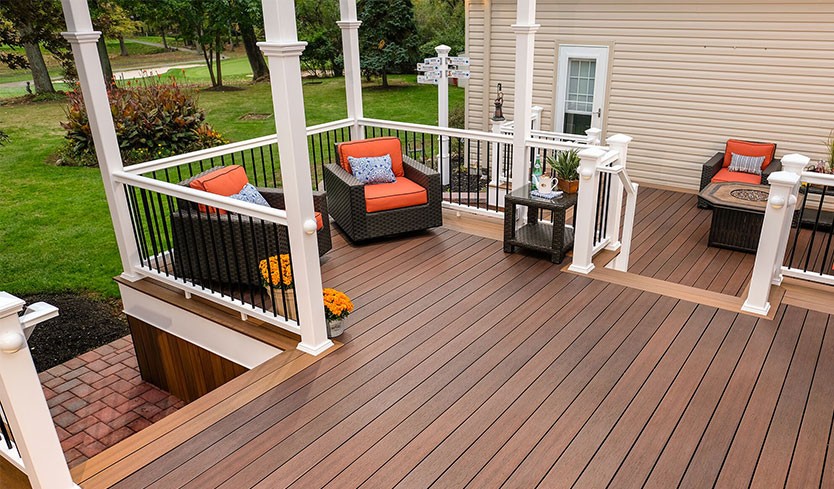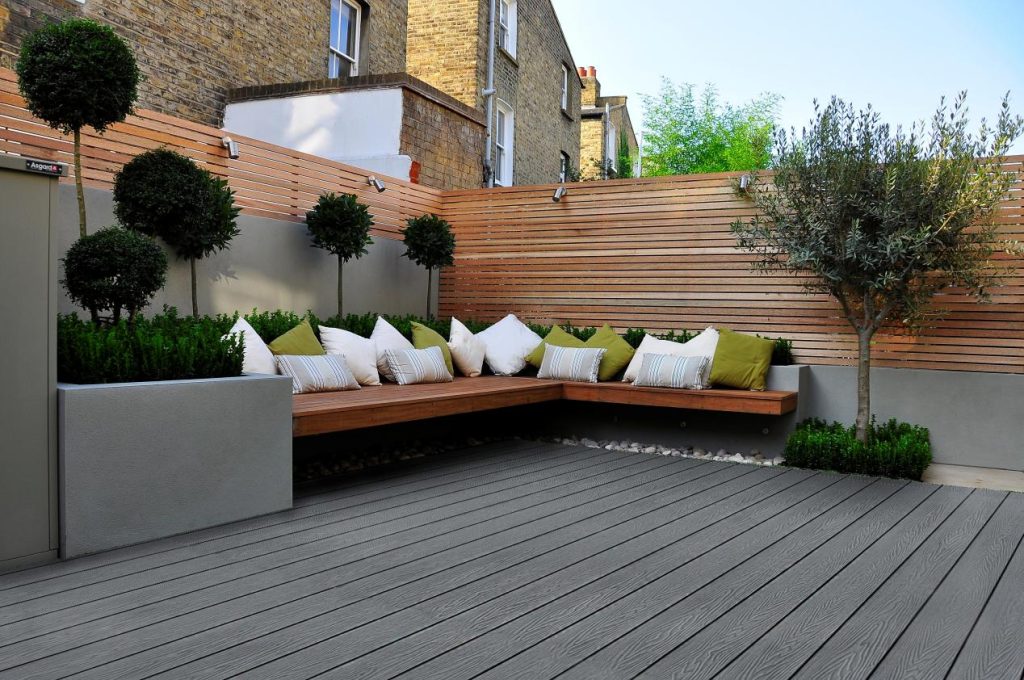
Creating a beautiful and functional garden space requires thoughtful planning, careful selection of materials, and creative design. Among the many materials available for outdoor flooring, composite decking has emerged as a popular choice for homeowners and landscape designers alike. Combining the natural aesthetic of wood with the durability of synthetic materials, composite decking offers a versatile solution for gardens of all sizes. This article explores various composite decking ideas for garden, covering design inspiration, installation tips, material selection, maintenance, and benefits, helping you transform your outdoor space into a stunning retreat.
Table of Contents
Understanding Composite Decking
Composite decking is made from a mixture of wood fibers and plastic, resulting in a material that retains the look of wood but offers enhanced durability. Unlike traditional timber decking, composite decking is resistant to rot, splintering, and insect damage. It also comes in a wide range of colors, finishes, and textures, allowing homeowners to achieve the desired look for their garden without the high maintenance requirements of natural wood.
Key Advantages of Composite Decking
- Durability:Composite boards can withstand harsh weather conditions, including rain, snow, and strong sunlight, without warping or cracking.
- Low Maintenance:Unlike natural wood, composite decking does not require regular staining, sealing, or painting.
- Eco-Friendly Options:Many composite decking products use recycled materials, making them a sustainable choice for environmentally conscious homeowners.
- Safety:Composite surfaces are often slip-resistant, making them safe for families with children and pets.
- Versatility:Available in a wide range of colors, finishes, and patterns, composite decking can be customized to match any garden style.
Design Ideas for Composite Decking in Gardens
Composite decking offers a blank canvas for creativity, enabling homeowners to design functional and visually appealing outdoor spaces. Here are some ideas to inspire your garden transformation:
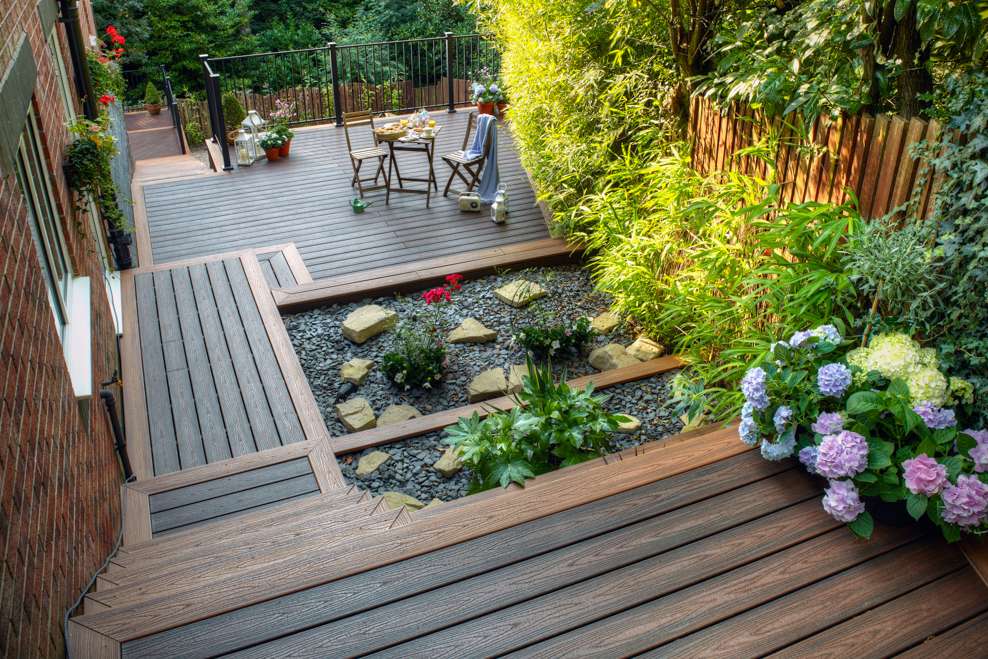
1. Multi-Level Decking
Creating a multi-level deck adds dimension and interest to your garden. Each level can serve a different function, such as:
- Lower Level:A cozy seating area or outdoor dining space.
- Middle Level:A play area for children or a space for garden beds.
- Upper Level:A sunbathing spot or raised planter feature.
Using composite decking for multi-level designs ensures durability while maintaining a uniform aesthetic. You can mix board colors and textures to create visual separation between levels.
2. Garden Pathways
Composite decking is ideal for constructing elegant garden pathways. By laying boards in straight lines, diagonal patterns, or even curved designs, you can guide visitors through your garden while providing a smooth, splinter-free surface. Consider:
- Linear Paths:Simple and modern, suitable for minimalist gardens.
- Curved Paths:Softens the landscape and adds a natural flow.
- Patterned Paths:Herringbone, chevron, or alternating board widths for a striking effect.
Pathways made from composite decking blend seamlessly with lawns, flower beds, and gravel areas while offering a low-maintenance alternative to stone or brick.
3. Raised Garden Decks
Raised garden decks create a platform that elevates your plants, seating, or decorative elements. This design can enhance the visual appeal of your garden and improve drainage for plants. Use composite decking boards for:
- Planter Boxes:Sturdy, weather-resistant planters for flowers, herbs, or vegetables.
- Decked Platforms:Create a stage for outdoor furniture or a BBQ area.
- Integration with Steps:Smooth transitions between different garden levels without worrying about wood rot.
4. Outdoor Living Spaces
Transform your garden into an extension of your home by designing outdoor living areas with composite decking. These spaces can include:
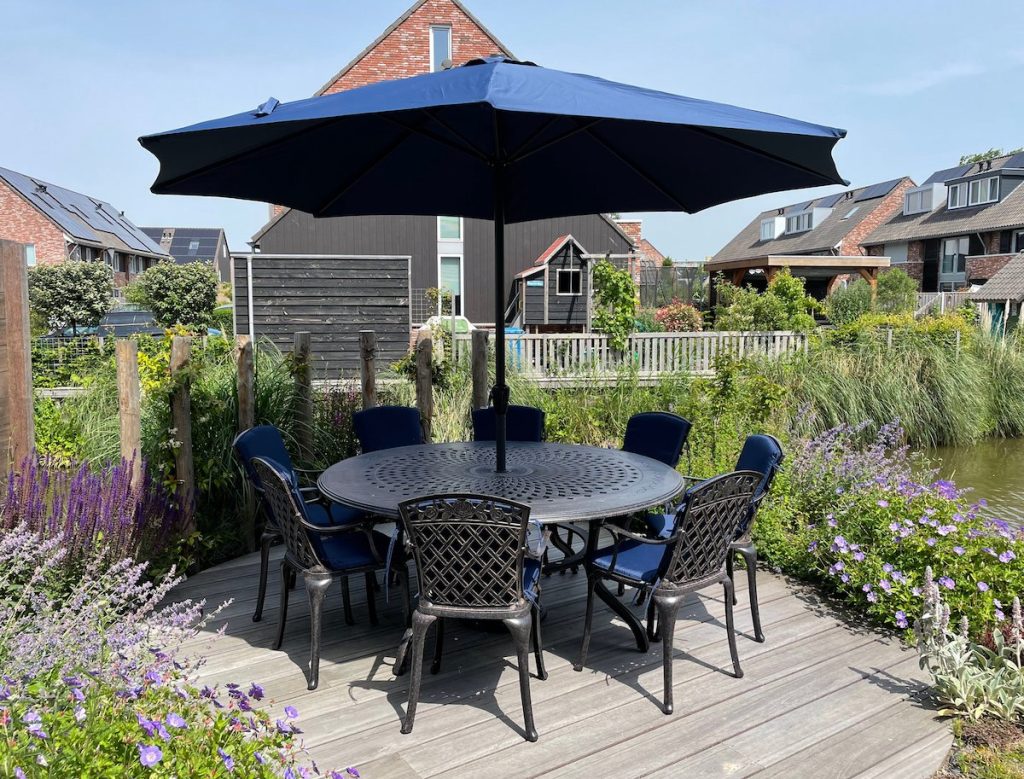
- Dining Areas:Incorporate composite decking under a pergola or gazebo to define the space.
- Lounging Zones:Comfortable seating, outdoor rugs, and accent lighting make for a cozy retreat.
- Fire Pits:Composite decks around fire pits resist heat and require minimal maintenance.
Combining composite decking with natural elements such as plants, stones, and water features creates a harmonious garden environment.
5. Poolside Decking
Composite decking is an excellent option for poolside areas due to its water resistance and slip-resistant textures. Benefits include:
- Safe Surfaces:Prevents slips and falls around wet areas.
- Durable Finish:Resists fading from sun exposure and chemical splashes from pools.
- Seamless Integration:Can be combined with pool coping and tiles for a polished look.
Consider using contrasting colors or patterns to highlight pool edges or create distinct lounging areas.
6. Vertical Garden Decking
Innovative gardeners are now using composite boards vertically to create walls, privacy screens, or vertical gardens. Advantages include:
- Space Optimization:Perfect for small gardens where horizontal space is limited.
- Visual Appeal:Adds texture and dimension to blank walls or fences.
- Low Maintenance:Resistant to moisture and decay, ideal for areas exposed to watering or rain.
Vertical composite panels can be used to support climbing plants, hanging pots, or decorative lights.
7. Incorporating Lighting
Lighting enhances the beauty and functionality of composite decks. Consider:
- Recessed Deck Lights:Install LED lights directly into composite boards for subtle illumination.
- Post Cap Lights:Perfect for deck perimeters or railing posts.
- String or Solar Lights:Adds ambiance to outdoor dining or lounge areas.
The durability of composite decking ensures that lighting fixtures remain securely in place without affecting board integrity.
Choosing the Right Composite Decking Material
Selecting the right type of composite decking is crucial to achieving your desired garden look and performance. Here are some factors to consider:
1. Material Composition
Composite decking typically comes in three types:
- Wood-Plastic Composite (WPC):Made from wood fibers and plastic, offering a natural wood appearance with enhanced durability.
- Polymer Composite Decking:Entirely synthetic, often more resistant to moisture and fading but may lack the authentic wood feel.
- Capped Composite Decking:Features a protective outer layer that improves stain, scratch, and UV resistance, extending the lifespan.
2. Color and Finish
Composite boards are available in a wide range of colors, from classic wood tones to modern grays and blacks. Finishes include:
- Smooth Finish:Sleek and contemporary, ideal for modern gardens.
- Wood-Grain Finish:Mimics natural timber, blending well with plants and greenery.
- Textured Finish:Enhances slip resistance while adding visual interest.
3. Board Size and Shape
Decking boards vary in width, thickness, and length. Choose boards that match your garden dimensions and design preferences. Wider boards create a seamless appearance, while narrower boards allow for intricate patterns.
4. Installation Type
Composite decking can be installed using:
- Hidden Fasteners:Creates a clean surface with no visible screws.
- Face Screws:Easier for DIY installation, but screws are visible.
- Interlocking Systems:Quick to install and suitable for modular designs.
Consider ease of installation, maintenance, and the final appearance when selecting a fastening system.
Maintenance Tips for Composite Decking
Although composite decking requires less maintenance than wood, proper care ensures longevity and keeps it looking its best.
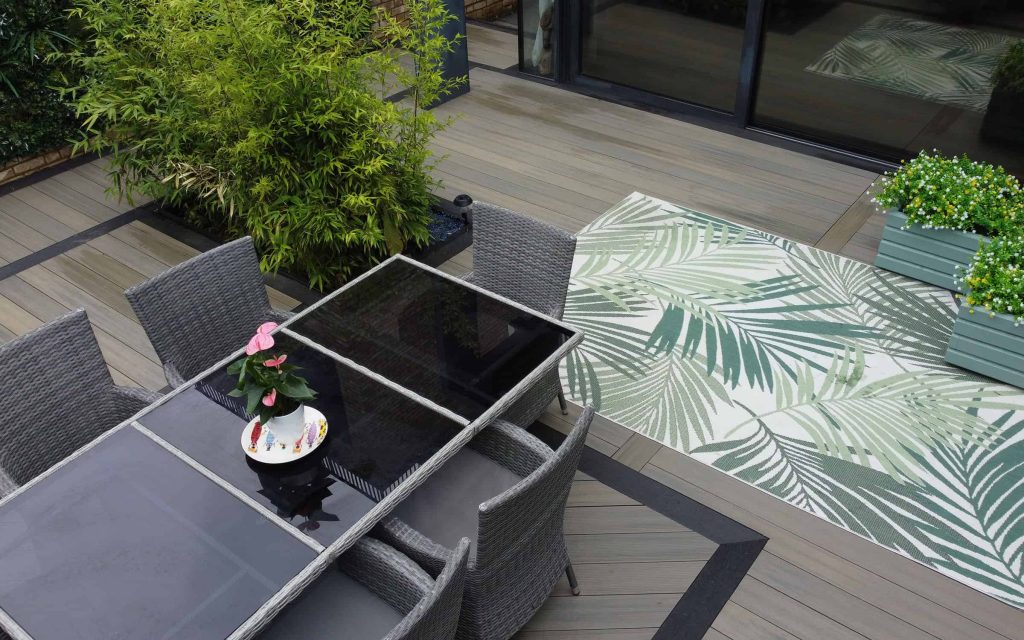
- Regular Cleaning:Sweep debris and wash boards with mild soap and water to prevent dirt accumulation.
- Stain Removal:Use a soft brush to remove stains from leaves, food, or oils.
- Avoid Harsh Chemicals:Bleach or abrasive cleaners may damage the protective surface.
- Prevent Mold Growth:Ensure proper drainage and airflow under the deck to minimize moisture buildup.
By following these simple steps, your composite decking will maintain its appearance for many years.
Landscaping Around Composite Decks
Integrating composite decking with your garden’s landscape enhances both functionality and aesthetics.
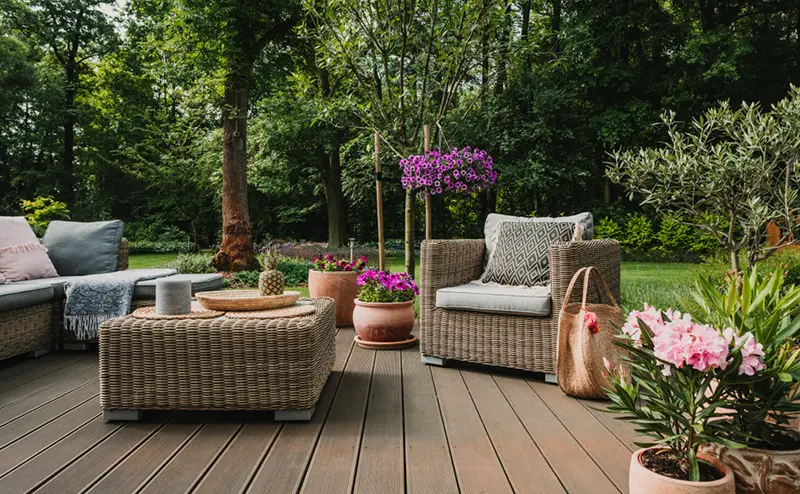
- Plant Beds:Surround decks with flowering shrubs, ornamental grasses, or low-maintenance ground covers.
- Gravel and Stones:Create visual contrast with different textures and colors.
- Water Features:Ponds, fountains, or small waterfalls complement the warmth of decking materials.
- Garden Furniture:Select weather-resistant furniture that harmonizes with deck tones and finishes.
Thoughtful landscaping maximizes your deck’s potential and creates a cohesive outdoor environment.
Common Composite Decking Layouts
The layout of decking boards significantly affects the overall look of your garden. Popular layouts include:
- Straight Parallel Layout:Classic and simple, easy to install.
- Diagonal Layout:Adds depth and visual interest, making small gardens appear larger.
- Herringbone Pattern:Intricate and eye-catching, ideal for feature areas.
- Perimeter Framing:Boards run parallel with a framed border, giving a polished appearance.
Mixing layouts in different garden sections can differentiate functional zones while maintaining a unified design.
Benefits of Composite Decking in Gardens
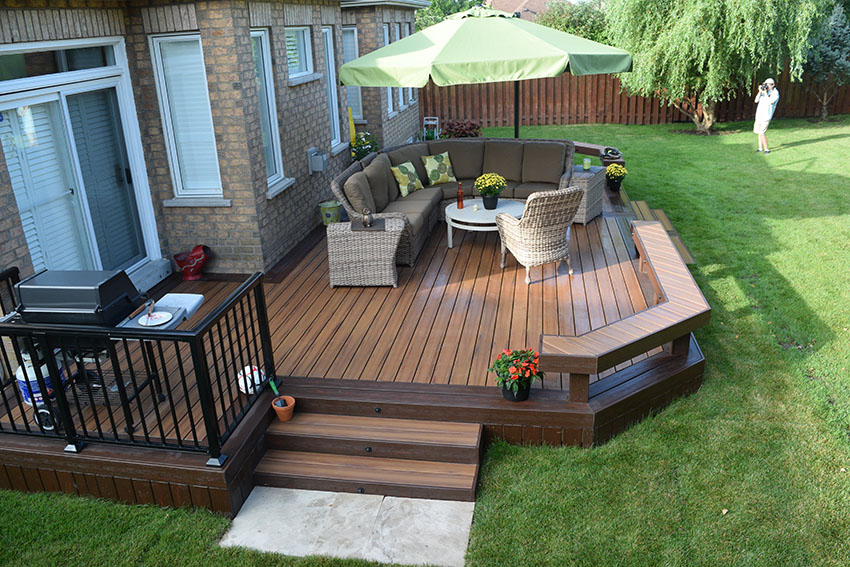
Using composite decking in your garden offers numerous advantages:
- Long-Lasting:Resistant to rot, warping, and fading.
- Low Maintenance:Minimal upkeep compared to traditional wood.
- Eco-Friendly:Many products incorporate recycled wood and plastic.
- Versatile Designs:Suits modern, traditional, or eclectic garden styles.
- Safe Surface:Slip-resistant and splinter-free, suitable for families and pets.
These benefits make composite decking a practical and stylish choice for outdoor spaces.
Common Mistakes to Avoid
While composite decking is user-friendly, some common pitfalls can reduce its effectiveness:
- Poor Drainage:Ensure water flows away from deck surfaces to prevent mold growth.
- Incorrect Fasteners:Using the wrong screws or clips may damage boards.
- Ignoring Expansion Gaps:Composite materials expand and contract with temperature changes; leave proper spacing.
- Neglecting Cleaning:Even low-maintenance materials need occasional care to prevent discoloration.
Avoiding these mistakes ensures your garden deck remains beautiful and functional for years.
Conclusion
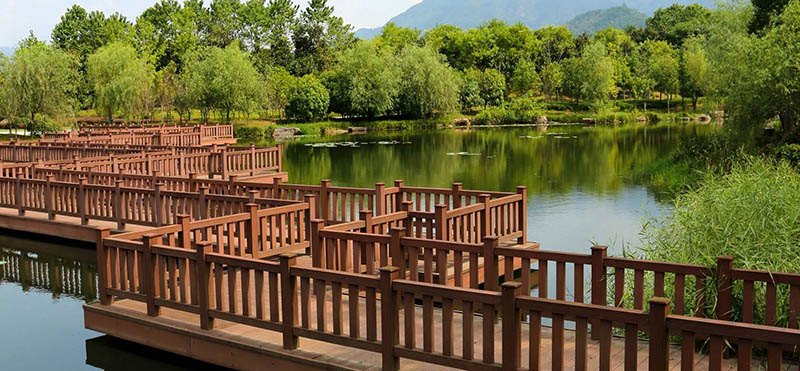
Composite decking offers limitless possibilities for garden design, blending style, functionality, and low maintenance. From multi-level decks and garden pathways to poolside areas and integrated seating, the versatility of composite materials allows homeowners to create outdoor spaces tailored to their lifestyle. By carefully selecting board types, colors, and layouts, and considering features such as lighting, pergolas, and play areas, you can achieve a garden that is both beautiful and practical.
Whether you want a contemporary look, a natural timber feel, or a creative patterned layout, composite decking provides the perfect foundation for your dream garden. For those seeking professional-grade products, Hosung WPC, a specialist composite decking manufacturer, offers high-quality solutions suitable for diverse garden projects.