When designing an outdoor living area, most homeowners focus on the main decking surface, furniture, lighting, and landscaping. However, corners often receive much less attention. A well-designed corner can make a deck look more professional, improve the use of available space, and create an attractive transition between different outdoor areas. This is why exploring practical composite decking corner ideas can make a significant difference in the final appearance and functionality of a deck.
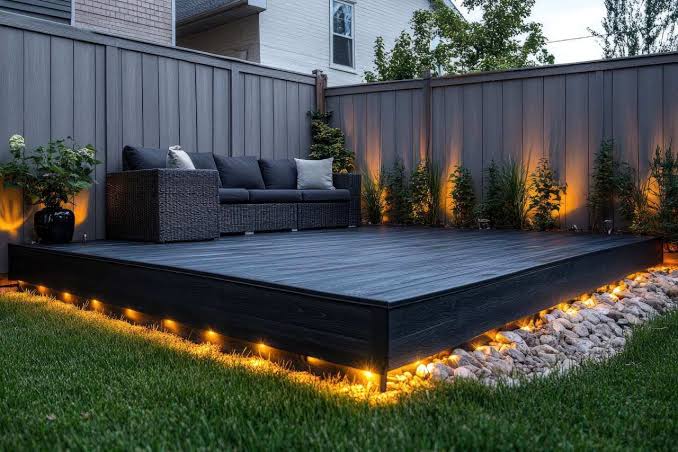
Table of Contents
Composite decking is especially suitable for creative corner designs because it is available in different colors, textures, board lengths, and profiles. Unlike traditional timber, composite decking generally requires less routine maintenance and offers consistent appearance over time. Whether you are building a small balcony, a large garden deck, a poolside platform, or a multi-level outdoor entertaining area, there are many ways to turn an ordinary corner into an attractive design feature.
1. Create a Built-In Corner Seating Area
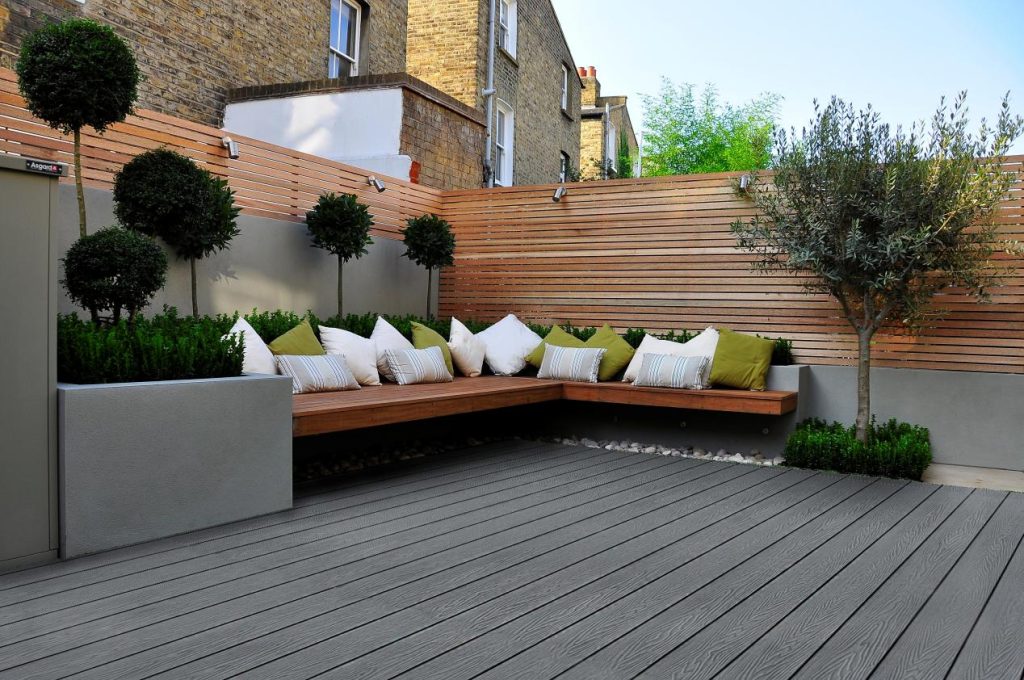
One of the most practical composite decking corner ideas is to transform an unused corner into built-in seating. Instead of leaving the corner empty, you can construct an L-shaped bench that follows the shape of the deck.
A built-in corner bench provides additional seating without taking up as much floor space as separate outdoor furniture. The seat can be designed using matching composite decking boards, while the supporting structure can be made from suitable outdoor framing materials.
For a more comfortable result, add weather-resistant cushions and pillows. You can also incorporate a small side table into the design. This creates a dedicated relaxation area that works particularly well for family gatherings, outdoor dining, or casual conversations.
2. Use a Contrasting Border Around the Corner
A simple way to make a decking corner more visually interesting is to use a contrasting color or pattern.
For example, a main deck can use medium brown composite boards while the perimeter uses a darker color. At the corner, the border can create a strong visual frame that clearly defines the edge of the deck.
This approach is particularly effective for large rectangular decks because it adds structure to an otherwise uniform surface. A contrasting border can also make the installation appear more sophisticated without requiring complicated construction.
When selecting colors, consider the exterior walls, doors, fencing, and landscaping around the deck. A coordinated color scheme will create a more unified outdoor environment.
3. Add a Diagonal Corner Pattern
Standard decking is often installed in a straightforward parallel arrangement. If you want something more distinctive, consider creating a diagonal feature in one or more corners.
A small section of decking can be installed at an angle to create a geometric accent. The diagonal area may use a different board color or simply change the direction of the boards.
This technique can visually divide a large deck into separate zones. It can also draw attention toward a specific feature, such as an outdoor dining table, fire pit, garden area, or entrance.
Because diagonal cuts require careful planning, measurements should be completed before installation. The framing underneath must also provide appropriate support for the altered board direction.
4. Build a Corner Planter
A corner planter is another excellent solution when looking for composite decking corner ideas that combine landscaping with decking.
Instead of placing a conventional planter on the deck, you can build a permanent raised planter into the corner. Composite boards can be used to create the exterior walls, allowing the planter to visually match the rest of the decking.
Plants can soften the hard lines of composite decking and introduce natural colors and textures. Depending on the environment, you might use ornamental grasses, flowering plants, small shrubs, or suitable container-friendly greenery.
A built-in planter can also provide a visual transition between the deck and surrounding garden. However, drainage and waterproofing should be considered carefully so that water does not remain against the decking structure.
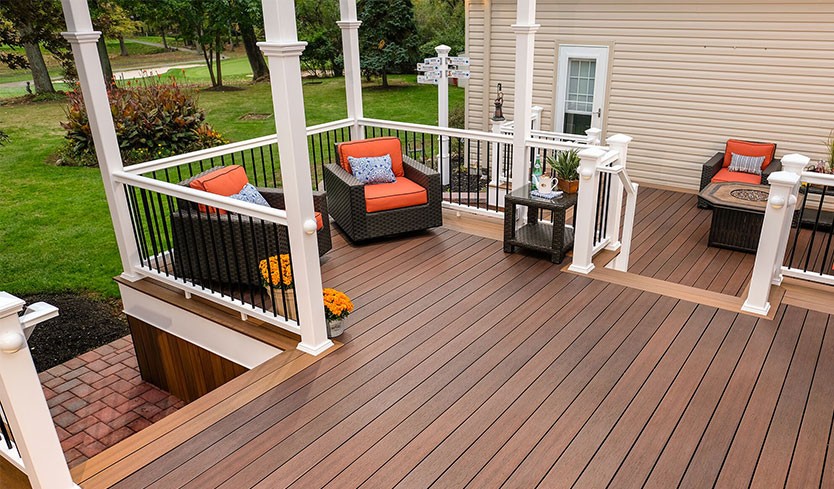
5. Install a Corner Pergola
If the deck has sufficient space, a corner pergola can create a dramatic focal point.
A pergola positioned at one corner can provide partial shade while also defining a dedicated outdoor living zone. The structure can support climbing plants, outdoor curtains, string lights, or other decorative elements.
The decking below the pergola can use a contrasting color to visually distinguish the seating or dining area. For example, a lighter main deck combined with a darker corner zone can create a clear separation between spaces.
When installing a pergola, make sure the support structure is appropriately designed and anchored. The decking itself should not automatically be treated as the structural support for a heavy overhead installation.
6. Create a Multi-Level Corner
For gardens with uneven terrain or larger outdoor spaces, a multi-level corner can add dimension and functionality.
A raised section can be used as a seating platform, while the lower section provides space for dining or outdoor activities. Steps can connect the levels and become another design feature.
Composite decking works well for multi-level applications because boards can be coordinated across different sections. Using the same material helps maintain visual consistency even when the deck contains several elevations.
Lighting can be incorporated into the steps or around the edge of each level. This improves nighttime visibility while emphasizing the shape of the deck.
7. Design a Curved Corner
Not every deck needs to follow sharp rectangular lines. A curved corner can provide a softer and more contemporary appearance.
Depending on the composite decking system and installation method, boards can be carefully arranged or cut to create curved edges. A curved corner can work particularly well beside a swimming pool, garden, lawn, or rounded seating area.
However, curved decking requires more planning than a standard straight installation. The supporting frame must follow the intended shape, and every board should be measured accurately before cutting.
For projects where precision is important, professional installation may be worthwhile.
8. Add a Corner Privacy Screen
A deck corner can also become a private retreat by incorporating a privacy screen.
Privacy screens can be made from composite materials, timber, metal, glass, or combinations of materials. A screen installed at the corner can block views from neighboring properties while creating a more enclosed atmosphere.
For a modern appearance, choose a screen with horizontal or vertical lines that complement the decking boards. Decorative slats can provide privacy without making the area feel completely enclosed.
This idea is particularly useful for urban gardens, balconies, and decks located close to neighboring houses.
9. Incorporate Corner Lighting
Good lighting can completely change the appearance of a deck after sunset. Corners are ideal locations for integrated lighting because they naturally define boundaries and transitions.
Recessed lights can be installed around steps, along borders, or close to seating areas. Small LED fixtures can also be positioned around a corner planter or privacy screen.
Another option is to use decorative wall lights or low-level pathway lighting near the edge of the deck. Warm lighting generally creates a comfortable atmosphere for evening entertaining.
When planning lighting, avoid excessive brightness. The goal should be to highlight the architecture and improve visibility rather than overwhelm the outdoor space.
10. Create a Dedicated Outdoor Dining Corner
If the deck is large enough, a corner can be transformed into a dedicated dining zone.
Place an outdoor dining table and chairs close to the corner, then define the area using a contrasting decking border or overhead pergola. A nearby planter can help separate the dining area from the rest of the deck.
This arrangement makes better use of large outdoor spaces and allows different activities to coexist. One side of the deck can be used for dining while another provides room for lounging, cooking, or relaxing.
When selecting furniture, leave enough space for chairs to move comfortably. Planning furniture dimensions before finalizing the decking layout can prevent the corner from becoming overcrowded.
11. Combine Decking With Stone or Paving
Mixing composite decking with other outdoor materials can create an attractive transition at a corner.
For example, composite boards can meet natural stone, porcelain paving, concrete, or decorative gravel. The boundary between materials can be used to define a pathway, planting zone, or outdoor seating area.
This combination works especially well in contemporary landscape designs. Composite decking provides warmth and texture, while stone or paving introduces a different visual character.
Careful attention should be given to height differences and drainage. The finished surfaces should transition smoothly while allowing rainwater to move away from the decking structure.
12. Turn a Corner Into an Outdoor Kitchen Zone
An unused corner can become a functional outdoor cooking area. An outdoor grill, countertop, storage cabinet, and compact sink can be arranged along two adjoining sides to create an efficient L-shaped kitchen.
The decking around the kitchen should be selected with practical maintenance requirements in mind. Food spills, grease, and frequent foot traffic make easy cleaning particularly important.
It is also essential to consider heat, ventilation, electrical connections, water supply, and local building requirements when designing an outdoor kitchen. Composite decking should not be exposed directly to uncontrolled high heat or open flames.
13. Use a Picture-Frame Corner Detail
A picture-frame border is one of the easiest ways to give a composite deck a more finished appearance.
In this design, perimeter boards run around the outside of the main decking field. At the corners, the boards meet to create a framed appearance.
This method can make a basic deck look more carefully designed. It also provides an opportunity to introduce a second composite decking color.
For example, a charcoal border around a warm brown deck can create a strong contrast. Alternatively, two similar shades can produce a subtle, sophisticated effect.
14. Add a Corner Fire Pit Area
A corner can also be designed as a dedicated fire pit or gathering area. This can create a natural focal point for evening entertainment.
However, safety should always come first. Composite decking products vary in their heat resistance and installation requirements, so the manufacturer’s recommendations must be followed. A suitable non-combustible surface may be necessary around the fire feature.
Instead of placing an open fire directly on composite boards, designers can create a separate stone or paver zone surrounded by decking. This approach provides both visual contrast and an additional safety layer.
15. Think About the Corner During the Planning Stage
The best composite decking corner ideas begin before the boards are installed. Trying to solve corner details after construction has started can lead to unnecessary cutting, material waste, and difficult transitions.
Before installation, consider:
- The location of doors and entrances
- Furniture dimensions
- Drainage requirements
- Steps and changes in elevation
- Lighting locations
- Planters and landscaping
- Privacy requirements
- Board direction and pattern
- Color combinations
- Future maintenance access
Creating a detailed layout can help determine how the decking boards will meet at every corner. It is also important to calculate the required materials accurately, including additional boards for cuts and installation waste.
Choosing the Right Composite Decking for Corner Designs
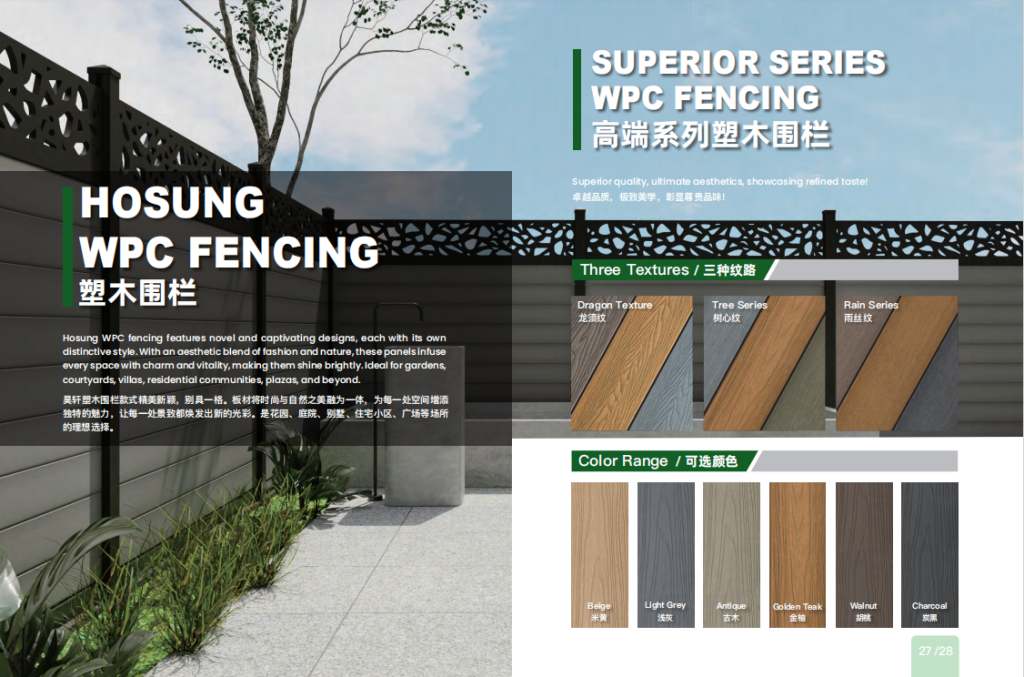
The material itself plays an important role in achieving a successful corner design. When comparing composite decking products, consider factors such as surface texture, color consistency, dimensional stability, moisture resistance, slip performance, and installation method.
Board profiles can also influence design possibilities. Some systems are better suited to traditional straight layouts, while others offer accessories and finishing components that make complex edge details easier.
For a commercial or high-traffic project, durability and long-term maintenance requirements should be evaluated carefully. For residential projects, appearance, comfort, and ease of maintenance may be equally important.
It is also useful to check whether matching fascia boards, corner trims, clips, fasteners, and other accessories are available. A complete system can make it easier to achieve clean transitions around corners.

Final Thoughts
A deck corner does not have to be an unused leftover space. With thoughtful planning, it can become one of the most attractive and functional parts of an outdoor living area.
From built-in seating and planters to pergolas, privacy screens, lighting, multi-level platforms, and contrasting borders, there are many composite decking corner ideas suitable for different architectural styles and outdoor spaces. The most successful designs balance appearance with practical considerations such as drainage, structural support, maintenance, safety, and furniture layout.
Whether you prefer a simple picture-frame border or a more elaborate outdoor kitchen and seating zone, paying attention to corners can give the entire deck a more complete and professional appearance. By planning corner details from the beginning and selecting composite decking products that match the project’s requirements, homeowners and designers can create outdoor spaces that are attractive, durable, and comfortable for years to come.