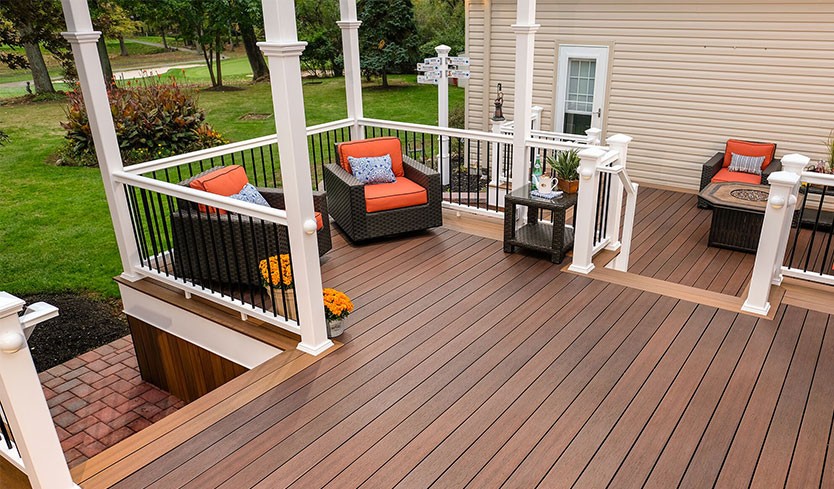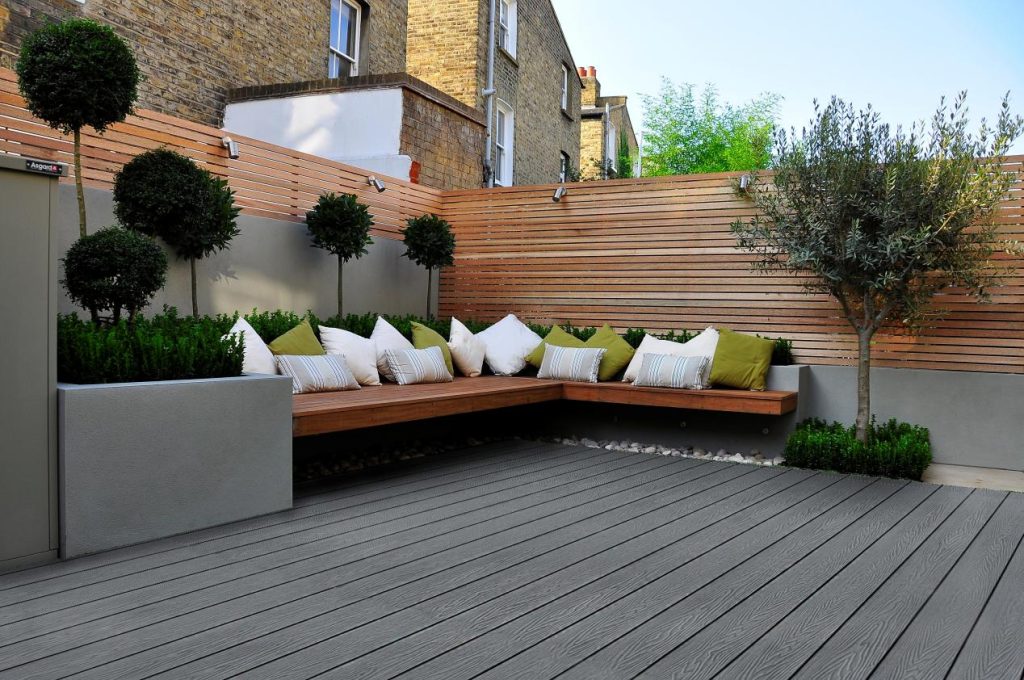
When planning an outdoor living space, homeowners often focus on decking, patios, furniture, and landscaping. However, the fence is equally important because it provides privacy, defines property boundaries, improves security, and contributes significantly to the overall appearance of a garden. Combining a contemporary fence with a beautiful deck can create a cohesive outdoor environment that feels comfortable, modern, and well designed. Composite decking fence ideas are becoming increasingly popular because composite materials can complement decking while offering durability, low maintenance, and a wide range of design possibilities. Whether you want a private garden retreat, a stylish boundary fence, or a seamless transition between your deck and surrounding landscape, composite fencing can provide an attractive solution.
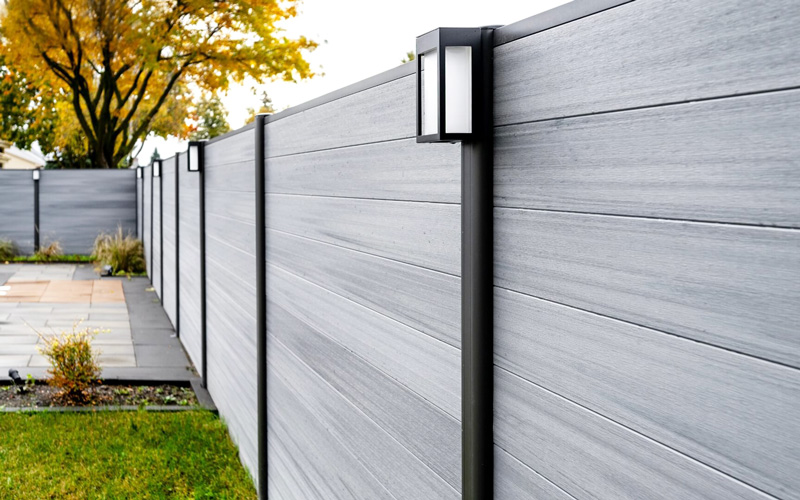
Table of Contents
What Is Composite Decking Fencing?
Composite decking fencing is generally made from wood-plastic composite materials, combining recycled or virgin polymers with wood fibers or similar reinforcing materials. Although composite decking boards and composite fence boards may have different structures and applications, they can often be designed to create a visually coordinated outdoor space.
Composite fencing can be used around gardens, patios, balconies, pools, terraces, and outdoor entertainment areas. Depending on the design, it can provide complete privacy or allow partial visibility through decorative gaps.
One of the biggest advantages is design flexibility. Composite fence boards are available in different colors, surface textures, dimensions, and installation styles. This makes it possible to match the fence with existing composite decking instead of treating the fence as a separate element.
Match the Fence and Decking Colors
One of the simplest composite decking fence ideas is to coordinate the color of the fence with the decking.
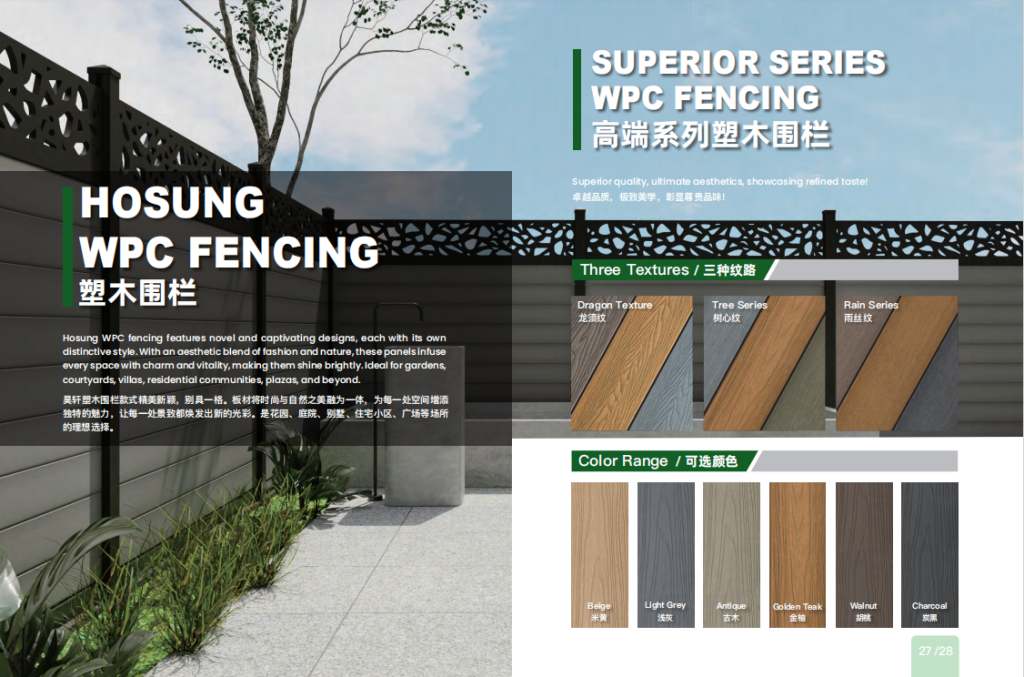
For a clean and unified appearance, choose decking and fence boards from the same color family. For example, a light brown deck can be combined with a warm brown fence, while gray decking can work well with charcoal or dark gray fencing.
However, matching does not always mean using exactly the same color. Slight contrast can make the outdoor space more visually interesting.
Popular combinations include:
- Light gray decking with charcoal fencing
- Brown decking with dark wood-tone fencing
- Natural wood-look decking with black or dark gray fencing
- Dark decking with light gray fencing
- Warm beige decking with medium brown fencing
Using similar tones creates harmony, while contrasting shades can help define different areas of the garden.

Create a Modern Horizontal Fence
Horizontal fencing is one of the most popular contemporary designs. Instead of installing boards vertically, the boards are positioned horizontally to create long, clean lines.
This style works particularly well with modern composite decking because both materials can feature simple geometric lines.
A horizontal composite fence can make a garden appear wider because the horizontal lines visually extend across the space. It is especially suitable for small gardens where you want to create a sense of openness.
For a modern appearance, consider dark gray, black, brown, or natural wood-effect composite boards. Combine them with simple metal posts for an attractive contemporary finish.
Choose a Vertical Composite Fence
Vertical fencing offers a more traditional appearance while still providing the benefits of composite materials.
Vertical boards draw the eye upward and can make a garden feel taller. This is particularly useful when the fence surrounds a compact outdoor area.
A vertical composite fence can also be combined with composite decking to create a balanced design. For example, natural brown decking can be paired with vertical wood-effect fencing to create a warm outdoor atmosphere.
Adding decorative caps or contrasting posts can further enhance the finished appearance.
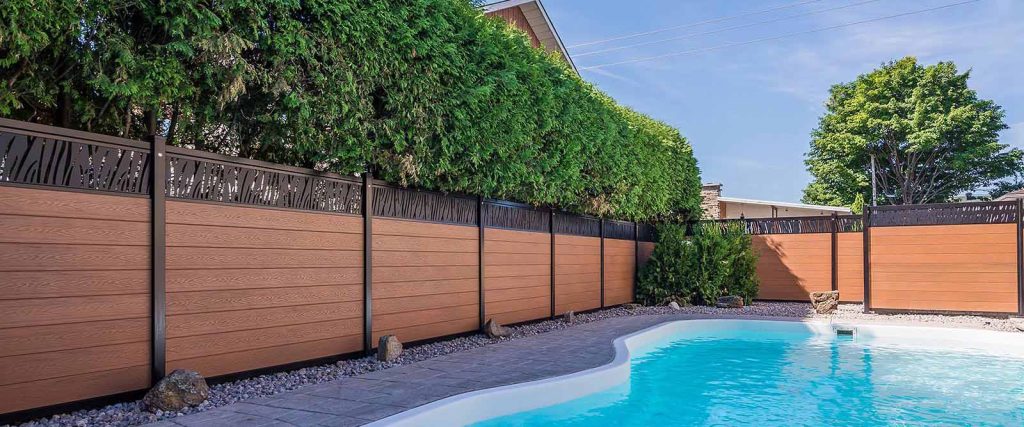
Use a Two-Tone Fence Design
If a single color feels too plain, consider a two-tone composite fence.
One popular approach is to use darker boards for the main fence and lighter boards for the upper section or decorative panels. Another option is to use a dark frame with wood-effect boards inside.
For example, a charcoal frame combined with warm brown boards can create a sophisticated appearance without becoming visually overwhelming.
Two-tone designs are particularly useful when the decking already contains multiple colors or textures. The fence can pick up one or two colors from the deck to create a coordinated visual theme.
Build a Private Garden Retreat
Privacy is one of the main reasons homeowners install garden fencing. Composite fencing can be designed with closely positioned boards to reduce visibility from neighboring properties.
A privacy fence works especially well around a composite deck because the deck often becomes an outdoor extension of the home. With the right fence height and layout, you can create a comfortable space for dining, relaxing, entertaining guests, or enjoying a morning coffee.
For maximum privacy, choose solid panels with minimal gaps. If you want some natural light and airflow, consider combining solid sections with decorative open panels.
Adding plants, planters, or climbing greenery in front of the fence can make the private space feel more natural.
Combine Composite Fencing with Metal Frames
Composite boards do not need to stand alone. Combining them with metal posts and frames can create a modern industrial appearance.
Black or dark gray metal provides a strong contrast against wood-effect composite boards. This combination is particularly effective for contemporary homes.
For example, imagine a warm brown composite deck surrounded by a horizontal composite fence with slim black metal posts. The result can look modern while retaining a natural outdoor character.
Metal frames can also provide structural support and create clearly defined sections within a longer fence.
Add Decorative Fence Panels
Not every section of a garden needs to be completely solid. Decorative panels can break up a large fence and introduce visual interest.
You can use decorative composite panels:
- Above a solid privacy fence
- Between sections of standard fencing
- Around a seating area
- Near an entrance gate
- Behind outdoor furniture
- As a garden feature wall
Decorative patterns may include narrow gaps, geometric shapes, slatted designs, or alternating board arrangements.
These details can make a basic fence feel more like a designed architectural feature.
Extend the Decking Design onto the Fence
One creative approach is to visually extend the decking design onto the fence.
If the deck uses a horizontal board arrangement, installing horizontal fence boards can create continuity between the floor and surrounding walls. This approach makes the outdoor space feel more intentional and professionally designed.
You can also repeat the same color or surface texture on the fence.
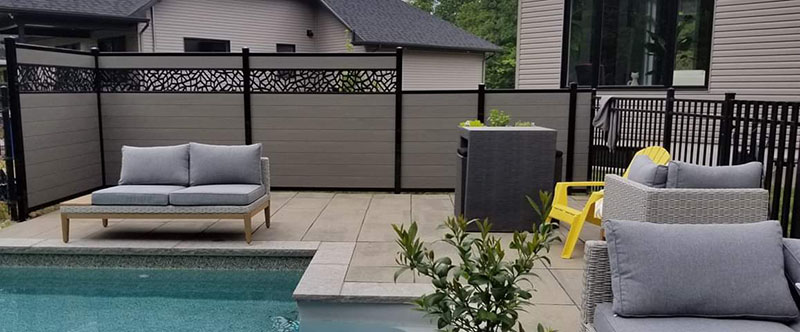
For example, a gray composite deck with matching gray horizontal fence boards can create a seamless monochromatic appearance. Adding green plants and outdoor furniture provides contrast without disrupting the overall design.
Use a Slatted Composite Fence
Slatted fencing is another attractive option for modern gardens. Instead of completely solid boards, the design uses evenly spaced slats.
This creates a balance between privacy and openness.
Slatted composite fencing can allow sunlight and air to pass through while still creating a visual boundary. It can also make a small outdoor space feel less enclosed.
For homeowners who want partial privacy rather than complete isolation, this is one of the most practical composite decking fence ideas.
Slatted fences are also useful around outdoor dining areas because they provide some separation without making the space feel closed.
Add Built-In Planters
Composite fencing can become more than a boundary. It can also serve as the background for garden plants and built-in planters.
Consider installing rectangular planters along the base of the fence. Plants with contrasting foliage can soften the appearance of composite boards and create a natural transition between the deck and garden.
For a modern garden, combine dark fencing with plants featuring bright green leaves. For a warmer appearance, use brown composite fencing with ornamental grasses, shrubs, and flowering plants.
Built-in planters are especially useful when the composite deck occupies a large portion of the garden and you want to introduce more greenery.
Create a Fence Feature Wall
A composite fence does not have to surround the entire property. A short section can be used as a feature wall.
For example, you could install composite boards behind an outdoor sofa, dining table, barbecue area, or fire pit. This creates a defined outdoor zone while giving the garden a stronger visual focal point.
A feature wall can also provide a suitable background for outdoor lighting, wall decorations, planters, or signs.
This approach is ideal when you want the appearance of composite fencing without replacing every existing boundary fence.
Combine Different Board Directions
For a more creative appearance, combine horizontal and vertical boards within the same fence.
For example, most of the fence can use horizontal boards, while a central section uses vertical boards. Alternatively, vertical boards can frame a horizontal center panel.
Changing board direction creates visual contrast and can highlight entrances, seating areas, or architectural features.
The key is to use the same or complementary colors so the design remains cohesive rather than appearing random.
Match Fence Design with Outdoor Furniture
Your composite decking fence ideas should also consider the furniture and accessories used on the deck.
A dark gray fence can provide an attractive background for light-colored outdoor sofas and chairs. Brown composite fencing can work well with wooden furniture, beige cushions, and natural fabrics.
If your outdoor furniture is already bold or colorful, a simple neutral fence may be the better choice. Conversely, if your furniture has a minimalist design, a textured or two-tone fence can become a stronger visual feature.
Think of the fence as part of the entire outdoor design rather than an isolated structure.
Add Outdoor Lighting
Lighting can dramatically improve the appearance of a composite fence after sunset.
Small LED lights can be installed along fence posts, beneath decking edges, or near the base of fence panels. Wall-mounted lights can also highlight specific sections of the fence.
Warm lighting is particularly effective with brown or wood-effect composite materials because it emphasizes their natural appearance.
For dark fencing, strategically positioned lighting can create attractive shadows and architectural lines.
Lighting also improves visibility and safety around the deck during the evening.
Use a Composite Fence Around a Pool Deck
If you have a swimming pool or hot tub, composite fencing can help create a defined recreational area.
A privacy fence around a pool deck can provide separation from neighboring properties while making the space feel more private. However, local building and pool safety regulations should always be checked before selecting a fence design, height, spacing, or gate system.
Choose materials and colors that complement the pool decking. Light gray or beige composite decking can create a bright, resort-style appearance, while darker boards can produce a more sophisticated modern look.
Benefits of Combining Composite Decking and Fencing
Coordinating composite decking and fencing offers several practical benefits.
Low Maintenance
Composite materials generally require less routine maintenance than traditional untreated timber. They do not normally need regular painting or staining to maintain their appearance.
This can make composite decking and fencing an attractive choice for homeowners who want a beautiful garden without spending excessive time maintaining outdoor surfaces.
Durable Outdoor Performance
Quality composite materials are designed for outdoor environments and can provide good resistance to everyday exposure, including moisture and temperature changes.
The exact performance depends on the material formulation, manufacturing process, installation method, and environmental conditions.
Consistent Appearance
Using complementary composite products makes it easier to create a coordinated outdoor design.
Instead of combining unrelated materials, homeowners can use similar colors, textures, and finishes across the deck and fence.
Flexible Design Options
Composite fence boards can be used in many configurations, including horizontal panels, vertical boards, slatted designs, privacy screens, feature walls, and mixed-material installations.
This flexibility makes composite materials suitable for both traditional and contemporary gardens.
How to Choose the Right Composite Fence Design
Before choosing from different composite decking fence ideas, consider several practical factors.
First, determine how much privacy you need. A solid fence may be appropriate for a private seating area, while a slatted design may be better if you want openness.
Second, consider the size of your garden. Dark colors can create a dramatic appearance but may make a small area feel more enclosed. Lighter colors can create a brighter and more open atmosphere.
Third, look at the existing architecture of your home. Modern houses often work well with horizontal boards, dark colors, and metal details, while traditional properties may suit vertical boards and natural wood tones.
Finally, consider how the fence will look alongside your decking, landscaping, furniture, lighting, and other outdoor features.
Final Thoughts
The best composite decking fence ideas combine appearance, privacy, durability, and practical functionality. From horizontal privacy fences and vertical wood-look boards to two-tone designs, slatted panels, feature walls, and metal-framed installations, composite fencing provides plenty of opportunities to create a personalized outdoor space.
The most successful design does not necessarily use the same material and color everywhere. Instead, it creates a visual connection between the decking, fencing, landscaping, furniture, and architecture.
Whether you are designing a small backyard deck or a large outdoor entertainment area, carefully coordinated composite decking and fencing can transform an ordinary garden into a comfortable and stylish extension of your home.