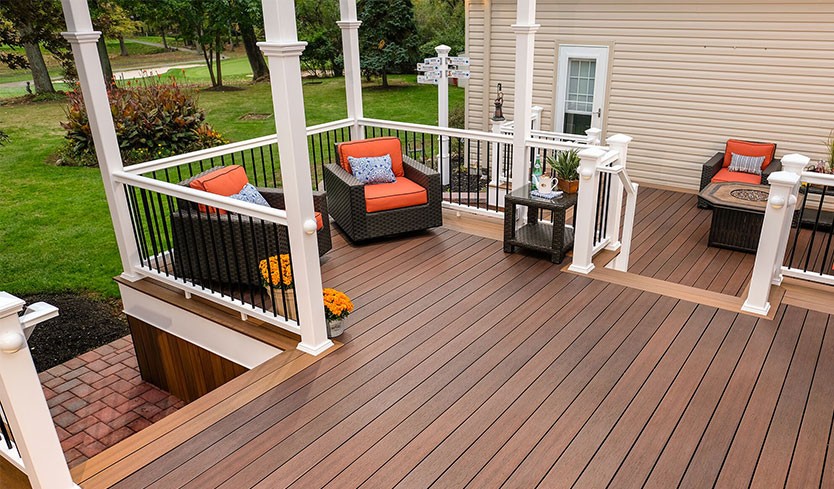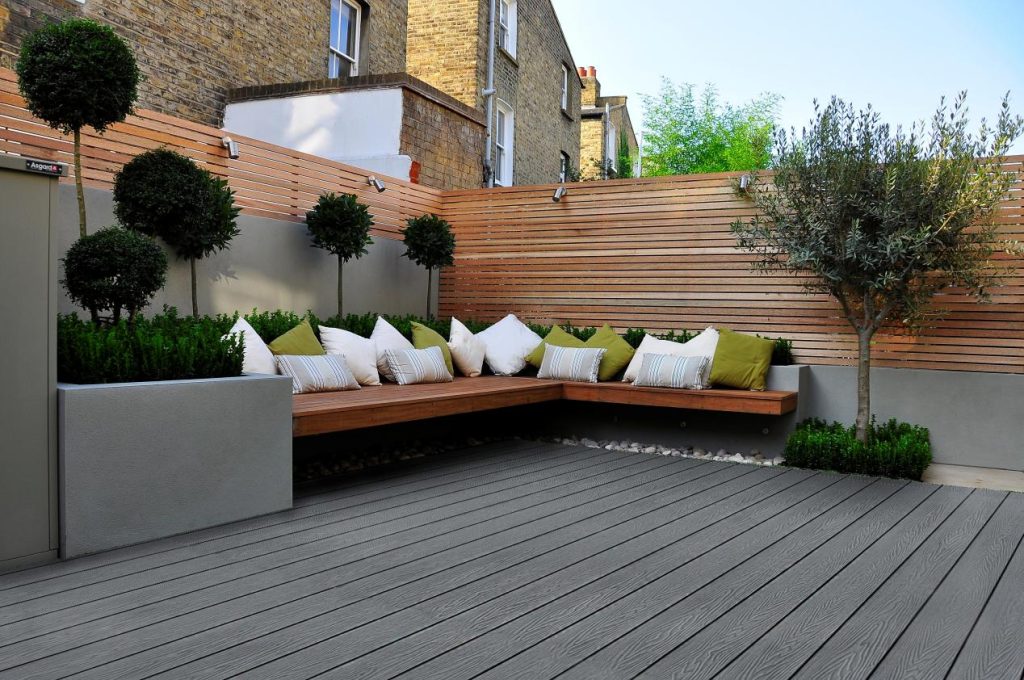
When choosing decking for a garden, patio, pool area, or commercial space, one key question is: which composite decking is the best value? The cheapest option is not always the best choice. Buyers should consider price, durability, maintenance, service life, appearance, and installation requirements. Composite decking offers a practical alternative to timber, with good resistance to moisture, rot, insects, and splintering. For homeowners, contractors, distributors, and retailers, the best value composite decking is generally the product that offers the right balance of cost, quality, and long-term performance.
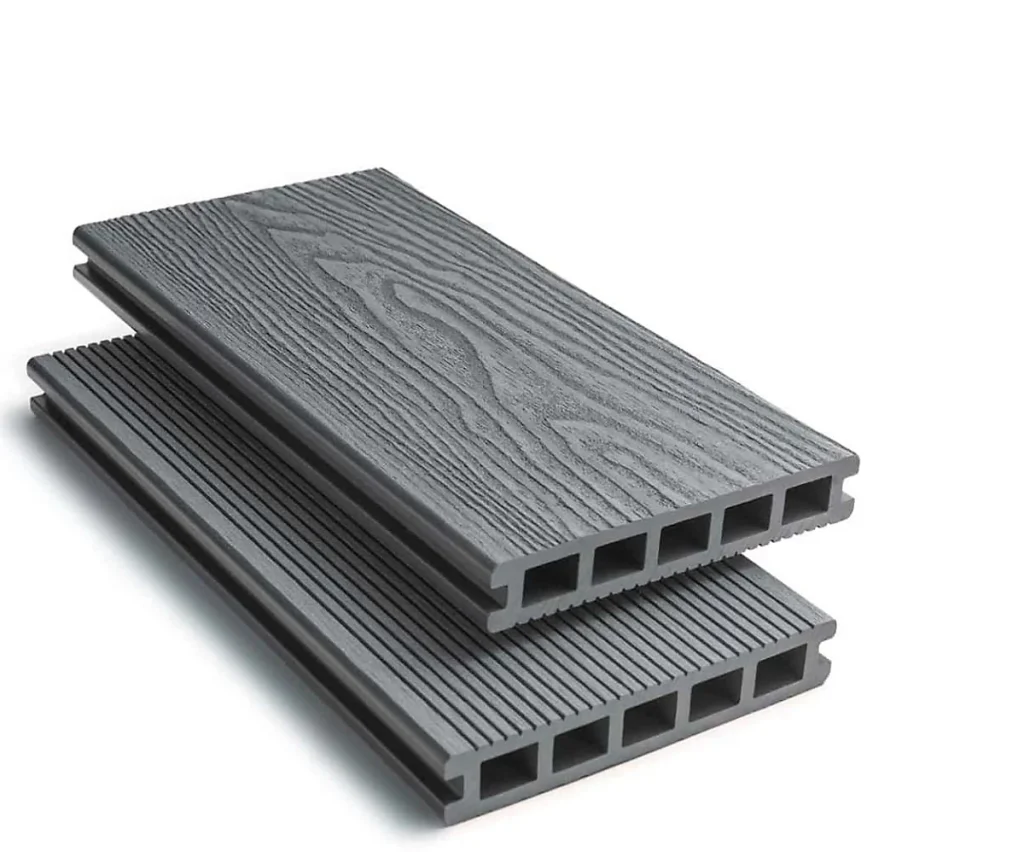
Table of Contents
What Does “Best Value” Mean for Composite Decking?
Before comparing different composite decking options, it is important to understand what “value” actually means.
The cheapest board may have a low initial purchase price, but if it fades quickly, absorbs moisture, requires frequent cleaning, or needs replacement earlier than expected, the total cost can become much higher.
On the other hand, an expensive premium board may offer excellent performance but may not provide the best value if the additional features are unnecessary for a particular project.
Therefore, the best value composite decking should ideally provide:
- A reasonable purchase price
- Good structural strength
- Reliable weather resistance
- Low maintenance requirements
- Good colour stability
- Adequate slip resistance
- A suitable service life
- Easy installation
- Consistent product quality
- A warranty that matches the expected application
Current UK market guides show substantial differences between budget, mid-range, and premium composite decking. Board-only prices can range from roughly £30 to more than £100 per square metre depending on construction and specification, while installation, subframes, fasteners, and other accessories add significantly to the overall project cost.
This is why looking only at the board price can give buyers an incomplete picture.
Hollow-Core vs. Solid-Core Composite Decking
One of the first factors to consider is the internal construction of the board.
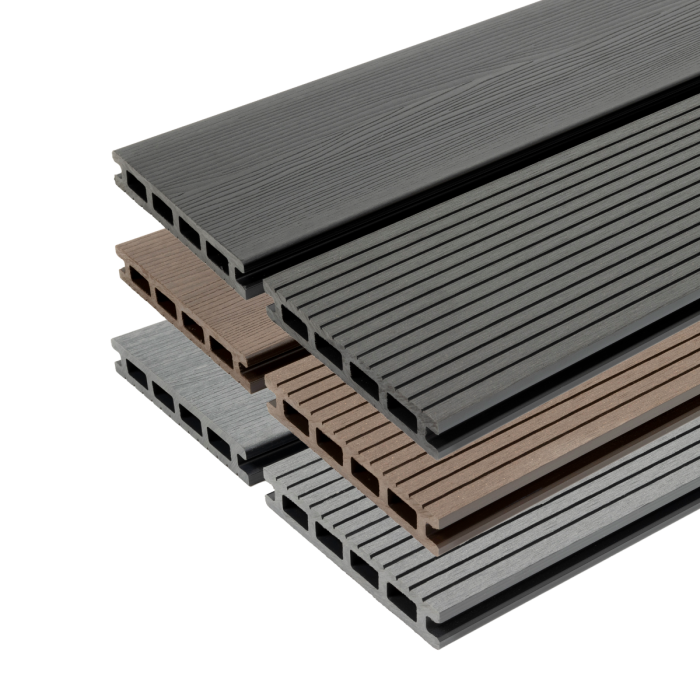
Hollow-Core Composite Decking
Hollow-core boards contain internal channels that reduce the amount of material used during production.
The main advantages include:
- Lower material consumption
- Lower overall weight
- Easier handling
- Easier transportation
- Lower purchase cost
- Convenient installation for many residential projects
Because less material is used, hollow-core decking is often positioned toward the budget or mid-range segment.
For a standard residential garden where the deck is not exposed to unusually heavy loads, a well-designed hollow composite board can provide excellent value.
However, buyers should pay attention to the board’s wall thickness, profile design, joist spacing requirements, impact resistance, and installation instructions. A low-cost hollow board is not automatically good value if its structural performance is inadequate.
Solid-Core Composite Decking
Solid-core boards contain more material throughout the cross-section, generally resulting in greater weight and a more substantial feel.
Potential advantages include:
- Higher resistance to heavy loads
- More substantial underfoot feel
- Good impact resistance
- Greater flexibility in certain applications
- Suitable for high-traffic areas
The disadvantage is a higher material cost.
Current cost guides generally place solid-core composite decking above hollow-core products in price.
For a normal residential patio, paying substantially more for a solid-core board may not always provide proportional additional value. However, for commercial areas, hospitality projects, high-traffic spaces, or demanding outdoor environments, the additional investment can make sense.
Capped vs. Uncapped Composite Decking
Another major factor affecting value is whether the composite decking is capped.
Uncapped Composite Decking
Uncapped composite decking has a composite material exposed at the surface.
It can provide:
- Lower initial cost
- Natural-looking surface characteristics
- Straightforward construction
- Good performance when properly manufactured
However, because the composite material is exposed, the surface can be more vulnerable to moisture, staining, UV exposure, and environmental conditions depending on the formulation and manufacturing quality.
For buyers who prioritize the lowest initial cost, uncapped decking may be attractive.
Capped Composite Decking
Capped composite decking includes a protective polymer layer around some or all of the board.
The protective layer can improve resistance to:
- Moisture
- Staining
- UV exposure
- Fading
- Surface wear
- Mould and mildew
Capped decking generally costs more than basic uncapped decking, but the additional surface protection can reduce maintenance and improve long-term appearance.
For many residential projects, mid-range capped composite decking can represent the best overall value because it avoids the highest premium prices while providing better surface protection than basic uncapped boards.
Market comparisons commonly identify capped products as stronger choices for maintenance, longevity, fade resistance, and stain resistance, while uncapped products generally have the price advantage.
Why the Cheapest Composite Decking Is Not Always the Best Value
Suppose two boards have the following approximate prices:
| Option | Board Cost | Expected Position |
|---|---|---|
| Budget hollow uncapped | Lower | Entry-level |
| Mid-range hollow capped | Moderate | Value-focused |
| Mid-range solid capped | Higher | Performance-focused |
| Premium solid/capped | Highest | Premium |
The first option may look like the obvious winner.
However, buyers should also consider what happens after installation.
If the cheaper board has poorer colour stability, greater moisture absorption, weaker surface protection, or a shorter warranty, the initial savings may not represent genuine long-term value.
For example, a slightly more expensive capped board could be a better investment if it maintains its appearance for longer and requires less maintenance.
This is especially important for large decks. A difference of £10 per square metre becomes £300 on a 30-square-metre project and £500 on a 50-square-metre project. Buyers therefore need to determine whether the additional cost delivers meaningful performance improvements.
The Importance of Maintenance Costs
One of the main reasons people choose composite decking is reduced maintenance.
Traditional timber decking can require regular cleaning, staining, oiling, sealing, or other treatments. Composite decking generally does not require the same level of ongoing treatment.
However, “low maintenance” does not mean “zero maintenance.”
Composite decking can still benefit from periodic cleaning to remove:
- Dirt
- Leaves
- Mud
- Food stains
- Organic debris
- Mould growth in damp areas
The maintenance requirements can differ according to board construction and surface protection.
Capped composite decking generally has an advantage when stain resistance and surface protection are priorities. This can be particularly valuable around outdoor dining areas, swimming pools, restaurants, hospitality spaces, and family gardens.
When calculating value, buyers should therefore consider not only the purchase price, but also the expected maintenance cost over the life of the deck.
Consider the Expected Service Life
A composite deck is a long-term investment.
Current market guidance commonly places quality composite decking in the 20- to 30-year range, although actual service life depends on product quality, installation, climate, usage, maintenance, and site conditions.
This means a slightly higher initial investment can be reasonable if it significantly improves durability.
For example, choosing a board that costs £10 more per square metre but provides better moisture protection and longer-lasting surface performance could make sense for a deck that is expected to remain in service for decades.
However, buyers should avoid assuming that the most expensive product automatically has the longest useful life. Product specifications, warranty terms, material composition, testing, and installation requirements should all be reviewed.
How Warranty Affects Value
A warranty can be an important indicator when comparing composite decking.
However, buyers should read the actual warranty conditions instead of looking only at the number of years.
A warranty may cover different aspects, such as:
- Structural integrity
- Rot or decay
- Insect damage
- Staining
- Fading
- Manufacturing defects
These coverage periods may not be identical.
For example, a product might have a long structural warranty but a shorter warranty related to colour or surface appearance.
When evaluating which composite decking is the best value, compare warranties on a like-for-like basis.
A longer warranty does not necessarily mean a better product, but a clear and comprehensive warranty can reduce purchasing risk.
Installation Costs Also Matter
Many buyers focus heavily on decking board prices and forget that boards are only one part of the project.
A complete decking installation may also require:
- Joists
- Subframe materials
- Fasteners
- Clips
- Screws
- Starter clips
- End clips
- Fascia boards
- Edge trim
- Support posts
- Labour
- Delivery
The subframe is particularly important.
A high-quality decking board installed on an inadequate substructure may not perform as expected. Conversely, a properly designed subframe can help improve stability and extend the overall service life of the decking system.
For this reason, the best value composite decking should be evaluated as part of a complete decking system, not simply as an individual board.
Which Composite Decking Is Best for Different Applications?
There is no single answer for every project.
Best Value for Residential Gardens
For most residential gardens, mid-range capped composite decking can be an excellent balance between price and performance.
It generally provides better surface protection than entry-level uncapped decking without the high cost associated with premium products.
Best Value for Budget Projects
If the primary objective is minimizing initial expenditure, a hollow-core composite board can be attractive.
This option can work well for:
- Small patios
- Garden walkways
- DIY projects
- Low-traffic residential decks
- Rental properties
However, buyers should verify technical specifications before choosing a low-cost product.
Best Value for High-Traffic Areas
For commercial or high-use applications, a solid-core capped composite decking system may provide better overall value.
The higher initial cost can be justified when durability, impact resistance, appearance, and long-term reliability are more important than minimizing the purchase price.
Best Value for Wet Environments
If the deck is located near a swimming pool, pond, coastal area, or consistently damp environment, moisture resistance should be one of the most important selection criteria.
A well-protected capped composite board can provide better long-term value than a cheaper product with less surface protection.
How to Compare Composite Decking Before Buying
A simple comparison checklist can make the purchasing process much easier.
1. Check the Material Composition
Find out what materials are used in the composite.
The ratio and type of wood fibre, plastic polymer, additives, pigments, and protective layers can influence performance.
2. Check the Board Profile
Determine whether the board is:
- Hollow
- Solid
- Semi-solid
Then compare weight, strength, dimensions, and installation requirements.
3. Check Surface Protection
Find out whether the product is:
- Uncapped
- Single-sided capped
- Three-sided capped
- Fully capped
The construction can affect moisture resistance and long-term surface performance.
4. Compare Dimensions
Board width and thickness influence material requirements and installation costs.
A cheaper board may not necessarily be cheaper per square metre if its dimensions create more waste or require additional support.
5. Review Colour Stability
Ask about UV resistance and expected colour changes.
Some composite decking can experience an initial colour change after installation, while quality products are designed to provide improved long-term colour stability.
6. Compare Warranty Terms
Look beyond the headline warranty period.
Check exactly what is covered and under what conditions.
7. Calculate Total Installed Cost
Do not compare board prices alone.
Calculate:
Boards + subframe + fixings + accessories + delivery + labour = total project cost
This gives a much more accurate picture of value.
What Is the Best Value Composite Decking Overall?
For many buyers, the sweet spot is a mid-range capped composite decking board with a reliable structure, good surface protection, reasonable warranty, and competitive installation cost.
This type of product avoids the limitations of the cheapest entry-level boards while avoiding the significant premium associated with luxury decking.
Current market pricing illustrates why this middle segment can be attractive. Budget composite products can start around £30–£45 per square metre for boards, while mid-range capped products can fall around £40–£60 per square metre, with premium solid-core products often costing considerably more.
The exact figures vary by supplier, specification, location, quantity, and project requirements, but the basic principle remains the same: value comes from the relationship between price and performance.
Best Value Does Not Mean Cheapest
When asking which composite decking is the best value, it is tempting to focus on the lowest price.
But a better question is:
Which composite decking provides the performance I need at the lowest reasonable total cost?
For a small residential project, an affordable hollow composite board may be the most sensible choice.
For a standard family garden, a mid-range capped board may provide the best balance.
For a commercial terrace or high-traffic outdoor space, investing in a stronger solid-core product may create better long-term value.
For wet or demanding environments, moisture resistance and surface protection may be more important than saving money at the point of purchase.
Ultimately, the best composite decking is the product that matches the application, budget, expected service life, maintenance expectations, and installation conditions.
Final Thoughts
So, which composite decking is the best value?
In most cases, the answer is not the cheapest board and not necessarily the most expensive premium product. For buyers looking for a practical combination of affordability, durability, low maintenance, and attractive appearance, mid-range capped composite decking is often the strongest value proposition.
Before purchasing, compare the board construction, material composition, surface protection, dimensions, warranty, installation requirements, maintenance needs, and total project cost.
By evaluating all of these factors together, homeowners, contractors, builders, distributors, and retailers can choose composite decking that delivers reliable performance without paying for features they do not actually need.