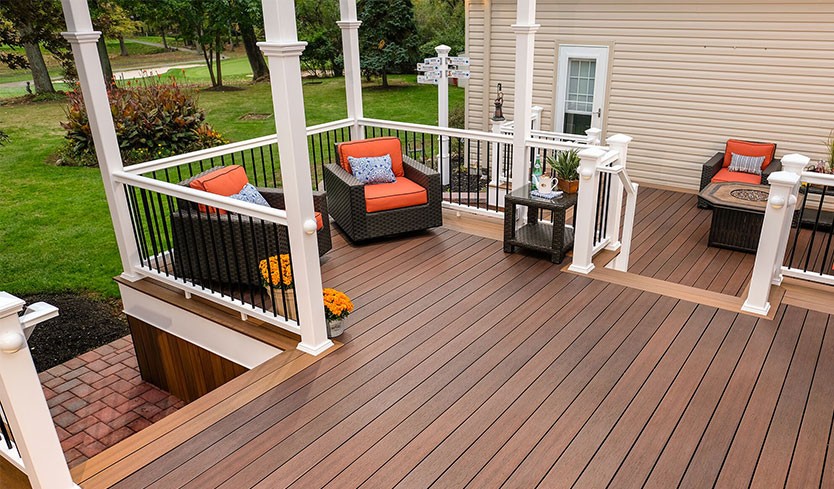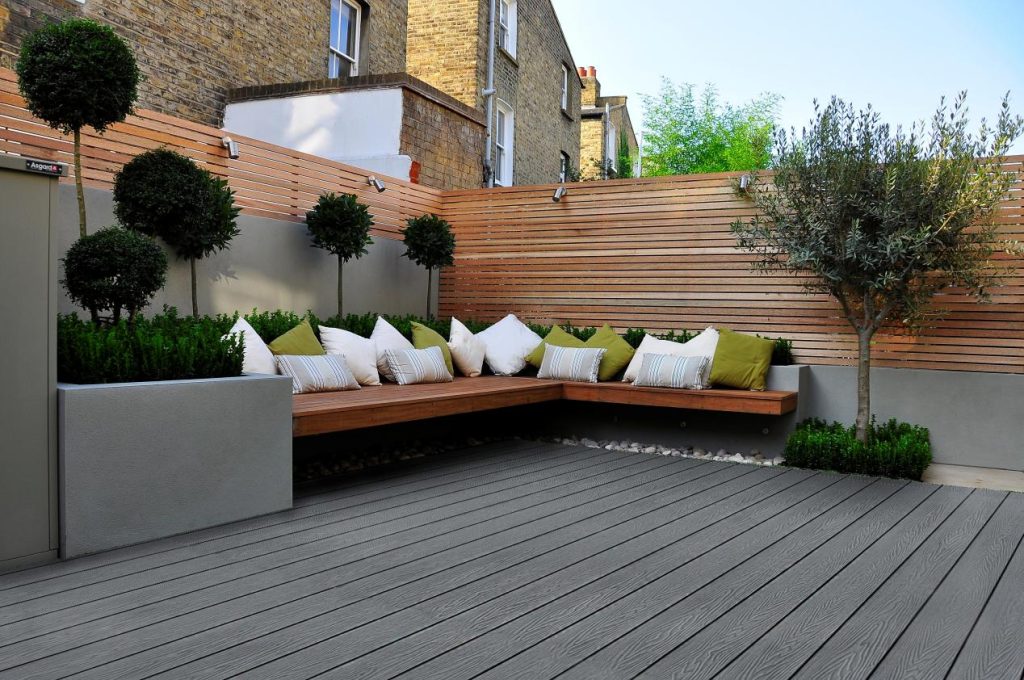
Slate grey composite decking has become one of the most sought-after surface solutions in modern architectural landscaping due to its balance of aesthetic neutrality, structural performance, and long-term durability. From a manufacturing standpoint, slate grey composite decking represents a carefully engineered product category designed to replicate the visual depth of natural stone while maintaining the resilience and low-maintenance benefits of wood-plastic composite technology.
In today’s outdoor design market, slate grey composite decking is widely specified for residential terraces, commercial walkways, rooftop gardens, and poolside platforms. Its color tone sits between charcoal and light ash grey, offering a balanced visual profile that complements both warm and cool architectural palettes. From a production perspective, slate grey composite decking is formulated using a precise ratio of wood fiber, high-density polyethylene (HDPE), and performance additives. The pigmentation process is critical to ensure UV stability and long-term color retention under harsh environmental exposure.
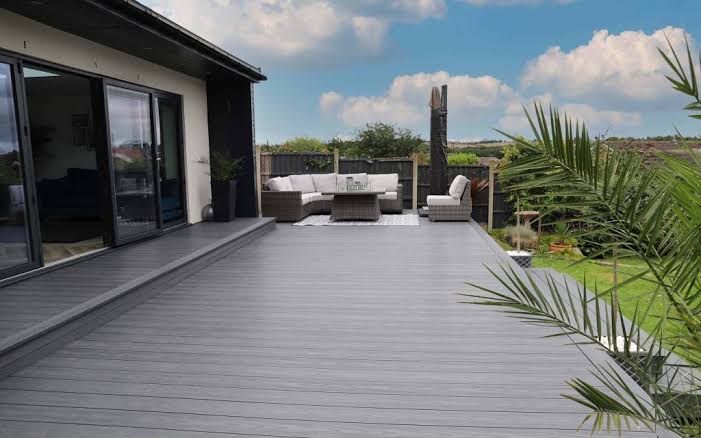
Table of Contents
Material Composition and Manufacturing Process of Slate Grey Composite Decking
The performance of slate grey composite decking depends heavily on its material composition and extrusion technology. Manufacturers typically follow a multi-stage production process:
Raw Material Blending
The base structure of slate grey composite decking consists of:
- Wood fibers (usually 50–60%)
- High-density polyethylene (HDPE or recycled plastic)
- Functional additives (UV stabilizers, coupling agents, anti-fungal agents)
- Color masterbatch specifically calibrated for slate grey composite decking
The blending process ensures uniform dispersion of wood fibers and polymer matrices, which is essential for structural integrity.
High-Temperature Extrusion
During extrusion, the composite mixture is heated and forced through precision molds. This stage determines:
- Board density
- Surface texture
- Internal bonding strength
Slate grey composite decking requires tightly controlled temperature profiles to avoid color inconsistency and surface defects.
Surface Treatment and Embossing
To enhance realism, slate grey composite decking undergoes embossing to simulate:
- Natural wood grain
- Stone-like matte textures
- Anti-slip surface patterns
This step also improves traction performance in wet environments.
Cooling and Calibration
The boards are cooled under controlled conditions to stabilize dimensional accuracy. Proper calibration ensures slate grey composite decking maintains consistent thickness and prevents warping over time.
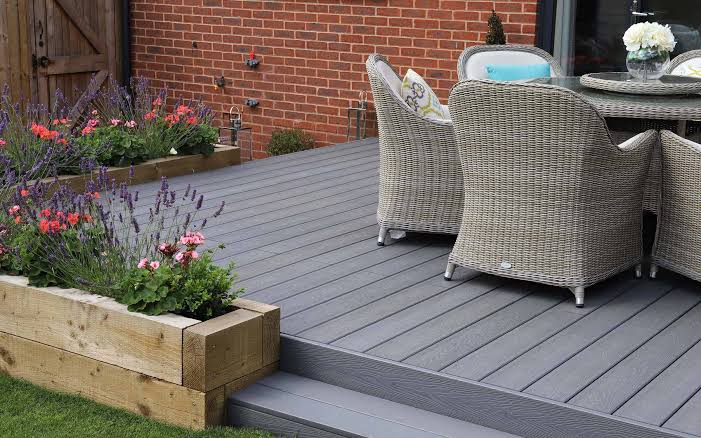
Key Advantages of Slate Grey Composite Decking
From a manufacturing and performance perspective, slate grey composite decking offers a wide range of advantages that make it suitable for both residential and commercial applications.
1. Superior Weather Resistance
Slate grey composite decking is engineered to withstand:
- UV radiation exposure
- Heavy rainfall
- Freeze-thaw cycles
- Coastal humidity environments
Unlike natural timber, it does not crack, rot, or splinter under environmental stress.
2. Low Maintenance Requirements
One of the strongest selling points of slate grey composite decking is its minimal maintenance requirement. It eliminates the need for:
- Regular sealing
- Staining or painting
- Pest treatment
Routine cleaning with water and mild detergent is sufficient to maintain appearance.
3. Enhanced Structural Stability
Due to its composite core structure, slate grey composite decking offers:
- High load-bearing capacity
- Resistance to bending and deformation
- Long-term dimensional stability
This makes it suitable for high-traffic environments.
4. Eco-Friendly Material Profile
Many formulations of slate grey composite decking utilize recycled wood and plastic materials, reducing environmental impact while promoting sustainable construction practices.
5. Aesthetic Versatility
The neutral tone of slate grey composite decking allows it to blend seamlessly with:
- Modern minimalist architecture
- Industrial design concepts
- Natural landscape environments
Applications of Slate Grey Composite Decking in Modern Projects
Slate grey composite decking is widely used across multiple sectors due to its versatility and durability.
Residential Applications
- Backyard patios
- Garden pathways
- Balcony flooring
- Rooftop terraces
Homeowners prefer slate grey composite decking for its modern aesthetic and long lifespan.
Commercial Applications
- Hotel outdoor lounges
- Restaurant terraces
- Shopping mall walkways
- Office building outdoor break areas
In commercial environments, slate grey composite decking provides a professional and consistent visual appearance.
Public Infrastructure
- Boardwalks
- Park platforms
- Waterfront viewing decks
- Recreational zones
Its anti-slip properties make slate grey composite decking particularly suitable for public safety requirements.
Slate Grey Composite Decking Color Psychology and Design Impact
Color selection plays a critical role in outdoor architectural design. Slate grey composite decking is favored because it provides a neutral foundation that enhances surrounding design elements.
Visual Balance
Slate grey composite decking reduces visual noise in outdoor environments, allowing landscaping features such as greenery, water elements, and furniture to stand out.
Modern Architectural Alignment
The tone aligns with contemporary architectural trends that prioritize:
- Minimalism
- Neutral palettes
- Material authenticity
Long-Term Color Stability
Unlike painted surfaces, slate grey composite decking maintains its tonal consistency over time due to UV-resistant pigmentation technology.
Installation Considerations for Slate Grey Composite Decking
Proper installation is essential for maximizing performance and lifespan.
Substructure Requirements
A stable subframe is necessary, typically constructed from:
- Aluminum joists
- Treated steel supports
- Composite support systems
Spacing must be carefully calculated to prevent sagging.
Expansion Gaps
Slate grey composite decking expands and contracts with temperature changes. Installation guidelines typically include:
- Edge spacing allowances
- Board-to-board gaps
- Ventilation clearance beneath the structure
Fastening Systems
Depending on design requirements, installation may use:
- Hidden clip systems
- Surface screw fastening
- Modular interlocking systems
Hidden fastening is preferred for achieving a seamless slate grey composite decking surface.
Maintenance and Longevity Performance
One of the strongest engineering advantages of slate grey composite decking is its extended service life.
Cleaning Protocol
Recommended maintenance includes:
- Periodic washing with low-pressure water
- Soft brush cleaning for debris removal
- Avoidance of harsh chemical solvents
Stain Resistance
The composite structure of slate grey composite decking minimizes absorption of:
- Oil stains
- Food spills
- Organic debris
Expected Lifespan
With proper installation, slate grey composite decking can achieve a service life of 15–25 years depending on environmental exposure.
Comparison Table: Slate Grey Composite Decking vs Other Grey Shades
Feature | Slate Grey Composite Decking | Light Grey Composite Decking | Charcoal Grey Composite Decking | Ash Grey Composite Decking |
Visual Tone | Deep neutral grey with stone-like depth | Soft, bright grey | Very dark, near-black grey | Muted, dusty grey tone |
Heat Absorption | Moderate | Low | High | Moderate |
Design Compatibility | Highly versatile for modern designs | Best for Scandinavian-style spaces | Best for industrial or bold aesthetics | Suitable for rustic and natural themes |
Dirt Visibility | Low | High | Very low | Medium |
Maintenance Appearance | Long-lasting clean look | Shows stains more easily | Hides dirt well but may fade contrast | Moderate performance |
UV Stability | High (with proper pigmentation) | High | Medium to high | Medium |
Commercial Use Suitability | Excellent | Good | Excellent for premium projects | Good |
This comparison highlights why slate grey composite decking is often considered the most balanced option among grey-based decking solutions.
Performance Engineering Behind Slate Grey Composite Decking
From a technical manufacturing standpoint, slate grey composite decking is optimized through several engineering parameters:
Density Optimization
Higher density improves:
- Load resistance
- Impact durability
- Surface hardness
Fiber-Polymer Bonding Strength
Advanced coupling agents ensure strong adhesion between wood fibers and polymer matrices, reducing micro-cracking over time.
UV Stabilization Technology
Special additives are used to maintain the color integrity of slate grey composite decking under prolonged sun exposure.
Moisture Resistance Engineering
The hydrophobic nature of polymer components prevents water penetration, reducing swelling and microbial growth.
Environmental Performance and Sustainability Factors
Sustainability is a major factor in modern construction material selection. Slate grey composite decking contributes to environmental goals through:
- Use of recycled plastic materials
- Reduced deforestation pressure
- Long lifecycle reducing replacement frequency
- Lower chemical treatment requirements
Manufacturing processes are also increasingly optimized to reduce carbon emissions and energy consumption.
Market Trends and Demand Growth
The demand for slate grey composite decking continues to rise due to several global trends:
- Growth in outdoor living space design
- Increased adoption of low-maintenance materials
- Expansion of commercial landscaping projects
- Preference for neutral architectural color schemes
Architects and contractors increasingly specify slate grey composite decking for projects requiring both durability and modern aesthetics.
Common Misconceptions About Slate Grey Composite Decking
Misconception 1: It Looks Artificial
Modern embossing technology allows slate grey composite decking to closely replicate natural textures.
Misconception 2: It Overheats Easily
While darker than light grey options, slate grey composite decking maintains moderate thermal performance when properly ventilated.
Misconception 3: It Requires Special Cleaning
In reality, maintenance is simpler than wood decking, requiring only basic cleaning routines.
Design Recommendations for Slate Grey Composite Decking
To maximize visual and functional impact, consider the following design strategies:
- Pair with black or matte metal railings
- Use warm wood-tone furniture for contrast
- Integrate LED lighting systems for nighttime ambiance
- Combine with green landscaping for natural contrast
Slate grey composite decking performs particularly well in modern minimalist environments.
Long-Term Value Assessment
From a lifecycle cost perspective, slate grey composite decking offers strong long-term value due to:
- Reduced maintenance expenditure
- Extended service lifespan
- Lower replacement frequency
- Consistent aesthetic performance
When evaluated over a 20-year period, slate grey composite decking often proves more cost-efficient than traditional wood alternatives.

Conclusion: Why Slate Grey Composite Decking Remains a Leading Choice
Slate grey composite decking in Hosung continues to dominate modern outdoor construction due to its balance of durability, aesthetics, and low maintenance requirements. Its engineered composition ensures long-term stability, while its neutral color profile supports a wide range of architectural styles.
For manufacturers and project developers alike, slate grey composite decking represents a high-performance material solution that meets both functional and design-driven demands in contemporary landscaping and construction environments.
At the end of the value chain, slate grey composite decking is increasingly associated with advanced manufacturing capability and global material innovation, with industry solutions such as Hosung WPC contributing to ongoing product development in this sector.