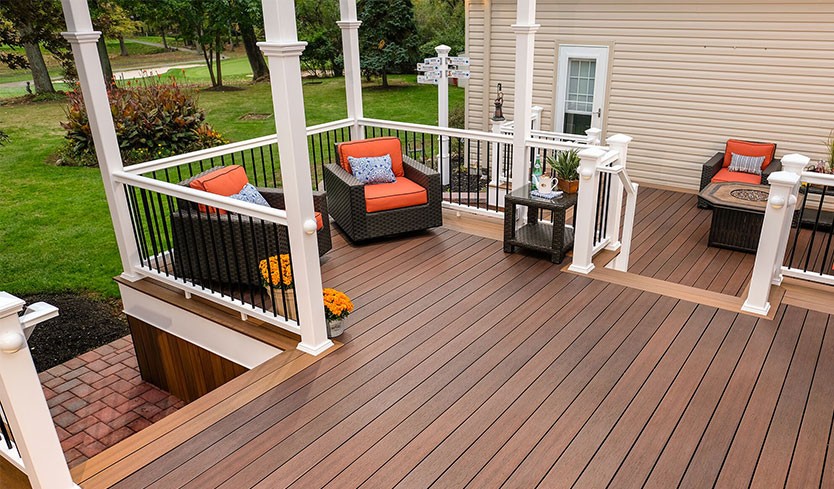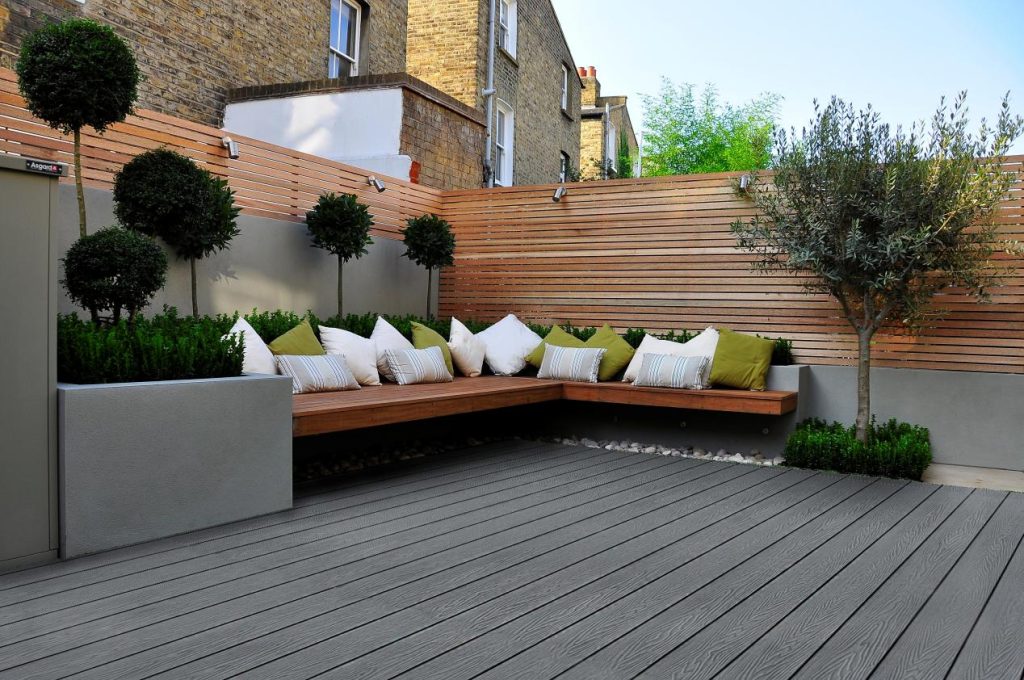
The wpc outdoor wall panel price philippines is one of the most frequently searched topics in the Southeast Asian construction and architectural finishing industry, especially as demand for durable, low-maintenance, and aesthetic exterior cladding continues to rise. In the Philippines, where tropical climate conditions such as high humidity, heavy rainfall, and intense UV exposure are common, WPC (Wood Plastic Composite) wall panels have become a widely adopted solution for both residential and commercial buildings. This article provides a comprehensive breakdown of pricing structures, material composition, installation costs, market trends, technical specifications, and purchasing considerations for WPC outdoor wall panels in the Philippine market.
Table of Contents
1. Understanding WPC Outdoor Wall Panels in the Philippines
WPC outdoor wall panels are composite materials made from a blend of:
- Wood fiber or wood powder
- Thermoplastic polymers (usually PE, PP, or PVC)
- Additives for UV resistance, anti-fungal protection, and color stabilization
In the Philippine construction market, these panels are widely used for:
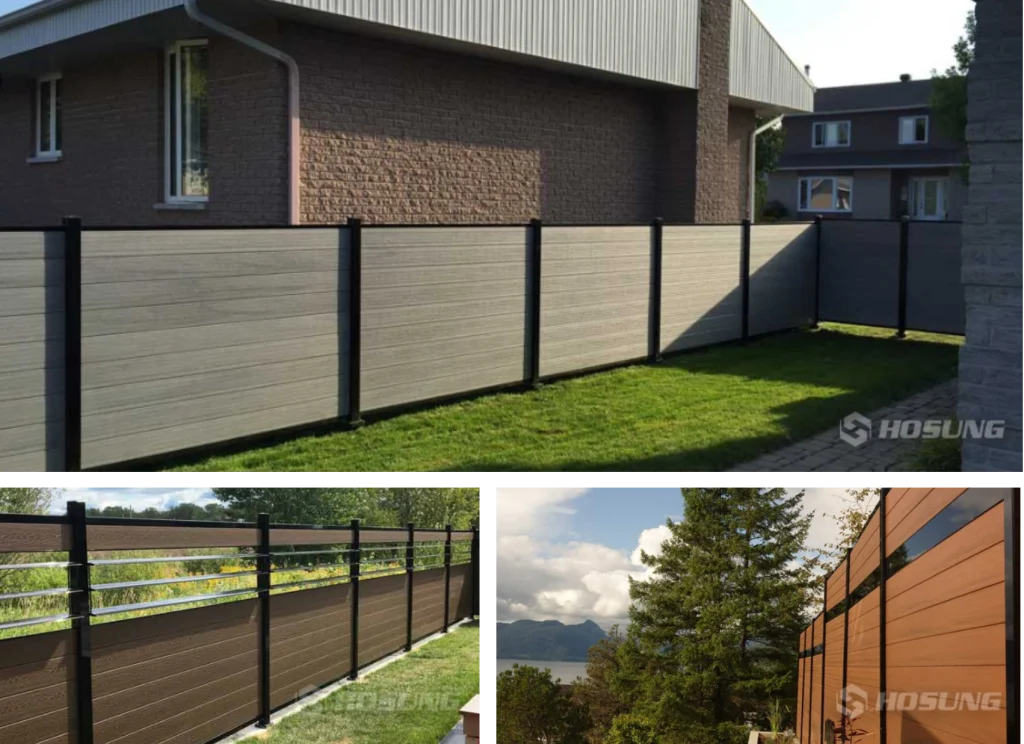
- Exterior building facades
- Balcony cladding
- Garden walls and fences
- Commercial building decoration
- Resort and hospitality architecture
Key Advantages in Tropical Climate
The popularity of WPC panels in the Philippines is strongly tied to environmental conditions:
- High humidity resistance
- Termite and insect resistance
- Low water absorption rate
- UV stability for outdoor exposure
- Reduced maintenance compared to natural wood
These properties make them particularly suitable for coastal cities such as Cebu, Davao, and Manila metropolitan areas.
2. WPC Outdoor Wall Panel Price Philippines Overview
The wpc outdoor wall panel price philippines varies depending on material composition, thickness, surface treatment, installation method, and supplier origin.
General Price Range (Market Estimate)
Panel Type | Thickness | Price per sqm (PHP) | Application |
Standard hollow WPC panel | 16–20 mm | ₱850 – ₱1,500 | Residential walls |
Solid WPC panel | 20–25 mm | ₱1,200 – ₱2,200 | High durability projects |
Co-extrusion WPC panel | 18–23 mm | ₱1,500 – ₱2,800 | Premium exterior facades |
Wood grain embossed panel | 16–22 mm | ₱1,000 – ₱2,500 | Decorative walls |
Note: Prices vary depending on import costs, logistics, and bulk order quantity.

3. Key Factors Affecting WPC Outdoor Wall Panel Price Philippines
Several technical and commercial factors influence pricing in the Philippine market.
3.1 Raw Material Composition
- Higher wood fiber content generally lowers cost but may reduce durability
- Higher polymer content increases weather resistance and price
- Additive quality (UV stabilizers, fire retardants) also affects cost
3.2 Manufacturing Technology
- Co-extrusion technology significantly increases price but improves lifespan
- Traditional extrusion methods are more affordable but less durable
3.3 Panel Structure
- Hollow core panels → lower cost, lighter weight
- Solid core panels → higher cost, stronger impact resistance
3.4 Surface Treatment
- Embossed wood grain texture increases aesthetic value
- Brushed or sanded finishes improve anti-slip performance
- UV coating increases outdoor longevity
3.5 Import vs Local Distribution
- Imported WPC panels: higher shipping and customs costs
- Locally distributed panels: lower logistics cost but variable quality
4. Installation Cost of WPC Outdoor Wall Panels in the Philippines
Beyond material price, installation significantly impacts total project cost.
Average Installation Cost Breakdown
Cost Component | Estimated Cost (PHP per sqm) |
Labor cost | ₱300 – ₱700 |
Substructure (aluminum/steel frame) | ₱400 – ₱900 |
Fasteners and accessories | ₱100 – ₱250 |
Total installation cost | ₱800 – ₱1,850 |
Total Project Cost Estimate
- Budget projects: ₱1,600 – ₱2,500 per sqm
- Mid-range projects: ₱2,500 – ₱3,800 per sqm
- High-end architectural projects: ₱3,800 – ₱5,000+ per sqm
5. Types of WPC Outdoor Wall Panels in the Philippine Market
In the Philippine construction and architectural finishing sector, WPC outdoor wall panels are not a single standardized product but a diversified material system with multiple structural and surface engineering configurations. Each type is designed to meet specific performance requirements such as load-bearing capacity, weather resistance, aesthetic output, and budget optimization. Understanding these categories is essential for accurate specification and cost control when evaluating wpc outdoor wall panel price philippines across different project scales.
5.1 Hollow Core Panels
Hollow core WPC panels are among the most widely used variants in residential and light commercial applications due to their optimized material efficiency and reduced production cost. These panels feature internal void structures—typically rectangular or circular cavities—that significantly reduce overall weight while maintaining acceptable rigidity for façade cladding.
From a technical standpoint, the hollow design decreases raw material consumption, which directly lowers manufacturing cost and market price. This makes them an ideal solution for large surface-area projects where budget constraints are a priority.
Key engineering characteristics include:
- Reduced dead load on structural frames
- Easier handling and faster installation cycles
- Adequate thermal insulation due to air cavity structure
- Moderate impact resistance suitable for low-traffic exterior zones
However, hollow core panels are generally not recommended for high-impact environments or areas exposed to strong mechanical stress. They perform best in controlled residential environments such as boundary walls, villa exteriors, and decorative garden partitions.
5.2 Solid Core Panels
Solid core WPC panels represent a higher-density structural category designed for enhanced mechanical strength and long-term durability. Unlike hollow variants, these panels are fully filled composite materials, resulting in significantly improved compressive strength and dimensional stability.
In the context of Philippine construction environments—where typhoons, heavy rainfall, and humidity fluctuations are common—solid core panels offer a more robust solution for demanding applications.
Key advantages include:
- High structural integrity under external pressure
- Superior resistance to warping and deformation
- Improved sound insulation performance
- Extended lifecycle in high-traffic commercial environments
Due to increased material usage and higher processing density, solid core panels naturally fall into a higher pricing tier within the wpc outdoor wall panel price philippines range. They are commonly specified for shopping centers, office buildings, hotels, and coastal infrastructure where durability is prioritized over initial cost savings.
5.3 Co-Extrusion Panels
Co-extrusion WPC panels represent an advanced generation of composite cladding technology. These panels are manufactured using a dual-layer extrusion process in which a protective polymer shell is fused onto a WPC core during production. This outer layer significantly enhances surface performance and environmental resistance.
From a material engineering perspective, the co-extruded layer acts as a barrier against ultraviolet radiation, moisture penetration, and surface contamination. This dramatically improves color retention and reduces maintenance requirements over time.
Key performance benefits include:
- Enhanced UV resistance preventing color fading
- Superior stain and scratch resistance
- Reduced water absorption at surface level
- Longer service life under tropical exposure conditions
Because of the additional production step and improved material formulation, co-extrusion panels occupy the premium segment of the Philippine WPC market. They are frequently selected for high-end architectural façades, luxury resorts, and modern commercial complexes where both performance and visual longevity are critical design requirements.
5.4 Decorative Embossed Panels
Decorative embossed WPC panels are primarily designed for aesthetic enhancement rather than structural optimization. These panels undergo surface texturing processes that replicate natural wood grain patterns or custom architectural finishes, providing a visually refined exterior appearance.
Technically, embossing is achieved through high-pressure roller imprinting or mold-based surface structuring during the extrusion phase. This results in a tactile surface finish that improves light diffusion and enhances the natural wood-like visual effect.
Key features include:
- Realistic wood grain texture replication
- Enhanced architectural design flexibility
- Improved anti-slip surface characteristics
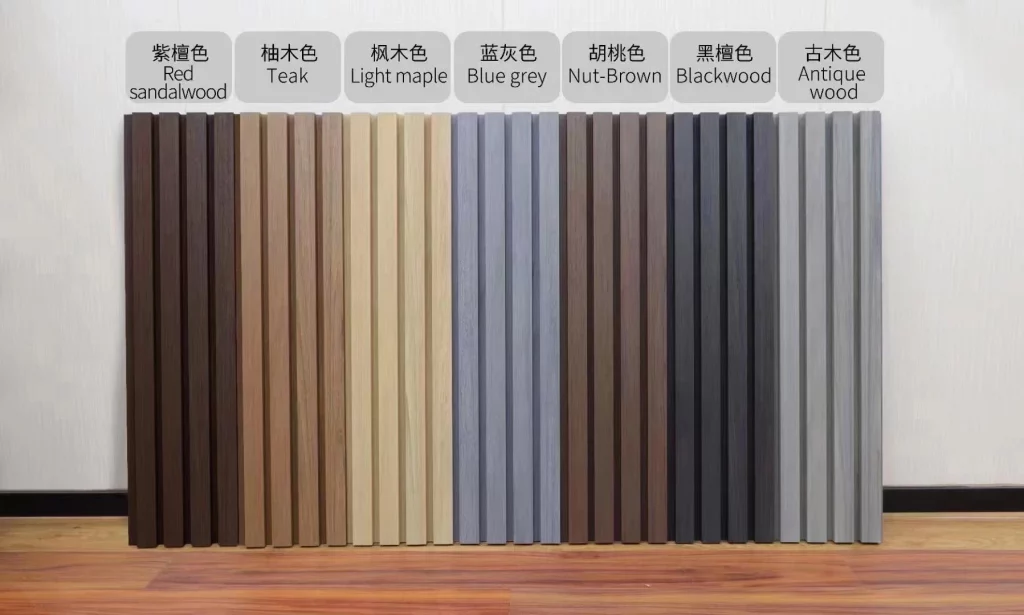
- Wide range of color and pattern customization options
These panels are commonly used in feature walls, façade accents, commercial storefronts, and landscape architecture projects where visual identity plays a central role. Their pricing typically falls within the moderate to high range of the wpc outdoor wall panel price philippines spectrum, depending on complexity of surface design and finishing quality.
6. Market Demand Trends in the Philippines
The demand for WPC wall cladding has increased significantly due to:
6.1 Real Estate Expansion
- Rising condominium developments
- Expansion of suburban housing projects
- Commercial retail infrastructure growth
6.2 Tourism and Hospitality Industry
- Resorts and beachfront hotels prefer WPC materials
- Low maintenance requirement is a key advantage
- Aesthetic flexibility supports modern design trends
6.3 Sustainability Awareness
- Reduced reliance on natural timber
- Recyclable composite materials
- Environmentally conscious construction trends
7. Advantages of WPC Outdoor Wall Panels
7.1 Durability
- Resistant to rot, decay, and termites
- Long lifespan under tropical conditions
7.2 Low Maintenance
- No need for repainting or sealing
- Easy cleaning with water and mild detergent
7.3 Aesthetic Flexibility
- Available in multiple colors and textures
- Mimics natural wood appearance
7.4 Weather Resistance
- Performs well under UV exposure
- Suitable for heavy rainfall environments
7.5 Cost Efficiency Over Time
Although initial cost may be higher than paint or traditional wood, lifecycle cost is lower due to reduced maintenance.
8. Disadvantages and Limitations
Despite advantages, several limitations exist:
- Higher upfront investment compared to paint finishes
- Quality varies significantly between suppliers
- Thermal expansion in extreme heat if improperly installed
- Requires correct installation system to avoid warping
9. WPC Outdoor Wall Panel Installation Process
Step 1: Surface Preparation
- Ensure wall surface is flat and clean
- Install waterproof membrane if required
Step 2: Frame Installation
- Aluminum or galvanized steel frame
- Maintain proper spacing for expansion
Step 3: Panel Fixing
- Use concealed clips or screws
- Ensure alignment and spacing consistency
Step 4: Finishing
- Edge trims and corner profiles
- Seal joints for waterproof performance
10. Comparison With Other Wall Cladding Materials
Material | Cost | Durability | Maintenance | Appearance |
Natural wood | Medium–High | Medium | High | High |
PVC panels | Low–Medium | Medium | Low | Medium |
Aluminum panels | High | High | Low | Modern |
WPC panels | Medium | High | Low | High |
WPC offers a balanced combination of aesthetics, durability, and cost-effectiveness.
11. Buying Guide for WPC Outdoor Wall Panels in the Philippines
11.1 Thickness Selection
- 16–18 mm → decorative use
- 20–25 mm → structural façade applications
11.2 Density Check
- Higher density = better durability
- Lower density = cheaper but less stable
11.3 UV Resistance
- Essential for tropical sun exposure
- Prevents fading and surface cracking
11.4 Moisture Absorption Rate
- Lower absorption improves lifespan
- Critical for coastal environments
11.5 Installation Compatibility
- Ensure compatibility with aluminum framing systems
- Check expansion gaps requirement
12. Future Market Outlook in the Philippines
The WPC wall panel industry is expected to grow steadily due to:
- Continued urban development
- Increasing demand for eco-friendly materials
- Expansion of modular construction systems
- Growth in residential renovation sector
Forecast trends include:
- Higher adoption of co-extrusion technology
- Increased customization options
- More competitive pricing due to supply chain optimization
- Rising demand in provincial cities
Conclusion
The wpc outdoor wall panel price philippines depends on multiple technical and commercial factors including material composition, panel structure, manufacturing technology, and installation requirements. While prices generally range from ₱850 to ₱2,800 per square meter for materials alone, total installed costs may reach up to ₱5,000 per square meter for premium architectural applications.
WPC wall panels manufacured by Hosung WPC continue to gain popularity in the Philippines due to their durability, aesthetic versatility, and suitability for tropical environments. When properly selected and installed, they provide a long-term, low-maintenance solution for modern building exteriors.