Menu Close
Close

What Are Composite Decking Boards Made Of

Composite decking boards have become one of the most popular alternatives to traditional wood decking in modern outdoor construction. Homeowners, architects, and builders increasingly choose them for patios, terraces, balconies, pool decks, and garden structures. But a common question still comes up: what are composite decking boards made of? Understanding their composition is essential if you are considering them for your project. It explains why they perform differently from natural wood, why they require less maintenance, and why they often last significantly longer in harsh outdoor environments. This article provides a deep, practical breakdown of composite decking materials, how they are manufactured, their advantages and limitations, and how their composition affects real-world performance.

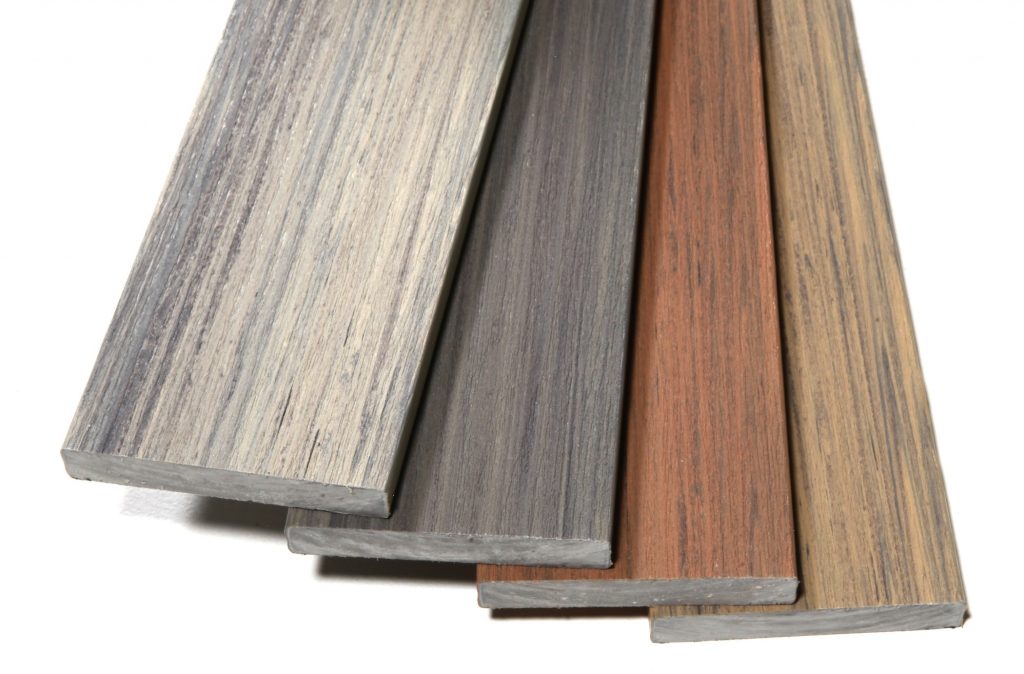
2 inch thick composite decking

Table of Contents

Understanding the Basics of Composite Decking

At its core, composite decking is an engineered product made by combining wood fibers and plastic materials. Unlike natural timber, which comes directly from trees, composite boards are manufactured through industrial processes that blend different raw materials into a single, unified structure.

The goal is simple: create a decking material that looks like wood but performs better in terms of durability, moisture resistance, and maintenance requirements.

Most composite decking products fall into two main categories:

  • Wood-Plastic Composite (WPC) decking
  • Capped composite decking (co-extruded boards)

While both are “composite,” their structure and surface protection differ slightly, which we will explore later.

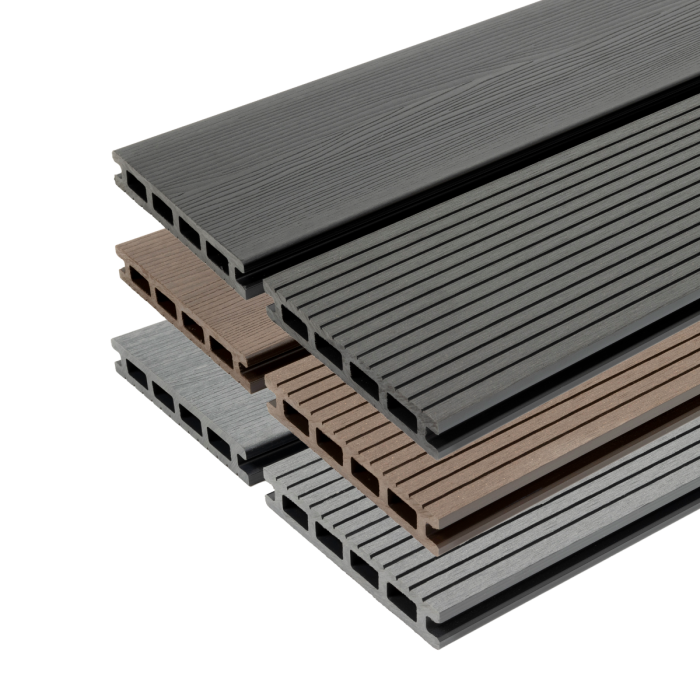
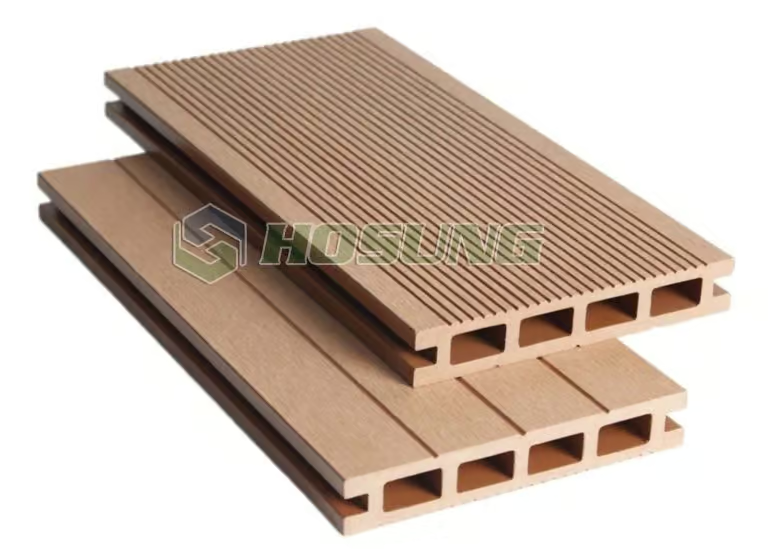
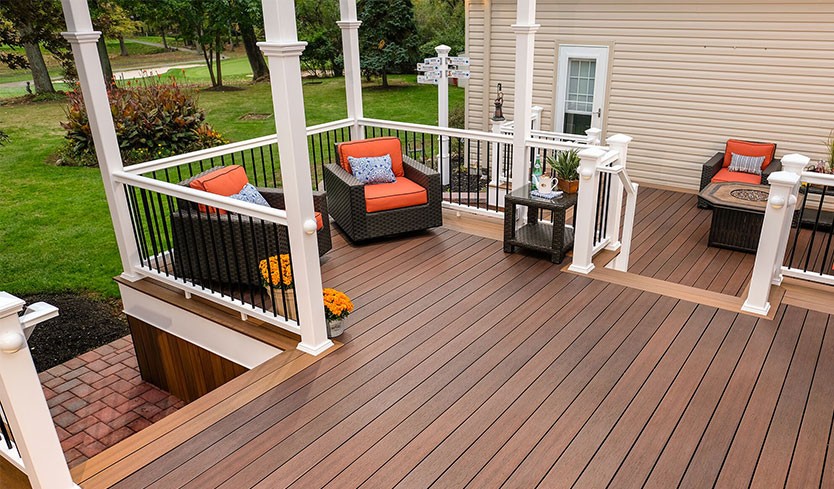
trex composite decking vs Hosung

Core Materials Used in Composite Decking Boards

To fully answer the question what are composite decking boards made of, we need to break down their three main components:

1. Wood Fibers (Natural Component)

Wood fibers are typically the largest natural ingredient in composite decking. They can come from:

  • Sawdust
  • Wood flour
  • Wood chips
  • Recycled wood waste from furniture or lumber production

These fibers provide:

  • A natural wood-like appearance
  • Structural rigidity
  • Texture and grain patterns

Manufacturers often prefer recycled wood fibers because they are cost-effective and environmentally friendly. However, raw wood fibers alone are not suitable for outdoor use because they absorb water and rot easily. That is why they must be combined with plastic materials.

The percentage of wood content varies, but in most composite decking boards it ranges from 35% to 65%.

2. Plastic Polymers (Synthetic Component)

Plastic is the second major ingredient in composite decking. It binds the wood fibers together and protects them from moisture and insects.

Common plastics used include:

  • High-density polyethylene (HDPE)
  • Polypropylene (PP)
  • Polyvinyl chloride (PVC) in some premium boards

Each type of plastic offers different properties:

HDPE (Most Common)

  • Flexible and durable
  • Good moisture resistance
  • Widely recycled
  • Used in many standard composite boards

Polypropylene (PP)

  • Higher stiffness than HDPE
  • Better heat resistance
  • Slightly more expensive

PVC-Based Composites

  • Very low water absorption
  • High durability
  • More rigid and less wood-like feel
  • Often used in premium capped decking systems

Plastic typically makes up 30% to 50% of the board composition, depending on the product design.

3. Additives (Performance Enhancers)

The third component is a group of additives that improve performance, appearance, and lifespan. Although they make up a small percentage of the board, they are extremely important.

Common additives include:

  • UV stabilizers (prevent fading from sunlight)
  • Color pigments (provide wood-like colors and tones)
  • Anti-fungal agents (prevent mold and mildew growth)
  • Bonding agents (help wood and plastic mix properly)
  • Fire retardants (in some building-code-compliant boards)
  • Lubricants (improve manufacturing flow)

Without these additives, composite decking would degrade quickly outdoors. They are the reason composite boards can maintain their appearance for years even under strong sun exposure and rain.

Grooved Composite Decking Manufacturer best composite decking material

How Composite Decking Boards Are Manufactured

Now that we know what composite decking boards are made of, it is important to understand how they are produced. The manufacturing process is what transforms raw wood and plastic into a high-performance construction material.

Step 1: Material Preparation

Wood fibers are cleaned, dried, and ground into fine particles. Plastic materials are also cleaned and shredded into small pellets.

Moisture control is extremely important at this stage. Excess moisture can weaken bonding between wood and plastic.


Step 2: Mixing and Blending

The wood fibers, plastic pellets, and additives are mixed together in precise ratios. This blending process ensures uniform distribution of materials throughout the final product.

At this stage, the mixture resembles a thick, fibrous compound.


Step 3: Heating and Extrusion

The mixture is heated until the plastic melts. It is then pushed through an extrusion machine that shapes it into long decking profiles.

This process is similar to squeezing toothpaste through a mold. The result is a continuous board with a consistent cross-section.


Step 4: Cooling and Shaping

After extrusion, the boards are cooled using water or air systems. Cooling solidifies the shape and locks in the internal structure.

Some boards are also embossed during this stage to create realistic wood grain textures.


Step 5: Surface Treatment or Capping (Optional)

Premium composite decking boards undergo an additional step called capping or co-extrusion.

This involves adding a protective outer layer made of polymer material. This cap:

  • Enhances UV resistance
  • Improves scratch resistance
  • Reduces staining
  • Prevents moisture absorption

Capped boards are more expensive but significantly more durable.


Step 6: Cutting and Quality Control

Finally, the boards are cut to standard lengths and undergo quality testing. Manufacturers check for:

  • Strength consistency
  • Color uniformity
  • Surface defects
  • Moisture resistance

Only boards that meet strict standards are packaged and shipped.

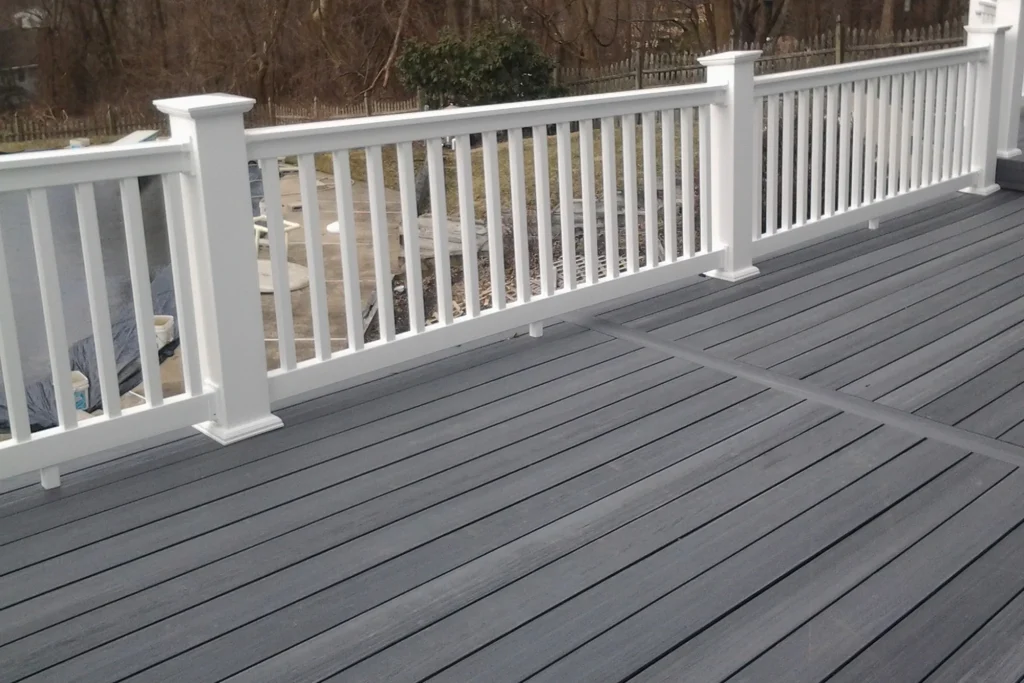
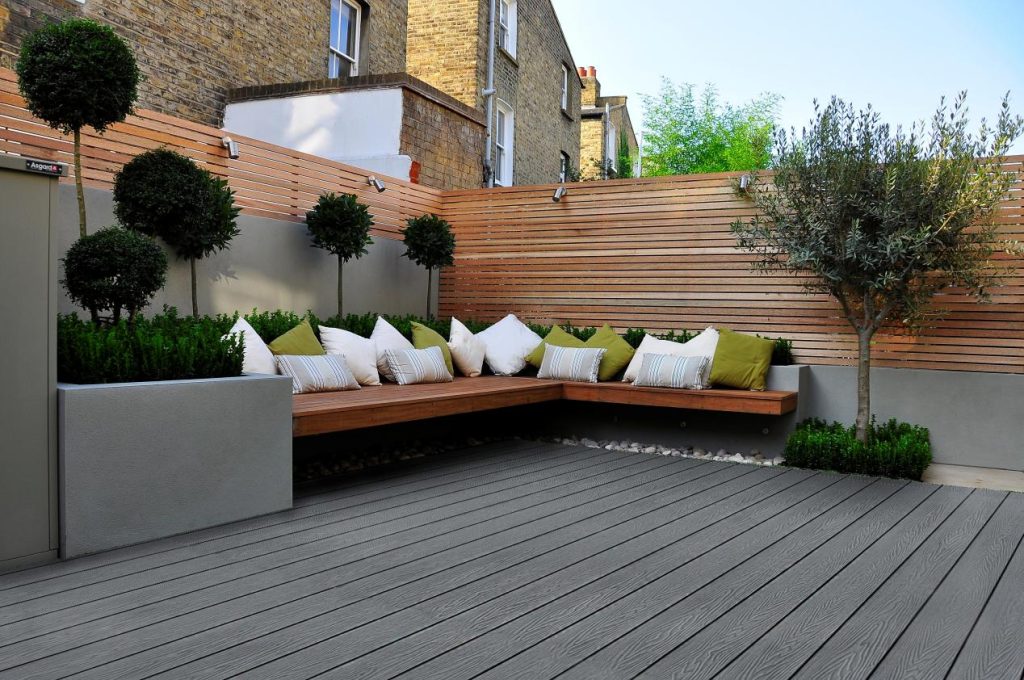
anthracite grey composite decking Hosung

Types of Composite Decking Based on Composition

Not all composite decking boards are made the same way. The ratio of materials and surface design creates different product categories.

1. Traditional WPC Decking

This is the most common type. It is made from a simple mix of wood fiber + plastic + additives.

Characteristics:

  • Natural wood feel
  • Cost-effective
  • Moderate durability
  • Requires occasional cleaning

It is widely used in residential outdoor decking projects.


2. Capped Composite Decking

Capped composite boards have a protective outer shell.

Characteristics:

  • Highly resistant to stains and fading
  • Better long-term durability
  • More expensive
  • Suitable for high-traffic areas

The core is still wood-plastic composite, but the surface is fully sealed.


3. PVC Composite Decking

PVC decking contains little or no wood fiber.

Characteristics:

  • Extremely moisture-resistant
  • Lightweight and strong
  • Less natural wood appearance
  • Higher cost

This type is often used in coastal or humid environments.

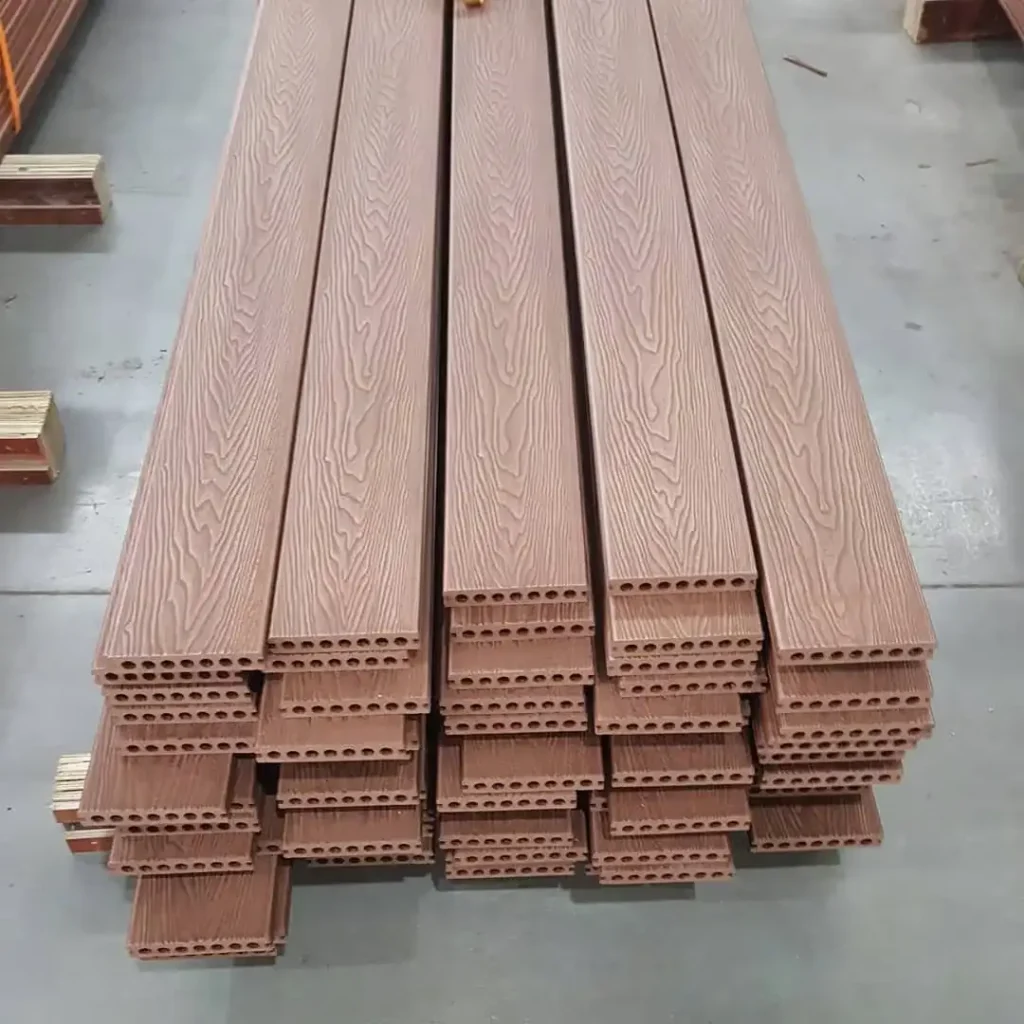
4 metre composite decking boards

Why Composite Decking Was Developed

Composite decking was created to solve common problems associated with natural wood decking:

  • Rotting from moisture exposure
  • Warping and cracking under sunlight
  • Termite and insect damage
  • High maintenance requirements (painting, sealing, staining)

By combining plastic and wood fibers, manufacturers created a material that retains the appearance of wood but eliminates many of its weaknesses.

Key Advantages of Composite Decking Materials

The composition of composite decking boards gives them several advantages:

1. Moisture Resistance

Plastic content prevents water absorption, reducing swelling and rot.

2. Durability

The combination of fibers and polymers creates a strong, stable structure.

3. Low Maintenance

No need for sealing, painting, or staining.

4. Environmental Benefits

Many boards use recycled wood and plastic waste.

5. Insect Resistance

Unlike natural wood, composite materials are not attractive to termites.

6. Color Stability

UV stabilizers help reduce fading over time.

Limitations of Composite Decking Materials

Despite their advantages, composite decking boards also have some limitations:

1. Heat Retention

Composite boards can become hot under direct sunlight, especially darker colors.

2. Higher Initial Cost

They are more expensive than basic wood decking.

3. Scratching

Although durable, some surfaces can still scratch under heavy furniture or sharp objects.

4. Non-Natural Feel

Even high-quality boards may not fully replicate the feel of real wood.

Environmental Impact of Composite Decking

One of the major selling points of composite decking is its environmental profile.

Because it uses:

  • Recycled wood waste
  • Recycled plastics
  • Reduced logging demand

It helps reduce environmental pressure on forests.

However, it is important to note that:

  • It is not fully biodegradable
  • Recycling composite boards at end-of-life can be challenging

Still, compared to chemically treated wood, it is often considered a more sustainable option.

How Composition Affects Performance

For eco-conscious homeowners, composite decking is an excellent choice. Many boards use recycled plastics, reclaimed wood fibers, or sustainably sourced materials. By choosing composite decking, you reduce the demand for freshly cut timber while benefiting from long-lasting, recyclable materials.

Additionally, composite boards typically require fewer chemical treatments than wood, reducing environmental impact over the deck’s lifespan.

2 inch thick composite decking

Where Composite Decking Is Commonly Used

Due to its balanced composition, composite decking is used in many environments:

  • Residential patios and balconies
  • Garden walkways
  • Swimming pool decks
  • Commercial outdoor spaces
  • Rooftop terraces
  • Coastal boardwalks

Its resistance to weather makes it suitable for both dry and humid climates.

Conclusion

So, what are composite decking boards made of?

They are primarily made of a carefully engineered blend of:

  • Wood fibers (for natural appearance and structure)
  • Plastic polymers (for strength and moisture resistance)
  • Performance additives (for durability, UV resistance, and color stability)

This combination creates a material that offers the visual appeal of wood with significantly improved durability and reduced maintenance requirements.

By understanding their composition, you can better evaluate whether composite decking is the right choice for your project. While it may not completely replace natural wood in every application, it offers a highly practical, long-lasting solution for modern outdoor living spaces.

If you are planning a decking project, knowing what goes into composite decking boards helps you make a more informed, cost-effective, and durable decision for the long term. Welcome to contact Hosung for more.

Scroll to Top