Choosing the right decking material is one of the most important decisions homeowners face when planning outdoor spaces. With the rise in popularity of low-maintenance, durable decking options, PVC and composite decking have emerged as leading choices. Both materials offer significant advantages over traditional wood, but they differ in composition, appearance, maintenance requirements, and cost. This guide explores every aspect of PVC and composite decking, helping you decide which is better for your home, lifestyle, and budget.
Table of Contents
Understanding PVC Decking
What Is PVC Decking?
PVC decking, short for polyvinyl chloride decking, is a 100% synthetic material. Unlike composite decking, which blends wood fibers with plastic, PVC decking contains no wood at all. It is entirely made from plastic polymers and additives that enhance durability, UV resistance, and color retention.
Key Features of PVC Decking
- 100% Synthetic
- No wood content, which means it is highly resistant to rot, mold, and insect infestations.
- Ideal for areas with high humidity or wet climates.
- Color Retention
- PVC decking maintains its color longer than composite materials.
- UV-resistant coatings prevent fading even under intense sunlight.
- Low Maintenance
- Requires only soap and water cleaning.
- Does not need staining, sealing, or painting.
- Lightweight
- Easier to handle and install compared to traditional wood or composite boards.
- Moisture and Rot Resistance
- Because it is 100% plastic, PVC decking is completely impervious to water absorption, making it ideal for poolside decks or coastal areas.
Drawbacks of PVC Decking
- Higher Cost
- Typically more expensive than composite decking.
- Initial investment can be significant, although lower maintenance costs may offset this over time.
- Appearance
- Some homeowners feel that 100% plastic decking lacks the natural look and warmth of wood.
- Advanced manufacturing has improved aesthetics, but it may still look artificial to some.
- Scratching and Denting
- PVC can be more prone to scratches and dents compared to composite materials, especially under heavy furniture or high foot traffic.
Understanding Composite Decking
What Is Composite Decking?
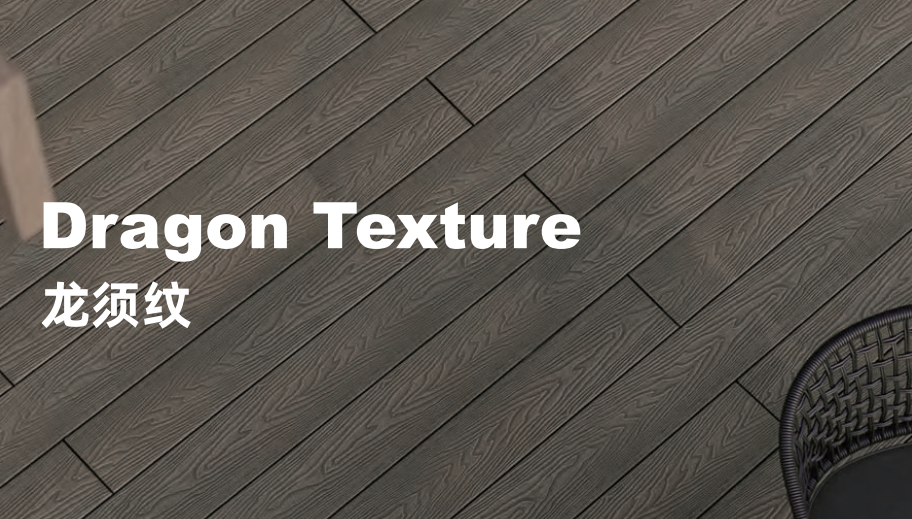
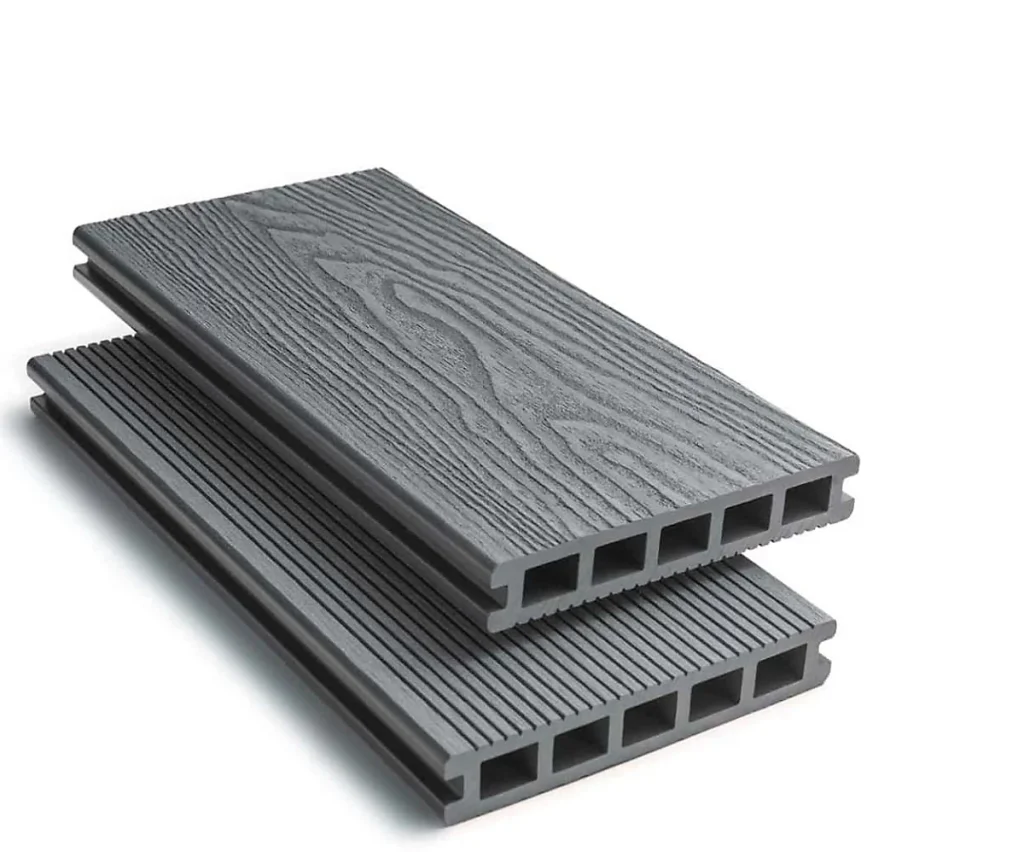
Composite decking is made by combining wood fibers, sawdust, or other natural fibers with recycled plastics. The blend is then treated with a binding agent and formed into planks that resemble traditional wood. Composite decking is designed to give the look of wood while providing enhanced durability and lower maintenance.
Key Features of Composite Decking
- Wood-Like Appearance
- Composite decking closely mimics the look and feel of natural wood.
- Grain patterns and textures add visual appeal.
- Durability
- Resistant to rot, decay, and insect damage.
- Generally stronger and more impact-resistant than PVC decking.
- Lower Maintenance Than Wood
- Does not require regular staining or sealing.
- Occasional cleaning with soap and water is sufficient to maintain appearance.
- Environmental Benefits
- Often made with recycled materials, making it an eco-friendly choice.
- Diverts plastic waste from landfills while reducing demand for timber.
- Variety of Styles and Colors
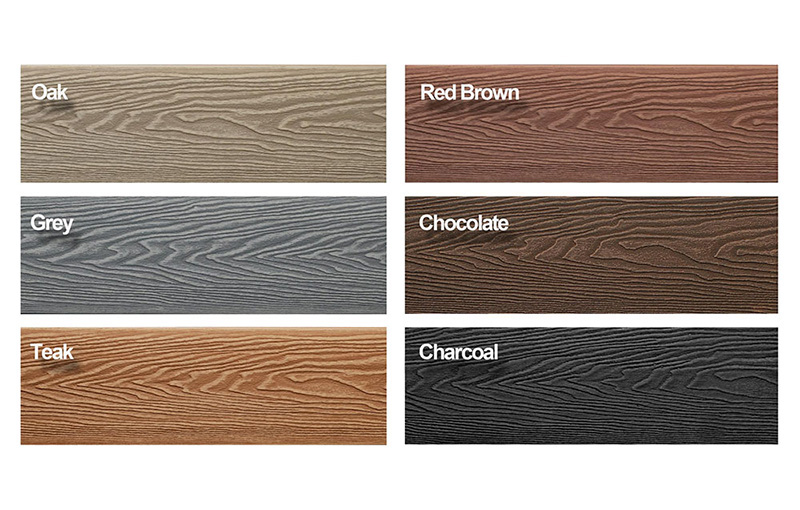
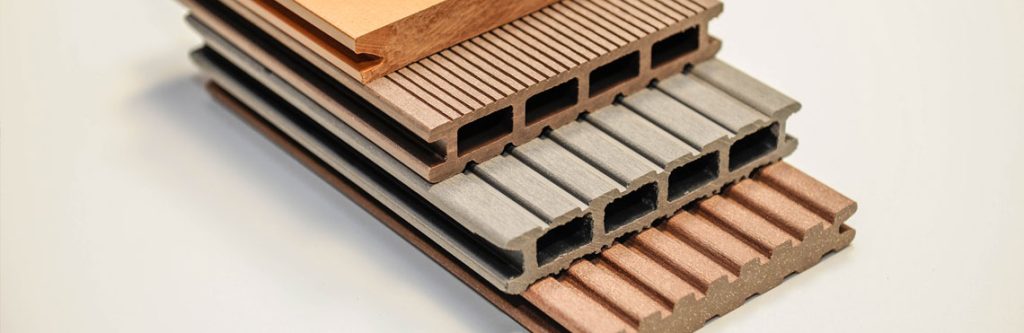
- Composite decking comes in a wide range of colors and finishes, from traditional browns and grays to modern shades.
- Some brands offer reversible boards for different looks.
Drawbacks of Composite Decking
- Moisture Absorption
- Although much more resistant than wood, composites can absorb some moisture, leading to swelling or mold growth if not properly ventilated.
- Fading and Staining
- Over time, composite boards may fade under direct sunlight.
- Susceptible to staining from leaves, grease, or other contaminants if not cleaned promptly.
- Cost Variations
- Generally less expensive than PVC, but higher-end composites can approach PVC prices.
- Weight
- Composite decking is heavier than PVC, which can make installation more labor-intensive.
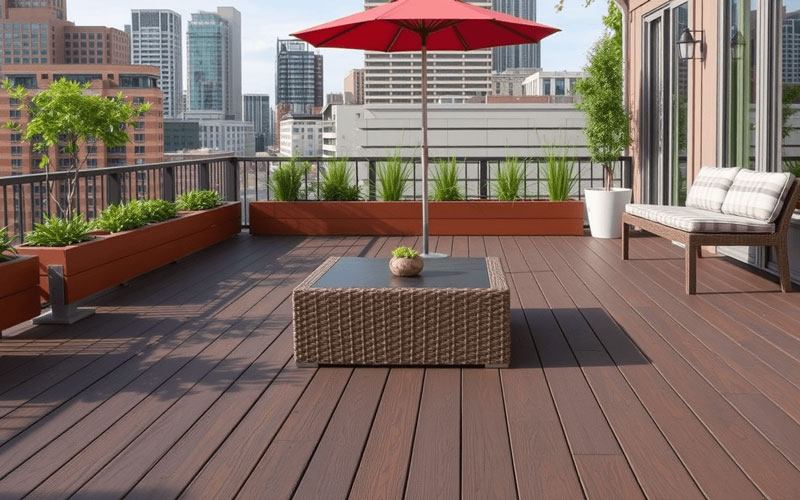
Comparing PVC and Composite Decking
To determine which decking material is better, it is essential to compare PVC and composite decking across several key factors.
1. Durability
- PVC Decking
- Highly resistant to moisture, rot, insects, and mold.
- Can withstand exposure to water better than composite, making it suitable for pool areas or coastal environments.
- Composite Decking
- Durable but slightly less resistant to moisture absorption.
- Can warp or swell in extremely wet environments if not properly installed.
Winner: PVC wins for extreme weather and moisture-prone areas.
2. Appearance
- PVC Decking
- Modern, clean look with uniform color.
- May appear artificial, especially in natural settings.
- Composite Decking
- Closely resembles wood with realistic grain and texture.
- Offers multiple color and finish options for customization.
Winner: Composite wins for aesthetics and natural wood-like appeal.
3. Maintenance
- PVC Decking
- Extremely low maintenance.
- Requires only simple cleaning; no staining, sealing, or painting.
- Composite Decking
- Low maintenance but may require occasional cleaning and mold removal.
- Some composites need periodic sealing in high-moisture environments.
Winner: PVC is superior for minimal maintenance.
4. Cost
- PVC Decking
- Higher upfront cost.
- Long-term savings due to minimal maintenance.
- Composite Decking
- Generally more affordable initially.
- Maintenance costs are slightly higher over time.
Winner: Composite is better for budget-conscious homeowners.
5. Environmental Impact
- PVC Decking
- Fully synthetic, not biodegradable.
- Manufacturing process may involve toxic chemicals.
- Composite Decking
- Often made from recycled plastics and wood fibers.
- More eco-friendly due to reduced reliance on virgin timber.
Winner: Composite is the greener choice.
6. Installation
- PVC Decking
- Lightweight and easy to cut, drill, and handle.
- Requires precise spacing for expansion and contraction.
- Composite Decking
- Heavier, requiring more effort during installation.
- Usually installed with hidden fasteners for a smooth finish.
Winner: PVC for ease of handling, composite for a finished look.
7. Comfort and Safety
- PVC Decking
- Can become slippery when wet, although many brands have textured surfaces.
- Less heat retention than composite, staying cooler under direct sunlight.
- Composite Decking
- Slightly warmer underfoot due to wood content.
- Textured surfaces provide better grip in wet conditions.
Winner: Depends on climate; composite for grip, PVC for cooler surfaces.
8. Lifespan and Long-Term Performance
PVC Decking
PVC decking is engineered for long-term outdoor exposure without structural breakdown. Because it contains no organic material, it does not decay internally over time. This makes it especially reliable in environments with heavy rainfall, salt air, or constant humidity.
- Typical lifespan: 25–50 years
- Performance remains stable even after years of UV exposure
- Color and surface integrity are generally preserved longer than composite
However, while PVC maintains structural integrity, its surface can show wear such as scratches or scuff marks in high-traffic areas.
Composite Decking
Composite decking also offers strong long-term performance, but its wood-fiber content introduces some natural limitations. Over time, exposure to moisture and temperature changes may slightly affect dimensional stability.
- Typical lifespan: 20–40 years
- High-quality capped composites perform significantly better than uncapped versions
- May experience gradual surface fading or slight texture changes
Modern manufacturing improvements have greatly reduced early-generation issues, but long-term exposure still makes composites slightly more vulnerable than PVC in harsh climates.
Winner: PVC for longer structural consistency and weather resilience
9. Heat Retention and Sun Exposure
PVC Decking
PVC decking generally absorbs less heat compared to wood-plastic composites. Many manufacturers incorporate reflective additives or lighter color options to further reduce surface temperature.
- Performs better in hot climates and direct sunlight
- Lighter colors remain comfortable underfoot even in peak summer conditions
- Still heats up, but usually less than composite of similar color tone
Composite Decking
Composite boards in Hosung, due to their wood fiber content, tend to retain more heat. Darker composite colors can become noticeably warm under strong sun exposure, which may affect barefoot comfort.
- Heat retention varies depending on brand and color
- Premium capped composites may include heat-reducing technology
- Still generally warmer than PVC in identical conditions
Winner: PVC for cooler surface performance in sunny environments
10. Structural Strength and Load Capacity
PVC Decking
PVC decking is lightweight but not always the strongest option under heavy concentrated loads. While it performs well for residential use, it may flex slightly under heavy furniture or dense foot traffic if joist spacing is not properly designed.
- Good for residential and light commercial use
- Requires correct substructure spacing for stability
- Less rigid compared to wood-composite blends
Composite Decking
Composite decking benefits from its wood fiber reinforcement, giving it greater rigidity and load-bearing capacity.
- Better resistance to bending or flexing
- Suitable for high-traffic areas and heavy outdoor furniture
- More stable feel underfoot
Winner: Composite for structural rigidity and heavy-duty performance
11. Slip Resistance and Safety in Wet Conditions
PVC Decking
While PVC decking can be manufactured with textured or embossed surfaces, some smoother designs may become slippery when wet. This is especially important for pool decks or shaded areas where water lingers.
- Modern PVC brands often improve traction with surface engineering
- Performance varies widely between manufacturers
- Requires careful product selection for wet environments
Composite Decking
Composite decking typically offers better inherent grip due to its wood fiber content and textured grain patterns.
- Naturally higher friction surface
- Performs well in rain and humid conditions
- Often preferred for families with children or elderly users
Winner: Composite for better natural slip resistance
12. Design Flexibility and Customization
PVC Decking
PVC decking offers clean, modern aesthetics but usually comes with more uniform color patterns. While this creates a sleek look, it can limit design variety.
- Best for contemporary or minimalist designs
- Limited variation in grain depth and color blending
- Consistent appearance across boards
Composite Decking
Composite decking offers significantly greater visual variety.
- Wide range of colors, tones, and wood-grain textures
- Some premium products mimic exotic hardwoods closely
- Better suited for traditional, rustic, or natural-style landscapes
Winner: Composite for design versatility and architectural matching
13. Repairability and Replacement
PVC Decking
PVC boards can be replaced individually, but matching older boards may be difficult if color batches change over time. Surface scratches are often permanent unless replaced or treated with specific repair kits.
Composite Decking
Composite boards are also replaceable, but capped composites may be harder to repair due to their protective outer layer. However, their slightly more rugged surface often hides minor damage better.
Winner: Tie — both depend on brand and product system
Common Misconceptions About PVC and Composite Decking
- PVC Is Too Plastic-Looking
- Modern PVC boards can have wood-grain textures, making them look less artificial.
- Composite Decking Does Not Fade
- Even high-quality composites will fade slightly over time, especially under intense UV exposure.
- Both Materials Are Maintenance-Free
- PVC is almost maintenance-free, but composite decking still requires occasional cleaning to avoid staining and mold.
- Installation Is Simple
- Both materials are easier than traditional wood, but professional installation ensures longevity and prevents warping.
Ideal Applications for PVC Decking
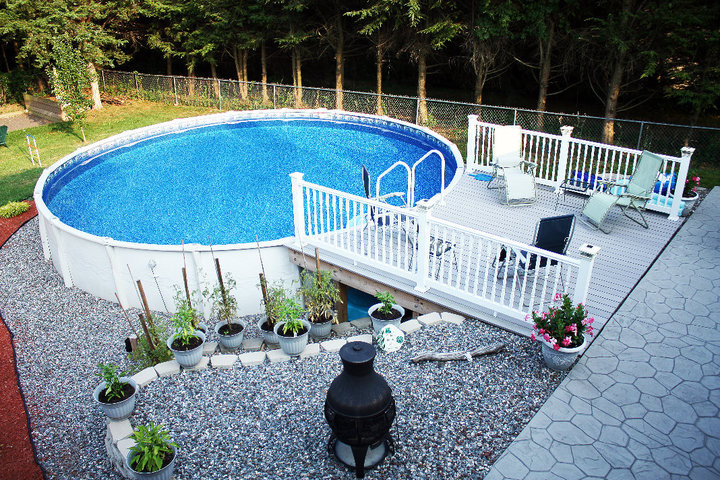
- Pool decks and spas
- Coastal properties
- Areas with high rainfall or humidity
- Homes requiring minimal maintenance
- Modern or contemporary architectural styles
Ideal Applications for Composite Decking
- Backyard decks with a natural wood look
- Patios and entertainment areas
- Garden paths and terraces
- Homeowners seeking eco-friendly options
- Projects requiring color and design versatility
Tips for Choosing the Right Decking Material
- Consider Climate
- High humidity or rainy climates: PVC is preferable.
- Moderate climates: Composite offers a good balance of aesthetics and durability.
- Determine Maintenance Preferences
- If you want truly low-maintenance decking, PVC is ideal.
- If occasional cleaning is acceptable, composite is sufficient.
- Budget Planning
- Compare upfront costs and long-term maintenance costs.
- PVC may have a higher initial cost but lower upkeep expenses.
- Evaluate Aesthetic Goals
- For natural wood appearance, composite decking is unmatched.
- For uniform color and modern look, PVC decking is better.
- Check Manufacturer Warranties
- Most PVC and composite boards come with warranties ranging from 20 to 50 years.
- A longer warranty can indicate material confidence and durability.
Maintenance Guide for Both Materials
PVC Decking Maintenance
- Clean with mild soap and water.
- Remove dirt and debris regularly to prevent surface scratches.
- Avoid harsh chemicals that could degrade plastic.
- Check for any scratches or dents and repair with touch-up kits if available.
Composite Decking Maintenance
- Sweep or rinse frequently to remove debris.
- Use a composite deck cleaner for stubborn stains or mold.
- Avoid using pressure washers on high settings to prevent surface damage.
- Periodically inspect for loose fasteners or boards.
Cost Comparison
| Factor | PVC Decking | Composite Decking |
|---|---|---|
| Average Cost per sq.ft. | $8 – $15 | $6 – $12 |
| Installation Cost | Moderate | Moderate to High |
| Long-term Maintenance | Low | Moderate |
| Lifespan | 25–50 years | 20–40 years |
While the initial cost of PVC is higher, the reduced maintenance can make it more cost-effective over decades. Composite decking offers a lower entry cost but requires occasional upkeep.
FAQ
- Can PVC decking scratch easily?
Yes, PVC can be scratched, but most scratches are minor and can be buffed out depending on the manufacturer. - Does composite decking require sealing?
Usually not, but some high-moisture environments may benefit from occasional sealing. - Which decking is better for poolside areas?
PVC decking is preferable due to its waterproof properties and resistance to mold. - Is composite decking eco-friendly?
Yes, most composite boards are made from recycled wood fibers and plastics. - Can PVC decking be installed over concrete?
Yes, with proper substructure and spacing to allow for expansion. - How long does each decking type last?
PVC can last 25–50 years, while composite decking generally lasts 20–40 years. - Do either of these materials get hot in the sun?
Composite tends to retain more heat than PVC, which can feel cooler underfoot.
Conclusion
Choosing between PVC and composite decking depends on your priorities:
- PVC Decking is best if you want maximum durability, low maintenance, moisture resistance, and modern appearance, and are willing to invest more upfront.
- Composite Decking is ideal if you value natural wood aesthetics, eco-friendliness, and a lower initial cost, and don’t mind periodic cleaning and maintenance.
Both materials are far superior to traditional wood in terms of longevity, safety, and environmental resistance. Your final decision should consider climate, budget, aesthetic preferences, and how much time you want to spend maintaining your deck.
Ultimately, whether you choose PVC or composite, both materials provide a high-quality, long-lasting solution that enhances your outdoor living space for years to come.